




Winter Storm Safety Tips: Expert Advice for Harsh Winter Conditions


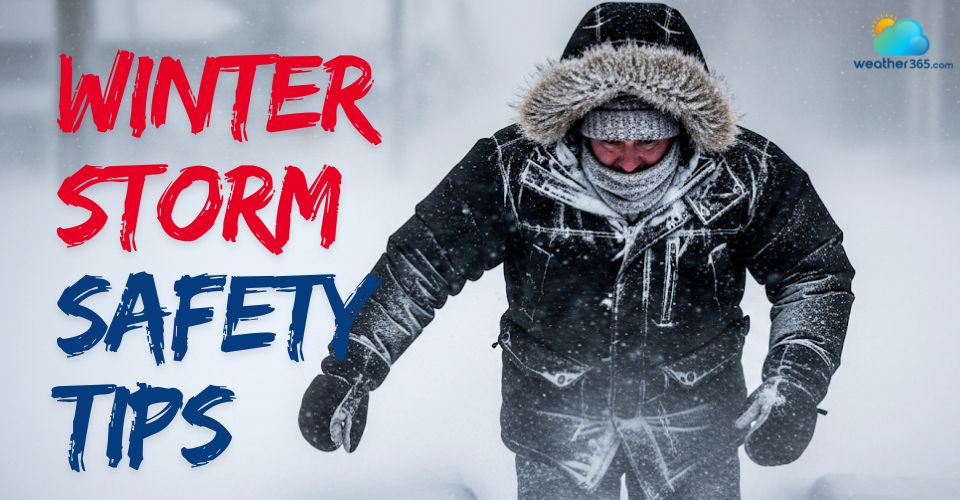
Winter storms can range from freezing rain, strong winds to snowfall over a few hours. Understanding blizzard conditions and winter storm safety tips helps you to overcome severe winters.
What to do in a winter storm?
Winter storm safety tips BEFORE the storm
Winter storm preparedness is very important to be proactive in facing severe weather, as well as to minimize damage.
Before a winter storm arrives, it’s critical to stay informed about potential threats and changing conditions.
Sign up for local weather alerts, emergency notifications, and public safety warnings through apps, text messages, or weather radios.
These updates provide real-time information about storm intensity, timing, and any evacuation instructions.
By monitoring forecasts regularly, you’ll have enough time to make preparations and keep your family safe.
An emergency plan ensures everyone in your household knows what to do if the storm forces you to shelter in place or cuts off power and transportation.
Discuss safe rooms in your home, emergency contact information, and how to communicate if cell service becomes unreliable.
If you have family members with medical needs, pets, or elderly relatives, plan for their safety in advance.
A written plan posted somewhere visible, like the refrigerator, can be a lifesaver during stressful situations.

Tell your family member about a safe room in your house when necessary
Another winter storm safety tip is to assemble a well-stocked emergency kit before the storm hits.
The kit should include items like bottled water, non-perishable food, flashlights, batteries, first aid supplies, and any necessary medications.
Don’t forget seasonal items such as extra blankets, winter clothing, and hand warmers to stay protected if heating systems fail.
A battery-powered radio and power banks for your devices can also keep you connected in case of outages.
If you or a loved one relies on medical equipment or regular treatments like dialysis, coordinate with healthcare providers in advance to ensure continuity of care during severe weather.
You also take some steps to protect your home before a winter storm hits.
You should remove dead or overhanging branches that could fall on your house, clear gutters, and inspect smoke and carbon monoxide alarms to make sure they’re working.
Check your insulation, weather-strip doors and windows, and stock up on safe heating fuel options like wood or propane.
Maintaining heating equipment and chimneys regularly ensures they work efficiently when needed.
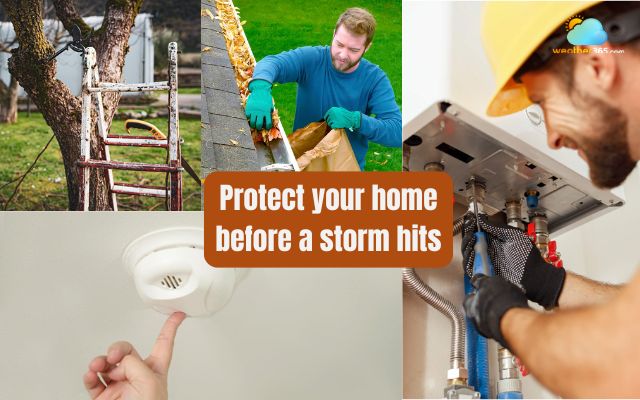
Protect your home before a storm hits
In a winter storm, a winter-ready vehicle can be a lifesaver. Keep the gas tank at least half full to prevent fuel lines from freezing, and store a Winter Emergency Car Kit in the trunk.
This kit should include blankets, a shovel, an ice scraper, jumper cables, sand or kitty litter for traction, and extra clothing.
These supplies ensure you can stay warm and safe even if you get stranded.
Winter storm safety tips DURING the storm
Winter storms are dangerous with many potential risks. When a winter storm hits, the first thing to remember is to remain calm.
Panicking can lead to rushed decisions and accidents.
Stay indoors as much as possible because the outside is now hazardous, although you may get into trouble inside your home.
If you are at home
During a winter storm, staying indoors is the best way to stay safe.
Use heating sources like wood stoves, fireplaces, or space heaters and always follow the manufacturer’s instructions.
Keep extra blankets, sleeping bags, and winter coats on hand in case of power outages. Never use your stove for heating—it’s a major fire and carbon monoxide hazard.
Make sure any space heater is placed at least three feet from flammable materials, has an automatic shut-off.
Never let the heater be unattended, especially around children.
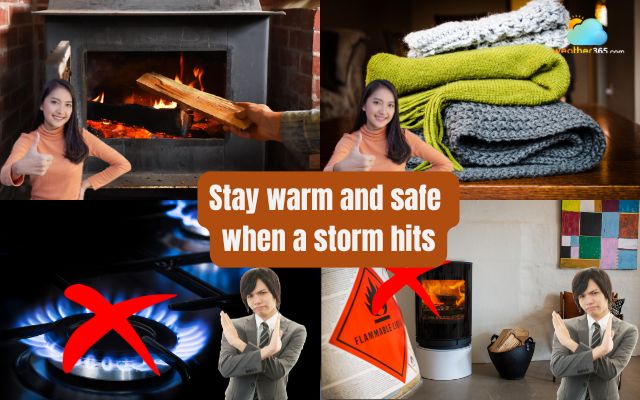
Stay warm and safe when a storm hits
If the power goes out and you use a generator, place it at least 20 feet from your home to prevent carbon monoxide poisoning.
Never use generators, gas or charcoal grills, or camp stoves indoors, in basements, or near open windows and doors.
You can install a battery-powered carbon monoxide detector to stay safe.
To keep your home warm during a storm, avoid opening doors or windows unnecessarily and close off rooms you’re not using.
If unsure what to set your thermostat to for comfort and safety during cold spells, here’s a quick reference: what is the ideal temperature for a house in winter.
Stuff towels or rags under doors to block drafts. Close drapes or cover windows with blankets at night for extra insulation.
If you have a ventless gas heater, follow all ventilation requirements to avoid health risks while keeping as much heat inside as possible.
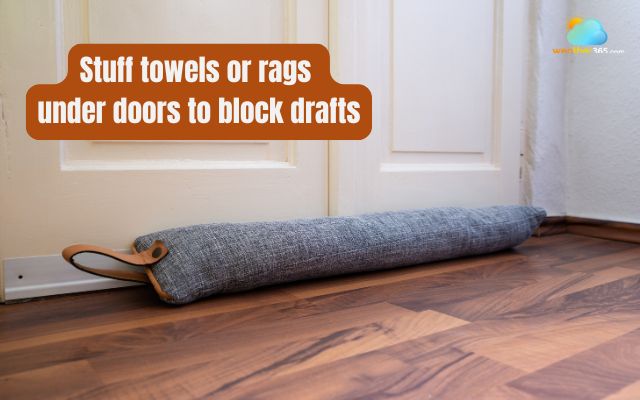
Use towels and rags under doors to block drafts
Babies and older adults are especially vulnerable during extreme cold. Thus, another vital winter storm safety tip is to keep vulnerable people warm.
Infants lose heat more quickly than adults, so dress them in warm layers like footed pajamas or sleep sacks and keep their rooms warm. Older adults should check indoor temperatures regularly and avoid prolonged exposure to the cold.
Check in on elderly neighbors and relatives to ensure they have adequate heat and supplies.
Extreme cold can freeze and burst water pipes, so leave faucets dripping slightly to keep water moving.
Open cabinets under sinks so warm air can circulate pipes. Never use a torch to thaw frozen pipes. Instead, you can use an electric hair dryer or space heater for safety.
If pipes break, use bottled water or melted snow that has been boiled for at least one minute to ensure it is safe to drink.

Leave faucets dripping slightly in severe winters
During a winter storm, eat balanced meals and stay hydrated with warm beverages like soup or hot tea to help your body maintain heat.
Avoid alcohol and caffeinated drinks because they cause your body to lose heat faster.
Nutritious foods and warm fluids will keep your energy levels up and help prevent hypothermia in extreme cold.
If you are outside
If you must go outside when the winter storm hits, keep your trip as brief as possible.
Tell family or friends exactly where you're going and when you'll be back. This small step ensures that if you don't return on time, they can alert authorities and provide a crucial starting point for an emergency search.
Remember, a quick trip can turn dangerous in a second, so never go out unprepared.
Dressing correctly can help prevent hypothermia and frostbite in extreme cold. Keeping in mind the "3-layer system" rule.
For more everyday guidance on staying warm and avoiding cold-related risks, you can also read our cold weather tips.
Starting with a moisture-wicking inner layer like wool or silk, followed by an insulating layer of fleece or down, and a water- and wind-resistant outer layer.
Always wear a hat, scarf, insulated gloves or mittens, and waterproof boots.
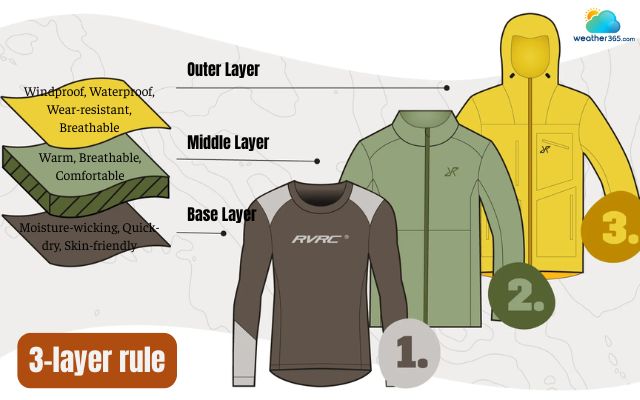
Remember the 3-layer rule to wear warmly
Watch out for cold-weather symptoms. Shivering is often the first sign that your body is losing heat.
If you or someone with you experiences constant shivering, numbness, or confusion, go inside immediately.
These are early symptoms of hypothermia and frostbite, which can become life-threatening if untreated.
People with asthma should be extra cautious because breathing cold, dry air can trigger asthma attacks.
Ice-covered sidewalks, driveways, and steps cause thousands of winter injuries each year. Use rock salt, sand, or other de-icing materials on walkways to prevent slips and falls.
If you must walk outside, wear shoes with good traction, take short steps, and move slowly to avoid slipping.
Shoveling snow or doing strenuous outdoor activities in cold weather puts added strain on the heart. If you have heart disease or high blood pressure, ask your doctor about safe limits before doing heavy work.
Take frequent breaks, work slowly, and dress warmly to prevent overexertion and sweating, which can lead to dangerous heat loss.
Avoid driving during low visibility or on ice-covered roads, bridges, and overpasses.
If you still need to be on the road, follow these practical winter driving safety tips to reduce the risk of skidding, whiteouts, and emergency breakdowns.

Ask your doctor when doing outdoor activities
Winter storm safety tips AFTER the storm
After a winter storm passes, inspect your home carefully for any damage. Check the roof, walls, and especially water pipes, as freezing temperatures can cause them to burst.
If you notice any damage or leaks, address them immediately to prevent further problems. Report power outages to your utility company so repairs can begin as soon as possible.
An important winter storm safety tip you should remember is to stay far away from downed power lines. Downed power lines are one of the most serious dangers after a winter storm.
Report any fallen or damaged power lines to your utility company or emergency services immediately.
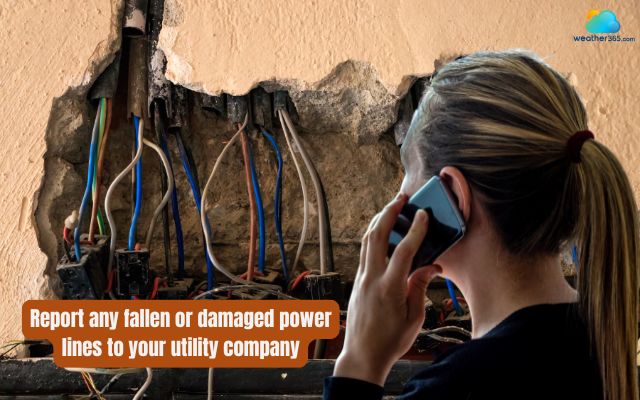
Call your utility company to report any fallen or damaged power lines
Snow and ice can make walkways, driveways, and steps extremely slippery. Using a snow shovel or de-icing materials like salt or sand to reduce the risk of falls.
Take breaks often, avoid overexertion, and wear boots with good traction to prevent injuries while cleaning up.
Melting snow and ice can lead to localized flooding, especially if storm drains are blocked. Keep an eye on your basement, yard, and nearby streets for rising water.
If water starts entering your home, move valuables to higher levels and contact local authorities if needed.
After a storm, check on elderly neighbors, people with disabilities, and families with young children, as they may need extra help.
They are more vulnerable to cold, power outages, and limited mobility during harsh weather conditions.
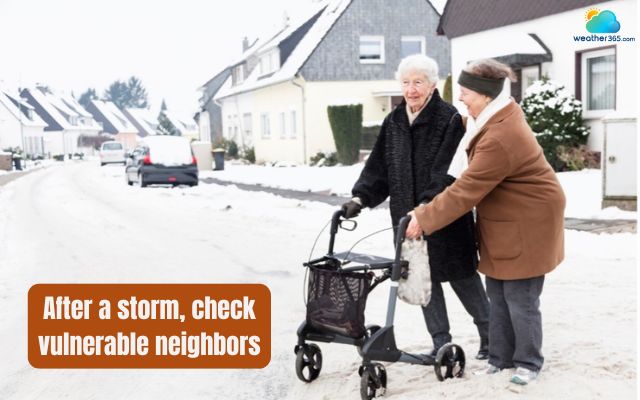
Check your vulnerable neighbors
If your local authorities issue a boil water advisory due to damaged pipes or potential contamination, take it seriously.
Boil water for at least one minute before drinking, cooking, or brushing your teeth.
This precaution protects against harmful bacteria and ensures safe water use.
For more weather updates, severe weather alerts, and seasonal guides, visit the weather365.com
Conclusion
Staying safe during extreme cold weather requires preparation and awareness. By following these winter storm safety tips, you can protect yourself, your family, and your home from dangerous conditions. Follow Weather365 to get further useful tips.
Frequently Asked Questions (FAQs)
Related post
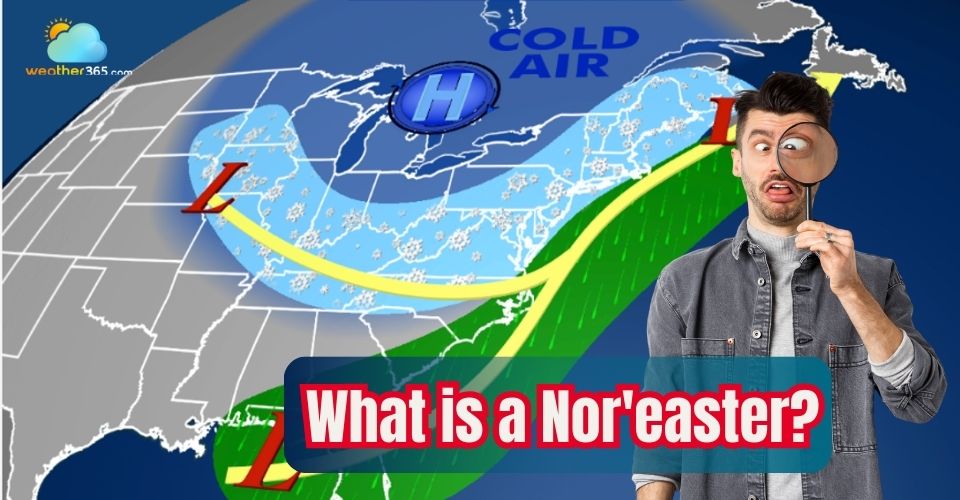
What Is A Nor'easter? Definitions, Weather Effects And Safety Tips
 2337
2337
 8
8
 5.0
5.0
 01/04/2026
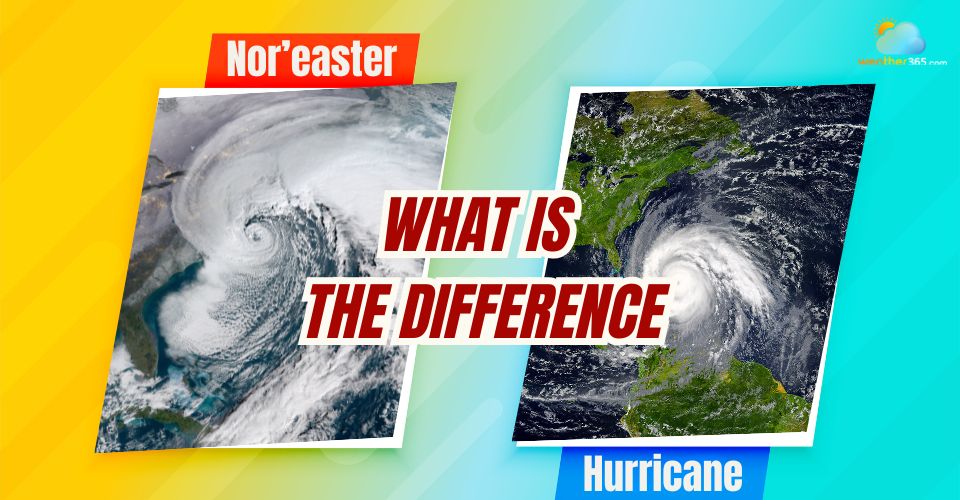
What's the difference between a nor'easter and a hurricane? Full explained
1635
8
4.8
01/04/2026
Winter Driving Safety Tips: A Complete Guide for Cold Weather Roads
1442
8
4.9
28/04/2026
Winter Energy Saving Tips: How to Stay Warm but Still Cut Energy Costs
1254
8
5.0
01/04/2026

8 Comment
Julian Garcia
What should you do if you have to go outside during a winter storm?
weather365
Keep the trip as short as possible, tell someone where you’re going, and wear several protective layers, including waterproof boots and insulated gloves.
Mary Hammond
The 3-layer clothing rule makes so much sense. Staying warm is about more than just wearing one thick coat.
Gabrielle Williams
Why shouldn’t you use a kitchen stove to heat the house?
weather365
It can create serious fire and carbon monoxide hazards, especially in an enclosed space.
Austin Porter
I didn’t know you should keep your gas tank at least half full during a winter storm.
Kyrie Anderson
How far should a generator be kept from the house?
weather365
The article recommends placing it at least 20 feet away to reduce the risk of carbon monoxide poisoning.
Leave a comment
Your email address will not be published. Required fields are marked *