




Power outage safety tips: What to do Before - During - After a blackout


Looking for the best power outage safety tips? A blackout can happen anytime, thus, knowing what to do before, during, and after the blackout can make a big difference. In this guide, Weather365 will share essential tips to help you stay prepared, protect your devices, and ensure your loved ones remain safe until the lights come back on.
What to do when power outage
- Terms to know
- Power outage safety tips: BEFORE
- Build a Complete Emergency Kit
- Check on Medical Needs
- Keep Your Car’s Tank Full
- Power outage safety tips: DURING
- Stay safe from Carbon Monoxide
- Unplug electronics
- Maintain food safety
- Be aware of your surroundings
- Power outage safety tips: AFTER
- Check on food safety
- Slowly plug appliances and electronics
- Check on others
Terms to know
Power outages can be disruptive and even dangerous if you’re unprepared. To know what to do when the power goes out, it’s essential to know the key terms used in the energy and utility industry.
Terms like blackout and rolling blackout describe different situations that can affect your home or business, each with its own causes and implications.
Blackout:
A blackout happens when the supply of electricity is completely cut off.
The reasons are often equipment failure, excessive demand on the power grid, severe weather like lightning storms, ice accumulation on power lines, or accidents that bring down electrical infrastructure.
Blackouts can occur unexpectedly and may last from a few minutes to several hours, depending on the severity of the issue.
Rolling Blackout:
A rolling blackout occurs when electrical power is intentionally turned off to specific areas to conserve energy, especially during times of high demand.
These planned outages usually happen during peak usage hours—commonly between 4:00 p.m. and 7:00 p.m.—but can occur at any time.
Rolling blackouts may last more than an hour and can affect the same area multiple times a day to prevent the entire power grid from failing.
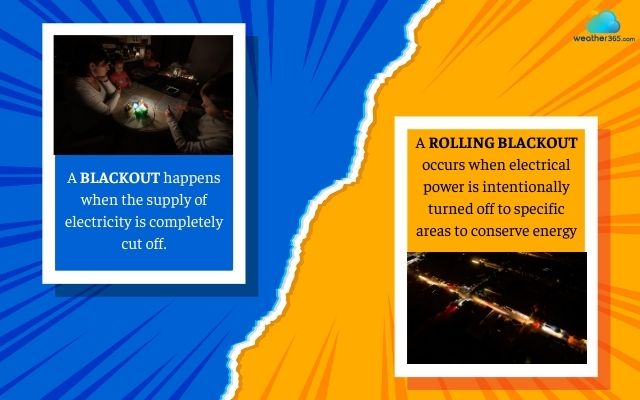
A Blackout vs a Rolling Blackout
Power outage safety tips: BEFORE
Before a blackout hits, being prepared can make all the difference. These power outage safety tips will help ensure your family stays safe and comfortable when the power goes out.
Build a Complete Emergency Kit
One of the most essential power outage safety tips before a blackout is to prepare a well-stocked emergency kit.
This kit should include flashlights, extra batteries, a battery-powered or hand-crank radio, bottled water, and non-perishable food that doesn’t require cooking.
Having these items ready ensures you can stay safe and informed even when the lights go out.
Consider adding a first-aid kit, blankets, and any necessary personal hygiene supplies so your household can manage comfortably during a power outage.
If a winter storm is in the forecast, you can also review our winter storm preparedness checklist to make sure your home and vehicle are ready before the blackout hits.
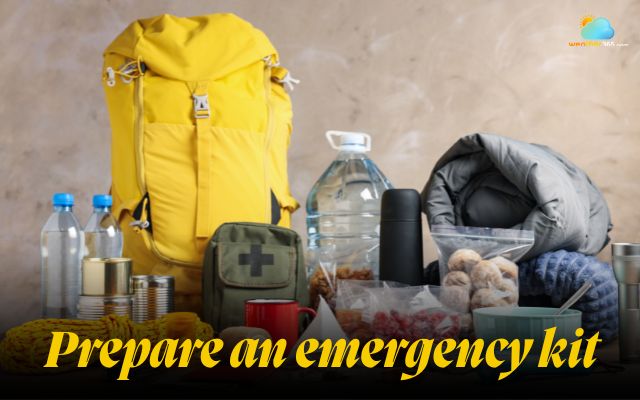
Prepare for power outage
Check on Medical Needs
Another critical power outage safety tip is to address any medical requirements before a blackout occurs.
If someone in your home depends on electrically powered medical equipment, such as oxygen machines, CPAP devices, or mobility aids, let’s talk to your healthcare provider about backup power options.
You can also notify your utility company, as many offer priority power restoration for medically vulnerable customers.
Taking this step in advance can help avoid medical emergencies during a prolonged power outage.
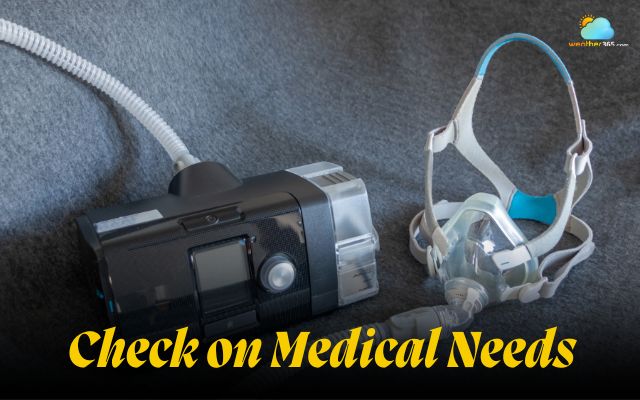
Check on medical needs before a blackout
Keep Your Car’s Tank Full
Besides, make sure your car’s gas tank is always at least half full, especially if a storm or blackout is expected. For storm-specific planning (home + vehicle + supplies), see our winter storm preparedness guide.
That is an important power outage tip to keep everyone safe.
Gas stations rely on electricity to pump fuel, so keeping your vehicle fueled in advance ensures you can travel safely in case of emergencies.
Your car can also be used to charge mobile devices if power is out for an extended period, making it even more essential to stay prepared.
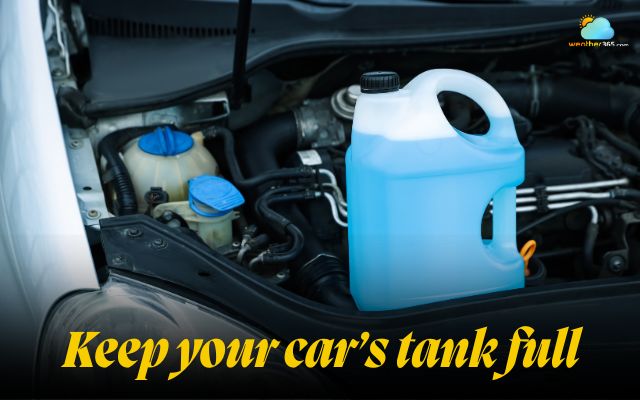
Make sure your car’s tank is always at least half full to prepare for a blackout
Power outage safety tips: DURING
When a blackout occurs, it can be unsettling, but having the right power outage safety tips can help you stay safe and minimize damage.
Key steps like staying safe from carbon monoxide, unplugging electronics, maintaining food safety, and staying alert to your surroundings ensure you’re prepared until the power comes back on.
Stay safe from Carbon Monoxide
Many people rely on backup power sources like portable generators, gas grills.
However, running them indoors or too close to windows and doors can quickly lead to deadly carbon monoxide buildup.
Especially when having a blackout in winter, many people choose charcoal or gas grills, hibachis, or unvented portable propane heaters to heat their home. These are not safe for indoor use.
Always operate generators outside, far from living areas, and install battery-powered carbon monoxide detectors to give you early warnings in case of danger.
These are also important cold weather tips you should remember.
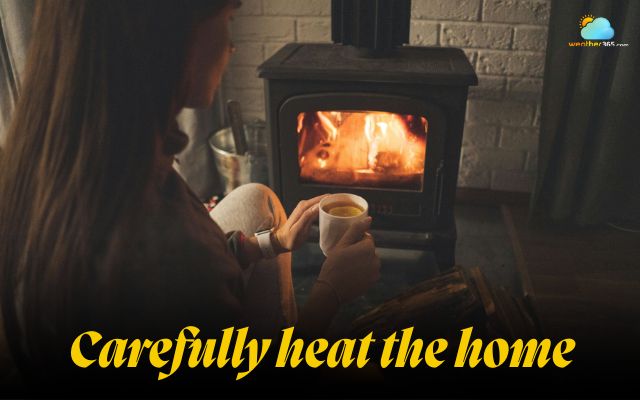
Carefully heat the home when a power outage in winter
Carbon monoxide (CO) is a colorless, odorless, and tasteless gas produced by burning fuel such as gas, wood, charcoal, or propane. When you breathe too much CO, CO replaces oxygen in your bloodstream, your body’s cells and organs can’t get enough oxygen. This can lead to symptoms like headache, dizziness, nausea, confusion, chest pain, and in severe cases, unconsciousness or even death. Common sources include faulty furnaces, gas stoves, fireplaces, car engines, and portable generators, especially when used in enclosed or poorly ventilated areas. |
Unplug electronics
Protect your appliances and devices by unplugging them during the blackout.
Sudden power surges when electricity is restored can damage or even destroy sensitive electronics like TVs, computers, and kitchen appliances.
By unplugging them in advance, you can prevent costly repairs or replacements once the power returns.
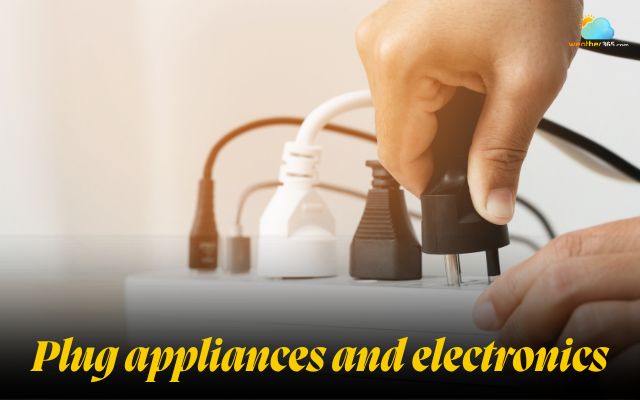
During a blackout, unplug your appliances and devices
Maintain food safety
Food safety is another major concern during extended outages.
To keep your food from spoiling, avoid opening your refrigerator and freezer unless absolutely necessary.
A full freezer can keep food frozen for about 48 hours (24 hours if half full) if left unopened, while a refrigerator will maintain a safe temperature for up to 4 hours.
Consider using a food thermometer to check temperatures before eating anything after the power comes back.
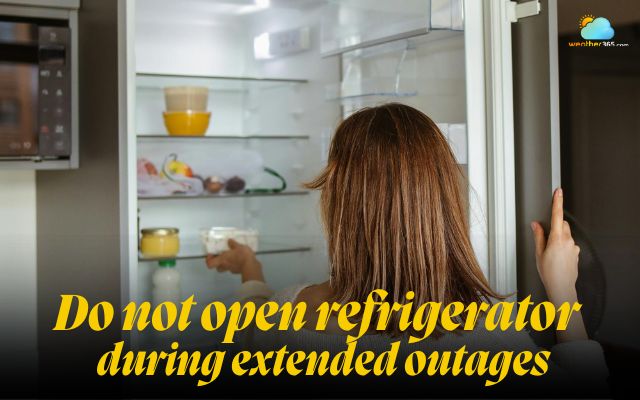
Limit to open refrigerator during outages to maintain food security
Be aware of your surroundings
Finally, be aware of your surroundings.
Use battery-powered flashlights instead of candles to avoid fire hazards, and keep hallways and stairs clear of obstacles to prevent accidents in the dark.
If you need to go outside, watch for downed power lines or debris that could pose additional dangers.
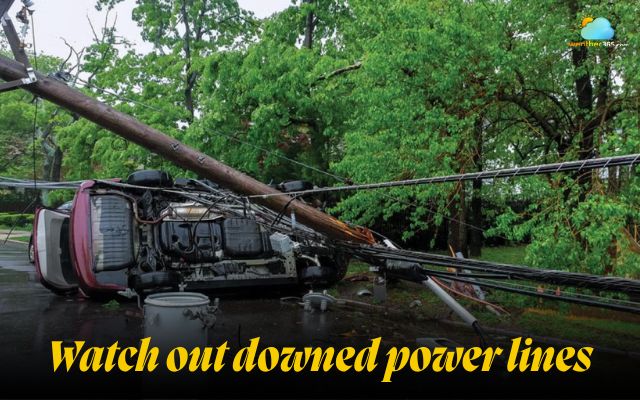
Be cafeful with downed power lines when you need to go outside during a power outage
Power outage safety tips: AFTER
After the power comes back on, it’s important to follow a few essential power outage safety tips to protect your home and family.
Checking on food safety, restarting appliances carefully, and ensuring neighbors are safe can help prevent accidents and health risks.
Check on food safety
The first important tip is to check on your food supply in both the refrigerator and freezer.
Perishable foods that have been above 40°F for more than two hours may no longer be safe to eat, so it’s best to discard them to avoid foodborne illnesses.
Keeping a thermometer in your fridge and freezer beforehand can make this process easier and safer.

After a power outage, check on your food supply
You may also like this: Winter storm safety tips
Slowly plug appliances and electronics
Take time to slowly plug your appliances and electronics rather than turning everything back on at once.
Power surges after a blackout can damage sensitive devices and overwhelm your home’s electrical system.
Start with critical items like heating systems or refrigerators before plugging in smaller appliances and electronics.
Once heating is restored, it can also help to reset your thermostat to a safe, comfortable range. Here’s a quick reference: what is the ideal temperature for a house in winter.
Plug your appliances and electronics
Check on others
Finally, check on neighbors, family members, or anyone with special medical needs.
Power outages can put vulnerable individuals at higher risk, especially those relying on electric-powered medical equipment or living in extreme temperatures.
Making sure they have heat, food, and any necessary medical support ensures everyone stays safe and comfortable after power is restored.

Check anyone with special medical needs to ensure they stay safe after power is restored
Closing thoughts
Following essential power outage safety tips before, during, and after a blackout can help protect your home, keep your family safe, and reduce the risk of accidents or costly damage. From building an emergency kit to preventing carbon monoxide poisoning and checking on neighbors, these proactive steps ensure you stay prepared and secure when the lights go out.
Frequently Asked Questions (FAQs)
Related post
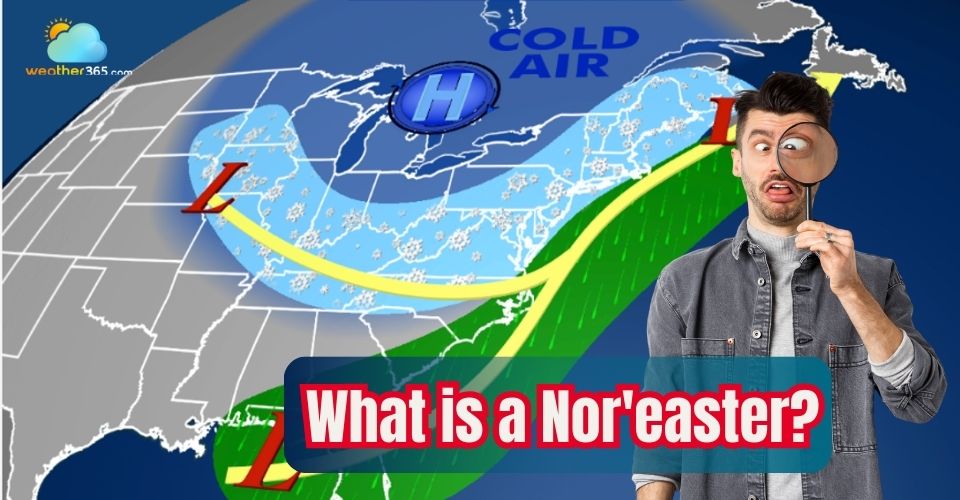
What Is A Nor'easter? Definitions, Weather Effects And Safety Tips
 2337
2337
 8
8
 5.0
5.0
 01/04/2026
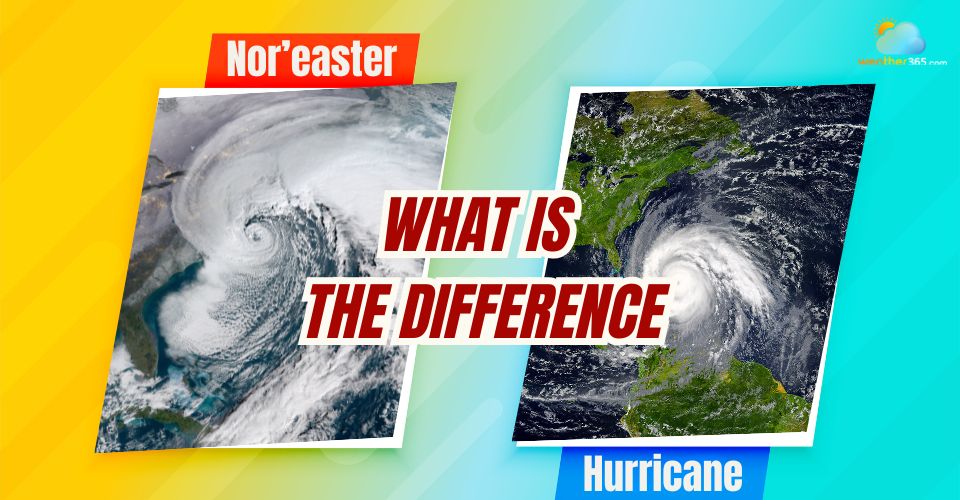
What's the difference between a nor'easter and a hurricane? Full explained
1635
8
4.8
01/04/2026

Winter Storm Safety Tips: Expert Advice for Harsh Winter Conditions
1517
8
4.8
28/04/2026

8 Comment
Remington Baker
What are the warning signs of carbon monoxide poisoning?
weather365
Headache, dizziness, nausea, confusion and chest discomfort are among the symptoms to watch for.
Autumn Klein
Should I unplug my electronics as soon as the power goes out?
weather365
Yes. Unplugging sensitive devices can help protect them from power surges when electricity is restored.
Lainey Patterson
Why is a generator so dangerous indoors?
weather365
Generators can produce carbon monoxide, an odorless gas that can build up quickly in enclosed or poorly ventilated spaces
Harper Howard
How long can food stay safe in the fridge without power?
weather365
A refrigerator can usually keep food safe for about four hours if it stays closed.
Leave a comment
Your email address will not be published. Required fields are marked *