




Winter Driving Safety Tips: A Complete Guide for Cold Weather Roads


When snow, ice, and freezing temperatures hit the roads, driving becomes far more dangerous. But with the right winter driving safety tips, you can protect yourself and others while traveling in harsh conditions. In this complete guide, we’ll walk through practical advice on preparing your car, adjusting your driving habits, and staying calm if you skid or get stuck.
Winter weather driving safety tips
- Winter driving safety tips: Prepare your car
- Tips to winterize your car
- How to avoid a crash
- Choose the right winter tyres
- Winter driving safety tips: Before you drive
- Winter driving safety tips: While you are driving
- Winter driving safety tips if you skid or get stuck
- If you skid
- If you get stuck in the snow
Winter driving safety tips: Prepare your car
Before winter arrives, it’s crucial to make sure your car is road-ready. Here are the best winter driving safety tips experts recommend:
Tips to winterize your car
Test your battery; battery power drops as the temperature drops
Inspect your brakes to ensure they are in top condition, as they are essential for safe stopping on slippery winter roads.
Check all exterior and interior lights and clean your headlights to improve visibility during shorter winter days.
Test your heater and defroster systems to ensure they are functioning properly and keeping your windshield clear.
Make sure the cooling system is in good working order
Have winter tires with a deeper, more flexible tread put on your car
Include sand, kitty litter, or road salt in your kit to provide traction if you get stuck on ice or snow.
If using all-season tires, check the tread and replace if less than 2/32 of an inch
Check the tire pressure, which drops as the temperature drops
Check your wiper blades and replace if needed
Add wiper fluid rated for 30 degrees Fahrenheit
Keep your gas tank at least half full to avoid gas line freeze
You can also read our full guide on winter storm preparedness for a detailed checklist.
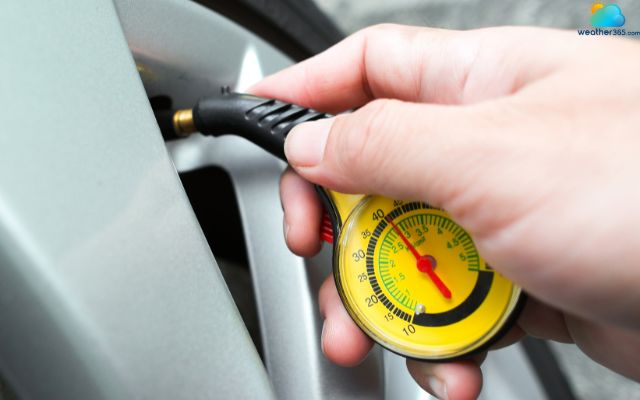
Make a comprehensive car check before driving
How to avoid a crash
Driving in winter can potentially put you in a crash if your visibility is restricted. To reduce risks, follow these winter driving safety tips:
Avoid using cruise control in wintry conditions
Steer in the direction of a skid, so when your wheels regain traction, you do not have to overcorrect to stay in your lane
Accelerate and decelerate slowly
Increase the following distance to 8 to 10 seconds
If possible, do not stop when going uphill
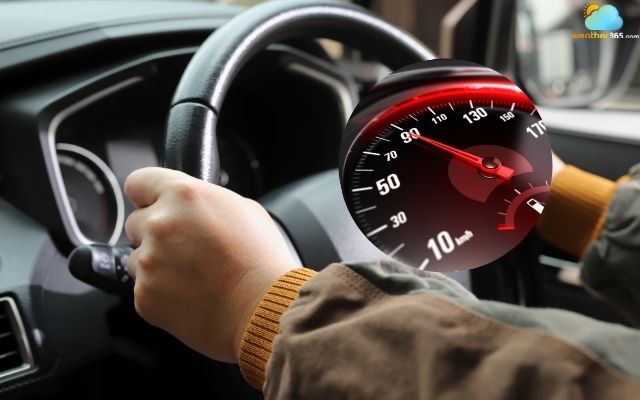
Control driving speed while driving in winter to avoid crash
Choose the right winter tyres
To opt for the right tyres for winter driving, consider these following factors:
Where you drive
In areas with heavy snow or icy roads, choose dedicated winter tyres. They stay flexible below 7°C and provide better traction and braking.
If you live in milder climates, all-season tyres marked with the 3PMSF (Three Peak Mountain Snowflake) symbol can handle light snow while performing well year-round.
Mountain or rural areas may require deeper tread (at least 3 mm) for stronger grip.
Kind of driving
Highway or daily commuting: Pick tyres with low rolling resistance for stability and fuel efficiency.
City driving: Prioritize short braking distances and strong wet grip.
Off-road or mountain roads: Choose reinforced tyres with aggressive tread for snow and slush.
Tyre dimension
Understanding tyre dimensions is crucial for anyone who wants to choose the right tyres for their vehicle. Let’s take an example:
Tyre sizes are usually written like P215/65R16 98H, and here’s what it means:
P: Type of tyre (Passenger).
215: Tyre width in millimeters (215 mm).
65: Aspect ratio – the height of the sidewall as a percentage of the width (65% of 215 mm).
R: Radial construction.
16: Rim diameter in inches (fits a 16-inch wheel).
98: Load index – maximum weight the tyre can carry.
H: Speed rating – maximum speed the tyre can safely handle.
Remember that your replacement tyre must match width, aspect ratio, and rim diameter, and meet or exceed the load and speed ratings recommended for your car.
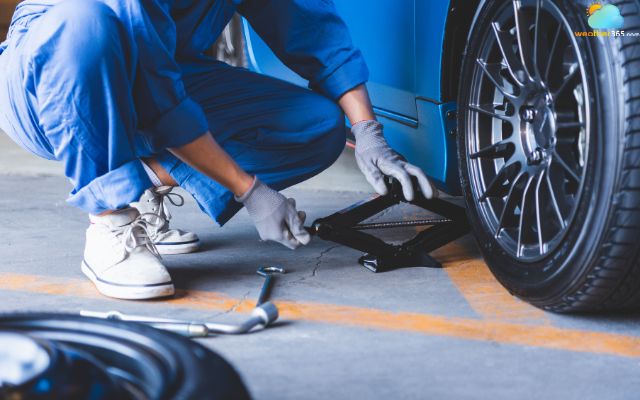
Safety tips for winter driving
Winter driving safety tips: Before you drive
Preparation is the best defense against dangerous conditions. Here’s what to do before heading out in winter weather:
Check your vehicle: Make sure your tires have good tread, and clear all snow and ice from windows, mirrors, hood, and tailpipe.
Prepare for the journey: Allow extra travel time, and ensure you have at least a quarter-tank of fuel
Stay informed: Check weather forecasts and road conditions before you go, and consider delaying your trip if conditions are severe.
Be prepared for emergencies: Keep your phone fully charged and carry a charger, and consider packing an emergency kit with essentials like blankets, warm clothes, and food.
For more everyday advice on staying safe in freezing conditions, see our cold weather tips.
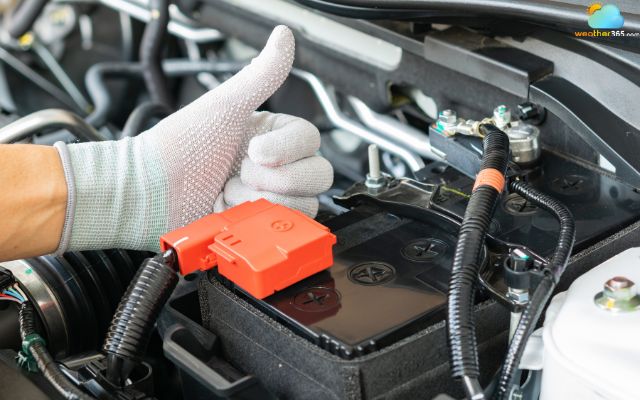
Make sure your car is ready for the journey
Winter driving safety tips: While you are driving
Even with preparation, your driving style matters most on slippery roads. These winter driving safety tips will keep you safe:
Slow down: Posted speed limits are for ideal conditions; always reduce your speed to account for lower traction on snow and ice
Increase following distance: Provide significantly more space (five to eight seconds or more) between your vehicle and the car in front to allow for longer stopping distances.
Brake and accelerate gently: Avoid sudden, jerky movements. Apply the accelerator slowly to regain traction, and apply brakes with firm, steady pressure
Use low-beam headlights: These are brighter than daytime running lights and activate your tail lights, making your vehicle more visible.

Use low-beam headlights to make your vehicle more visible
Avoid cruise control: Winter conditions require your full attention and control, which cruise control hinders.
Be aware of black ice: This can make a road look like new asphalt but is extremely slippery; slow down when approach it.
Never pass a snow plow: The area in front of a snow plow can create dangerous whiteout conditions.
Know your brakes: If your vehicle has anti-lock brakes (ABS), apply steady pressure. If you do not have ABS, pump the brakes to avoid locking them.
Winter driving safety tips if you skid or get stuck
Even careful drivers may face skids or getting stuck in snow. Here’s how to handle these situations calmly:
If you skid
Stay calm and avoid sudden jerks.
Ease off the accelerator.
Steer into the skid – look where you want to go.
Be ready for the car to swing back.
Brake lightly – pump if you don’t have ABS.
For rear-wheel drive: ease off the accelerator, steer into the skid.
For front-wheel drive: ease off gas, steer gently to regain traction.
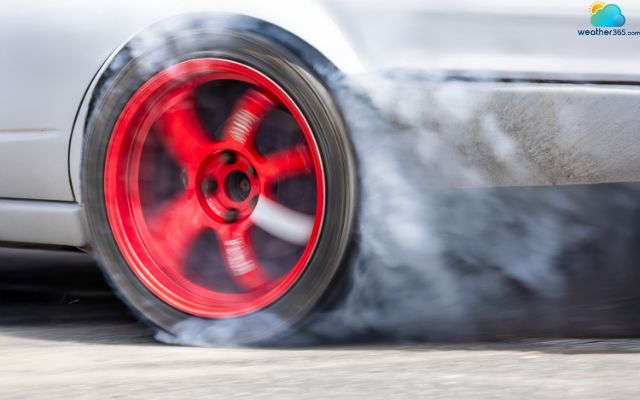
Brake lightly in case you skid
If you get stuck in the snow
Don’t spin your wheels – it digs deeper.
Turn wheels side to side to push snow away.
Apply light accelerator pressure to move slowly.
Shovel snow from around tires.
Use sand, gravel, salt, or even car mats for traction.
Call for recovery if your car is blocking danger.
(Also read: Winter storm safety tips)
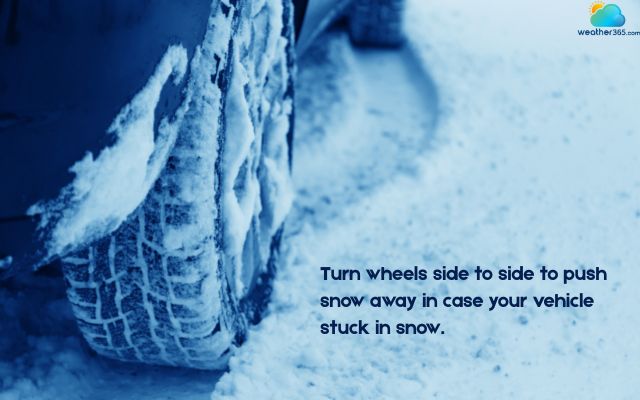
Turn the wheels side to side to push snow away.
And once you’re home, keeping your indoor temperature in a safe, comfortable range also matters during cold spells. Here’s a quick guide: what is the ideal temperature for a house in winter.
Conclusion
Driving during winter requires patience, preparation, and awareness. By following these winter driving safety tips, including preparing your car, adjusting your driving style, and knowing what to do if you skid or get stuck, you’ll reduce your risk of accidents and stay safer on icy, snowy roads.
Frequently Asked Questions (FAQs)
Related post
Power outage safety tips: What to do Before - During - After a blackout
 1564
1564
 8
8
 4.9
4.9
 28/04/2026

Winter Storm Safety Tips: Expert Advice for Harsh Winter Conditions
1516
8
4.8
28/04/2026
Extreme Cold Weather Tips: Best Ways to Stay Safe in Severe Conditions
1472
8
4.8
28/04/2026

8 Comment
Grayson Mills
What should you do if your car starts to skid?
weather365
Stay calm, ease off the accelerator and steer into the skid rather than making sudden movements.
Andre Ruiz
Do winter tires really make that much difference?
weather365
Yes. Dedicated winter tires stay more flexible in cold temperatures and provide better traction and braking on snow and ice.
Arthur Reed
How much following distance should you leave in winter?
weather365
The article recommends increasing it to about 8–10 seconds because stopping takes longer on snow and ice.
Nathan Hughes
Why should you avoid cruise control on icy roads?
weather365
It can reduce your control when traction suddenly changes, so it’s safer to control acceleration and speed yourself.
Leave a comment
Your email address will not be published. Required fields are marked *