




What is AEO in marketing? Importance of weather widgets in AEO


What is AEO in marketing, and why are more brands focusing on it today? As AI search and voice assistants change how people find information, businesses need content that gives quick and accurate answers. Using real-time tools like weather widgets can help improve relevance, engagement, and AEO performance. Keep reading to optimize your content today!
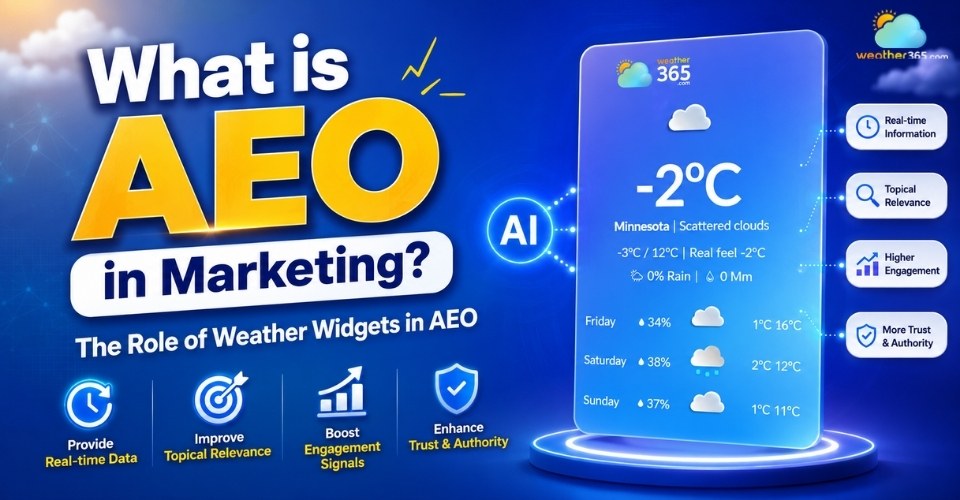
What is AEO in marketing
- What is AEO in marketing?
- How AEO works
- Search Intent and Question-Based Queries
- Structured and Concise Content
- User Experience Signals
- Why Real-Time Data Improves AEO?
- Role of weather widgets in AEO
- What Is a Weather Widget?
- How Weather Widgets Support Answer Engine Optimization
- Weather Widgets and Voice Search
- Enhancing Featured Snippet Opportunities
- How to implement weather widgets to improve AEO
What is AEO in marketing?
Answer Engine Optimization (AEO) is the process of optimizing content so search engines, AI tools, and voice assistants can quickly understand and deliver direct answers to users.
Instead of only helping a page rank on Google, AEO focuses on making your content become the answer itself.
Today, people often search using full questions like “What is AEO in marketing?” or “Will it rain this weekend?”
Instead of showing only a list of links, AI-powered search engines now try to provide instant answers directly on the results page.
Because of this shift, businesses need content that is clear, conversational, well-structured, and easy for both users and AI systems to understand.
AEO is becoming more important as voice search and AI-generated results continue to grow.
Websites optimized for AEO have a better chance of appearing in featured snippets, AI summaries, and voice search responses, helping improve visibility, trust, and user engagement.
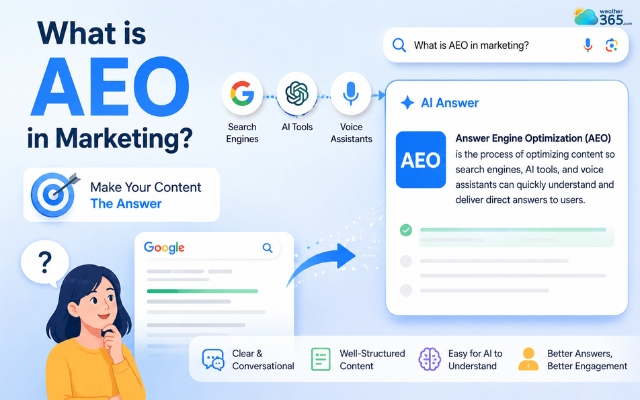
AEO focuses on making your content become the answer
How AEO works
AEO works by helping search engines and AI systems quickly understand which content gives the clearest and most useful answer to a user’s question.
Instead of focusing only on keywords, AEO focuses more on search intent, content structure, and user experience.
Search Intent and Question-Based Queries
Modern users search differently than before.
Instead of typing short phrases, people now ask full questions like “What is AEO in marketing?”, “How does voice search work?”, or “Why is real-time data important for SEO?”
Because of this shift, search engines prioritize content that directly answers “What,” “How,” and “Why” queries naturally and conversationally.
Content written around real user questions is easier for AI tools and voice assistants to understand and deliver as instant answers.
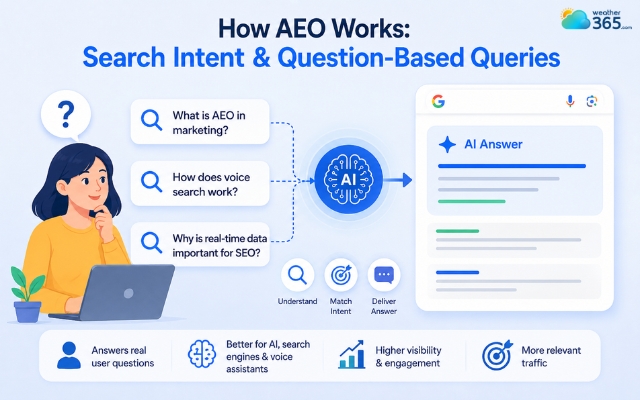
Search engines prioritize content that has direct answer
Structured and Concise Content
Search engines prefer content that is simple to scan and easy to extract information from. That is why structure plays a major role in AEO.
Using clear headings, FAQ sections, short paragraphs, and organized lists helps AI systems quickly identify the most important information on a page.
Concise answers are especially important because featured snippets and AI summaries often pull short sections directly from well-structured content.
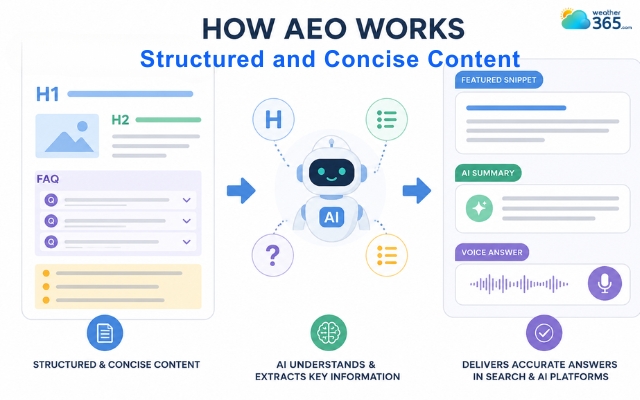
Structure plays a major role in AEO
User Experience Signals
AEO also depends heavily on user experience signals. Search engines look at whether users find the content helpful, relevant, and engaging.
Factors like page speed, mobile friendliness, engagement time, and content relevance can all influence visibility in AI-powered search results.
Real-time information is becoming even more valuable because users expect accurate and updated answers.
Content that stays fresh and useful is more likely to be trusted by both users and AI search systems.
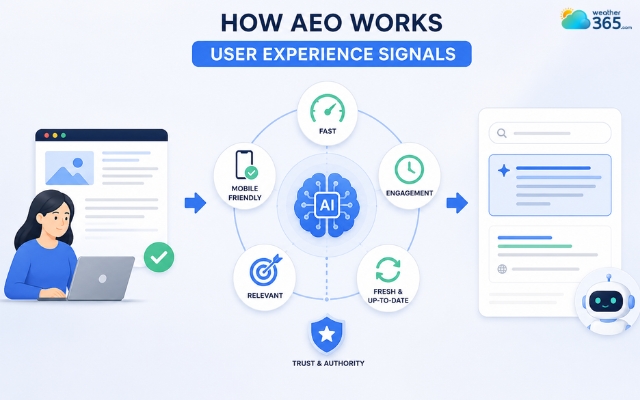
Fresh and useful contents are trusted by users and AI
Why Real-Time Data Improves AEO?
Real-time data plays an important role in Answer Engine Optimization because AI-powered search engines prioritize fresh, accurate, and relevant information.
Users now expect instant answers that reflect current conditions, not outdated content.
Real-time content improves AEO in several ways:
It increases trust and AI selection because updated information signals reliability and relevance.
It supports “answer-first” search behavior by helping pages respond to immediate questions like weather updates, live prices, or event changes.
It allows dynamic content optimization, making it easier to update FAQs, recommendations, and schema based on changing user intent.
It improves accuracy for high-intent searches where users need current information instead of outdated answers.
It strengthens brand authority and E-E-A-T signals when AI systems consistently recognize a website as a reliable source.
This is why many businesses now use dynamic tools and live content features to improve AI search visibility.
You can also learn more in our article about weather widget SEO benefits.
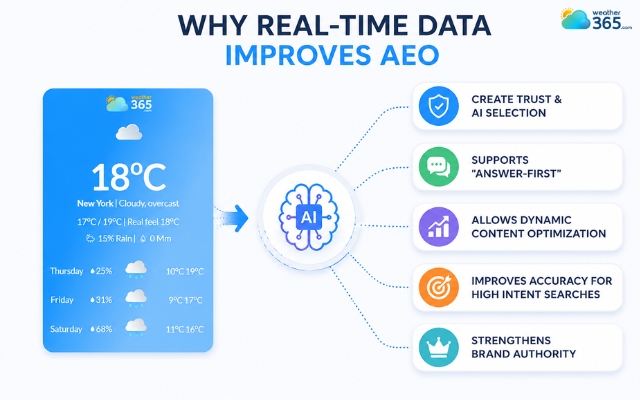
Real-time data plays an important role in AEO
Role of weather widgets in AEO
Weather widgets are becoming valuable tools for Answer Engine Optimization because they provide real-time information that matches how people search today.
Many users look for quick updates before making decisions about travel, shopping, events, or outdoor activities.
By displaying live weather data directly on a website, weather widgets help content stay fresh, relevant, and useful.
What Is a Weather Widget?
A weather widget is a tool that displays real-time weather information on a website.
Depending on the provider, it may show temperature, forecasts, rain chances, humidity, wind speed, or severe weather alerts.
Modern weather widget features often include automatic updates, mobile-friendly design, location-based forecasts, and customizable layouts.
Because the information refreshes continuously, weather widgets help webpages remain active and up to date.
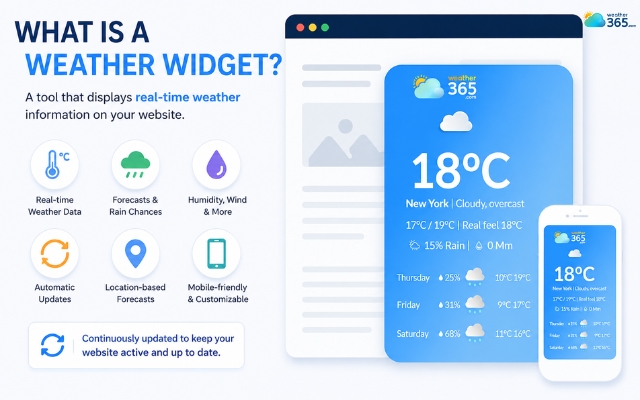
Weather widget is a tool that displays real-time weather
How Weather Widgets Support Answer Engine Optimization
One major benefit of weather widgets is that they provide fresh content automatically.
AI-powered search engines prefer updated information, especially for searches related to local conditions or current events.
Weather widgets also improve topical relevance for weather-related searches. For example, a travel or event page becomes more useful when users can instantly check local weather conditions without leaving the site.
In addition, weather widgets can improve engagement signals such as dwell time and interaction rate.
Visitors often spend more time on pages that include interactive and useful real-time information, which may positively support AEO performance.
This is also one of the main reasons why many businesses are now exploring why add a weather widget to their websites.
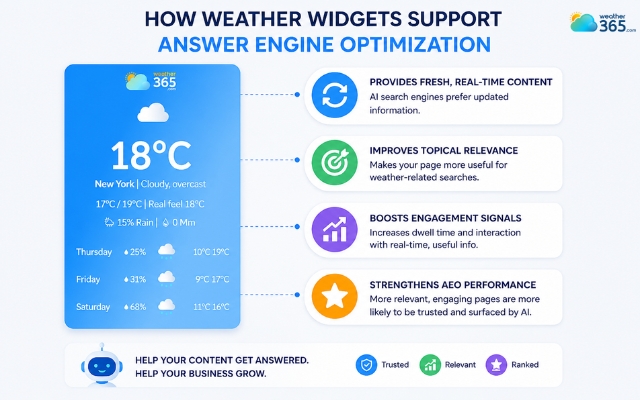
AI-powered search engines prefer updated information
Weather Widgets and Voice Search
Voice search is closely connected to AEO because users naturally ask conversational questions like “What’s the weather today?” or “Will it rain this weekend?”
Weather widgets help websites align with these search patterns by providing direct and updated answers.
This makes content more compatible with voice assistants and AI-generated search responses.
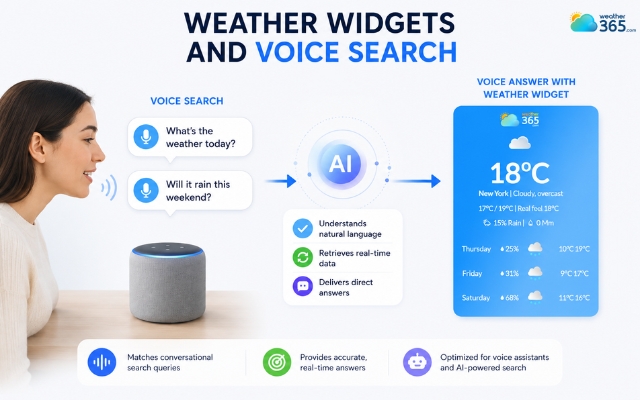
Voice search is closely connected to AEO
Enhancing Featured Snippet Opportunities
Weather widgets can also increase the chances of appearing in featured snippets.
Dynamic weather sections often answer user intent immediately, especially for local or time-sensitive searches.
When combined with structured data, weather information becomes easier for search engines to understand and extract.
Proper formatting and weather widget performance optimization can further improve loading speed, usability, and machine readability, helping pages perform better in AI-powered search results.
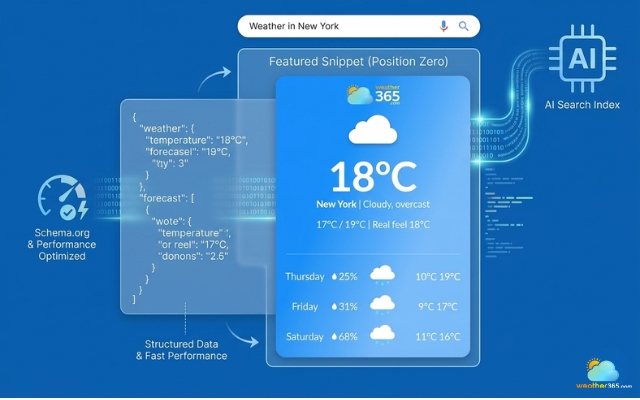
Dynamic weather answer user intent immediately
How to implement weather widgets to improve AEO
Adding a weather widget to your website not only about improving user experience, but also strengthen AEO by making content more relevant, dynamic, and useful for AI-powered search engines.
Place the Weather Widget on High-Intent Pages
Weather widgets work best on pages where weather conditions directly affect user decisions.
This includes travel guides, event pages, local business websites, and seasonal shopping pages.
For example, visitors planning a trip or attending an outdoor event often check the weather before making decisions.
Adding a weather widget to these pages helps search engines connect your content with weather-related and location-based queries.
Use Question-Based Content Around the Widget
To improve AEO, surround the weather widget with conversational headings and FAQs.
Questions like “What’s the weather in New York today?” or “Will it rain during the event?” match how people search through AI tools and voice assistants.
This structure helps search engines understand the intent of the page more clearly while increasing the chances of appearing in featured snippets and AI-generated answers.
Combine the Widget with Real-Time Content
Weather widgets become even more effective when combined with dynamic recommendations or live content updates.
For example, a website can suggest indoor activities during rainy weather or promote outdoor experiences when conditions are sunny.
This type of contextual content improves relevance and helps pages stay fresh for AI-powered search systems.
Add Structured Data (Schema Markup)
Structured data helps search engines interpret content more easily.
Adding FAQ schema, LocalBusiness schema, or weather-related structured markup can improve machine readability and increase the chances of appearing in rich results or AI summaries.
Well-structured pages are easier for search engines to extract direct answers from.
Keep the Widget Fast and Mobile-Friendly
A slow weather widget can negatively affect both user experience and search visibility.
To avoid this, use lightweight scripts, responsive design, and fast-loading APIs.
Fast and mobile-friendly widgets improve usability, engagement, and overall AEO performance, especially as more users search through mobile devices and voice assistants.
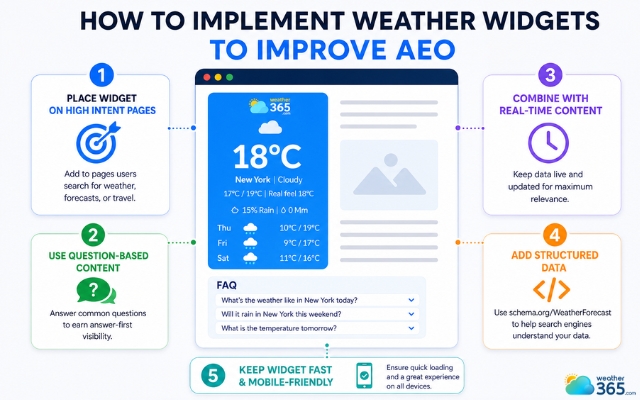
Weather conditions directly affect user decisions
You may also like this:
The bottom line
More brands are starting to rethink what is AEO in marketing in the age of AI search and voice assistants. Creating helpful, up-to-date content and using tools like weather widgets can make your website more relevant, trustworthy, and easier for search engines to recommend.
Frequently Asked Questions (FAQs)
Related post
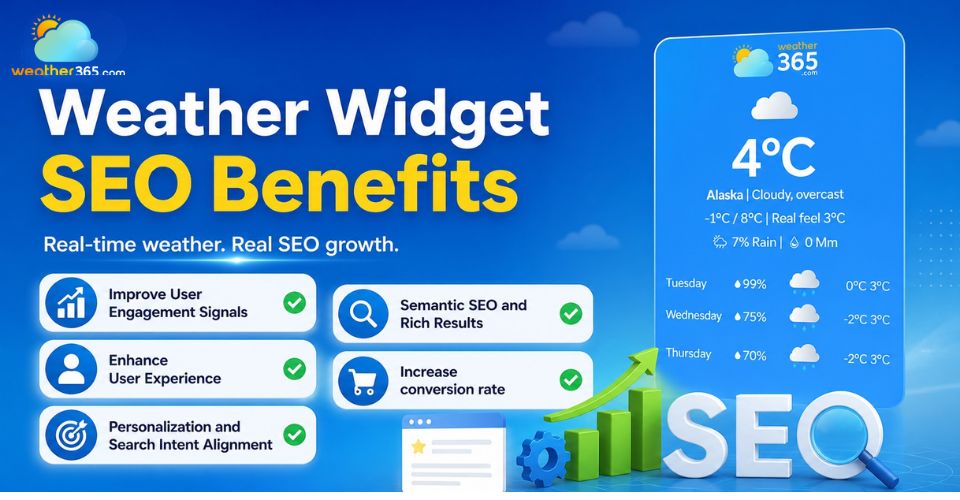
Weather Widget SEO Benefits: A Complete Guide for Better Rankings
 186
186
 0
0
 4.8
4.8
 12/05/2026
What Is Seasonal Marketing? Boost Campaigns with Weather Widgets
173
0
4.6
12/05/2026
What is GEO in marketing? How weather widget improve the GEO strategy
104
0
4.9
12/05/2026

0 Comment
Leave a comment
Your email address will not be published. Required fields are marked *