




What Is Seasonal Marketing? Boost Campaigns with Weather Widgets


What is seasonal marketing, and why do brands see huge sales spikes when they use it well? Peak shopping seasons can account for 30–40% of yearly ecommerce revenue, proving how powerful timely campaigns can be. Add weather widgets for real-time personalization, and the impact grows even stronger. Let’s explore how this strategy works.
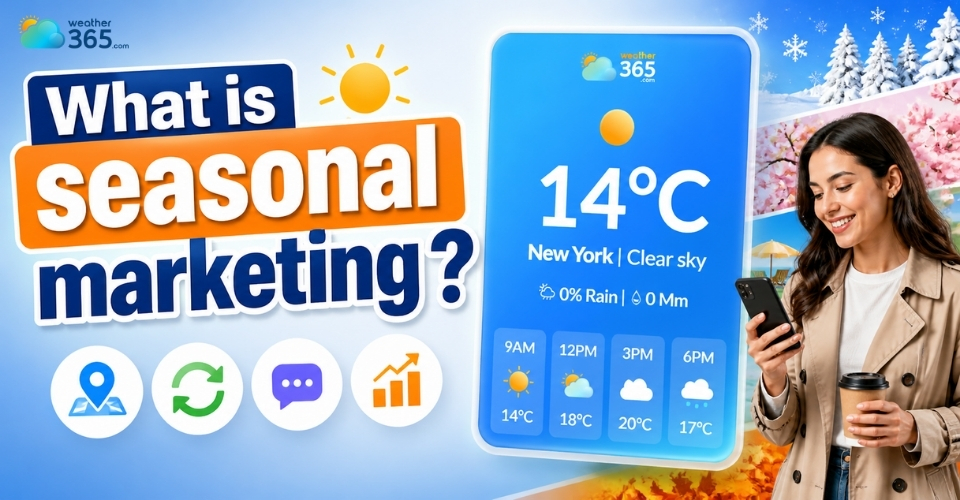
What is seasonal marketing
- What is seasonal marketing?
- Why Weather Widgets Are Perfect for Seasonal Marketing?
- Enable Hyper-Local, Real-Time Triggers
- Automate Dynamic Content Updates
- Boost Engagement with Interactive Elements
- Personalize for Micro-Seasons
- Integrate Easily with Ecommerce Campaigns
- How to implement weather widgets for seasonal marketing?
- Map Weather Conditions to Marketing Actions
- Use Real-Time Data for Dynamic Personalization
- Optimize Placement & Measure Performance
What is seasonal marketing?
Seasonal marketing is a strategy where brands adjust their promotions, messaging, and offers around specific times when customer behavior naturally changes.
These “seasons” can be major holidays like Christmas or Lunar New Year, but they can also include summer travel months, back-to-school shopping, rainy season demand, or even short local events that influence what people want to buy.

Seasonal marketing leverages high consumer interest periods
In simple terms, instead of selling the same way all year round, businesses market according to what customers are feeling, needing, or planning at that exact moment.
That is what makes this strategy so effective: timing creates relevance.
When shoppers are already thinking about gifts, vacations, winter clothes, or rainy-day essentials.
Just as importantly, seasonal marketing is not limited to “big annual sales.” Smart brands now use it across many smaller demand windows throughout the year, including:
holiday promotions
weather-based product pushes
event-driven limited offers
school or travel seasons
sudden climate changes and micro trends
This means the strategy is less about the calendar itself and more about identifying when consumer needs shift, then showing the most relevant message before competitors do.
For example, a clothing brand may launch cozy knitwear campaigns when temperatures suddenly drop, while a skincare website can highlight sunscreen and cooling products during a heatwave.
A home goods retailer might promote indoor entertainment items during long rainy weekends.
In each case, the products are not new - the timing is what makes them feel necessary.
That is the real meaning of seasonal marketing: delivering the right campaign when customers are naturally most ready to care.
Why Weather Widgets Are Perfect for Seasonal Marketing?
Seasonal marketing works best when promotions appear at the exact moment customers need them. The problem is that customer needs do not only change by holiday, they also change by weather.
A sudden rainy week, a heatwave, or an unexpected cold front can instantly shift what people want to buy.
This is also why more businesses are starting to explore why add weather widget to your website strategies, as these tools help turn changing weather into real-time marketing opportunities.
That is why weather widgets are such a smart fit. They give brands live weather data that can be turned into timely promotions, personalized content, and more engaging shopping experiences.
Since weather has a direct impact on buying behavior, many marketers now use it as a real-time signal to make campaigns more relevant and effective.
Enable Hyper-Local, Real-Time Triggers
Weather widgets detect what is happening in each visitor’s area right now. If it is raining, your website can instantly push umbrellas or indoor products.
If it is sunny, it can highlight beachwear or sunscreen.
This makes seasonal campaigns feel immediate and useful instead of broad and generic.
Automate Dynamic Content Updates
Another big benefit is automation.
Rather than manually changing banners every few days, weather widgets can refresh homepage messages and CTAs based on live forecasts.
For example:
Sunny today? Summer sale starts now
Rain incoming? Shop cozy indoor picks
Your website stays fresh without constant manual work.
Boost Engagement with Interactive Elements
Weather widgets also keep users on the page longer because they offer practical real-time information.
When visitors see a local forecast paired with a matching deal, they are naturally more likely to pause, notice the CTA, and click.
So instead of acting like a simple banner, the promotion feels more interactive and helpful.
Personalize for Micro-Seasons
Not every buying season lasts for months.
Sometimes demand spikes happen during short weather moments: a stormy weekend, an extra hot day, or a sudden cold morning.
These micro-seasons create very specific shopping needs, and weather widgets help brands respond instantly with the right products at the right time.
Integrate Easily with Ecommerce Campaigns
Weather widget data can also connect with:
popups
email campaigns
abandoned cart reminders
product recommendations
This means the same weather-based message can follow customers across different touchpoints, creating a smoother and more convincing seasonal campaign.
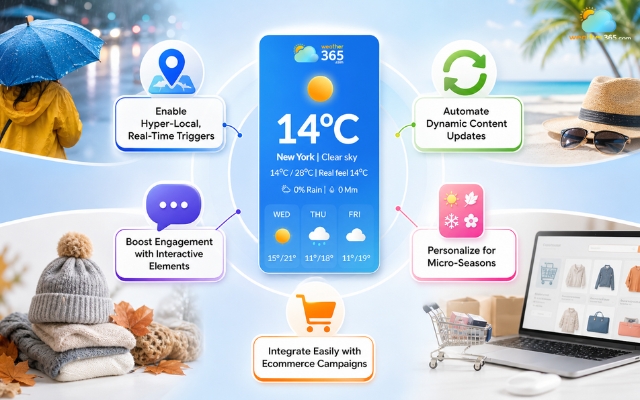
The weather widget gives brands live weather data
How to implement weather widgets for seasonal marketing?
Add a weather widget to your website is easy, but making it work as a real marketing tool requires a smarter setup.
The goal is not simply to show today’s forecast, it is to connect weather changes with customer intent, then turn that into timely offers and personalized content.
When used strategically, weather widgets can help brands automate seasonal messaging, improve relevance, and create stronger conversion opportunities across the customer journey.
Map Weather Conditions to Marketing Actions
Start by deciding which weather situations should trigger specific offers.
Rainy days may work well for indoor products, while hot weather can support summer fashion or cooling items.
This step is important because it turns weather data into a clear marketing signal instead of just extra website information.
Use Real-Time Data for Dynamic Personalization
Next, connect the widget with live weather data so banners, CTAs, or product suggestions can change automatically based on each visitor’s location.
Someone browsing in a storm may see different offers from someone visiting on a sunny day.
This kind of contextual personalization helps campaigns feel more useful and increases the chance of engagement.
This is why many brands are moving beyond static seasonal banners and investing in weather-based personalization for websites to deliver more relevant messages in real time.
Optimize Placement & Measure Performance
Finally, place the widget where users are most likely to notice it, such as the homepage, seasonal landing pages, or product sections.
Then track whether people click, engage, and convert from those weather-based messages.
Over time, small A/B tests will show which triggers and placements bring the best results.
Brands that want stronger ROI should also focus on weather widget conversion rate optimization to see which triggers and offers turn seasonal traffic into actual sales.
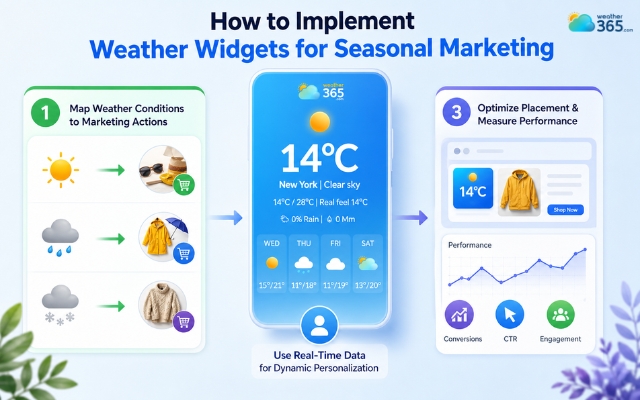
Weather widgets can help brands automate seasonal messaging
The bottom line
Now you understand what is seasonal marketing: a strategy built around timing, relevance, and shifting customer needs. When brands combine it with weather widgets, campaigns become more personalized, responsive, and effective. The result is simple: better engagement, stronger conversions, and seasonal promotions that feel far more natural to shoppers.
Frequently Asked Questions (FAQs)
Related post
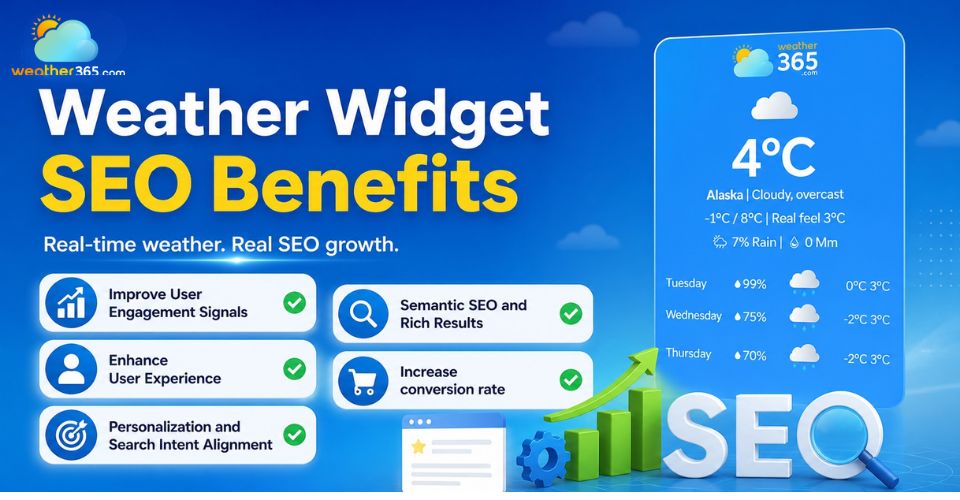
Weather Widget SEO Benefits: A Complete Guide for Better Rankings
 208
208
 8
8
 4.8
4.8
 12/05/2026

TOP Real Estate Marketing Tip to Increase Property Sales
184
8
4.7
08/05/2026
What is AEO in marketing? Importance of weather widgets in AEO
115
8
4.7
08/05/2026

8 Comment
Brian Moore
A clothing store could promote coats when temperatures drop instead of relying only on a fixed winter campaign. That seems like a more relevant way to reach customers.
weather365
Exactly! Weather-responsive promotions can complement seasonal campaigns by adapting to local conditions. This is especially useful when temperatures vary significantly between regions.
Jayden Cooper
How is weather-based marketing different from traditional seasonal marketing? They seem closely related, but not exactly the same.
weather365
They're related, but seasonal marketing follows broader periods or events, while weather-based marketing responds to actual conditions such as rain, heat, or sudden temperature changes. They can work well together.
Rowan Webster
I've noticed that some seasonal campaigns start too early and lose their impact. Timing seems just as important as the offer itself.
weather365
That's a good observation! Businesses should consider their audience, buying habits, and local calendar when planning campaigns. Testing different launch dates can also help identify the best timing.
Daniella Ross
Seasonal marketing is more than just holiday promotions. I think matching campaigns to what customers actually need at different times of the year makes a big difference.
weather365
Absolutely! The most effective seasonal campaigns connect a timely message with a real customer need, whether that's preparing for winter, planning summer trips, or shopping for holiday gifts.
Leave a comment
Your email address will not be published. Required fields are marked *