




Weather-Based Personalization for Websites: Increase Engagement Tip


Have you ever noticed how your mood, shopping habits, or travel plans change depending on the weather? That’s exactly why more brands are using weather-based personalization for websites to create more relevant and engaging online experiences. In this article, you’ll learn how weather personalization works, why it matters for engagement and SEO, and how businesses can implement it effectively.
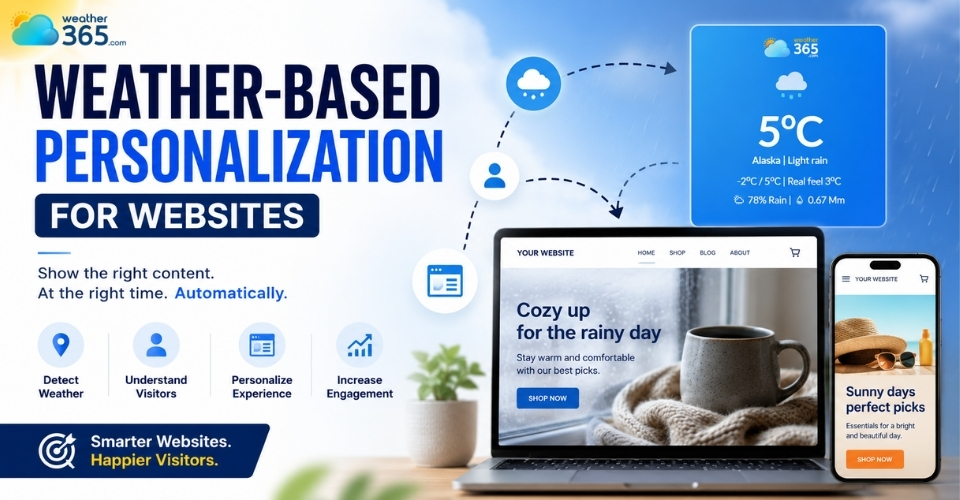
Weather-based personalization for websites
- Understanding weather-based personalization for websites
- Why should apply weather-based personalization for websites
- Key Applications of Weather-based personalization for websites
- How to implement weather-based personalization for websites?
- Step 1: Select a tool
- Step 2: Customize personalization rules
- Step 3: Create dynamic content
- Step 4: Target specific regions
- Examples of weather-based marketing
Understanding weather-based personalization for websites
Weather-based personalization for websites is the use of real-time weather data, such as temperature, sunlight, humidity, wind, or rain to dynamically tailor website content, promotions, and user experience according to a visitor’s local weather conditions.
Rather than displaying the same static page to every user, websites can instantly adjust banners, product recommendations, or calls-to-action to match what users may need at that moment.
For example:
A fashion store can promote sunglasses, sandals, and summer outfits in sunny regions.
Users experiencing rain may instead see waterproof jackets, umbrellas, or indoor lifestyle products.
A food delivery service could highlight hot drinks during cold weather or iced beverages during heatwaves.
This strategy makes website interactions feel more natural and context-aware. It also reduces decision fatigue because users immediately see products or offers relevant to their current environment.
By integrating weather APIs or a live weather widget, businesses can automate these changes in real time and turn weather conditions into personalized marketing opportunities.
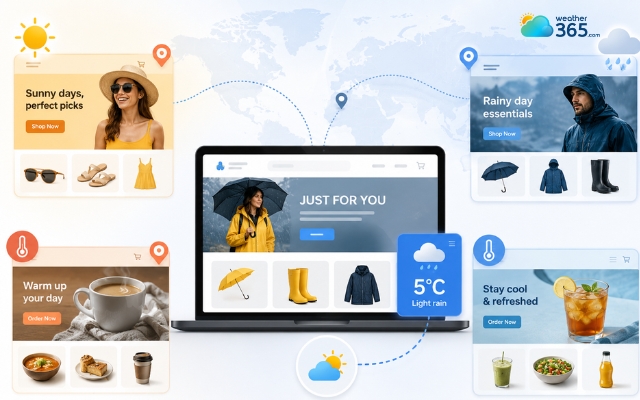
Weather-based personalization makes a website more interactive
Why should apply weather-based personalization for websites
Weather affects customer behavior more than many businesses realize.
With weather-based personalization for websites, brands can show content, products, and promotions that match a visitor’s real-time local conditions.
This makes the experience feel more useful and relevant.
Engagement surge
People are more likely to stay on a website when the content matches their current situation.
For example, promoting rainy-day products during bad weather feels more timely than showing generic offers.
Relevant recommendations can improve dwell time and user interaction.
Conversion optimization
Weather-triggered promotions can also increase conversions. A message like “Rainy today? Get 20% off boots” feels natural because it connects directly to what users may need at that moment.
This reduces decision friction and encourages faster purchases.
SEO gains
Weather personalization helps keep website content fresh and dynamic. Search engines value updated and engaging content, while better user signals like longer session duration and lower bounce rates can support SEO performance over time.
This is one reason many businesses are exploring why add weather widget to your website as part of their SEO and engagement strategy.
User retention and loyalty
Personalized experiences make websites feel more customer-focused.
When users repeatedly see recommendations that match their local weather, they are more likely to trust the brand and return in the future.
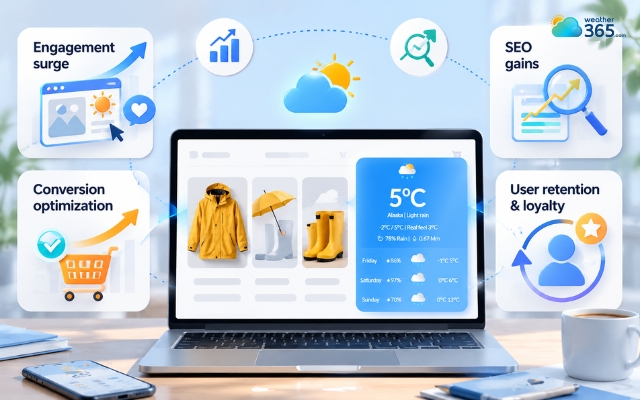
Weather-based personalization makes the experience feel more useful
Key Applications of Weather-based personalization for websites
Weather-based personalization can be used in many different ways to make a website feel more relevant and engaging.
By combining real-time weather data with dynamic content, businesses can create experiences that better match what users need at the moment.
Dynamic content changes
One of the most common applications is updating website elements based on current weather conditions.
Businesses can automatically change banners, hero images, product collections, or homepage visuals depending on temperature, rain, humidity, or sunlight.
For example, an online fashion store may display summer clothing during hot weather and switch to rain jackets when storms are forecasted.
Many websites also insert a live weather widget to make the experience feel more interactive and up to date.
Targeted promotions
Weather conditions can also trigger specific promotions and marketing messages.
Instead of running the same campaign for everyone, businesses can create offers that match real-time or upcoming weather situations.
For example, a food delivery app might promote hot soup before a cold weekend, while a travel website highlights beach deals during sunny weather.
These personalized promotions often feel more natural and timely to users.
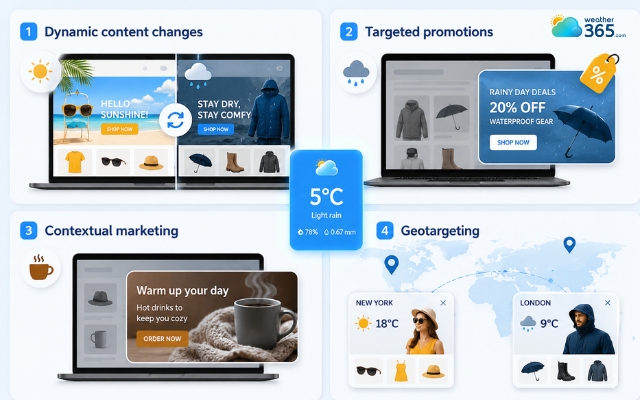
Different ways to apply weather-based personalization for websites
Contextual marketing
Contextual marketing focuses on matching products with the visitor’s immediate environment. This helps brands connect with customer needs more effectively.
Examples include promoting hot coffee during winter, ice cream during a heatwave, or indoor entertainment products on rainy days.
Because the recommendations fit the current situation, users are more likely to engage with them.
Geotargeting
Weather can vary greatly between locations, which makes geotargeting especially valuable.
Businesses can personalize offers based on the local weather conditions of each visitor rather than showing the same content globally.
For instance, users in rainy cities may see waterproof products, while visitors in sunny areas see outdoor or travel-related offers.
Many brands use a weather widget by location to create more localized and personalized experiences.
How to implement weather-based personalization for websites?
Implementing weather-based personalization for websites is easier than many businesses think.
With the right weather tool and a few simple automation rules, brands can create experiences that feel more timely and relevant to visitors.
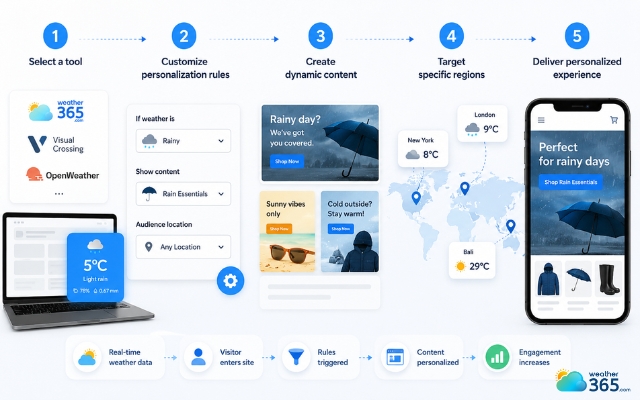
Step 1: Select a tool
The first step is choosing a weather data solution.
Many businesses start with the best weather widget because it is simple to install and provides real-time local weather updates.
A good tool should support live forecasts, location targeting, and easy customization so the website can adapt automatically based on changing weather conditions.
Step 2: Customize personalization rules
After setting up the tool, businesses need to decide how different weather conditions will affect website content.
For example, hot temperatures may trigger summer product promotions, while rainy conditions can display waterproof items or indoor activity recommendations.
These rules help websites react automatically to real-world conditions instead of showing the same content to every visitor.
Simple steps to implement weather-based personalization
Step 3: Create dynamic content
The next step is creating personalized content that changes based on the weather. This may include hero banners, pop-ups, product collections, or promotional messages.
For example, an online fashion store could highlight rain boots during storms and switch to sunglasses during sunny weather.
These dynamic updates make the website feel more relevant and engaging.
Step 4: Target specific regions
Weather conditions are different everywhere, so combining weather data with user geolocation creates a more personalized experience.
A visitor in a rainy city may see completely different offers from someone in a hot and sunny location.
Many businesses use weather widgets by location to deliver hyper-local recommendations and promotions that better match user needs.
Examples of weather-based marketing
Many industries already use this strategy successfully.
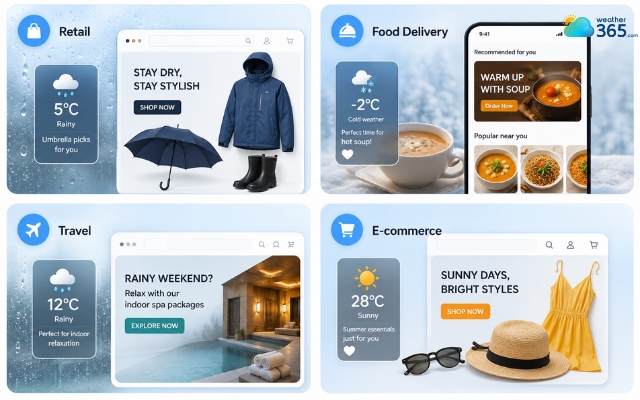
Retail brands often promote weather-related products like jackets or umbrellas during storms.
Food delivery apps may advertise hot soup during cold weather, while travel websites can highlight indoor spa packages for rainy weekends.
Small adjustments like these help websites feel more useful and customer-focused.
Examples of weather-based marketing
Closing thoughts
By using weather-based personalization for websites, businesses can create experiences that feel more relevant and helpful to visitors. Simple weather-driven updates, personalized offers, and local recommendations can improve engagement, increase conversions, and make users more likely to return to your website in the future.
Frequently Asked Questions (FAQs)
Related post
How Weather Widgets Increase User Engagement and Website Value
 182
182
 0
0
 4.9
4.9
 17/08/2026
Weather Widget Conversion Rate Optimization: 5 High-Impact CRO Strategies
96
0
4.6
11/05/2026
Top Destination Weather Widget for Travel Blogs to Increase Engagement
92
0
4.8
13/08/2026

0 Comment
Leave a comment
Your email address will not be published. Required fields are marked *