




What is GEO in marketing? How weather widget improve the GEO strategy


What is GEO in marketing, and why are more brands starting to optimize for AI-driven search experiences instead of relying only on traditional SEO? In this article, you’ll learn how GEO works, how it differs from SEO and AEO, and why weather widgets can strengthen your GEO strategy through real-time engagement and location-based relevance.
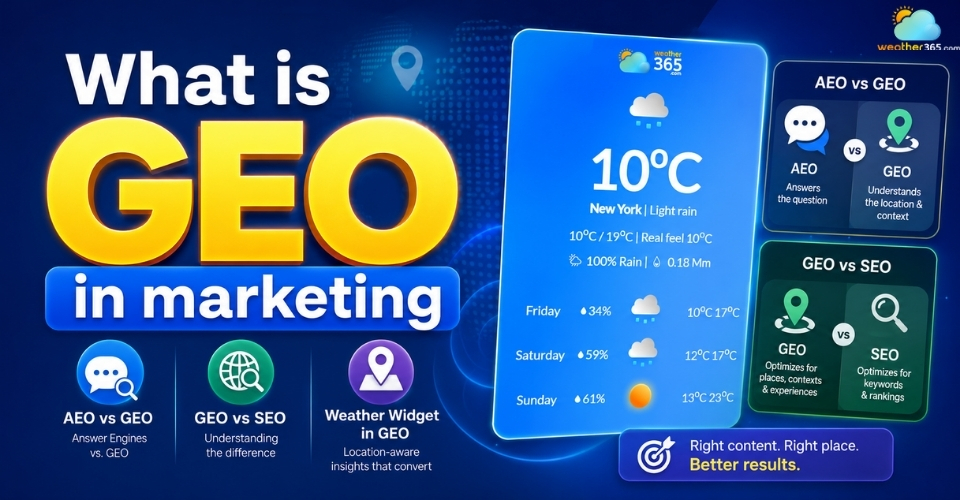
What is GEO in marketing
What is GEO in marketing?
GEO stands for Generative Engine Optimization.
It refers to the process of optimizing content so that AI-powered search engines and generative AI systems can better understand, trust, and surface your website in AI-generated responses.
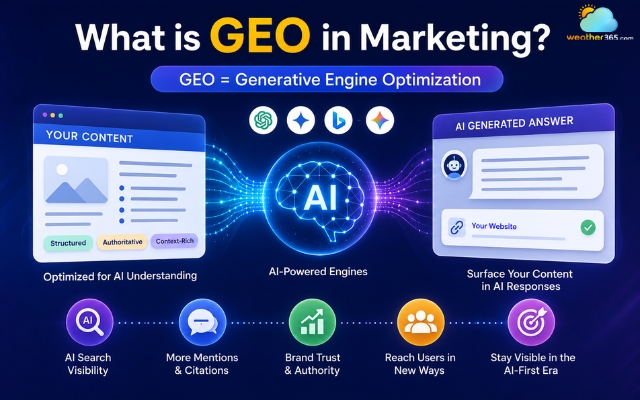
GEO stands for Generative Engine Optimization
Unlike traditional SEO, which focuses on ranking web pages in search results, GEO focuses on helping AI tools extract, summarize, and recommend your content in conversational answers.
As platforms like AI search assistants and generative search experiences become more common, GEO helps businesses stay visible even when users no longer click through multiple search results.
According to the Digital Marketing Institute, GEO involves creating content that is structured, authoritative, context-rich, and easy for AI systems to interpret.
AEO vs GEO
Although AEO and GEO are closely related, they focus on slightly different goals.
Factor | AEO | GEO |
Full meaning | Answer Engine Optimization | Generative Engine Optimization |
Main goal | Provide direct answers | Become a trusted AI reference |
Focus | Featured snippets and voice search | AI-generated summaries and recommendations |
Content style | Concise answers | Contextual, authoritative, and conversational |
User interaction | Search query → direct answer | AI conversation → generated response |
If you want to learn more about Answer Engine Optimization, you can also explore our internal guide on What is AEO in marketing.
While AEO focuses heavily on answering questions clearly, GEO goes further by helping AI systems understand the broader meaning, context, and reliability of your website.
GEO vs SEO
Traditional SEO is still important, but GEO introduces additional optimization layers designed specifically for AI-driven search environments.
Factor | SEO | GEO |
Main target | Search engine rankings | AI-generated responses |
Optimization focus | Keywords and backlinks | Context, trust, and semantic relevance |
Content structure | Search-friendly pages | AI-readable and conversational content |
Ranking signals | Technical SEO and authority | Real-time relevance and entity understanding |
User journey | Search → click website | AI answer → suggested source |
Because AI systems summarize information differently than search engines, GEO strategies often prioritize clarity, structured formatting, fresh updates, and contextual relevance over simple keyword placement.
How GEO in marketing works
To understand why GEO matters, it helps to know how AI systems decide which content deserves visibility.
Contextual relevance
AI systems prioritize content that feels useful, timely, and closely connected to user intent.
Instead of only matching keywords, generative AI evaluates whether the information truly answers a user’s situation or context.
For example, a travel website discussing “best activities in Hanoi during rainy weather” may be more relevant than a generic travel page.
This is why contextual content performs better in GEO strategies.
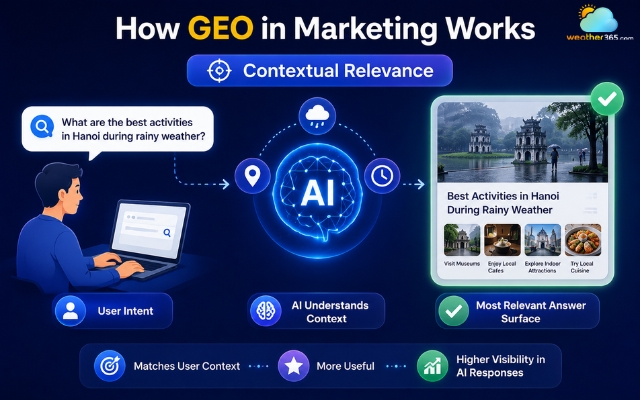
Contextual content performs better in GEO strategies
Structured and trustworthy content
AI systems prefer content that is easy to scan and understand.
That includes:
Clear heading hierarchy
FAQ sections
Logical formatting
Expert-style explanations
Organized paragraphs
Reliable supporting information
Structured formatting helps AI engines identify key points quickly and improves the chance of being cited or summarized in AI-generated answers.
Adding FAQs is especially useful because conversational search queries often resemble natural questions.
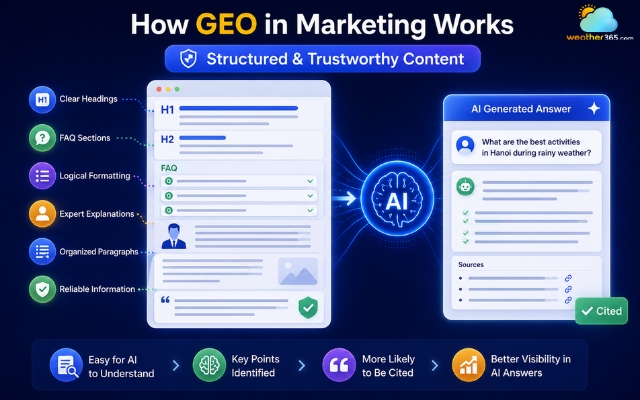
AI systems prefer content that is easy to scan and understand
Fresh and dynamic data
One major advantage in GEO is providing updated information.
AI systems tend to prioritize content that changes regularly and reflects current conditions.
Dynamic elements such as live weather data, event updates, availability status, or seasonal recommendations help strengthen freshness signals.
This is one reason weather widgets are becoming increasingly valuable for GEO optimization.
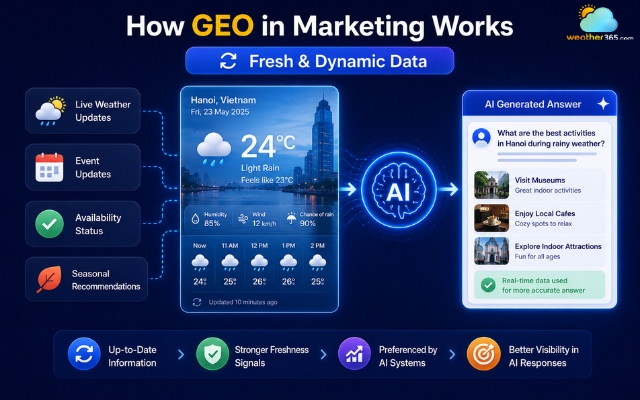
AI systems tend to prioritize updated data
Importance of weather widgets in GEO
As GEO becomes more important in AI-driven search, websites need more than just keywords and static content.
AI systems now look for signals that show a website is useful, relevant, and connected to real user needs.
This is where weather widgets become surprisingly valuable.
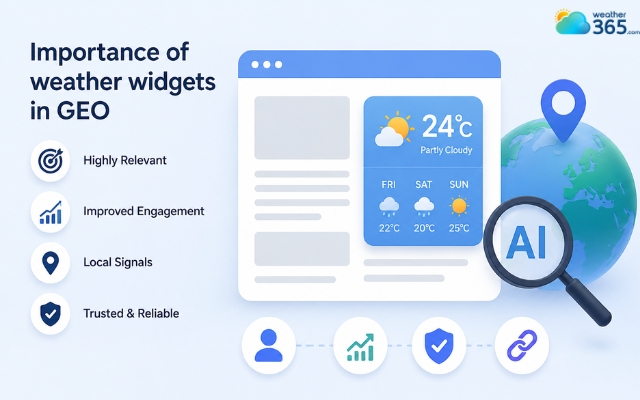
A weather widget makes sites more trusted and reliable
A weather widget is a small feature added to a website that displays live weather information such as temperature, forecasts, humidity, rainfall, or wind speed.
While many websites add weather widgets mainly for convenience, they can also support SEO, engagement, and GEO performance.
You can explore more benefits in our article about why add weather widget to your website.
Why add weather widget to your website?
Weather directly affects how people make decisions online.
Someone planning a trip, attending an event, shopping for seasonal products, or even choosing a restaurant often checks the weather first.
Adds geographic context: Helps AI systems connect your website with a specific location through local weather data.
Provides fresh content: Real-time forecasts and weather updates improve content freshness signals.
Boosts user engagement: Interactive forecasts and maps encourage visitors to stay longer on the site.
Strengthens local authority: Makes your website appear more useful and trustworthy for local audiences.
Reduces bounce rate: Gives users instant, practical information without needing to leave the page.
Improves AI relevance: Dynamic and contextual data helps AI engines better understand your content.
How to use weather widgets for GEO optimization
For GEO, the goal is to make content more contextual, useful, and easier for AI systems to understand.
Add widgets to high-intent pages
Weather widgets work best on pages where weather can influence user decisions.
Travel pages, local landing pages, and event pages are strong examples because visitors often want real-time conditions before taking action.
A live forecast can make these pages feel more relevant and practical, which helps improve both user engagement and GEO signals.
Combine weather data with personalized content
Weather data becomes more powerful when combined with personalized recommendations.
For example, rainy weather can trigger indoor suggestions, while sunny conditions may highlight outdoor promotions or activities.
This type of contextual content improves user experience and helps AI systems better connect weather conditions with search intent.
You can also explore more strategies in our internal guide about weather-based personalization for websites.
Create AI-friendly FAQ sections
FAQ sections help AI systems understand conversational search queries more clearly.
Instead of using overly technical wording, focus on natural questions related to weather and user needs, such as “What should visitors do during rainy weather?” or “What is the best season to visit?”
This makes the content more useful for both readers and AI-generated search results.
Focus on user experience and speed
A weather widget should feel helpful, not distracting. Keep the design clean, mobile-friendly, and lightweight to avoid slowing down the page.
It is also important to display weather data that matches the website’s purpose.
For example, health websites may show humidity levels, sports sites may highlight wind speed, and travel websites may benefit from 3-hour forecasts.
The more relevant the weather information is, the stronger the GEO value becomes.
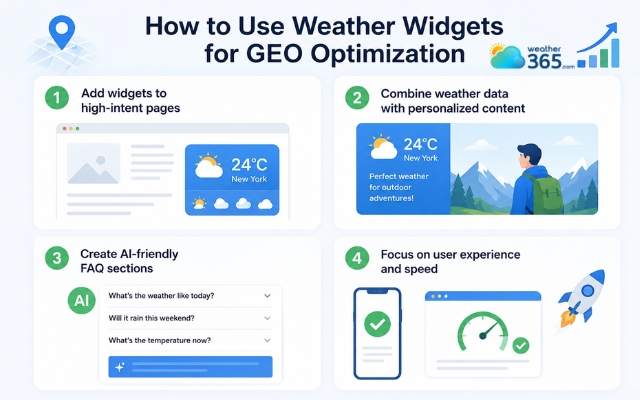
A live forecast can make these pages feel more relevant
Conclusion
Understanding what is GEO in marketing is becoming more important as AI search keeps growing. Weather widgets can help websites feel more useful, up-to-date, and relevant to users. They also improve engagement and local relevance, which can support better visibility in AI-powered search results over time.
Frequently Asked Questions (FAQs)
Related post
What Is Seasonal Marketing? Boost Campaigns with Weather Widgets
 173
173
 0
0
 4.6
4.6
 12/05/2026

Local Pack SEO Guide: Best Weather Widgets & Implementation Tips
128
0
4.8
17/08/2026
What is AEO in marketing? Importance of weather widgets in AEO
106
0
4.7
08/05/2026

0 Comment
Leave a comment
Your email address will not be published. Required fields are marked *