




Weather Widgets by Industry: Best Use Cases for Every Business


Weather widgets by industry are transforming how businesses deliver real-time forecasts, improve user experience, and increase customer engagement. From travel and agriculture to retail and logistics, industry-specific weather widgets help companies provide accurate, localized weather information directly on their websites and apps. In this article, we’ll explore how different industries use weather widgets to support operations, enhance customer satisfaction, and drive better business outcomes.
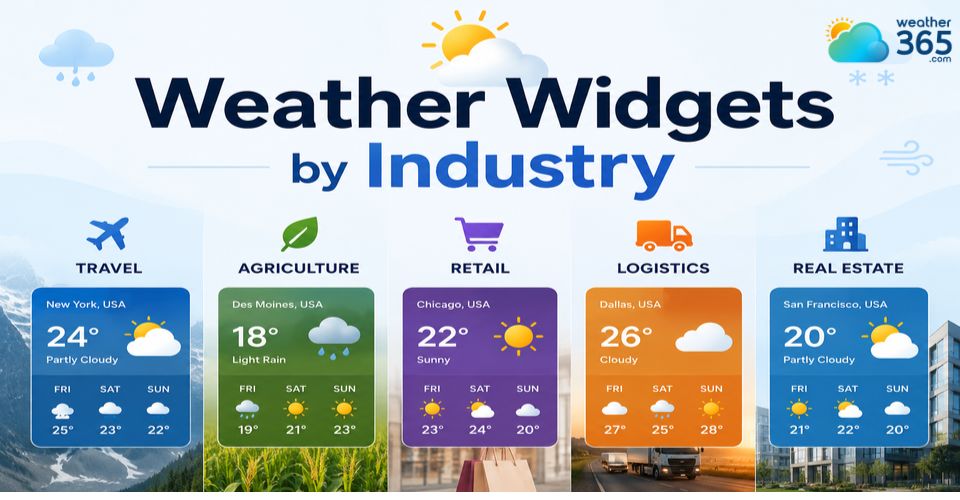
Understanding weather widgets by industry
- Weather widget by industry
- Weather widgets for Travel, Hospitality, and Event
- Weather widget for travel & tourism websites
- Weather widget for hotels
- Weather widget for event websites
- Weather widgets for Media and Business websites
- Weather widget for new sites
- Weather widget for real estate websites
- Weather widget for business websites
- Weather widgets for Agriculture, Construction, and Education
- Weather widget for Agriculture
- Weather widget for Construction
- Weather widget for Education
- Benefits of using weather widgets by industry
- How to add weather widgets by industry websites?
- Using embed codes
- WordPress weather widget plugins
- API integration for custom websites
Weather widget by industry
Weather widgets by industry help businesses deliver accurate, real-time forecasts directly through websites, apps, and digital platforms.
These tools are widely used across industries such as travel, agriculture, retail, logistics, and real estate to improve decision-making and customer experience.
Studies show that more than 70% of consumers check weather conditions before making travel, shopping, or outdoor activity decisions.
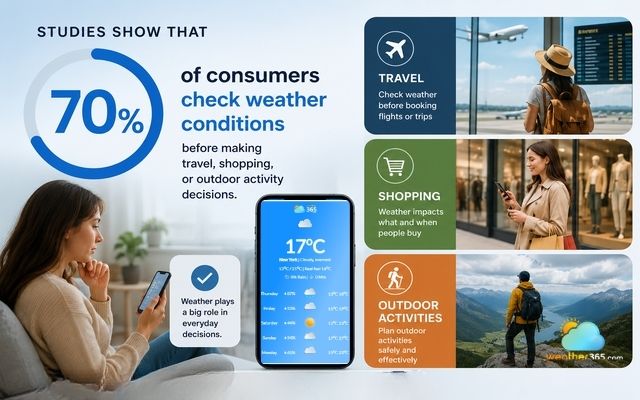
Studies show that 70% of consumers check weather conditions
Businesses rely on real-time weather data because weather conditions directly affect operations, customer behavior, and revenue.
For example, airlines use live weather updates to reduce delays, while retailers adjust promotions based on temperature and seasonal forecasts.
By integrating weather widgets, companies can provide timely information, improve website performance, and create more personalized digital experiences across industries.
Weather widgets for Travel, Hospitality, and Event
Weather widgets play a critical role in helping travel, hospitality, and event businesses provide real-time forecasts and improve customer experiences.
By integrating accurate weather data into websites, companies can support trip planning, increase bookings, and reduce weather-related disruptions.
Weather widget for travel & tourism websites
A Weather Widget for Travel & Tourism Websites helps travelers access accurate forecasts before choosing destinations or booking trips.
Tourism websites often integrate weather tools to display temperature, rainfall probability, wind speed, and UV index for popular destinations.
For example, beach tourism websites may highlight sunny forecasts to encourage bookings, while ski resorts provide snowfall updates in real time.
These weather widgets improve user confidence, reduce uncertainty, and increase the time visitors spend on travel websites.

Weather widget for travel and tourism websites
Weather widget for hotels
A Weather Widget for Hotels allows guests to view local weather conditions directly on hotel booking pages or mobile apps. Hotels and resorts use weather data to personalize recommendations and improve customer satisfaction.
Common weather metrics include:
Hourly and weekly forecasts
Humidity and air quality
Sunrise and sunset times
Severe weather alerts
Luxury resorts may promote outdoor pools or spa activities during warm weather, while mountain hotels can showcase snow conditions for winter travelers.
By integrating weather widgets, hotels can create a more interactive and informative booking experience.
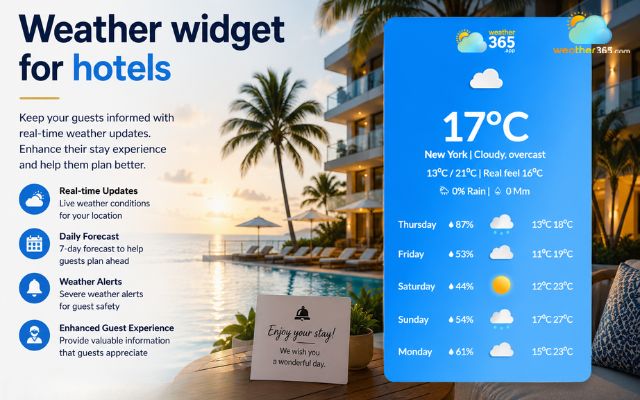
Weather widgets for hotels
Weather widget for event websites
A weather widget for event websites is essential for outdoor concerts, festivals, sports venues, and conferences where weather conditions directly affect attendance and safety.
Event organizers use real-time weather forecasts to manage schedules, prepare contingency plans, and notify attendees about changing conditions.
Similarly, a weather widget for real estate website helps buyers and renters evaluate local climate conditions before making property decisions.
Real estate platforms often display temperature trends, rainfall averages, and seasonal weather patterns to provide additional location insights for users.
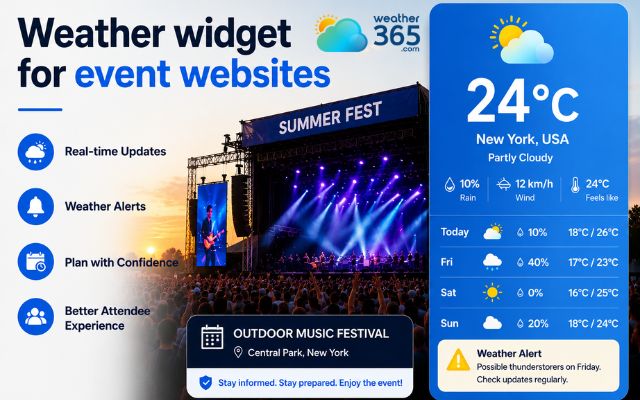
It’s essential to add a weather widget for event websites
Weather widgets for Media and Business websites
Weather widgets help media and business websites deliver real-time forecasts and improve user engagement. They support customer decisions, enhance website functionality, and can increase engagement by up to 30% during major weather events.
Weather widget for new sites
A weather widget for news sites helps publishers provide real-time forecasts alongside breaking news and local updates. Many digital news platforms integrate weather sections because weather remains one of the most searched daily topics online.
News websites commonly display:
Current temperature and hourly weather forecasts
Severe weather alerts
Radar maps and precipitation updates
Air quality and wind conditions
For example, local news websites often use weather widgets to keep readers informed during hurricanes, heatwaves, or snowstorms. These widgets increase page views, improve session duration, and encourage repeat visits.
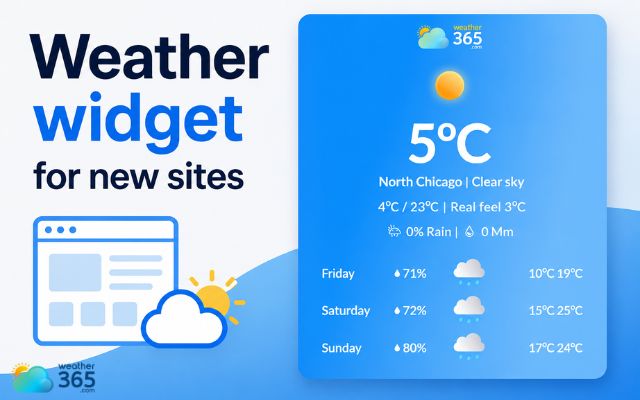
A weather widget provides real-time forecasts alongside breaking news and local updates
Weather widget for real estate websites
Weather widgets for real estate websites help improve user experience by displaying current weather conditions and short-term forecasts directly on property pages.
Many buyers and renters check weather information before choosing a new location, especially in coastal, mountain, or seasonal areas.
These widgets typically show:
Current temperature and weather conditions
3-day, 5-day, or 7-day weather forecasts
Rain probability and humidity
Severe weather alerts
Real estate platforms use weather widgets to keep visitors engaged and provide useful real-time information while browsing listings.
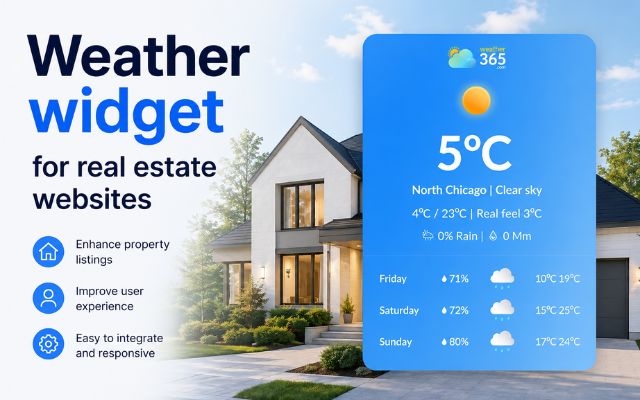
Weather widgets for real estate websites improve user experience
For example, beachfront properties may attract more attention during sunny weather, while mountain homes can highlight snow forecasts during winter seasons.
Weather widgets also make property websites more interactive, informative, and SEO-friendly through dynamic content updates.
You may also like this: Real Estate Marketing Tip
Weather widget for business websites
A weather widget for bussiness websites helps companies improve customer engagement and website functionality.
Retail stores, delivery services, and eCommerce platforms often add weather widgets to display current weather conditions and 3-day, 5-day, or 7-day forecasts.
Businesses use weather widgets to:
Support seasonal marketing campaigns
Improve customer experience with real-time weather updates
Increase user engagement and retention
Help customers plan purchases or deliveries
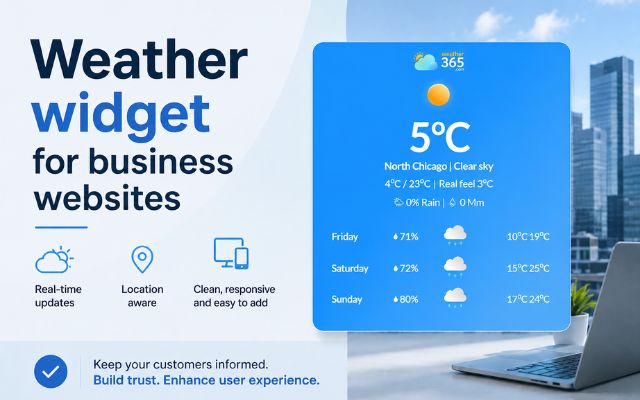
A weather widget helps companies improve customer engagement and website functionality
For example, eCommerce stores may promote umbrellas during rainy days or highlight summer products during hot weather.
Weather widgets also make business websites more interactive and informative for visitors.
You also like this: Weather Widget for Outdoor Business
Weather widgets for Agriculture, Construction, and Education
Weather plays a major role in industries that depend on outdoor activities, scheduling, and safety planning.
From farming and construction to schools and universities, businesses increasingly rely on weather widgets by industry to display current conditions and short-term forecasts directly on websites and internal platforms.
Real-time weather information helps organizations improve planning, reduce risks, and support daily operations.
Weather widget for Agriculture
A weather widget for agriculture helps farmers and agricultural businesses monitor current weather conditions and 3-day, 5-day, or 7-day forecasts. Agriculture is highly dependent on weather patterns, especially during planting and harvesting seasons.
Common weather metrics include:
Temperature and humidity
Rainfall forecasts
Wind speed
Frost and heat alerts
Farmers use weather widgets to plan irrigation, protect crops, and reduce weather-related losses.
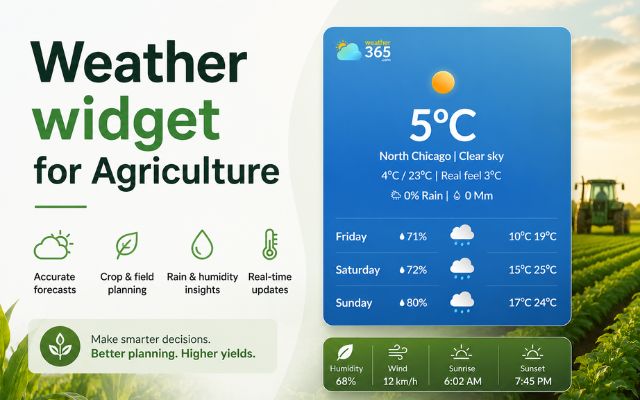
Weather widgets are also necessary for agriculture websites
For example, growers may delay pesticide spraying before rain or prepare for frost conditions during colder months.
Weather widgets by industry are especially valuable for agriculture because even small weather changes can directly affect crop yields and operational costs.
Weather widget for Construction
A weather widget for construction helps contractors, builders, and project managers monitor weather forecasts before scheduling outdoor work.
Construction companies often integrate weather widgets into websites and internal dashboards to improve project planning and worker safety.
Important weather data includes:
Rain probability
Wind conditions
Temperature forecasts
Severe weather alerts
For example, heavy rain or strong winds can delay roofing, concrete work, and crane operations. Real-time weather updates help construction teams reduce downtime, improve scheduling accuracy, and minimize safety risks on job sites.
Many construction companies use weather widgets to support daily planning and avoid costly weather-related delays.
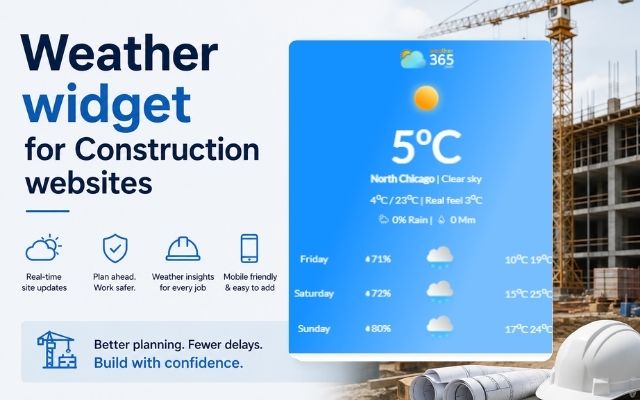
A weather widget for construction
Weather widget for Education
A weather widget for education helps schools, colleges, and universities keep students, parents, and staff informed about current weather conditions and short-term forecasts.
Educational institutions often use weather widgets on websites, portals, and mobile apps to improve communication during changing weather conditions.
Common features include:
Current weather updates
3-day and 7-day forecasts
Severe weather alerts
Temperature and chance of rain
Schools can use weather widgets to notify families about schedule changes, outdoor activity conditions, or severe weather risks.
For example, universities may adjust campus events during storms, while schools can provide weather alerts during snow or heat waves. These integrations help educational organizations operate more efficiently.
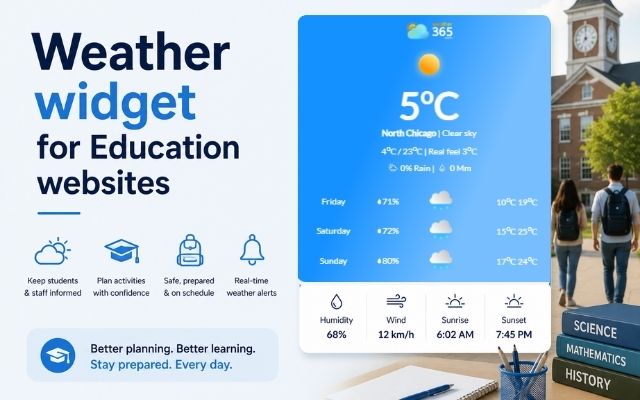
Weather widgets are beneficial to education websites
Benefits of using weather widgets by industry
Weather widgets by industry help businesses improve user engagement, website functionality, and operational efficiency with real-time weather updates.
Industries such as travel, retail, agriculture, construction, and real estate use weather widgets to display current conditions and 3-day, 5-day, or 7-day forecasts directly on websites and apps.
These widgets help customers make faster decisions while increasing time spent on websites.
For example, travel websites can show forecast updates before bookings, while retail stores may promote seasonal products during changing weather conditions.
Construction and agriculture businesses also use weather forecasts to improve planning and reduce weather-related risks.
Another major advantage of weather widgets by industry is SEO performance. Dynamic weather content keeps pages updated regularly, which can improve search visibility and user retention.
Studies show that interactive weather features can increase website engagement by up to 30%, especially during severe weather events and seasonal changes.
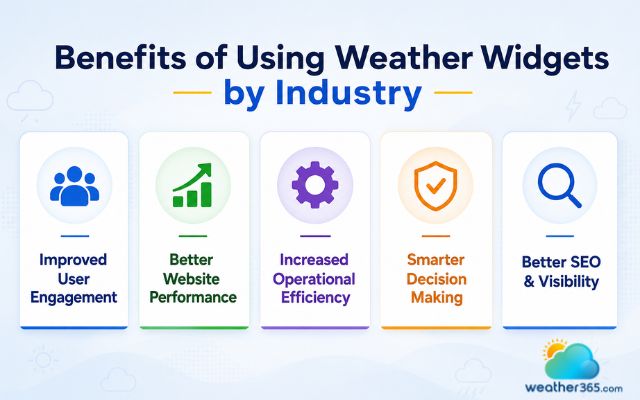
Main benefits of using weather widgets by industry
How to add weather widgets by industry websites?
Weather widgets by industry are easy to integrate into websites across travel, retail, real estate, education, and business platforms.
These widgets display current weather conditions and 3-day, 5-day, or 7-day forecasts to improve user engagement and website functionality.
It’s also easy to add weather widgets to websites. Keep reading to know different ways to get perfect extension right on your site.
Using embed codes
how to embed weather widget is one of the fastest ways to add weather forecasts to a website. Most weather providers offer ready-made widgets with customizable designs and forecast options.
Short steps:
Choose a weather widget provider like Weather365, Accuweather
Customize colors, size, and forecast type
Copy the embed code
Paste the code into your website HTML or page builder
This method is popular for travel, hotel, and news websites because it requires little technical knowledge.
WordPress weather widget plugins
A weather widget for wordpress allows website owners to add forecasts without coding. Many WordPress plugins support responsive weather displays and real-time forecast updates.
Short steps:
Install a weather widget plugin from WordPress
Connect the plugin with a weather data source
Choose widget style and forecast length
Add the widget to pages, posts, or sidebars
WordPress weather plugins are widely used by bloggers, local businesses, and real estate websites to improve user experience.
API integration for custom websites
For advanced platforms, developers often compare Weather Widgets vs Weather APIs when building custom weather features. APIs provide more flexibility and allow businesses to fully customize forecast displays and website functionality.
Short steps:
Sign up for a weather API service
Get an API key
Connect the API to the website backend
Display current weather and forecast data on custom pages
API integrations are common for enterprise websites, logistics companies, and large media platforms that need scalable weather solutions.
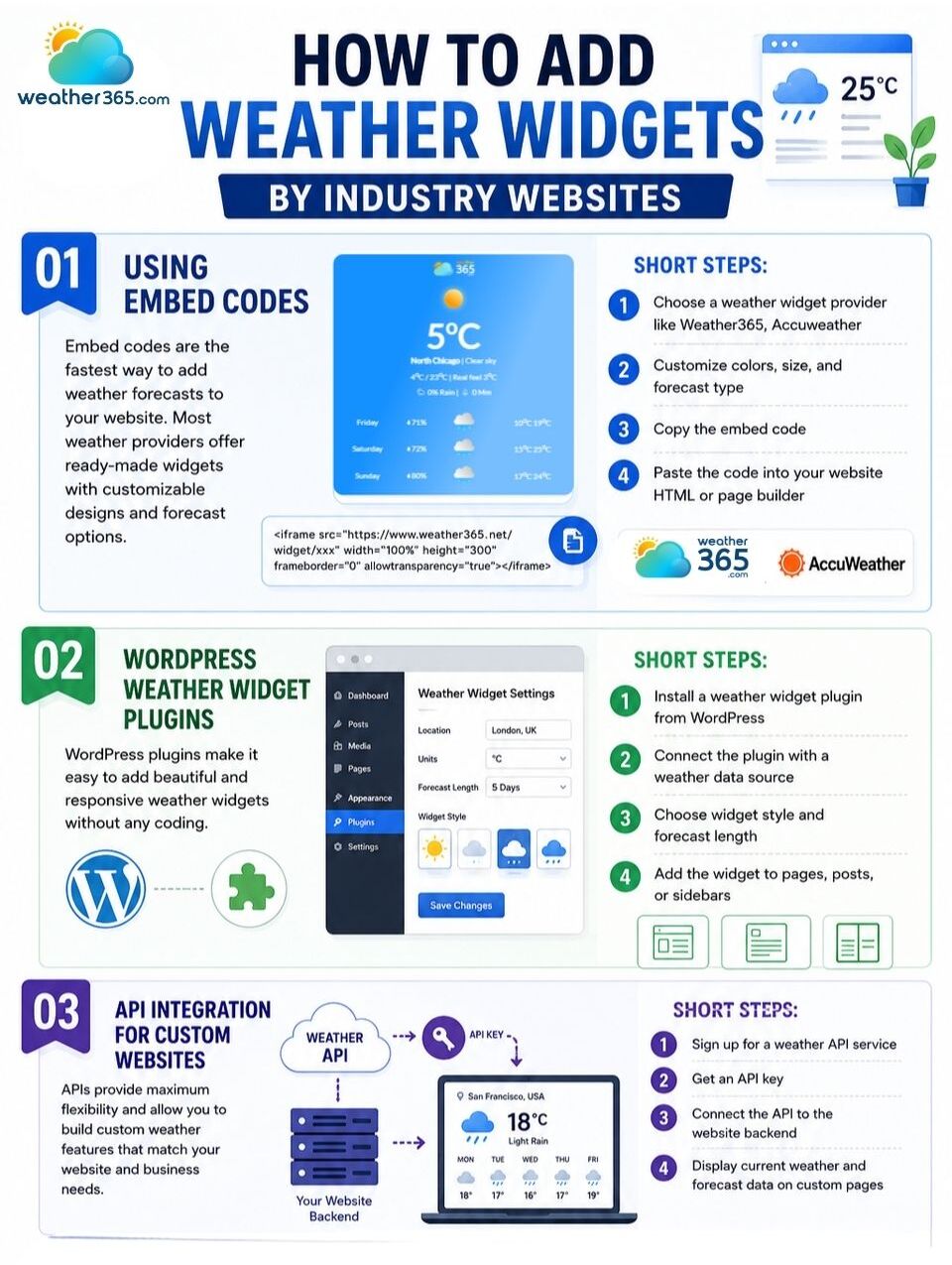
How to add weather widget to websites
The bottom line
As digital platforms evolve, businesses increasingly use weather solutions to improve engagement, SEO performance, and website functionality. Real-time forecasts help companies deliver dynamic content, support customer decisions, and enhance user experience across multiple sectors. Investing in weather widgets by industry is an effective way to create more interactive, informative, and competitive websites.
Frequently Asked Questions (FAQs)
Related post

Weather365 widget - BEST & FREE weather widgets for websites
 901
901
 8
8
 4.7
4.7
 12/08/2026

How to Add Weather Widget to Any Platform? A Complete Guide for Beginners
357
8
4.7
17/08/2026
Forecast Range Widgets: Key features, Benefits, How to Add & Best tools
246
8
4.6
11/08/2026
Which Weather Widget Features Matter for Modern Websites?
217
8
5.0
22/04/2026

8 Comment
Adonis Hill
Could schools use weather widgets to help teachers plan outdoor lessons and sports activities?
weather365
Absolutely. Current weather and forecast widgets can help teachers check conditions before outdoor activities. For severe weather or air quality concerns, schools should also follow official advisories and their established safety procedures.
Nicholas Jackson
For a tourism website, I think a forecast widget would be more practical than displaying just the current temperature. Visitors usually want to know what the weather might be like during their trip.
weather365
We agree! A multi-day forecast can help travelers plan ahead, while current conditions provide a useful snapshot. Combining the two can make destination pages more informative for visitors preparing their itineraries.
Derek Green
Which type of weather widget would be most useful for an agriculture website? Rainfall and temperature are probably more important than general conditions.
weather365
Rainfall and temperature widgets are good starting points for agricultural audiences. Depending on the website’s focus, wind and humidity data may also be helpful. The best choice depends on the crops, region, and decisions your visitors need to make.
Eva Perkins
I run a real estate website, and I hadn't considered adding weather information to property listings. It could help people understand local conditions when comparing places to live.
weather365
That’s a useful idea! Local weather information can give potential buyers and renters additional context about an area. A compact widget could fit naturally into property pages without distracting from the listing details.
Leave a comment
Your email address will not be published. Required fields are marked *