




How Does Weather Affect Retail Sales? Boost Sales with Weather Data


How does weather affect retail sales? A sudden rainstorm can push customers online, while a heatwave can instantly boost summer product demand. Weather quietly drives up to 15–20% of retail fluctuations. In this article, we’ll discover together how weather widgets help retailers transform forecasts into smarter sales strategies.
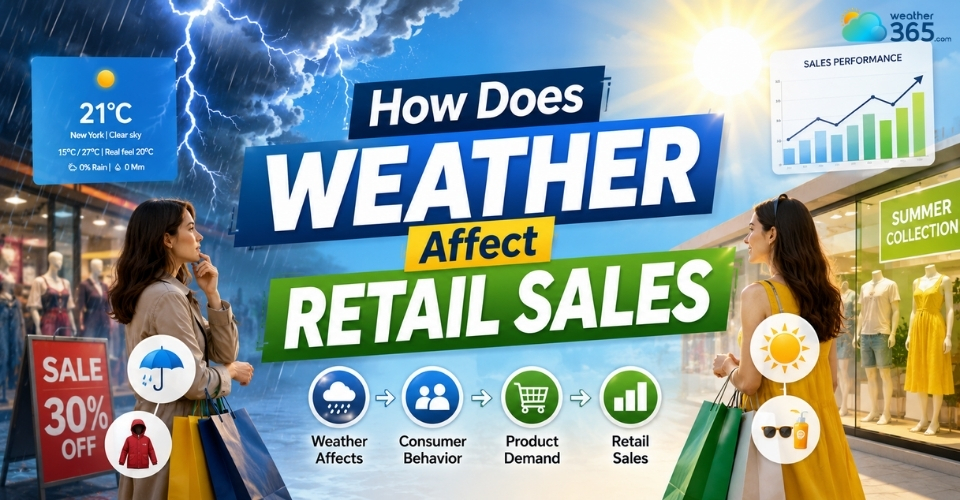
How does weather affect retail sales
- How does weather affect retail sales?
- Weather affects the purchase method/ channel
- Weather affects consumer behavior
- Weather affects the product demand
- Leveraging the Weather Widget for Sales Optimization
- Turn Weather Data into Sales Triggers
- Optimize Product Visibility in Real Time
- Enhance Engagement to Support Conversions
- Case Studies: Retailers Winning with Weather Data
- Fashion: Boosting outerwear sales with first frost triggers
- Home improvement: Preparing demand with 7-day weather insights
How does weather affect retail sales?
Weather plays a powerful role in shaping retail performance because it influences when people shop, how they shop, and what they choose to buy.
Rather than being a minor external factor, weather conditions often act as a real-time trigger that shifts demand patterns across both online and offline channels.
Below are the three core ways it impacts retail sales.
Weather affects the purchase method/ channel
One of the most immediate effects of weather is how it changes the shopping channel customers prefer.
On clear and pleasant days, people are more likely to visit physical stores, increasing offline foot traffic.
In contrast, rain, storms, or extreme cold often push consumers toward online shopping and delivery services for convenience and comfort.
Research shows that poor weather conditions can significantly increase online traffic as consumers avoid traveling, while favorable weather encourages in-store visits and spontaneous purchases.
This shift means retailers may experience fluctuations not in demand itself, but in where that demand is executed - a key factor in sales performance and conversion tracking.
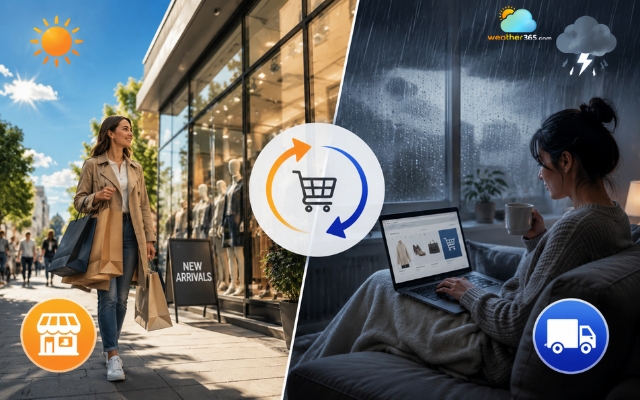
Extreme cold often pushes consumers toward online shopping
Weather affects consumer behavior
Beyond channel preference, weather also impacts consumer psychology and shopping behavior. Temperature, sunlight, and precipitation can influence mood, energy levels, and even willingness to spend.
For example, sunny weather often creates a more positive emotional state, which can encourage impulse buying, while gloomy or rainy conditions may lead to more practical or comfort-driven purchases.
Studies in retail behavior highlight that weather conditions can alter consumer decision-making patterns by affecting perceived comfort and urgency.
This means shoppers may become more cautious during harsh conditions or more emotionally driven during pleasant weather, directly influencing purchase frequency and basket size.
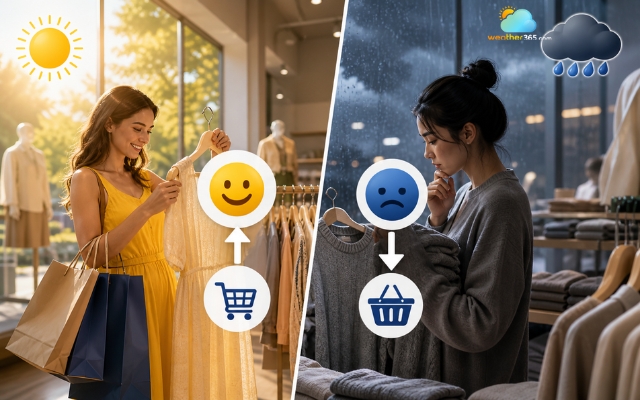
The weather can even influence willingness to spend
Weather affects the product demand
Perhaps the most visible impact is on product demand itself. Different weather conditions naturally increase or decrease interest in specific categories.
Heatwaves drive demand for summer apparel, cold drinks, and cooling devices, while colder weather boosts sales of warm clothing, heaters, and comfort-related goods.
Retail data consistently shows that even small changes in temperature can lead to noticeable shifts in product sales.
For instance, warmer days often increase demand for lightweight clothing and outdoor items, while sudden drops in temperature trigger spikes in winter essentials.
Retailers adjust inventory based on upcoming weather changes shown on New York weekly weather forecast maps.
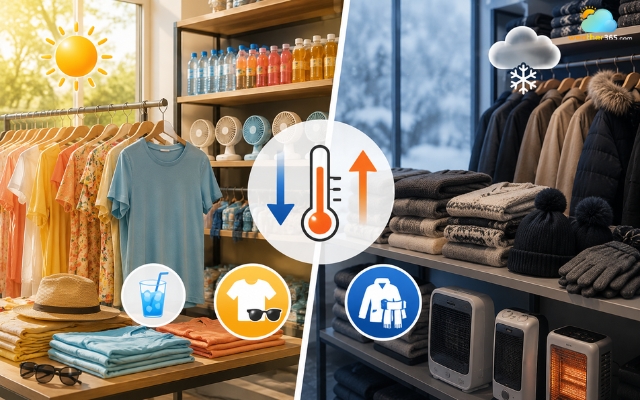
Changes in temperature can lead to shifts in product sales
Leveraging the Weather Widget for Sales Optimization
When connected to product strategy, weather widget allows businesses to move from static merchandising to dynamic, weather-responsive selling, improving both relevance and conversion rates.
Turn Weather Data into Sales Triggers
One of the most effective ways to use a weather widget is to turn live weather conditions into automated sales triggers.
Instead of running generic promotions, retailers can align campaigns with what customers are actually experiencing at that moment.
For example:
Rainy weather → promote umbrellas, raincoats, indoor entertainment, and delivery services
Hot weather → highlight summer clothing, cold beverages, fans, and cooling devices
Cold weather → push jackets, heaters, blankets, and comfort products
With simple rule-based logic (e.g., if temperature > 30°C, show summer promotion banner), marketing becomes more responsive and personalized.
This makes offers feel timely and relevant, which naturally improves engagement and conversion potential.
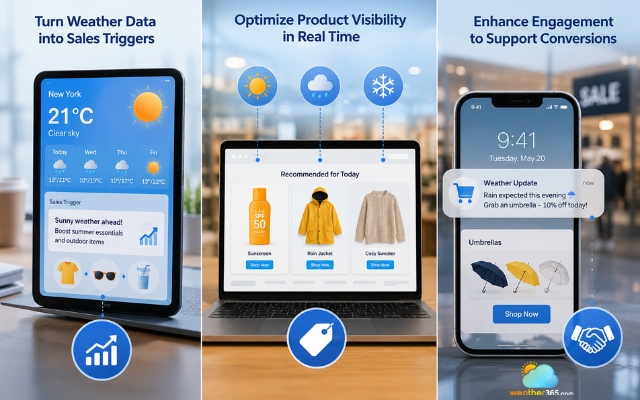
Turn live weather conditions into automated sales triggers
Optimize Product Visibility in Real Time
Instead of relying on static product layouts, retailers can use weather data to dynamically adjust what users see first.
A weather widget enables real-time product prioritization based on current conditions.
This can include:
Re-ranking product listings depending on temperature or weather type
Highlighting weather-relevant categories on homepage or landing pages
Showing personalized recommendations such as “Perfect for Rainy Days” or “Heatwave Essentials”
When users immediately see products that match their environment, browsing becomes easier and decision-making faster.
This increases click-through rates and improves the likelihood of conversion because the content feels directly relevant to their needs.
Enhance Engagement to Support Conversions
Weather widgets also play an important role in improving user engagement.
Many visitors interact with weather information naturally, checking forecasts as part of their daily routine.
This behavior increases time spent on site and encourages deeper exploration of content.
As users stay longer and interact with weather-based elements, bounce rates tend to decrease while session depth increases.
These engagement signals not only support conversions but can also indirectly benefit SEO performance, as search engines often interpret strong user engagement as a sign of content relevance.
For retailers, understanding tools like a weather widget concept and learning how to add a weather widget to your website is the first step toward building a more responsive, data-driven storefront.
Case Studies: Retailers Winning with Weather Data
Many retailers are already proving that weather data is directly tied to sales performance.
By reacting to real-time forecasts, brands across different industries have successfully improved timing, relevance, and conversion rates.
Fashion: Boosting outerwear sales with first frost triggers
In the fashion industry, timing is everything. One well-known approach is using the first frost of the season as a trigger for targeted campaigns.
Instead of waiting for general seasonal changes, some brands activate email and promotional campaigns the moment temperatures drop below a specific threshold.
For example, when the first frost arrives, customers receive personalized recommendations for jackets, coats, and winter accessories. This strategy creates urgency and relevance at exactly the right moment.
As a result, one fashion brand reported up to a 20% increase in outerwear sales, showing how weather-based timing can significantly improve campaign performance.
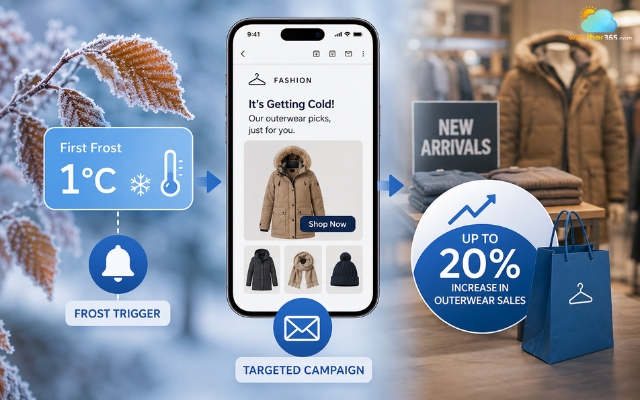
Some brands activate email the moment temperatures drop
Home improvement: Preparing demand with 7-day weather insights
In the home improvement sector, weather forecasting plays an even more practical role.
Hardware and DIY stores often rely on 7-day weather widgets to anticipate storms, heavy rain, or temperature drops before they happen.
This allows them to prepare customers in advance with relevant product suggestions, such as:
Storm protection supplies
Waterproof materials
Emergency lighting and generators
Roof and drainage repair tools
Instead of reacting after weather events occur, retailers can proactively guide demand.
When customers see upcoming storms in a weather widget, they are more likely to plan ahead and purchase necessary items early, reducing last-minute shortages and increasing basket value.
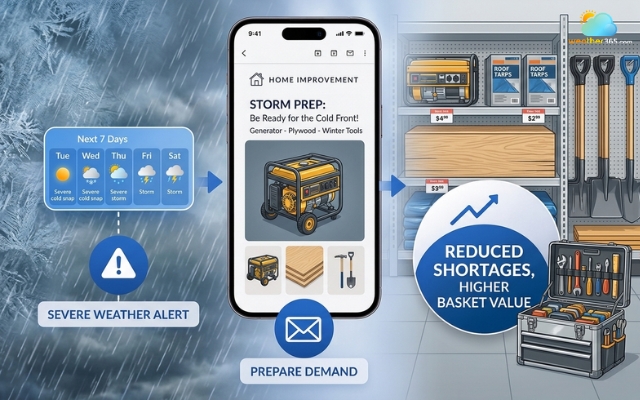
Customers purchase necessary items before the upcoming storm
You may also like this:
Key Takeaway
Understanding how does weather affect retail sales gives retailers a clear advantage in predicting customer behavior, adjusting product visibility, and launching timely promotions. When paired with weather widgets, these insights help businesses respond to real-world conditions, create more relevant shopping experiences, and ultimately drive stronger conversions.
Frequently Asked Questions (FAQs)
Related post
Weather Widget SEO Benefits: A Complete Guide for Better Rankings
 186
186
 0
0
 4.8
4.8
 12/05/2026

TOP Real Estate Marketing Tip to Increase Property Sales
174
0
4.7
08/05/2026
What Is Seasonal Marketing? Boost Campaigns with Weather Widgets
173
0
4.6
12/05/2026

0 Comment
Leave a comment
Your email address will not be published. Required fields are marked *