




Sunlight Effect in Marketing: Turn Sunshine into Revenue Growth


Do you know that there’ll have 40% increase in sales when stores utilize natural light? Studies show sunlight improves mood, lowers hesitation, and increases shopping activity, giving marketers a hidden psychological advantage. In this guide, we’ll explore the sunlight effect and how to turn real-time sunshine into measurable revenue with weather-based personalization. Diving in!
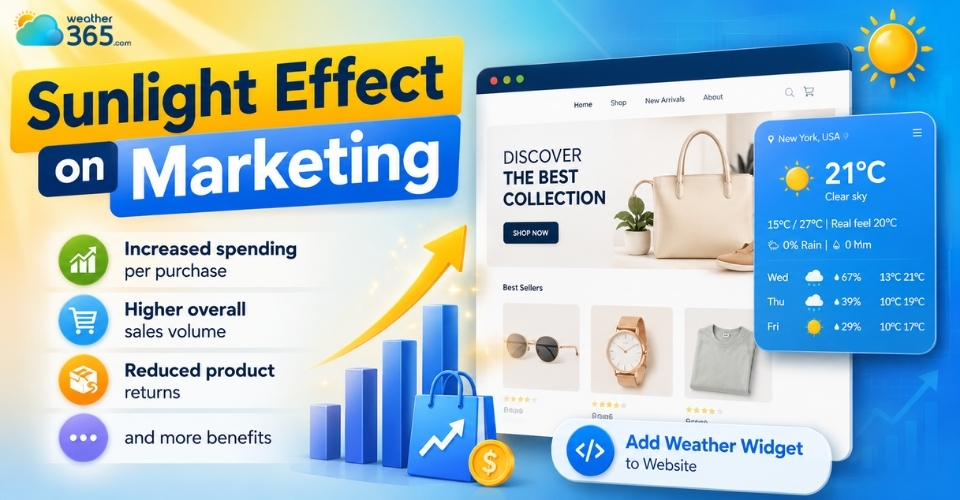
Sunlight effect in marketing
Understanding the Sunlight effect
The sunlight effect is a behavioral phenomenon where bright, sunny conditions make people feel more positive, energetic, and willing to take action.
When sunlight improves mood, customers tend to browse more comfortably, make decisions faster, and become more open to spending.
Research in consumer psychology shows that sunlight can reduce negative emotions, which directly increases shopping intention and lowers hesitation during purchasing decisions.
In simple terms, people are often more likely to click “buy” when they feel good.

People are often more likely to click “buy” when they feel good
This is why weather matters more than many businesses realize. A sunny day changes the customer mindset.
Instead of visiting a website with low energy or just looking around, users on bright days are usually in a more active mood.
They are more willing to explore products, respond to promotions, and spend extra time browsing.
That emotional difference may seem subtle, but in marketing, subtle mood changes often lead to very different conversion results.
You can see the sunlight effect in everyday situations.
People are more likely to go shopping on pleasant sunny weekends than on dark gloomy afternoons.
Lifestyle ads, outdoor products, travel deals, and seasonal fashion also tend to feel more attractive when the weather already supports that active mindset.
Even online, a sunny-day campaign often feels more relevant because it matches what the customer is experiencing in real time.

People are more likely to go shopping on pleasant sunny weekends
Sunlight Effect on Sales
The sunlight effect has a surprisingly strong influence on shopping behavior.
When customers feel brighter and more comfortable, their buying decisions often change in ways that directly benefit sales.
This pattern is part of a broader trend in weather-based commerce, where changing environmental conditions can significantly influence shopper activity.
You can explore more in our guide on How Does Weather Affect Retail Sales.
Here are the biggest impacts businesses can notice:
Increased spending per purchase
Sunny weather tends to put shoppers in a better mood, and that positive feeling lowers hesitation.
Customers become more open to buying non-essential items, upgrading their choices, or adding extra products instead of sticking only to what they originally planned.
Research has shown that sunshine can create a more optimistic spending mindset, which leads to higher average order value.
Higher overall sales volume
Natural daylight can affect total store performance.
A major retail daylighting study found that stores with skylights and stronger daylight exposure achieved sales levels around 40% higher than comparable stores without that lighting advantage.
This suggests that bright environments encourage more active shopping and stronger purchase behavior.
Reduced product returns
When products are seen under natural brightness, customers can judge details more clearly. Colors look more accurate, textures are easier to notice, and the item feels more trustworthy.
This improves purchase confidence, which means customers are less likely to regret the decision later or return the product after receiving it.
Longer browsing time and more foot traffic
Bright, welcoming spaces naturally invite people to stay longer. Instead of making rushed decisions, shoppers feel more relaxed and willing to explore.
The longer customers browse, the more opportunities businesses have to expose them to additional products, promotions, and impulse purchases.
Better product presentation
Sunlight helps products appear closer to their true colors and quality. This is especially important for fashion, furniture, cosmetics, and lifestyle goods where visual appeal strongly affects buying decisions.
When what customers see feels more realistic, disappointment decreases and conversion rates tend to improve.
Overall, the sunlight effect boosts sales because it improves the full shopping experience from mood to confidence to time spent browsing.
Customers feel better, trust products more, and become more willing to spend, which is exactly why sunny conditions can quietly turn into a revenue advantage.

Sunlight effect has a strong influence on shopping behavior
How to turn the sunlight effect into actual revenue?
Many businesses understand that sunny weather brings more active shoppers, yet they still run the same homepage, the same promotions, and the same product recommendations every day.
That means they are missing the exact moment when customers are naturally more willing to click and spend.
To turn the sunlight effect into real revenue, brands need to make their website react to weather conditions in real time.
Use Sunlight as a Real-Time Sales Trigger
Sunny conditions usually create two important customer signals: people feel happier, and they feel more active. This combination makes them more open to browsing and less resistant to spending.
Instead of waiting for seasonal campaigns, businesses can launch immediate weather-based promotions the moment sunshine appears.
Offers like Sunny Day Sale ☀️, Weekend Sunshine Picks, or Perfect Weather for Outdoor Gear feel timely because they match the shopper’s current mindset.
Real-time relevance makes promotions feel less like ads and more like useful suggestions.
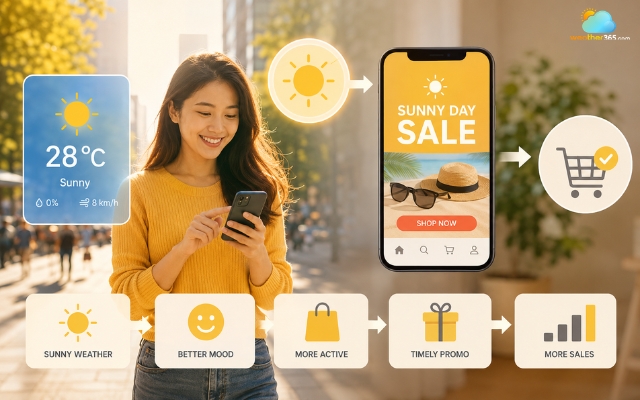
Sunny conditions make people feel more active
Dynamically Adapt Homepage & Product Display
This is where a live weather widget becomes especially valuable.
Rather than showing a fixed homepage to every visitor, businesses can adjust banners, featured collections, and recommended items based on current sunlight conditions.
On bright sunny days, it makes sense to push: outdoor furniture, travel accessories, fashion, fitness gear, or seasonal lifestyle products.
When skies are cloudy or rainy, the homepage can automatically shift toward:
home comfort, entertainment, indoor décor, or cozy essentials.
This simple change increases product relevance, and more relevance usually means higher click-through rate and better conversions.
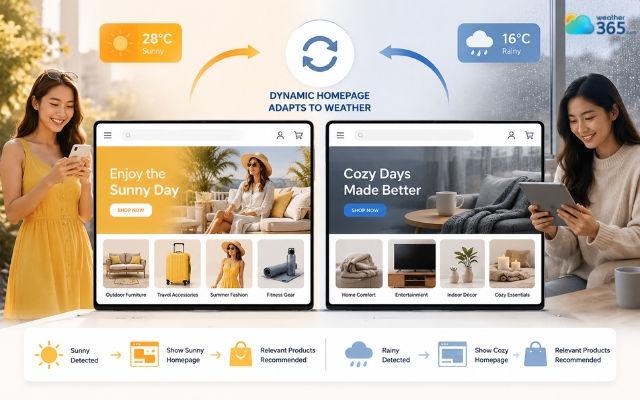
Businesses can adjust banners based on current sunlight conditions
Personalize by Location
Sunlight is never the same everywhere. One customer may be enjoying a clear sunny afternoon, while another is dealing with rain in a different country.
If both visitors see the same message, one of them will receive content that feels disconnected.
That is why location-based weather personalization matters, especially for global websites.
By using multi-location & auto-detect weather widget displays, businesses can show different product suggestions depending on local sunlight conditions.
For example, a user in sunny California may see Beach Essentials, while a visitor in rainy London sees Stay Cozy Indoors.
This makes the shopping experience feel far more personal and timely.
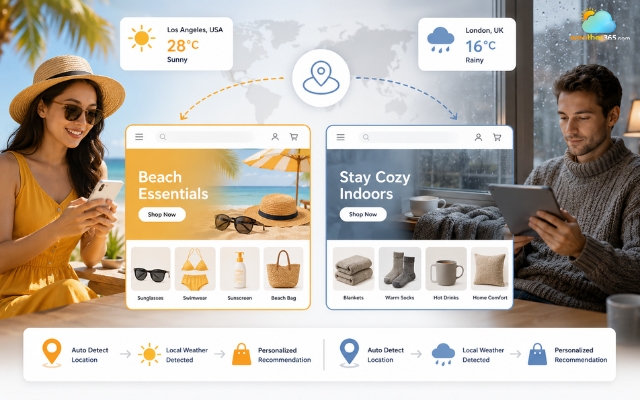
Weather widget makes shopping experience feel far more personal
Increase Engagement
Customers naturally spend more time on websites that feel responsive to their real situation.
When they see live weather information, changing banners, or recommendations that match the day outside, the website feels smarter and more interactive.
Users tend to click more, browse more pages, and stay longer because the experience feels customized rather than static.
In digital marketing, that extra engagement matters because longer dwell time and deeper browsing often lead to stronger conversion probability.
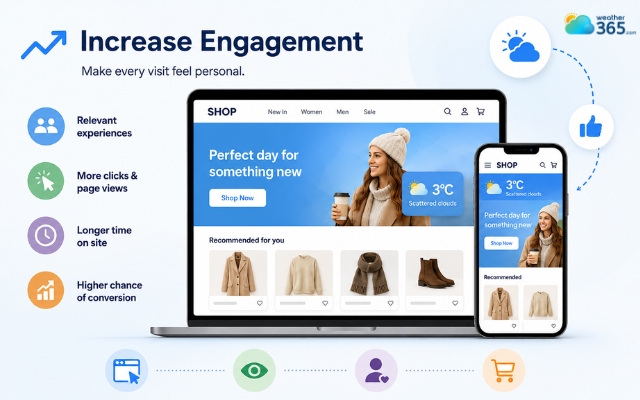
Weather widgets can help your website to increase engagement
Add a weather widget to your website
How do you actually make your website respond to sunlight in real time?
The easiest answer is to install a weather widget.
A weather widget acts like a live data layer on your site.
It pulls current weather conditions such as sunshine, cloud cover, temperature, or UV level, then gives your website the ability to display content that feels timely instead of static.
Many modern weather widgets are lightweight, customizable, and can be embedded with just a small HTML or JavaScript snippet, making setup much easier than building a full weather API system from scratch.
More importantly, it turns weather from passive information into an active marketing trigger.
With a weather widget, your business can:
show live sunny-day promotions automatically,
switch homepage banners based on current conditions,
recommend products that match outdoor or indoor moods,
personalize weather content by visitor location,
and create a website experience that feels more dynamic.
That means instead of simply telling visitors what the weather is, you are using that weather data to influence what they click and buy.
Besides, weather widgets can also support stronger user signals like longer session duration and lower bounce rates, which is why many brands also look at the broader weather widget SEO benefits when implementing them.
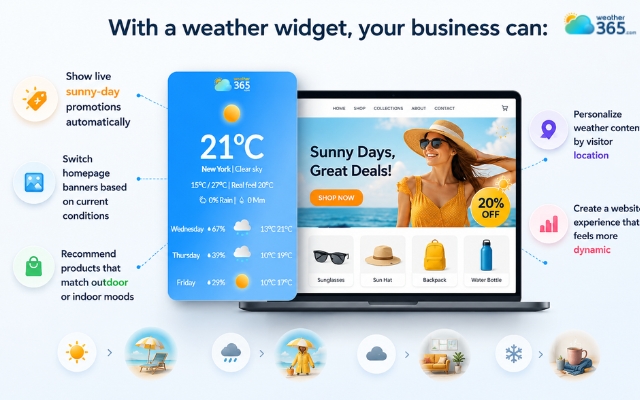
Weather widget acts as an active marketing trigger
The good news is that adding one is usually very simple. Follow our steps below to get one!
Step 1: Choose a customizable weather widget provider
Pick a widget that offers real-time updates, responsive design, and flexible location settings.
Some providers allow current weather, forecast, UV data, and automatic refresh, which are ideal for marketing personalization.
Step 2: Customize the widget to match your website
Adjust the colors, size, language, and display style so the widget looks like a natural part of your site rather than a random plugin.
A weather widget should blend into the customer journey, not interrupt it.
Step 3: Enable location-based weather detection
If your audience comes from different regions, use an auto-detect or multi-location setup so each visitor sees weather conditions relevant to where they are.
Step 4: Connect weather conditions with marketing content
This is the most important step. Decide what should happen when the widget detects sunny weather, cloudy skies, or rain.
For example, sunshine can trigger outdoor product banners, while gloomy weather can shift the focus to comfort or home essentials.
Step 5: Monitor engagement and conversion changes
After installation, track click-through rate, dwell time, pages per session, and sales behavior.
Many businesses find that weather-relevant content keeps users interacting longer because the site feels more alive and personalized.
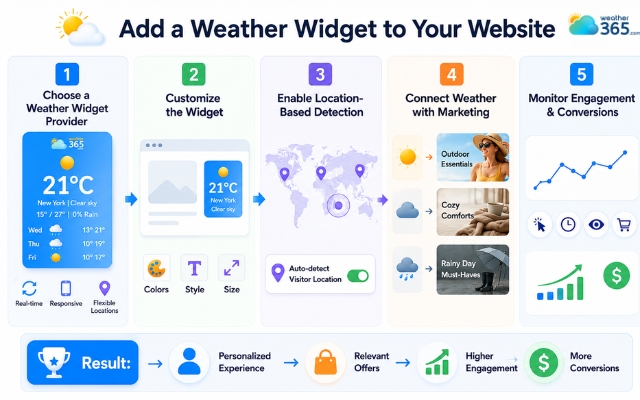
Easily add a weather widget to your site
Wrap up
Long story short, the sunlight effect can do more to a business than you imagine. A brighter day often means brighter customer moods, longer browsing time, and easier buying decisions. When paired with a real-time weather widget, that natural shift becomes a smart way to drive more engagement, better conversions, and stronger revenue.
Frequently Asked Questions (FAQs)
Related post
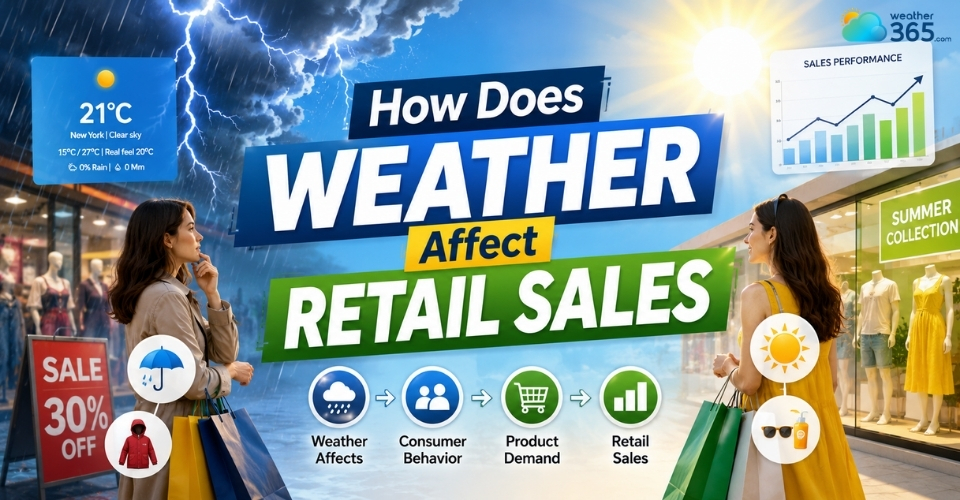
How Does Weather Affect Retail Sales? Boost Sales with Weather Data
 211
211
 0
0
 4.6
4.6
 17/08/2026
Weather Widget SEO Benefits: A Complete Guide for Better Rankings
186
0
4.8
12/05/2026
What Is Seasonal Marketing? Boost Campaigns with Weather Widgets
173
0
4.6
12/05/2026

0 Comment
Leave a comment
Your email address will not be published. Required fields are marked *