




Event Risk Management: How to Plan, Monitor Weather & Reduce Risks


Event risk management is often the difference between a smooth event and a stressful situation nobody saw coming. From outdoor festivals to corporate gatherings, unexpected risks can appear fast and create major disruptions. Want to know how event planners prepare for the unexpected? Let’s explore practical ways to monitor risks and respond with confidence.
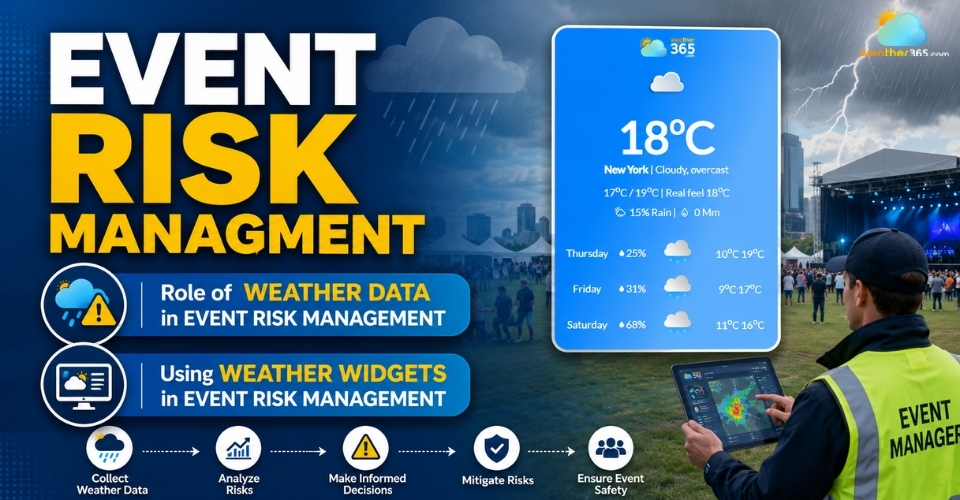
Event risk management
What is event risk management?
Event risk management is the process of identifying potential problems that could affect an event and preparing solutions before those problems happen.
The goal is to reduce disruptions, improve safety, and help the event run as smoothly as possible.
Every event comes with some level of risk, whether it is a sudden storm, technical failure, overcrowding, transportation delay, or even a vendor canceling at the last minute.
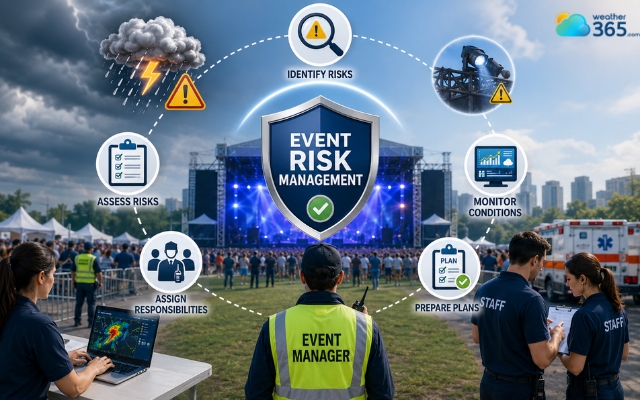
Event risk management is to reduce disruptions
While many of these situations are unpredictable, good planning can make them much easier to handle.
Instead of reacting in panic when something goes wrong, event organizers create systems that help them respond quickly and minimize the impact.
This usually includes:
Identifying possible risks
Evaluating how serious each risk could become
Monitoring conditions before and during the event
Preparing backup plans and emergency procedures
Assigning responsibilities to staff members
For example, an outdoor festival may prepare for heavy rain by arranging covered areas, monitoring weather forecasts in real time, and creating evacuation procedures in advance.
Organizers planning outdoor events can also review the Texas weather forecast to assess upcoming conditions before finalizing schedules and contingency plans.
A business conference, meanwhile, may focus more on technical failures, internet issues, or crowd management.
Modern event risk management is no longer only about emergency response.
Today, organizers also focus heavily on prevention and real-time monitoring.
Many teams now use weather data, live communication tools, and digital monitoring systems to detect risks earlier and make faster decisions.
In short, event risk management helps organizers stay prepared for the unexpected.
It protects attendees, reduces financial losses, improves operational efficiency, and creates a more reliable event experience overall.
Among these risks, weather is one of the few factors that can change rapidly and affect attendee safety, schedules, and operations within minutes.
This is why weather monitoring has become an essential part of modern event risk management
Why Weather Is Critical in Event Risk Management
Weather can impact an event much faster than many organizers expect.
A sudden storm, extreme heat, or strong wind may affect safety, schedules, equipment, and attendee experience within minutes.
That is why weather data plays an important role in modern event risk management.
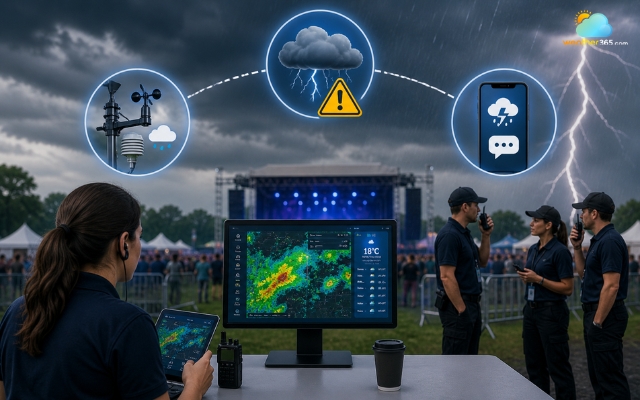
A sudden storm may affect event schedules
Real-time weather monitoring
Real-time weather monitoring helps organizers track changing conditions before and during an event.
Live updates about rain, temperature, wind, or lightning allow teams to respond faster and make safer decisions.
For outdoor events especially, this helps reduce disruptions and improve overall event safety.
Early risk detection
Weather forecasting tools can detect potential risks hours or even days in advance.
Outdoor event organizers must manage storm risks by checking Florida hourly severe weather ahead of time.
This gives organizers more time to prepare backup plans, adjust schedules, secure equipment, or notify attendees before conditions become dangerous.
Early preparation often helps reduce financial losses and avoid last-minute chaos.
Improved communication
Weather data also improves communication between organizers, staff, vendors, and attendees.
By sharing real-time updates through apps, websites, SMS alerts, or weather widgets, everyone can stay informed quickly.
Clear communication helps reduce confusion, improve crowd management, and create a smoother event experience overall.
- Better Decision Making
Accurate weather forecasts help event organizers make informed decisions before problems occur.
Based on changing conditions, teams can delay activities, move programs indoors, adjust event schedules, or activate contingency plans at the right time.
Making these decisions early helps minimize disruption while protecting attendees, staff, and event assets.
Weather data | How it supports event risk management |
Rain forecast | Prepare backup venues |
Wind forecast | Secure temporary structures |
Lightning alerts | Delay or suspend outdoor activities |
Heat forecast | Add hydration stations and shade |
Temperature trends | Adjust event schedules |
Using weather widgets in event risk management
Weather widgets are becoming a simple but powerful tool in modern event risk management.
By making weather information visible and easy to access, weather widgets support faster decisions and reduce uncertainty during events.
This small integration can significantly improve safety, communication, and overall planning efficiency.
This is also one of the main reasons many businesses now explore why add weather widget to your website as part of improving real-time communication and user experience.
Support Real-Time Safety Monitoring
Weather widgets help improve safety by giving real-time updates on conditions like rain, heat, wind, or storms.
When attendees and organizers can see weather changes instantly, they can react earlier and avoid risky situations.
For outdoor events, this means better protection for crowds, staff, and equipment.
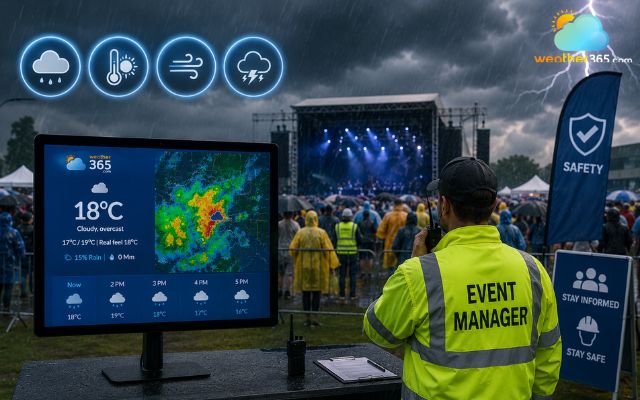
Weather widgets help improve safety
Help Organizers Respond Faster
With continuous weather updates, organizers can adjust schedules or activities before conditions worsen. This reduces last-minute cancellations, delays, and confusion during the event.
Early awareness helps keep operations stable even when weather changes quickly.
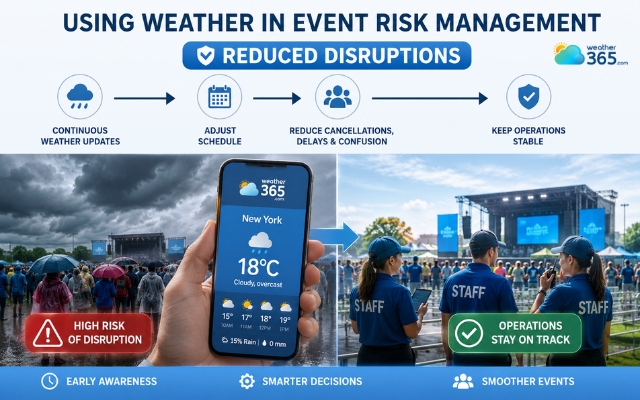
Organizers can adjust schedules thanks to the weather widget
Keep Attendees Informed
When attendees can easily check weather information, they feel more prepared and confident.
It improves their overall experience because they know what to expect and how to plan their participation.
This also reduces frustration caused by unexpected weather changes.
Learn more about how a weather widget can significantly increase user engagement here!
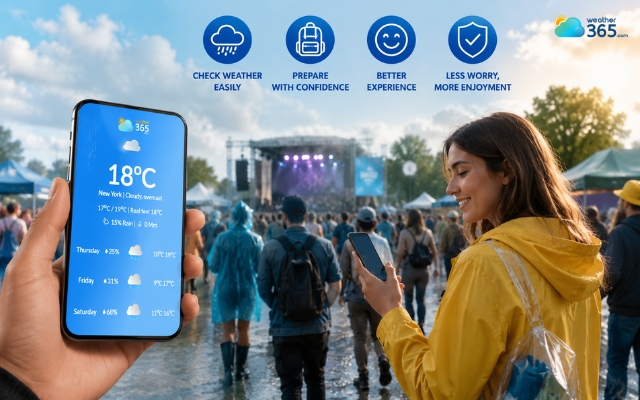
The weather widget improves the overall experience of users
Reduce Weather-Related Costs
Weather-related issues often lead to extra costs such as refunds, equipment damage, or emergency arrangements.
Weather widgets help organizers act earlier, reducing unnecessary losses and improving budget control.
So, what to look for in an event weather widget? Take a look below!
Feature | Why it matters |
Real-time updates | Faster decisions |
Hourly forecast | Better planning |
Weather alerts | Improved safety |
Mobile-friendly | Better attendee experience |
Easy website integration | Quick setup |
Looking for an event weather widget that checks all these boxes?
Explore Weather365 to get accurate forecasts, real-time weather alerts, and an easy-to-embed widget that helps you keep every event running smoothly.
How to create an event risk management plan?
An effective event risk management plan identifies potential risks, monitors changing conditions, prepares response actions, and keeps everyone informed before and during the event.
Because weather is one of the most unpredictable factors, using real-time weather data throughout the planning process helps organizers make faster and safer decisions.
Identify Weather Risks
Start by listing everything that could disrupt your event, including severe weather, technical failures, crowd safety issues, transportation delays, power outages, and medical emergencies.
For each risk, assess:
✓ How likely it is to happen
✓ How much impact it could have
✓ Which risks require immediate action
Prioritizing risks allows your team to focus resources where they matter most and create response plans before problems occur.
Monitor Weather Continuously
Even a well-planned event can be affected by changing weather conditions.
Instead of checking multiple weather websites, embed a weather widget on your event website or app to display real-time forecasts, hourly updates, weather alerts, and temperature changes in one place.
This gives both organizers and attendees instant access to the latest weather information, making it easier to adjust schedules, activate contingency plans, or communicate changes quickly.
Prepare Response Plans
Create clear action plans for the most likely scenarios before the event begins.
Your contingency plan should include:
✓ A backup indoor venue or alternative schedule
✓ Procedures for delaying or canceling activities
✓ Emergency communication channels
✓ Protection for equipment, stages, and electrical systems
✓ Staff responsibilities during weather or safety incidents
When everyone knows their role, responses become faster and more organized.
Keep Everyone Informed
Timely communication reduces confusion and improves attendee safety.
Share important updates through multiple channels, including email, SMS, mobile apps, social media, and your event website.
Embedding a weather widget on your event page also allows attendees to check live weather conditions themselves instead of relying only on announcements.
Review After the Event
After the event, evaluate how your risk management plan performed. Review any incidents, identify what worked well, and note areas for improvement.
Collect feedback from staff, vendors, and attendees to strengthen future event planning.
Quick Event Weather Checklist
Before your event starts, make sure you've completed these essentials:
✓ Check the 7-day forecast
✓ Monitor hourly updates
✓ Assign weather responsibilities
✓ Prepare backup plans
✓ Inform attendees
✓ Embed a weather widget
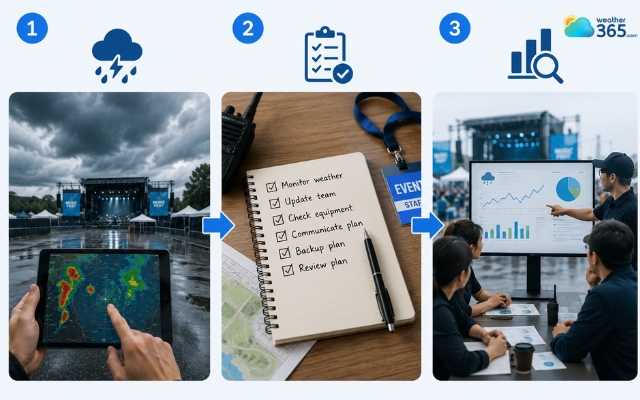
Real-time forecasts make event risk management more practical
The Bottom Line
Event risk management is something every organizer should take seriously, because even a well-planned event can change quickly when weather or unexpected issues appear. With the right preparation, real-time monitoring, and clear response plans, you can stay in control and protect both your guests and your event experience.
Frequently Asked Questions (FAQs)
◉ Event websites
◉ Mobile apps
◉ Internal dashboards for organizers
Related post

How Does Weather Affect Retail Sales? Boost Sales with Weather Data
 212
212
 0
0
 4.6
4.6
 17/08/2026

TOP Real Estate Marketing Tip to Increase Property Sales
176
0
4.7
08/05/2026
Sunlight Effect in Marketing: Turn Sunshine into Revenue Growth
155
0
5.0
08/05/2026

0 Comment
Leave a comment
Your email address will not be published. Required fields are marked *