




Weather Elements Explained: The Essential Components of Our Climate


Have you ever tried counting the number of weather elements? How many have you got? Most people only think of temperature or rain, yet the atmosphere is influenced by many hidden factors. Scrolling down to discover the full list of weather elements and how they interact with each other!
Discover various weather elements
- What Are Weather Elements?
- 3 Main Weather Elements
- Temperature
- Precipitation
- Wind
- Other Weather Elements
- Weather Conditions
- Feel like temperature
- Atmospheric pressure
- Humidity
- Visibility
- UV Index
- Air quality index (AQI)
- Sunrise and Sunset
- Advanced Weather Elements
- How Weather Elements Interact?
- Temperature and Pressure
- Pressure and Wind
- Humidity and Precipitation
- Fronts and Weather Changes
What Are Weather Elements?
Weather elements are the measurable atmospheric factors that describe the state of the weather at a particular place and time.
Meteorologists rely on these variables to analyze atmospheric conditions and predict future weather.
In short, weather elements are the building blocks of weather.
By observing and measuring them, scientists can determine whether conditions will remain stable or change.
Weather elements describe the state of the weather
Weather elements are typically measured using specialized instruments at weather stations, satellites, and radar systems.
Learn more on Types of weather radar!
These measurements are then used to create weather forecasts, climate reports, and environmental analyses.
Some elements describe basic atmospheric conditions, such as temperature or wind speed.
Others provide more detailed information about air quality, sunlight exposure, or atmospheric stability.
3 Main Weather Elements
3 main weather elements include: Temperature, precipitation, and wind.
These core components provide the basic picture of what the weather is doing at any given moment.
You’ll notice that most weather forecasts - whether on TV, in an app, or on a weather website highlight these three first.
Can’t recognize common symbols on a weather forecast? Learn here!
That’s because they directly affect what we experience outdoors: how hot or cold it feels, whether water falls from the sky, and how the air moves around us.
Temperature
Temperature indicates the level of heat or coldness present in the air.
It may sound simple, but temperature actually drives many other weather processes.
The sun is the main source of heat for the Earth.
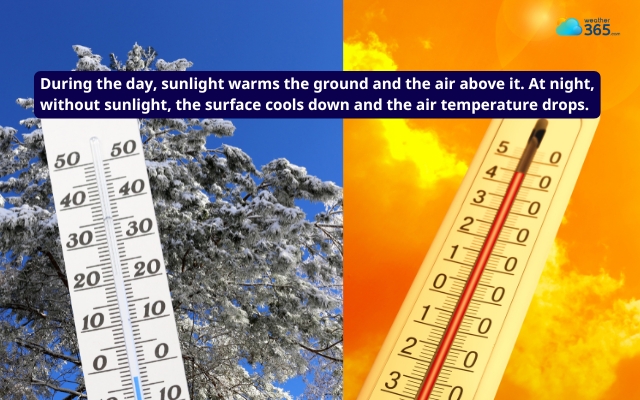
Temperature is a fundamental weather element
During the day, sunlight warms the ground and the air above it. At night, without sunlight, the surface cools down and the air temperature drops.
This constant heating and cooling creates temperature differences across different regions.
These differences are important because they influence many other weather elements.
For example, air temperature determines whether precipitation falls as rain, snow, sleet, or hail.
Or it will influence air pressure differences, which latter drive wind speed and direction.
Meteorologists measure temperature using a thermometer, typically placed inside a protective weather shelter so that direct sunlight does not affect the reading.
Precipitation
Have you ever heard about “Precipitation”? Is this rain? or drizzle? Almost right!
Precipitation describes all types of water that move from the atmosphere down to the Earth's surface.
Common forms of precipitation are rain, snow, sleet, and hail.
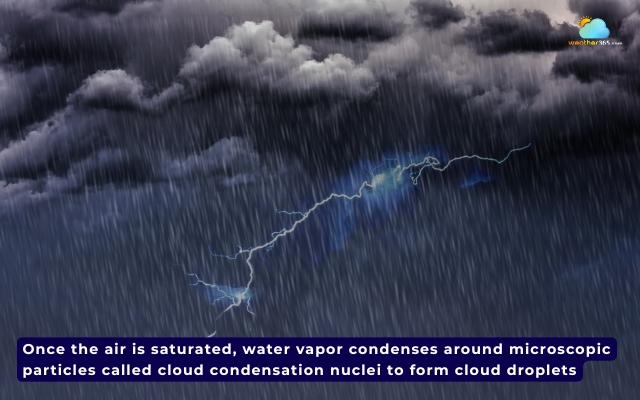
Precipitation refers to any form of water falling
Precipitation forms through a process that begins with water vapor in the air.
When warm air containing moisture moves upward in the atmosphere, its temperature gradually decreases.
When it cools enough, the water vapor condenses into tiny droplets or ice crystals, forming clouds.
Over time, these droplets combine and grow heavier until gravity pulls them down to the ground.
This process is a key part of the global water cycle, constantly moving water between the atmosphere, land, and oceans.
Meteorologists measure precipitation using a device called a rain gauge, which collects and records how much water falls during a certain period.
Precipitation is especially important for agriculture, water supply, and ecosystems.
Too little precipitation can cause drought, while too much can lead to flooding.
Because of this, tracking precipitation is essential for both weather forecasting and environmental planning.
Wind
Wind is the movement of air across the Earth’s surface, and it plays a major role in distributing heat and moisture around the planet.
Wind forms because air naturally moves from areas of high atmospheric pressure to areas of low pressure.
These pressure differences often result from uneven heating of the Earth's surface by the sun.
Meteorologists use an anemometer to measure wind speed and a wind vane to determine wind direction.

The wind distributes heat and moisture
Wind influences many aspects of weather.
It can transport warm or cold air masses across long distances, spread moisture that leads to precipitation, and strengthen storms when conditions are right.
On a larger scale, wind also drives major atmospheric circulation patterns that help regulate the Earth’s climate.
Other Weather Elements
While temperature, precipitation, and wind form the core of weather observation, they don’t tell the whole story.
Temperature, humidity, wind, and air pressure form the core parameters visible on Illinois weather elements dashboards.
If you’ve ever checked a weather app, you’ve probably seen indicators such as humidity, air pressure, or UV index alongside the temperature.
These extra measurements help explain why a day might feel hotter than expected, why fog suddenly appears, or why the sky changes from clear to stormy.
Weather Conditions
Weather conditions describe the overall state of the sky and atmosphere at a specific moment.
Instead of presenting raw data, this element summarizes what people actually experience outside.
Weather conditions are usually expressed in terms like clear, partly cloud, overcast, rainy, stormy, foggy,...
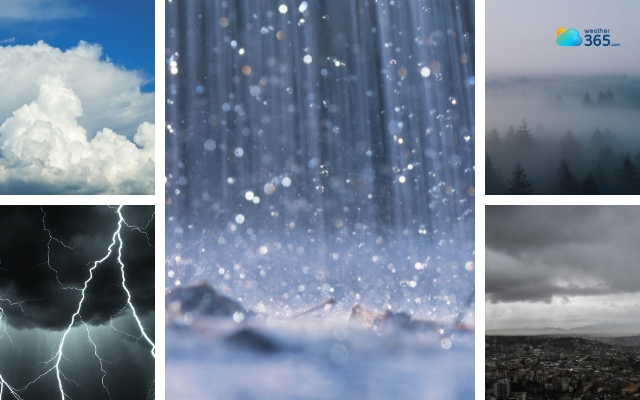
Weather conditions are what people experience outside
Feel like temperature
Sometimes the air temperature doesn’t fully represent how the weather feels. That’s where feels like temperature comes in.
This measurement estimates the temperature the human body actually experiences by combining factors such as humidity, wind speed, or even solar radiation.
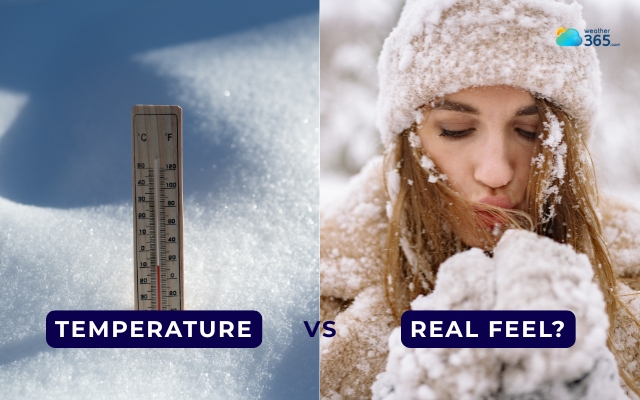
The feel-like temperature shows actually feels on human skin
For example, high humidity slows the body’s ability to cool itself through sweat, making hot days feel even hotter.
On the other hand, strong winds can remove heat from the body quickly, making cold weather feel colder than the thermometer suggests.
Learn more about this element on our guide: What does wind chill mean?
Atmospheric pressure
Atmospheric pressure refers to the weight of the air pressing down on the Earth's surface.
Although we cannot feel it directly, it plays a major role in shaping weather patterns.
Changes in pressure often signal changes in weather.
High pressure usually brings stable and clear conditions, while low pressure is commonly linked to clouds, rain, or storms.
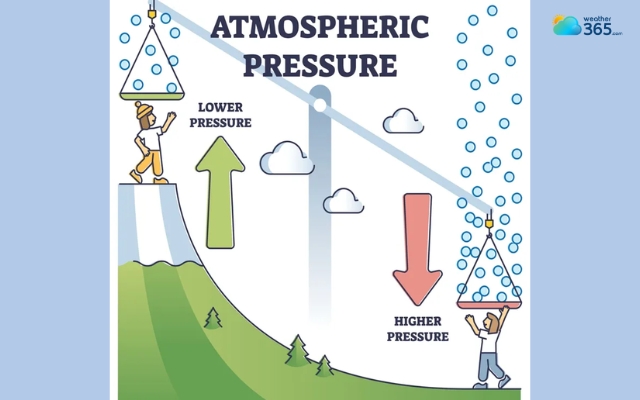
A change in pressure means a change in the weather
For this reason, meteorologists closely monitor pressure trends when analyzing developing weather systems.
Humidity
Humidity measures the amount of water vapor in the air.
This element strongly influences cloud formation and precipitation.
When humidity levels are high, the air contains more moisture, increasing the likelihood of clouds, fog, or rain.
High humidity increases the chance of rain
Humidity also affects how comfortable the weather feels.
Warm air with high humidity often feels sticky and exhausting because the body cannot cool down efficiently.
Visibility
Visibility indicates how far a person can see through the atmosphere.
Clear air allows long viewing distances, while certain conditions can greatly reduce visibility.
Fog, heavy rain, snow, dust, or pollution can make the air harder to see through.
Because low visibility can affect transportation and safety, it is closely monitored at airports, highways, and coastal areas.
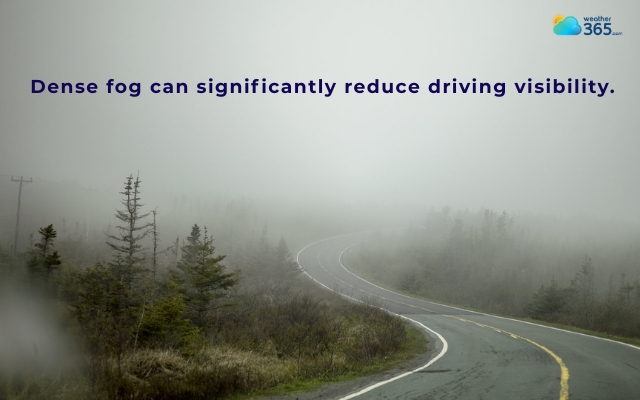
Dense fog reduces visibility
UV Index
The UV index measures the strength of ultraviolet radiation from the sun reaching the Earth’s surface.
Higher values indicate a greater risk of skin damage from sun exposure.
Including the UV index in forecasts helps people decide when to use protection such as sunscreen, hats, or shade, especially during midday when solar radiation is strongest.
Check hourly UV index on Weather365.com!

A high UV index can negatively affect skin
Air quality index (AQI)
The Air Quality Index, or AQI, reflects the level of pollution in the air and how safe it is to breathe.
It considers the presence of pollutants such as fine particles and ozone that may affect human health.
Poor air quality can cause breathing difficulties and worsen respiratory conditions,
That’s why many modern weather platforms include AQI as part of their daily reports.
Check today's AQI in your city on Weather 365. Click air quality index!
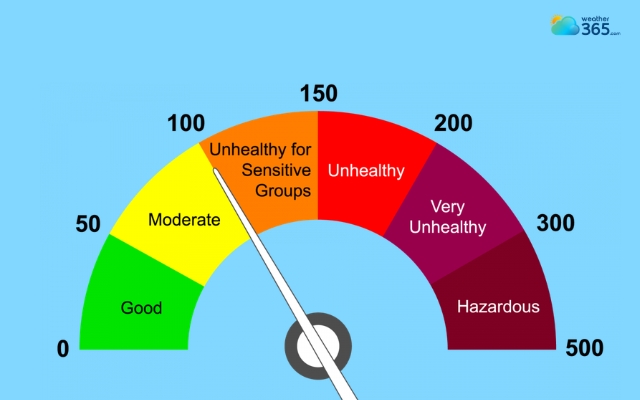
Air quality index range
Sunrise and Sunset
Sunrise and sunset times are also useful atmospheric indicators because they determine the length of daylight.
The amount of daylight influences how much solar energy warms the Earth's surface during the day.
Longer days typically allow more heating and can raise daytime temperatures, while shorter days often lead to cooler conditions.

Sunrise and sunset can indicate the length of the day
Advanced Weather Elements
Besides common weather elements mentioned above, meteorologists also analyze several advanced weather elements to better understand complex atmospheric processes.
Now let’s see what they are!
Cloud cover
Cloud cover describes how much of the sky is covered by clouds.
It affects how much sunlight reaches the Earth’s surface, influencing temperature, evaporation, and even precipitation patterns.
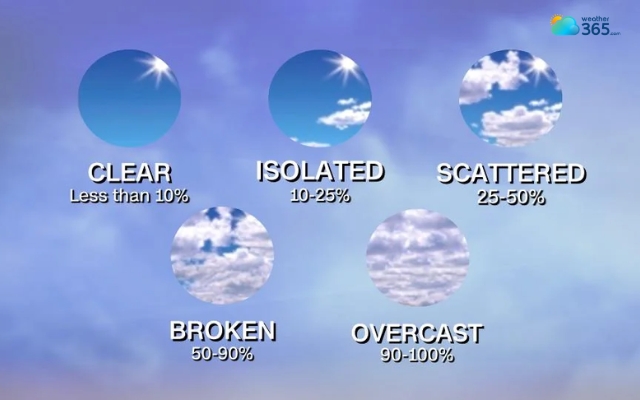
Types of cloud cover
Dew point
While humidity tells us how much moisture is in the air, dew point reveals the temperature at which water vapor begins to condense into liquid droplets.
A higher dew point usually signals moist, uncomfortable air and a greater chance of rain or thunderstorms.
Need more details about the dew point? Drop by dew point right now!
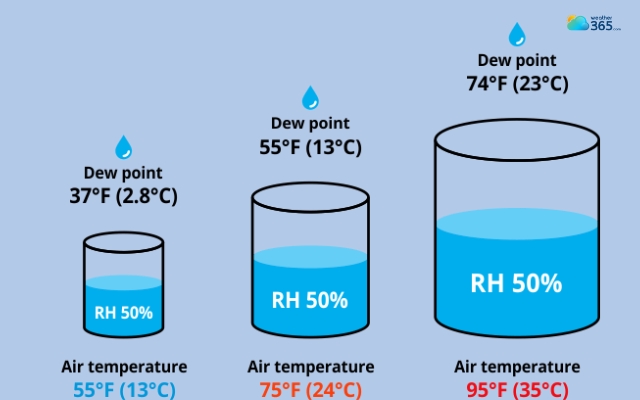
Dew point and air temperature
Wind gusts
Meteorologists also pay attention to wind gusts, which are short bursts of stronger wind that occur suddenly.
Gusts can be important during storms because they often signal unstable atmospheric conditions and can cause rapid changes in weather.

Wind gusts are short bursts of stronger wind
Convective Available Potential Energy (CAPE)
This measurement indicates how much energy is available in the atmosphere for rising air.
Higher CAPE values suggest that the atmosphere is unstable and that powerful thunderstorms may develop.
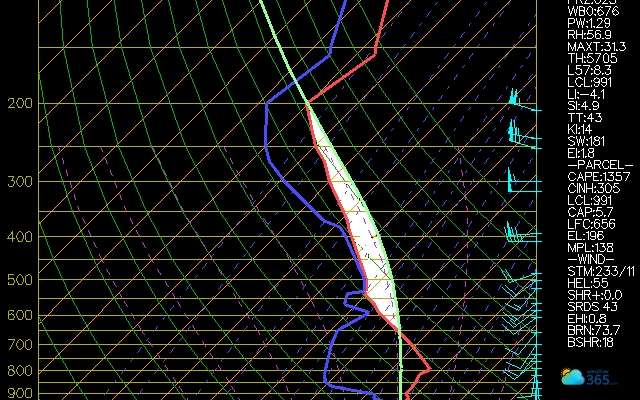
CAPE measures energy in the atmosphere
Atmospheric stability
Atmospheric stability describes how easily air rises or sinks.
When the atmosphere is unstable, warm air rises quickly, forming clouds and storms.
When the air is stable, weather conditions tend to remain calm and unchanged.
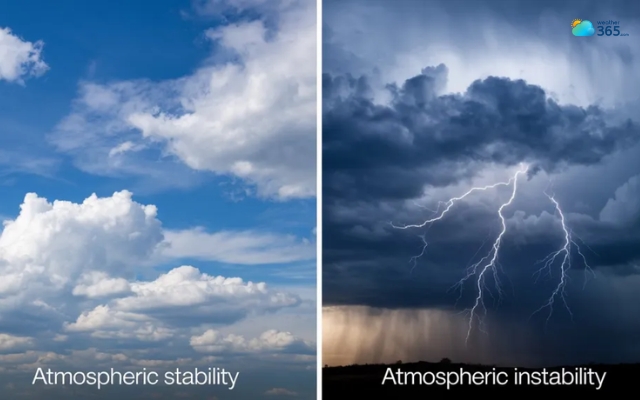
Atmosphere when stable and unstable
How Weather Elements Interact?
The weather does not depend on a single atmospheric factor.
Instead, it is the result of multiple weather elements constantly interacting with each other.
Temperature, pressure, humidity, and wind are closely connected, and a change in one element often triggers changes in others.
Temperature and Pressure
Temperature and atmospheric pressure are strongly linked.
When air becomes warmer, it expands and becomes lighter, which usually leads to lower pressure at the surface.
In contrast, colder air is denser and tends to create higher pressure areas.
These differences in pressure are important because they influence air movement and can trigger changes in weather patterns.
For example, large temperature contrasts between regions often lead to developing weather systems.
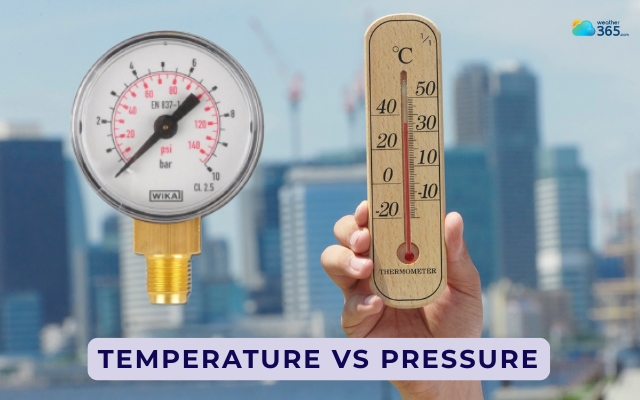
Temperature and pressure have an inverse relationship
Pressure and Wind
Wind is essentially a response to differences in atmospheric pressure.
Air naturally moves from areas of high pressure toward areas of lower pressure to balance the atmosphere.
The greater the pressure difference between two regions, the stronger the wind tends to be.
This is why storms and large weather systems often produce powerful winds - they involve significant pressure contrasts within the atmosphere.
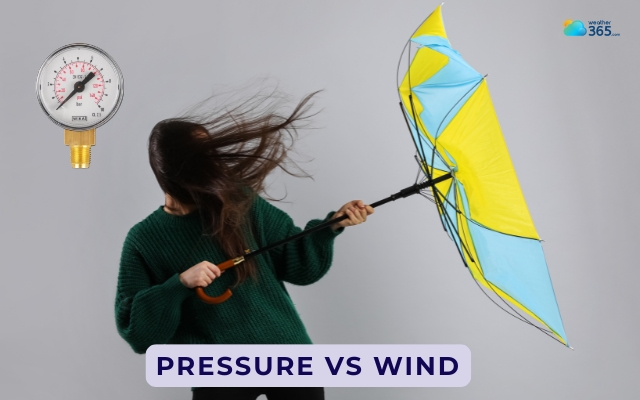
Greater pressure leads to stronger wind
Humidity and Precipitation
Humidity and precipitation are also closely connected.
When the air contains a large amount of water vapor, it becomes easier for clouds to form.
As moist air rises and cools, the water vapor condenses into tiny droplets that gather into clouds.
If these droplets grow large enough, they fall to the ground as precipitation such as rain or snow. In this way, high humidity often increases the chances of precipitation.
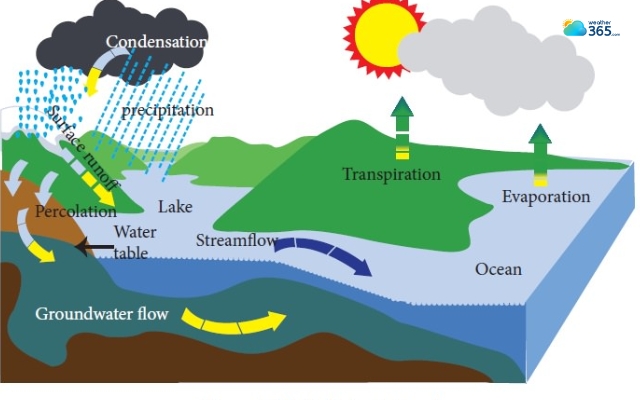
Humidity and precipitation in a hydrological cycle
Fronts and Weather Changes
Weather fronts occur when different air masses meet, usually with contrasting temperatures and moisture levels.
For instance, when cold air pushes into a region of warmer air, the warm air is forced to rise.
This rising air cools and condenses, often leading to cloud development, rain, or thunderstorms.
Because of these interactions, fronts are responsible for many sudden and dramatic weather changes.
Confused about the fronts? We have their symbols here!
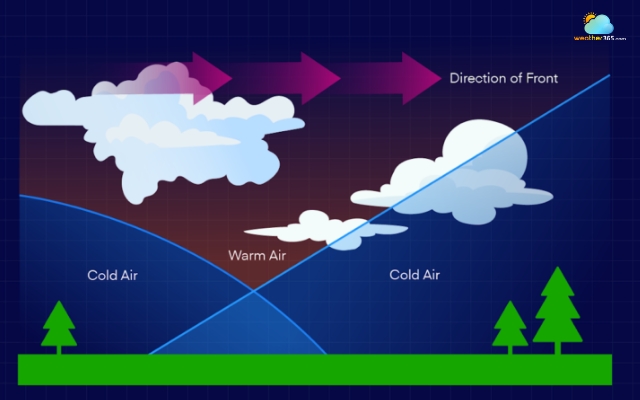
Fronts lead to many sudden weather changes
Final Thought
Weather elements are the hidden pieces behind every forecast you check. Once you start noticing how temperature, wind, pressure, and humidity work together, the weather stops feeling random. Instead, you begin to see the patterns behind it, and reading the sky becomes a lot more interesting!
Frequently Asked Questions (FAQs)
These may include temperature, precipitation, solar radiation, humidity, wind patterns, atmospheric pressure, and other environmental indicators used to analyze climate systems.
Related post
Which is The Most Accurate Weather Forecast? A Complete Guide
 1538
1538
 0
0
 4.8
4.8
 18/08/2026
Symbols On Weather Explained: Master The Weather Maps Like a Pro
1323
0
4.9
18/08/2026
What Is The GFS Weather Model: Accuracy, Uses & Comparison Explained
1298
0
5.0
18/08/2026

0 Comment
Leave a comment
Your email address will not be published. Required fields are marked *