




How Does Temperature Affect The Weather? Simply Explained


How does temperature affect the weather, and why does the forecast often feel so different from reality? If you’ve ever stepped outside and thought, “This isn’t what I expected,” you’re not alone. This guide will help you make sense of those confusing daily weather changes. Diving in!
How does temperature affect the weather
Factors Affecting The Weather
Factors affecting the weather include solar radiation, temperature and latitude, air pressure, humidity, wind patterns, topography, ocean currents, and atmospheric compositions.
Solar radiation
Solar radiation is the starting point of everything. The Sun provides the energy that heats the Earth, but this heating is uneven because of the planet’s shape and rotation.
Some areas receive more direct sunlight, while others get less. These differences create temperature variations, which act as the driving force behind most weather processes.
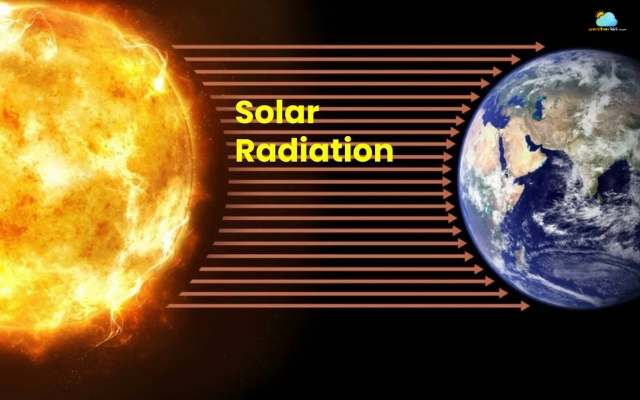
Difference in heating from solar radiation causes temperature variations
Temperature and latitude
Closely linked to the weather are temperature and latitude.
Regions near the equator tend to be warmer because sunlight hits them more directly throughout the year.
In contrast, areas closer to the poles receive sunlight at a lower angle, making them cooler.
This uneven heating across latitudes is one of the main reasons why climates and weather patterns differ so much around the world.
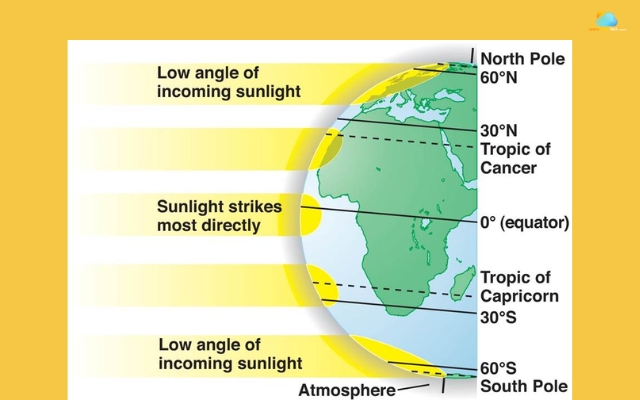
Regions near the equator tend to be warmer
Air pressure
Another key factor affecting the weather is air pressure.
When air warms up, it expands, becomes lighter, and rises, forming low-pressure areas.
Cooler air, on the other hand, is denser and sinks, creating high-pressure zones.
These pressure differences are essential because they set air in motion, shaping wind and influencing daily weather changes.
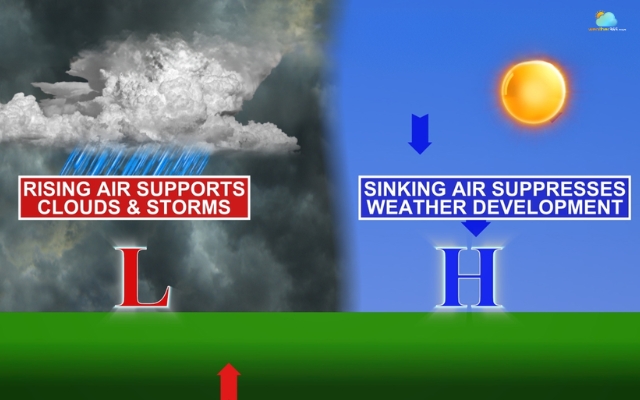
Air pressure shapes wind and influences daily weather changes
Humidity
You’ll also feel the effects of humidity and water vapor in everyday life. Humidity refers to the amount of moisture in the air, and it plays a big role in how the weather feels.
While many people focus on what is air temperature, humidity dictates how that temperature is experienced.
High humidity can make hot days feel even more uncomfortable, while low humidity can make cold air feel sharper.
Beyond comfort, moisture in the air is crucial for cloud formation and precipitation.
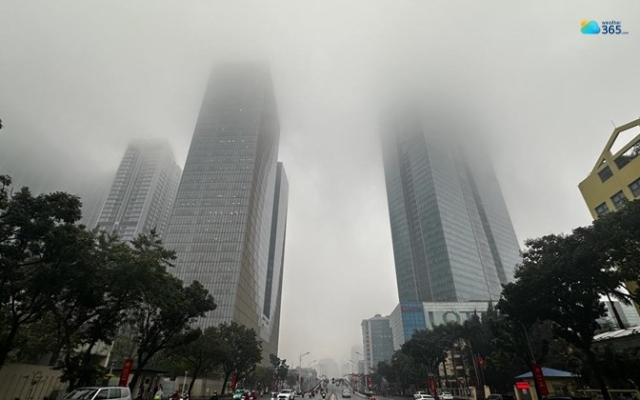
High humidity makes people feel uncomfortable
Wind patterns
Then there are wind patterns, which are essentially air moving from high-pressure areas to low-pressure areas.
These include different types of winds like trade winds and westerlies, as well as local winds such as sea breezes and land breezes.
Wind helps distribute heat and moisture around the Earth, making weather more dynamic and sometimes unpredictable.
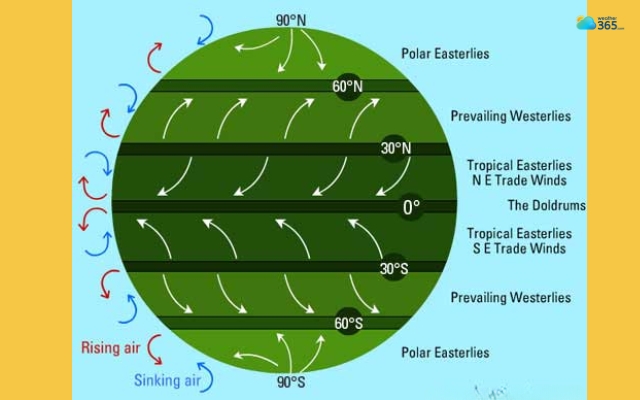
Wind patterns make the weather dynamic and unpredictable
Topography
The topography of an area also has a strong influence. Mountains, valleys, and landscapes can shape how air moves.
For example, when air is forced to rise over mountains, it cools and often produces rain on one side, while the other side remains dry - a phenomenon known as the rain shadow effect.
Ocean currents
Meanwhile, ocean currents and water bodies play a quieter but powerful role.
Oceans absorb large amounts of heat and release it slowly over time, helping to regulate temperatures, especially in coastal regions.
Warm and cold currents can also influence local weather, sometimes making certain areas warmer or cooler than expected.
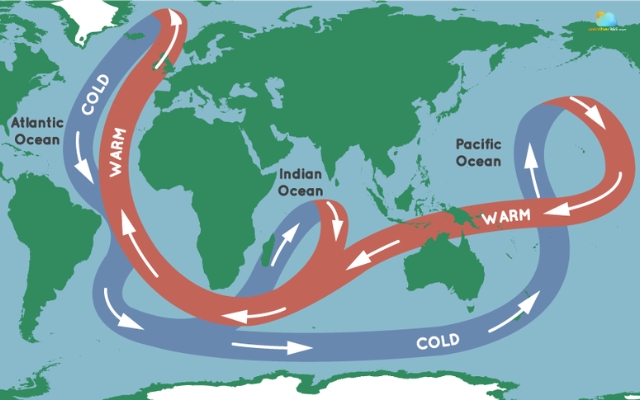
Warm and cold currents can make certain areas warmer or cooler
Atmospheric compositions
Finally, atmospheric composition ties everything together.
The gases in the atmosphere, including greenhouse gases, determine how much heat is trapped or released.
Even small changes in this balance can affect both short-term weather conditions and long-term climate trends.
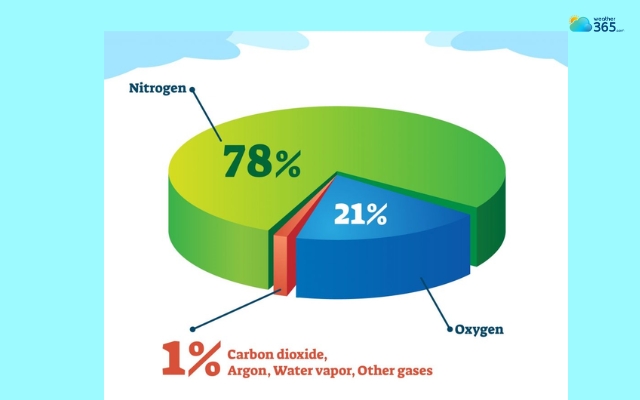
Change in atmospheric composition can affect the weather patterns
How Does Temperature Affect The Weather?
When temperature shifts, it changes how air behaves, how moisture moves, and how stable or unstable the atmosphere becomes.
That’s why even a small change in temperature can lead to completely different weather conditions.
Air Pressure and Wind
Temperature directly affects air pressure by changing how air molecules move.
When air heats up, its molecules move faster, spread out, and become less dense. This causes the air to rise, creating a low-pressure area.
On the other hand, cooler air is denser and sinks, forming high-pressure zones.
These pressure differences are what create wind. Air naturally moves from high-pressure areas to low-pressure areas, and the bigger the temperature difference, the stronger the wind becomes.
So next time you feel a sudden breeze or strong wind, it’s often the result of temperature imbalances trying to even themselves out.
Discover more on how does weather affect air pressure!
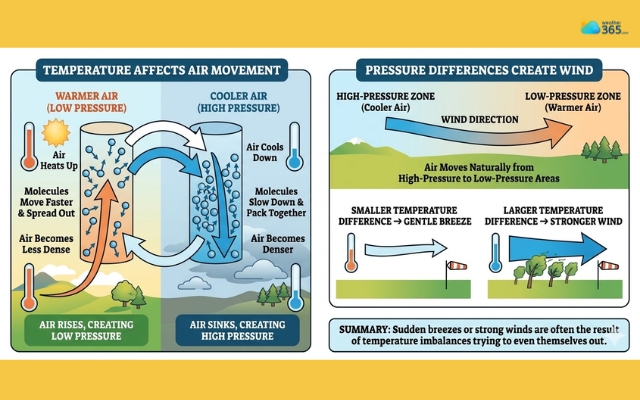
Temperature can directly affect air pressure
Humidity and Precipitation
Temperature also controls how much moisture the air can hold. Warm air can store more water vapor, which is why hot days often feel humid and heavy.
This high moisture capacity is a major factor in heat index vs feels like, where humidity traps heat and prevents sweat from evaporating quickly.
As warm, moist air rises and cools, it loses its ability to hold that moisture. The water vapor then condenses into tiny droplets, eventually forming rain, snow, or other types of precipitation.
This is why you’ll often notice rain after a warm, humid day: the atmosphere has reached its limit and needs to release that moisture.
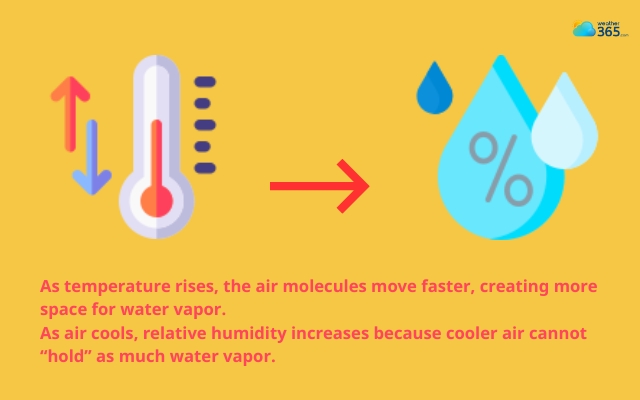
How does temperature affect humidity and precipitation?
Cloud Formation
Clouds are a direct result of weather changes in the air.
When warm air rises, it expands and cools. Once it cools enough to reach its dew point, the water vapor inside it begins to condense into visible droplets - forming clouds.
The type and thickness of clouds also depend on temperature.
For example, rapid cooling can create thick, dark clouds that bring rain, while slower changes may form thin, wispy clouds.
In short, without temperature changes, clouds wouldn’t form, and neither would most weather events.
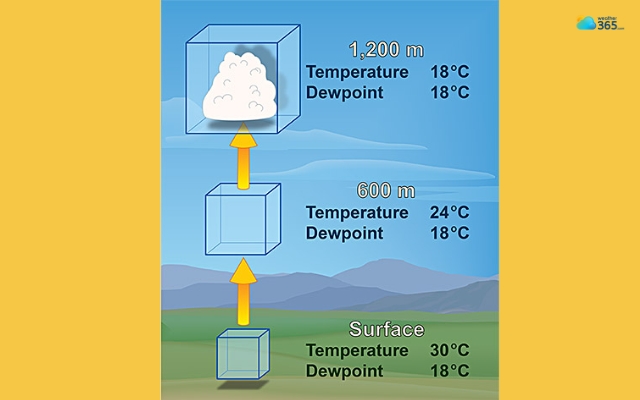
Temperature change in the air results in the clouds
Storms & Other Weather Patterns
Temperature differences are one of the main reasons storms develop.
When warm and cold air masses meet, the contrast creates instability in the atmosphere.
Warm air rises quickly over cooler air, cools down, and forms clouds and precipitation.
If this process is strong enough, it can lead to thunderstorms, heavy rain, or even larger systems like hurricanes.
Thermal energy drives wind, precipitation, and storm cycles across US climate temperature trends.
The greater the temperature contrast, the more energy is available for storms to grow.
This is also why weather can change so quickly because temperature differences are constantly shifting, especially between day and night or across regions.
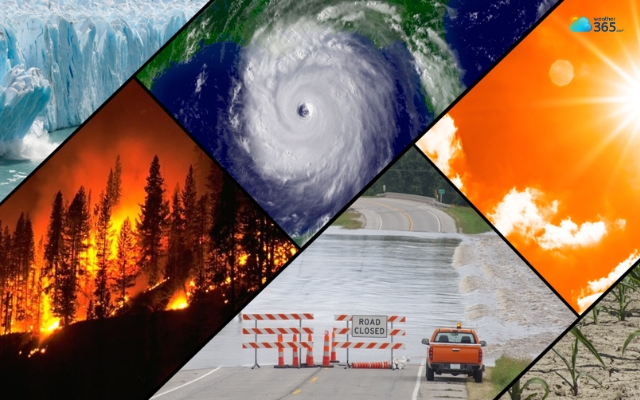
Constant shifting in temperature differences fuels weather change
How Does Climate Change Affect Weather?
If you’ve ever felt like the weather is becoming harder to predict: hotter days, heavier rain, or sudden storms, you’re not imagining it.
Climate change is closely tied to rising global temperatures, and that shift is significantly reshaping how weather behaves across the world.
Climate change means the Earth is holding more heat than before. This extra heat not only makes things warmer; it also adds more energy to the atmosphere.
And when the atmosphere has more energy, weather patterns become more intense and less stable.
Extreme weather events
One of the most noticeable impacts is the increase in extreme weather events.
Higher temperatures lead to more frequent heatwaves, and these can last longer and reach more dangerous levels.
At the same time, warmer air holds more moisture, which can result in heavier rainfall and a higher risk of flooding.
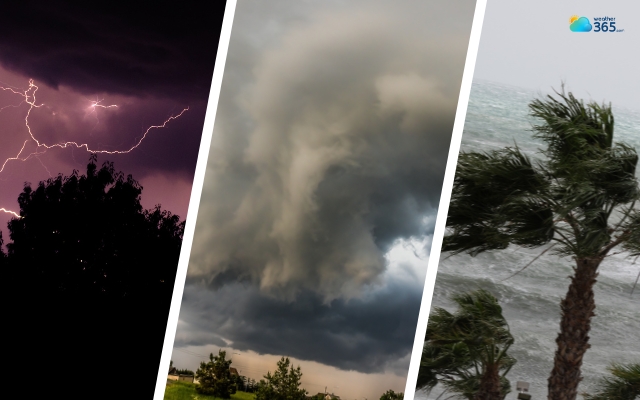
Climate change means the increasing of extreme weather events
Change in weather patterns
Climate change also disrupts familiar weather patterns.
Systems that used to follow predictable cycles, like seasonal rains or wind patterns, can shift or behave irregularly.
This is why some regions experience unexpected droughts while others deal with unusually heavy storms.
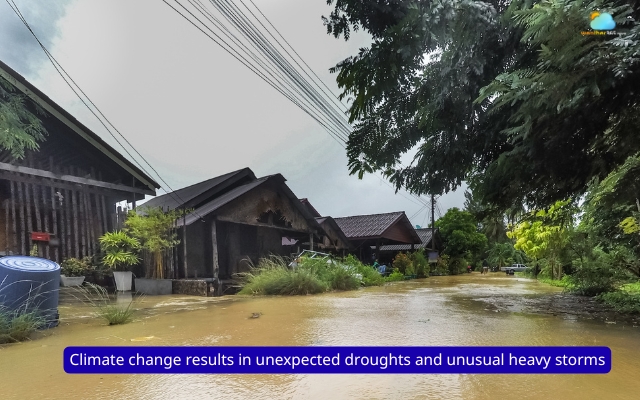
Climate change causes changes in weather patterns
Storms fuel
Another important effect is linked to the oceans.
As global temperatures rise, oceans absorb much of that heat. Warmer ocean water can fuel stronger storms, especially tropical systems like hurricanes.
At the same time, melting ice and thermal expansion cause sea levels to rise, which can make coastal weather events more damaging.
What makes all of this challenging is that climate change does not create entirely new types of weather, it amplifies what already exists.
Hot days become hotter, wet conditions become wetter, and dry areas can become even more prone to drought.
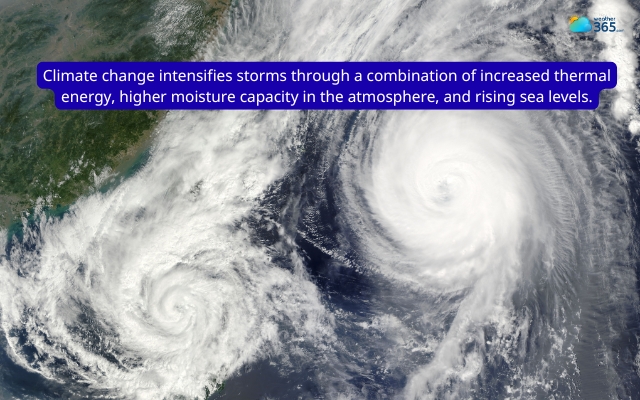
Warmer ocean water from climate change can fuel stronger storms
Final Thought
Understanding how does temperature affect the weather helps you make sense of everyday forecasts and long-term climate trends. Once you see how temperature drives wind, rain, and storms, those “unexpected” weather changes feel far less random and much easier to anticipate in your daily life.
Frequently Asked Questions (FAQs)
Related post
What's The Temperature For Tomorrow? A Simple Guide to Tomorrow’s Forecast
 566
566
 8
8
 4.7
4.7
 18/08/2026
What Is Air Temperature? Definition, Measurement, and Key Factors
431
8
4.8
18/08/2026
How To Measure Air Temperature? Step-by-Step Guide To Accurate Measurement
305
7
4.9
18/08/2026

8 Comment
Raymond Ross
This makes weather feel a lot less random. Temperature is connected to so many things happening in the atmosphere.
Maximus Holmes
The more I learn about weather, the more I realize temperature is kind of the starting point for everything else. Pretty fascinating!
Maximus Schultz
Can temperature changes influence wind?
weather365
Yes. Uneven heating creates differences in air pressure, and those pressure differences can drive wind.
Kenneth Gibson
Why does temperature matter for cloud formation?
weather365
Temperature affects how much moisture the air can hold and whether water vapor can condense into clouds.
Alan Wood
How does temperature affect weather?
weather365
Temperature influences air pressure, humidity, cloud formation, wind, and other atmospheric processes.
Leave a comment
Your email address will not be published. Required fields are marked *