




How Does Weather Affect Air Pressure? A Comprehensive Guide


How does weather affect air pressure, and why does the air sometimes feel “heavy” right before it rains? These small but noticeable changes are tied to how temperature and moisture shift in the atmosphere. This guide will help you finally make sense of it all. Scrolling down to discover now!
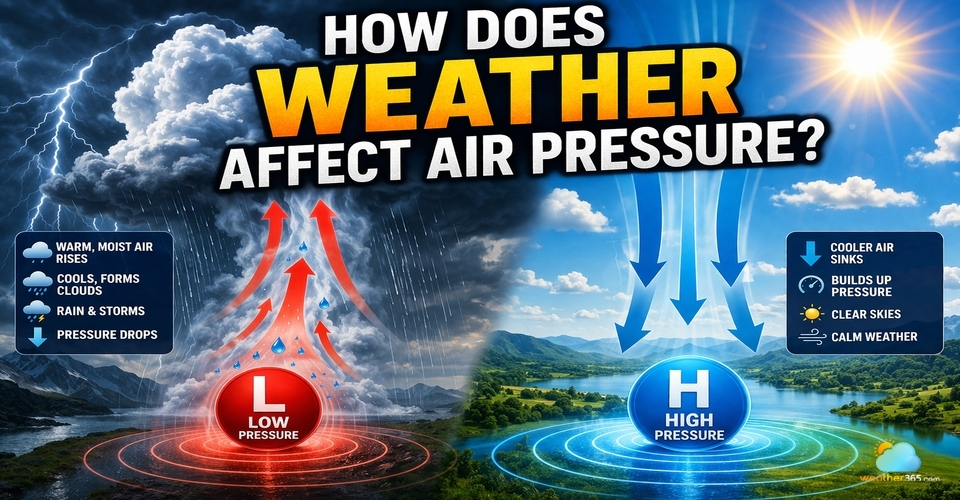
How does weather affect air pressure
About air pressure
Air pressure (or atmospheric pressure) is the force created by the weight of air pressing down on the Earth’s surface.
Even though air feels “invisible,” it has mass. The layer of gases surrounding our planet - called the atmosphere is constantly pushing down on everything, including you.
If you want a more beginner-friendly breakdown, you can explore this guide on what is air pressure!

Air has mass to push everything down
What makes air pressure interesting is that it’s never truly stable.
It is always changing, even if those changes are too subtle for us to notice right away.
These shifts happen because air is constantly moving, heating up, cooling down, rising, or sinking.
And those movements are exactly what create different types of weather.
To make this easier to picture, imagine the atmosphere like a giant ocean of air. Just like water currents in the ocean, air is always circulating.
When air gathers and presses downward, pressure increases. When air rises and spreads out, pressure decreases.
These differences are what meteorologists track to understand and predict weather patterns.
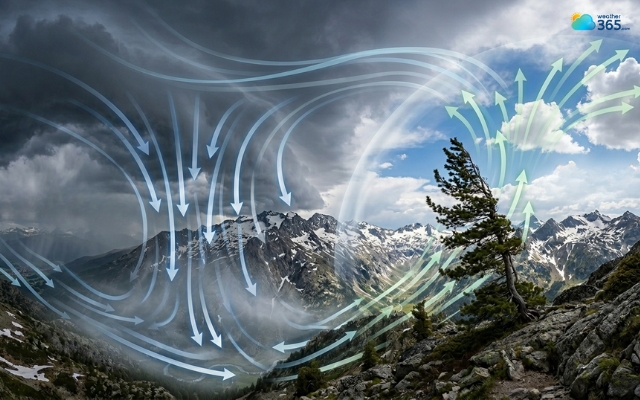
Pressure increases when air gathers and presses downward
This is also where the idea of pressure systems comes into play.
Some areas experience higher pressure, while others have lower pressure, and the contrast between them drives wind and weather changes.
If you’re curious about how these systems compare in detail, this article on the difference between high and low pressure systems is a helpful next step.
In everyday life, air pressure explains more than you might think.
It’s the reason your ears pop when you change altitude, why the air can feel “heavy” before rain, and why clear days often feel crisp and stable.
While we can’t see air pressure directly, we can definitely feel its effects, and the weather is one of the clearest ways it shows up.
How does weather affect air pressure?
The relationship between weather and air pressure is a "two-way street": while air pressure changes drive the weather, factors like temperature and moisture are what cause those pressure changes in the first place.
Temperature
Do you know how does temperature influence air pressure in weather systems?
In fact, temperature is the strongest factor influencing air pressure, and it explains why pressure is constantly shifting throughout the day.
Warm Air = Lower Pressure
When air gets warmer, its molecules move faster and spread farther apart. This expansion makes the air less dense, so it becomes lighter and starts to rise.
As air rises, it leaves behind less mass pressing down on the surface, which leads to a drop in air pressure.
That’s why hot afternoons or tropical regions are often linked to lower pressure and unstable weather.
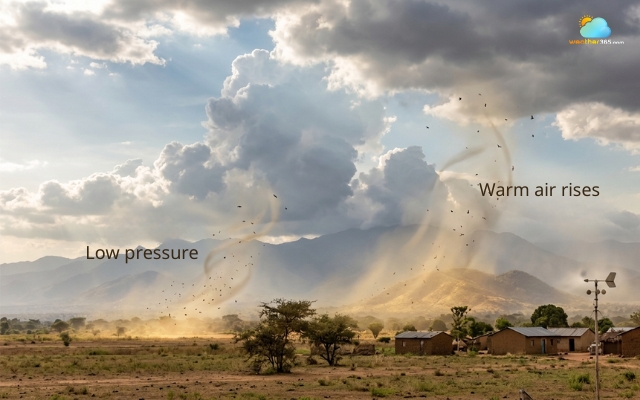
The air is lighter and starts to rise
Cold Air = Higher Pressure
On the other hand, when the air cools down, the opposite happens.
Molecules slow down and pack closer together, making the air denser and heavier.
This heavier air sinks toward the ground, increasing the force pressing down and creating higher pressure.
That’s also why cooler mornings often feel more stable and “clear.”
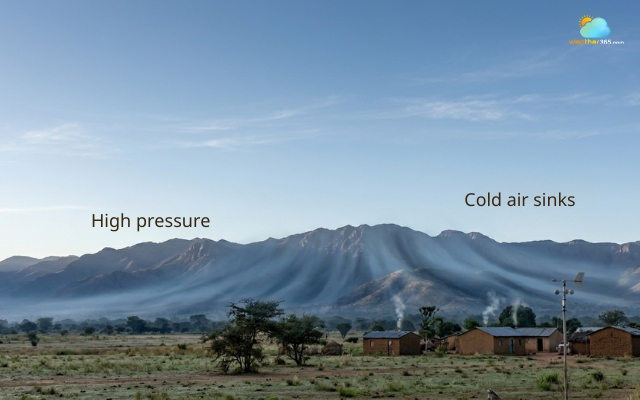
Sinking air increases the force pressing down
Humidity
Humidity plays a quieter but still important role, and it often surprises people.
Humid air is actually lighter than dry air.
This happens because water vapor replaces heavier gases like nitrogen and oxygen in the air.
As moisture levels increase, the overall weight of the air decreases slightly. That means humid air tends to rise more easily, which contributes to lower pressure near the surface.
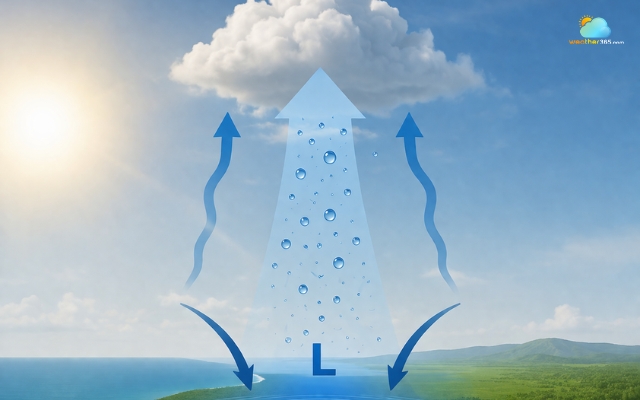
Increasing moisture level decreases the overall weight of the air
This is one reason why pressure often drops before rain because the air is becoming more humid and more unstable at the same time.
You can often feel this yourself. That sticky, heavy sensation before a storm is a sign that moisture is building up and pressure is beginning to fall.
Altitude and Movement
Air pressure is also strongly affected by how air moves vertically, not just by its temperature or moisture content.
Temperature swings in high altitude areas rapidly alter local barometer readings on Colorado air pressure and weather.
Rising Air
When air is forced to rise, either because it’s heated by the ground or pushed upward by terrain like mountains, it creates what meteorologists call an “instability.”
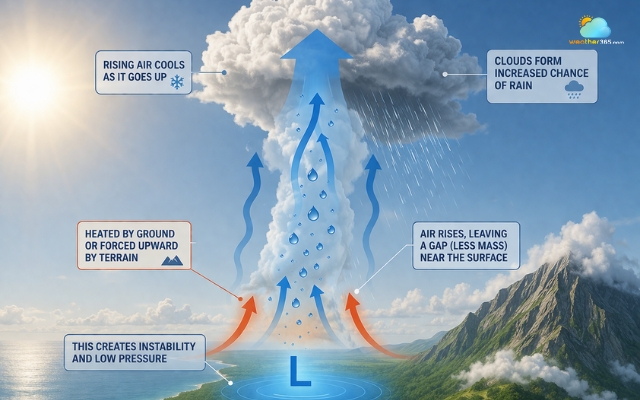
Rising air help clouds to form
As the air rises, it leaves behind a small gap (or reduction of mass) near the surface. This results in a low-pressure area forming below.
Rising air also cools as it goes up, which helps clouds develop and increases the chance of rain.
Sinking Air
On the flip side, when air sinks from higher altitudes, it increases the amount of air near the surface.
This builds up pressure and forms a high-pressure system.
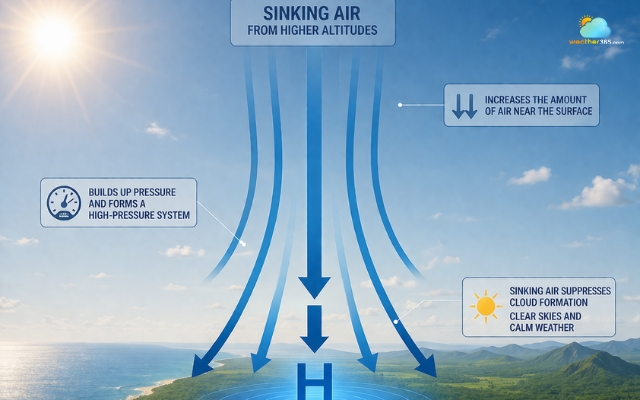
Sinking air tends to prevent cloud formation
Sinking air tends to suppress cloud formation, which is why these conditions are usually linked to clear skies and calm weather.
This vertical movement of air is happening all the time, even if we don’t notice it.
But it plays a key role in shaping pressure patterns and explains why pressure changes are often tied to cloud formation and shifting weather.
Storm systems and pressure
Storms are where all these factors come together, and they make pressure changes much easier to notice.
Most storm systems are linked to low-pressure areas. In these systems, warm and moist air rises quickly into the atmosphere.
As it rises, it cools and forms clouds, eventually leading to rain or even severe weather.
Because air is continuously rising, less air remains at the surface, so pressure keeps dropping.
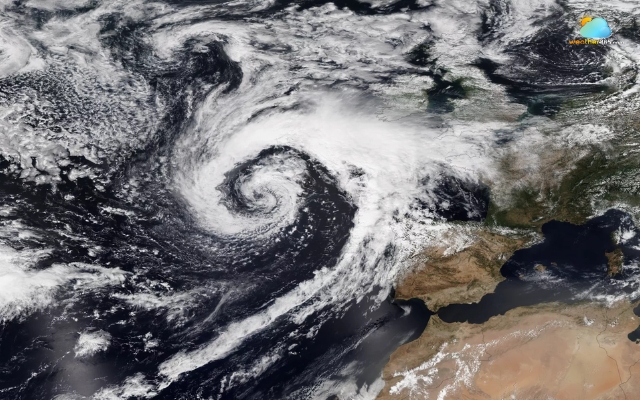
Most storm systems are linked to low-pressure areas
This is why a falling barometer is often one of the first signs that bad weather is on the way. If the pressure drops slowly, it might mean steady rain.
But if it drops quickly, it can signal stronger systems like thunderstorms or even cyclones.
After the storm passes, the pattern usually reverses. Cooler, drier air moves in and begins to sink, increasing surface pressure again.
That’s when skies start to clear, and the air feels fresher and more stable.
In everyday terms, pressure acts like a signal: when it’s falling, the atmosphere is becoming more active and unstable; when it’s rising, things are calming down.
Atmospheric Regions
Let’s look at how the Earth is divided into major atmospheric pressure regions.
These zones are shaped by how sunlight heats different parts of the planet, which then controls whether air rises or sinks.
Equatorial low-pressure zone
This region sits around the equator, where sunlight is strongest year-round. The ground heats up quickly, warming the air above it.
As the air becomes warmer, it rises continuously, creating a wide area of low pressure.
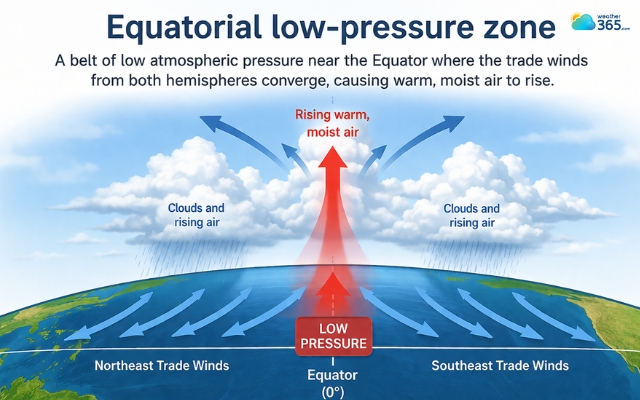
Air always rises in equatorial low-pressure zone
Because air is always rising here, clouds form easily, and rainfall is frequent. That’s why equatorial regions are known for tropical climates with high humidity and regular storms.
In simple terms, this zone is like a constant “engine” driving rising air and low pressure.
Subtropical high-pressure zone
After rising near the equator, air moves outward and eventually cools down. As it cools, it becomes denser and starts to sink around 30° latitude north and south.
This sinking air creates high-pressure systems. Since sinking air suppresses cloud formation, these regions are typically dry and stable.
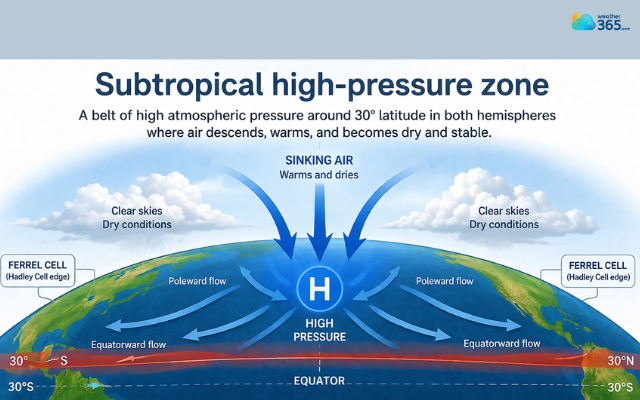
Sinking air creates high-pressure systems
This is also why many of the world’s deserts like the Sahara, are located in subtropical zones.
You can think of this area as the opposite of the equator: instead of rising, active air, you get sinking, calm air.
Mid-latitude (temperate) pressure zones
In the mid-latitudes, things get more dynamic. This is where warm air from the subtropics meets colder air from the poles.
Because of this interaction, pressure systems here are constantly shifting. Air can rise or sink depending on which air mass is stronger at a given time.
That’s why the weather in these regions often changes quickly, from sunny to rainy in just a day or two.
This zone is basically a “battleground” between high and low pressure, which creates a lot of the weather patterns we experience daily.
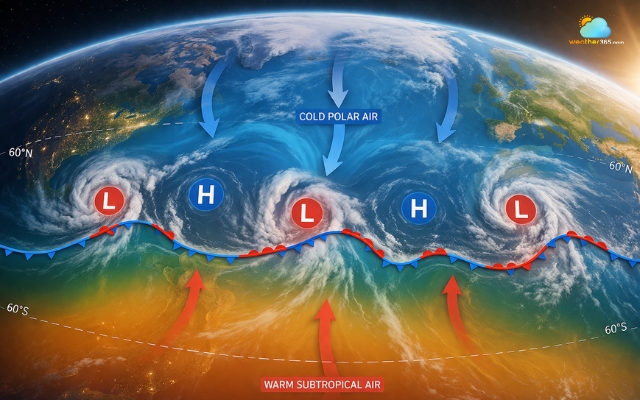
The weather in mid-latitude pressure zones changes quickly
Polar high-pressure zone
At the poles, temperatures are extremely low. The air becomes very dense and heavy, causing it to sink toward the surface.
This creates stable high-pressure systems. These regions are generally dry, with limited precipitation, because sinking air makes it difficult for clouds to form.
Even though conditions are stable, strong winds can still occur due to pressure differences between the poles and lower latitudes.
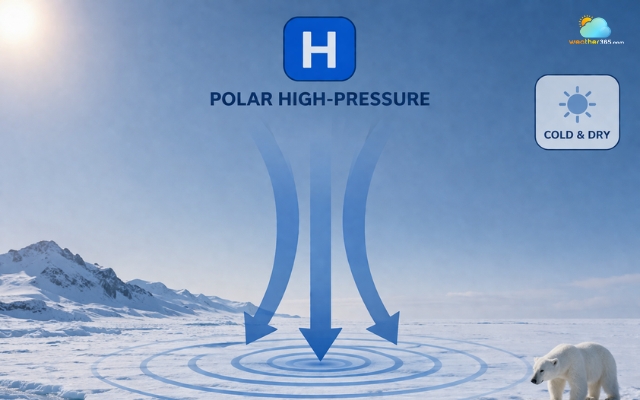
The air in Polar high-pressure zone sinks toward the surface
Closing thoughts
How does weather affect air pressure? It all comes down to temperature, humidity, and air movement working together. Warm, moist, rising air lowers pressure, while cold, dry, sinking air increases it. Understanding these patterns makes it much easier to predict everyday weather changes.
Frequently Asked Questions (FAQs)
Related post

What Is Barometric Pressure? Simple Explanation for Beginners
 1026
1026
 8
8
 5.0
5.0
 30/09/2026

Difference Between High and Low Pressure Systems: Easy Explanation
570
8
4.6
27/08/2026

What Is Air Pressure? Understanding Atmospheric Pressure
307
15
5.0
18/08/2026

8 Comment
Aylin Williams
I’m starting to see pressure readings as more than numbers on a weather app. They’re basically clues about what the atmosphere is doing behind the scenes.
Ariana Mills
The atmosphere really doesn’t sit still for long. Pressure changes are like little signals that the weather pattern is shifting.
Elle Ward
Does humidity have any connection with air pressure?
weather365
Yes. Water vapor is less dense than dry air, so changes in moisture can influence air density and contribute to pressure variations.
Alexandria King
Why can approaching weather systems cause noticeable pressure changes?
weather365
Moving high- and low-pressure systems redistribute air and change the weight of the atmosphere above a location, causing pressure to rise or fall.
Kamila Cooper
Can a change in temperature cause air pressure to change?
weather365
Yes. Temperature changes can alter air density and the way air moves, which can contribute to changes in atmospheric pressure.
Leave a comment
Your email address will not be published. Required fields are marked *