




What Is Barometric Pressure? Simple Explanation for Beginners


What is barometric pressure, and why do weather apps throw numbers you don’t fully understand? If you’ve ever felt confused reading forecasts or wondered why headaches hit before rain, this guide is for you. In fact, it is simpler than it seems! Let’s break it down so those numbers finally make sense to you!
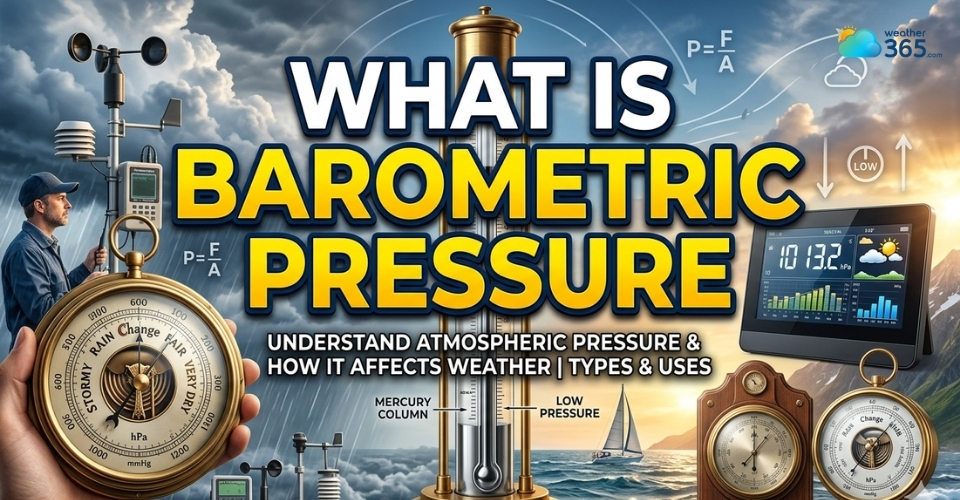
What is barometric pressure
- What is barometric pressure?
- Atmospheric & barometric pressure
- What actually creates changes in pressure?
- Types of barometric pressure: high vs low
- When was the Barometer invented?
- What is the significance of barometric pressure readings?
- It helps predict the weather
- It affects your health
- It affects Aviation
- It affects outdoor sports ( fishing, hunting, hiking)
- It affects soil conditions and plant health
- What is a barometric pressure unit?
- Instruments for measuring barometric pressure
- Mercury Barometers
- Aneroid Barometers
- Digital Barometers
- How to measure barometric pressure?
- Step 1: Use a barometer to get a reading
- Step 2: Make sure the reading is accurate
- Step 3: Understand the number (not just read it)
- Step 4: Track changes over time
What is barometric pressure?
Barometric pressure (also called atmospheric pressure) is the force exerted by the weight of the air in Earth’s atmosphere on a given area.
Although we can't see or feel it directly, changes in barometric pressure play a major role in shaping everyday weather patterns.
In places like Erie, where weather can change quickly, understanding these pressure shifts is especially useful.
But how does barometric pressure affect Erie’s weather? And why should locals care?
To understand its impact on our lake-effect snow and changing seasons, we first look at the science behind it.
Atmospheric & barometric pressure
The Earth is surrounded by layers of air called the atmosphere. This air is made up of tiny molecules that have mass.
Because of gravity, all of that air is constantly being pulled toward the Earth’s surface.
The result? A force pushing down on everything, including you. That force is what we call barometric pressure.
A helpful way to picture this is to imagine standing at the bottom of a huge ocean, except instead of water, it’s air.
The deeper you go in water, the more pressure you feel.
With air, the same idea applies: the more air above you, the greater the pressure.
This is why barometric pressure is strongest at sea level and decreases as you go higher. On a mountain, there’s less air above you, so the pressure drops.
What actually creates changes in pressure?
Barometric pressure is constantly changing throughout the day. These changes mainly come from how air moves and reacts to temperature.
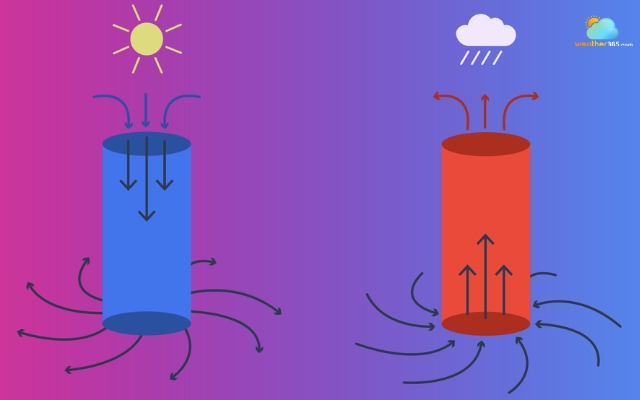
Changes in pressure are mainly due to air moving
Warm air tends to rise because it’s lighter.
When air rises, it leaves behind an area with less weight pressing down, creating lower pressure.
On the other hand, cold air is denser and sinks, adding more weight to the surface and creating higher pressure.
This continuous movement of air is what makes pressure rise and fall, and it’s also the reason weather keeps changing.
Types of barometric pressure: high vs low
Instead of thinking of barometric pressure as just a number, it’s more useful to understand it in terms of patterns.
High-pressure systems form when air sinks and becomes more compact. This usually leads to clear skies and stable weather because sinking air makes it harder for clouds to form.
Low-pressure systems, on the other hand, happen when air rises. As air rises, it cools, and moisture in the air can turn into clouds and rain. That’s why low pressure is often linked to cloudy, windy, or stormy conditions.
Still confused about the difference between high and low pressure? We have a full guide here!
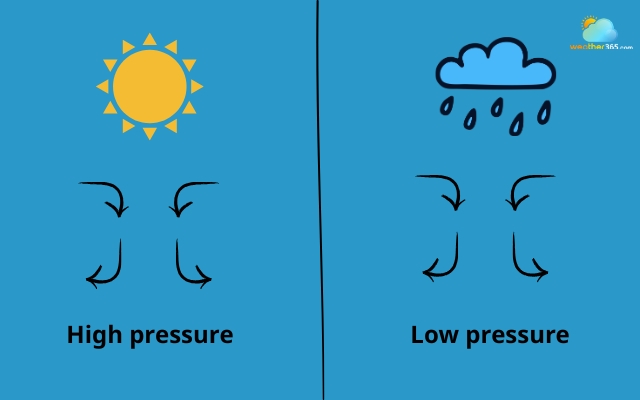
High and low pressure
When was the Barometer invented?
The barometer was invented in 1643 by Evangelista Torricelli, an Italian physicist and student of Galileo.
At the time, scientists were trying to answer a simple but puzzling question: Does air actually have weight?
Torricelli’s experiment changed everything. He filled a long glass tube with mercury, sealed one end, and inverted it into a bowl of mercury.
Instead of emptying completely, some mercury stayed inside the tube. What held it there?
The answer was atmospheric pressure:
The weight of the air pushing down on the surface of the liquid
This was a breakthrough moment. For the first time, humans could measure air pressure, not just feel or guess changes in the weather.
Torricelli had essentially created the first mercury barometer, and with it, a new way to understand the atmosphere.
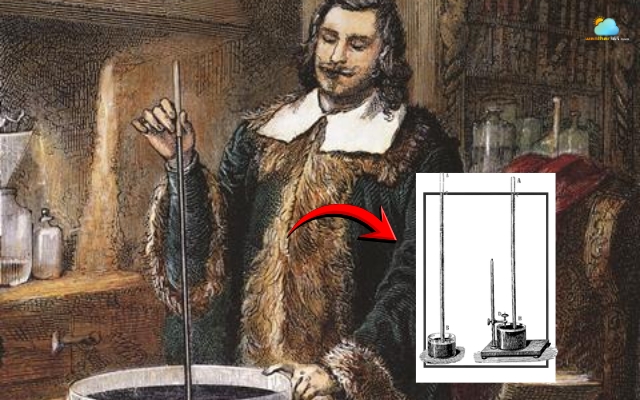
Evangelista Torricelli invented the barometer in 1643
What’s interesting is how quickly people connected this invention to weather patterns.
They noticed that when the mercury level dropped, storms often followed. When it rose, the weather tended to clear up.
This observation laid the foundation for modern forecasting, and it’s exactly why learning how to read a barometer is still useful today.
Over time, the design evolved.
Mercury barometers were later complemented by aneroid barometers (which don’t use liquid) and eventually digital sensors in smartphones and weather stations.
But the core idea hasn’t changed since 1643:
Changes in air pressure signal changes in weather
So while today’s devices may look more advanced, every barometer you use still traces back to Torricelli’s simple yet revolutionary experiment.
What is the significance of barometric pressure readings?
Barometric pressure readings are important because they help predict weather changes and influence many everyday activities.
They can affect human health, improve aviation safety, guide outdoor sports planning, and impact soil moisture and plant growth by reflecting changes in atmospheric conditions.
It helps predict the weather
If there’s one reason barometric pressure matters most, it’s this: it helps us see weather changes before they happen.
Meteorologists closely track how pressure is rising or falling.
When pressure drops, it usually means air is rising and becoming unstable, which can lead to clouds, rain, or even storms.
When pressure rises, the air becomes more stable, often bringing clear skies and calmer conditions.
For example, tracking barometric pressure in Hawaii can help identify approaching tropical systems or changing trade wind patterns across the islands.
Likewise, comparing today's readings with the average barometric pressure in Florida can provide useful insight into whether local conditions are typical for the season or suggest an approaching weather change, especially during hurricane season.
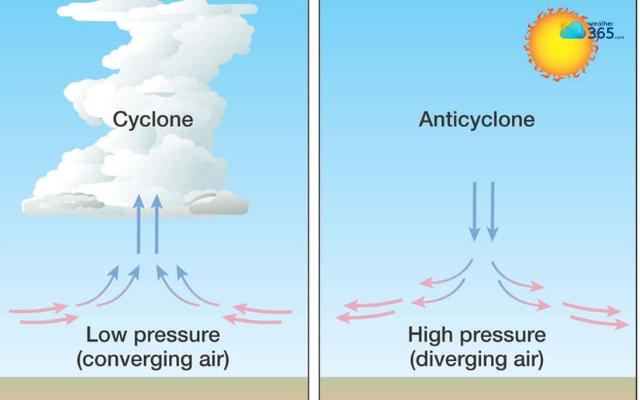
Barometric pressure can predict a cyclone
It affects your health
Barometric pressure not only acts on the environment, but it also acts on your body.
Since the human body contains fluids and air-filled spaces (like sinuses and joints), changes in external pressure can create subtle imbalances.
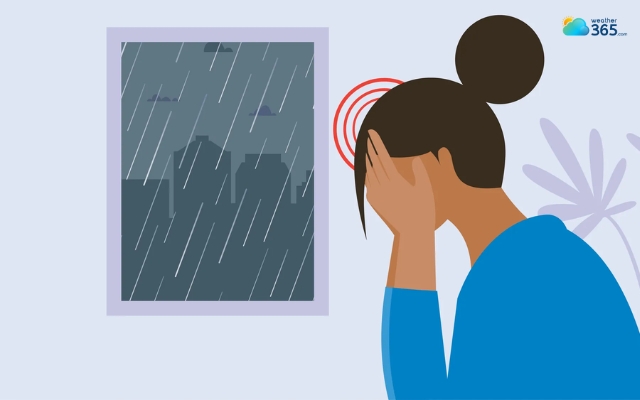
A change in pressure can cause headaches
When pressure drops, some people may notice headaches, joint discomfort, or sinus pressure.
This happens because the difference between internal and external pressure can cause tissues to expand slightly, leading to discomfort.
Not everyone is sensitive to these changes, but for those who are, especially people with migraines or arthritis, barometric pressure becomes more than just a weather term.
It becomes something you can actually feel.
It affects Aviation
In aviation, barometric pressure is essential.
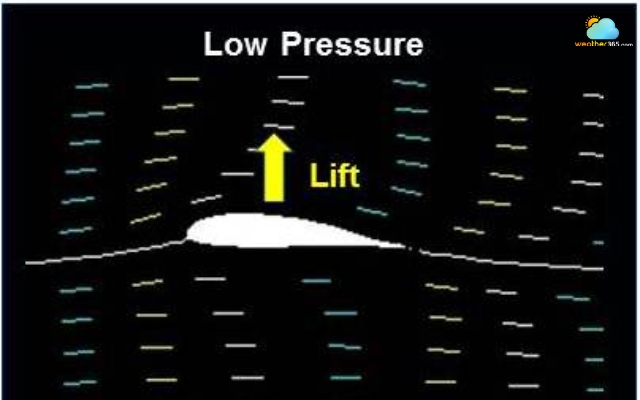
Theory of flights
Aircraft rely on pressure readings to determine altitude. Pilots use instruments that calculate height based on how pressure changes with elevation.
If pressure readings are off or not updated correctly, it can lead to incorrect altitude readings, which directly impacts flight safety.
That’s why pressure data is constantly monitored and adjusted during flights.
It affects outdoor sports ( fishing, hunting, hiking)
If you enjoy activities like fishing, hiking, or hunting, barometric pressure quietly influences your experience.
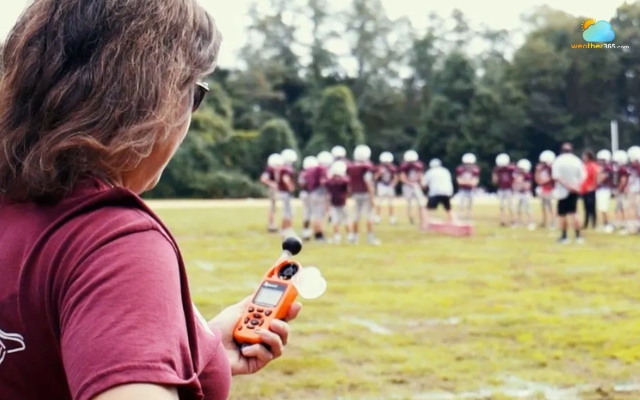
Barometric pressure can influence the outdoor activities schedule
For example, falling pressure often signals changing weather, which can affect visibility, safety, and even animal behavior.
Fish and wildlife tend to respond to pressure shifts, becoming more or less active depending on conditions.
Hikers also benefit from understanding pressure trends.
A sudden drop can be an early warning sign of incoming bad weather - something that’s especially important in remote or mountainous areas.
It affects soil conditions and plant health
Barometric pressure also plays a role in the natural environment, especially in agriculture and plant health.
Changes in pressure affect crop development
Changes in pressure are closely linked with humidity, rainfall, and air movement, all of which influence how plants grow.
Stable pressure conditions are often associated with predictable weather, which helps maintain consistent soil moisture.
On the other hand, rapid pressure changes can signal storms or dry spells, both of which can stress plants and affect crop development.
What is a barometric pressure unit?
Barometric pressure units are millibars (mb) and hectopascals (hPa), and inches of mercury (inHg).
The pascal (Pa) is the SI unit, though it is typically expressed as hPa for weather reports.
Millibars (mb)
Millibars are widely used in meteorology, especially in weather maps and forecasts.
They are convenient because the numbers are easy to read and compare.
For example, standard atmospheric pressure at sea level is about 1013 mb, which becomes a useful reference point for identifying high or low pressure systems.
Another example, if you're monitoring barometric pressure in Kansas City, many international weather websites display the current reading in mb or hPa.
Comparing daily pressure trends can help you understand changing weather conditions, such as the approach of a cold front or a developing storm.
>>>>> Check the current barometric pressure in Kansas City! <<<<<
Inches of mercury (inHg)
This unit comes from early barometers that used liquid mercury.
Instead of calculating pressure directly, they measured how high mercury would rise in a tube under air pressure.
That height, measured in inches, became a standard unit.
Today, inches of mercury are still commonly used in aviation and in some countries’ weather reports, particularly in the United States.
For example, if you look up barometric pressure in New York, many local weather services display the pressure in inHg. A typical sea-level reading is about 29.92 inHg.
Even though modern devices are digital, this unit remains widely used because of its long history in flight systems.
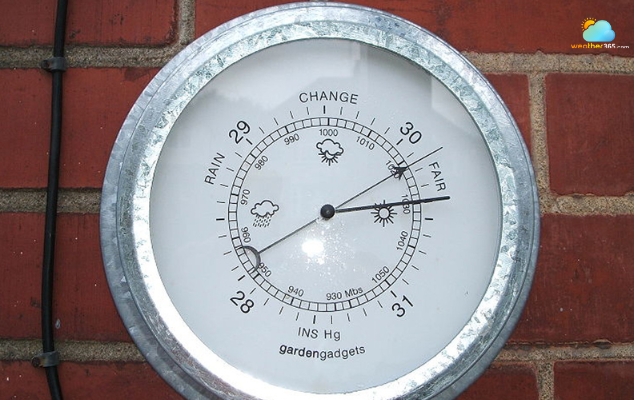
A barometer measured in Hg and Mbs
Hectopascals (hPa)
Hectopascals are essentially the same as millibars - 1 hPa equals 1 mb.
The difference is mainly naming and standardization.
Hectopascals are part of the international measurement system, so most global weather services prefer this unit.
If you’ve ever used an international weather app, you’ve likely seen hPa instead of mb.
Pascals (Pa)
The pascal is the official SI (International System of Units) measurement for pressure.
It’s widely used in scientific research and technical fields.
However, because one pascal is a relatively small unit, atmospheric pressure is usually expressed in hectopascals (hPa) instead.
For reference, standard atmospheric pressure equals 101,325 Pa, which is why smaller, more practical units like hPa are often preferred in everyday use.
Instruments for measuring barometric pressure
To measure barometric pressure, scientists use the barometer.
Nowadays, scientists have developed different types of barometers, each using a slightly different method to capture these changes in pressure.
Mercury Barometers
The mercury barometer is the oldest and most traditional way of measuring atmospheric pressure.
It works using a simple but clever idea: air pressure pushes on a pool of mercury, forcing it up a glass tube.
The higher the pressure, the higher the mercury rises.
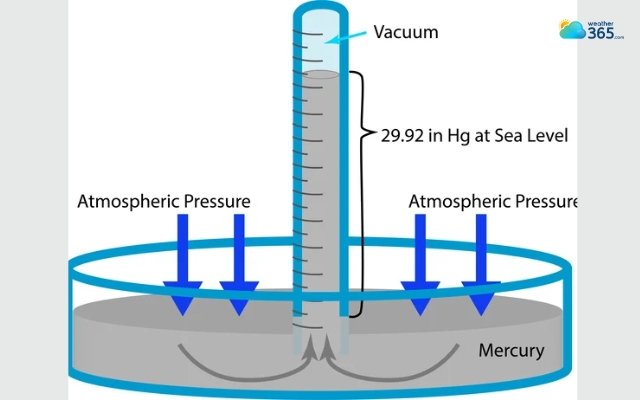
The mercury barometer is the most traditional tool
What makes this method so reliable is its direct connection to physical force. You’re literally seeing how much air can hold up a column of liquid.
That’s why mercury barometers were long considered the standard for accuracy and are still used for calibration in some scientific settings.
However, they’re not very practical for everyday use. Mercury is toxic, and the glass tubes are fragile and bulky.
Because of safety concerns, this type of barometer is now less common outside laboratories.
Aneroid Barometers
To solve the limitations of mercury instruments, scientists developed the aneroid barometer.
Instead of using liquid, this device relies on a small, sealed metal chamber that reacts to pressure changes.
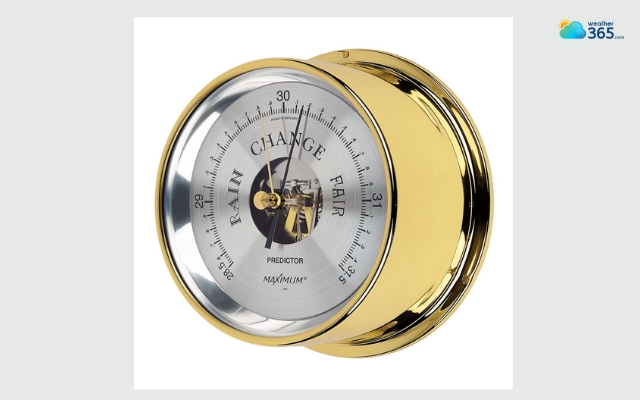
Aneroid barometer relies on a sealed metal chamber
When the surrounding air pressure increases, the chamber is slightly compressed. When pressure drops, it expands.
These tiny movements are then transferred to a needle on a dial, giving you a readable measurement.
Aneroid barometers are so popular because they are compact, durable, and safe to use.
That is why you’ll often find them in homes, portable weather devices, and even aircraft instruments.
While they may not match mercury barometers in absolute precision, they are more than accurate enough for everyday forecasting and practical use.
Digital Barometers
Digital barometers represent the most advanced version of pressure measurement.
Instead of relying on visible movement (like liquid or metal), they use electronic sensors to detect even tiny changes in air pressure.
These readings are then displayed instantly on a screen.
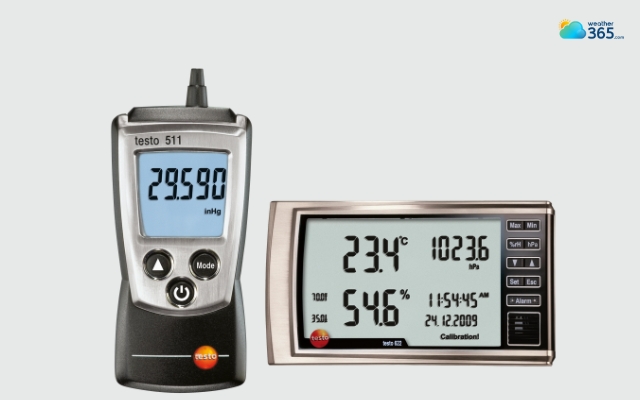
Digital barometers are the most convenient tool
You’ve probably already used one without realizing it; many smartphones, smartwatches, and GPS devices now include built-in barometric sensors.
These instruments are not only accurate but also capable of tracking pressure trends over time, which makes them especially useful for weather monitoring and outdoor navigation.
How to measure barometric pressure?
Barometric pressure is measured by using a device to capture how much force the air is applying, and then understanding what that number means over time.
Now let’s take it step by step!
Step 1: Use a barometer to get a reading
The first step is always to measure the current air pressure using a barometer.
This can be a traditional aneroid barometer, a digital weather station, or even a smartphone with a built-in sensor.
These devices are designed to detect tiny changes in the atmosphere and convert them into a readable number.
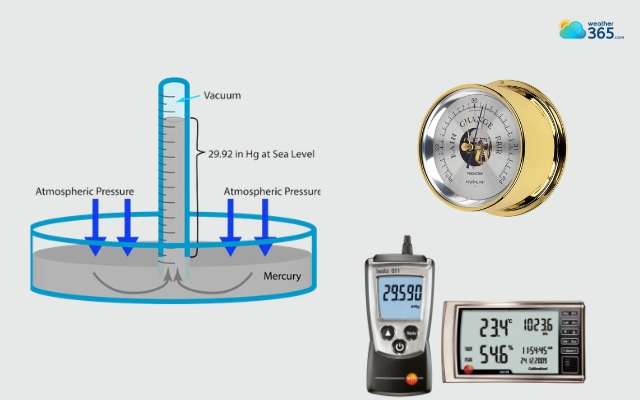
Use a barometer to measure air pressure
If you’re using a mechanical (aneroid) barometer, you’ll see a dial with a needle pointing to a value.
For digital devices, the reading appears instantly on a screen. Either way, what you’re getting is a snapshot of the current atmospheric pressure at your location.
Step 2: Make sure the reading is accurate
To get a meaningful measurement, accuracy matters.
Barometers are often calibrated to match local conditions, especially because pressure changes with altitude.
For example, if you live above sea level, your raw pressure reading will naturally be lower than standard sea-level pressure.
That’s why weather reports usually show “sea-level pressure” - a corrected value that allows comparisons across different locations.
Modern digital devices handle this automatically, but with manual barometers, you may need to adjust the reading using local weather data.
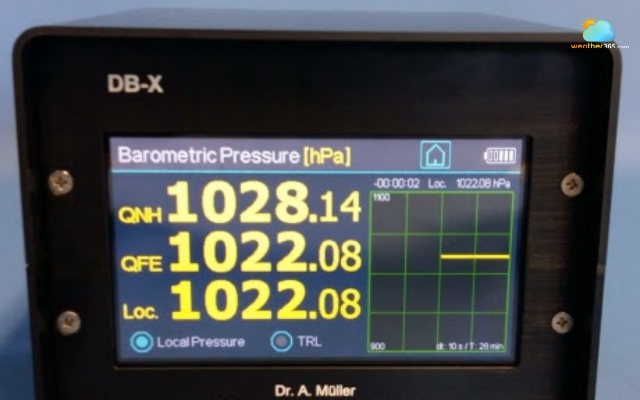
Carefully make a comparison to make sure the reading is accurate
Step 3: Understand the number (not just read it)
Once you have a reading, the next step is interpretation.
At sea level, standard atmospheric pressure is about 1013 hPa (or 29.92 inHg).
If your reading is close to this, conditions are fairly normal
If it’s significantly higher, the air is more stable
If it’s lower, the atmosphere may be more active or unstable
If you’re not sure how to interpret these values or what the dial actually means, you can check out our detailed guide on how to read a barometer.
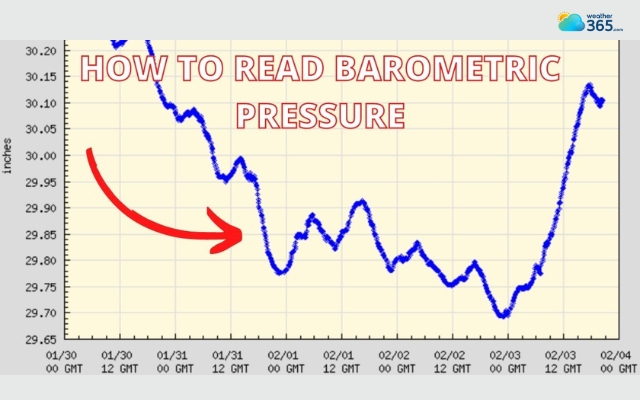
Understand the barometric pressure number
Step 4: Track changes over time
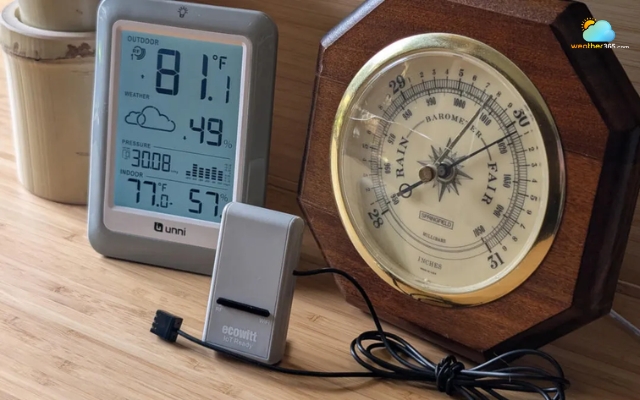
Instead of checking it once, you should observe how it changes over hours or days.
A rising pressure trend usually means improving weather
A falling pressure trend often signals that rain or storms could be on the way
A steady reading suggests little change in conditions
These patterns happen because pressure reflects how air is moving, whether it’s rising, sinking, or staying stable.
Even small, gradual shifts can give early clues about upcoming weather changes.
Regularly check the barometric pressure change
Conclusion
What is barometric pressure really about? It’s simply the weight of the air around you, but that simple idea explains so much, from changing weather to how you feel. Learning to read it gives you a small advantage in understanding your environment every single day.
Frequently Asked Questions (FAQs)
◉ Migraine sufferers
◉ Individuals with arthritis
◉ Those with sinus conditions.
They may notice symptoms when pressure changes rapidly.
Related post

How to Read a Barometer? Simple Step-by-Step Guide for Beginners
 964
964
 8
8
 4.8
4.8
 30/09/2026

Difference Between High and Low Pressure Systems: Easy Explanation
520
8
4.6
27/08/2026
How Does Weather Affect Air Pressure? A Comprehensive Guide
322
8
4.6
18/08/2026

8 Comment
Haven Lee
That little pressure reading on a weather app suddenly seems a lot less random. There’s clearly a story behind the number.
Alexis Lindsey
The atmosphere is basically an invisible ocean of air sitting above us, and this article made me appreciate just how much that “weight” matters for weather.
Demi Barnes
Does altitude affect barometric pressure?
weather365
Yes. Air pressure generally decreases as elevation increases because there is less air above a higher location.
Elaina Morris
Why is barometric pressure often useful for spotting weather changes?
weather365
Changes in pressure can indicate shifts in atmospheric systems, helping provide clues about developing weather conditions.
Brynlee Briggs
Why does barometric pressure change from one location to another?
weather365
Differences in altitude, temperature, and atmospheric conditions can all cause air pressure to vary between locations.
Leave a comment
Your email address will not be published. Required fields are marked *