




How To Measure Air Temperature? Step-by-Step Guide To Accurate Measurement


How to measure air temperature accurately without getting misleading results? It may seem simple, but small mistakes can throw everything off. Scrolling down this guide, you will discover practical methods, tools, and tips to measure air temperature like a pro.
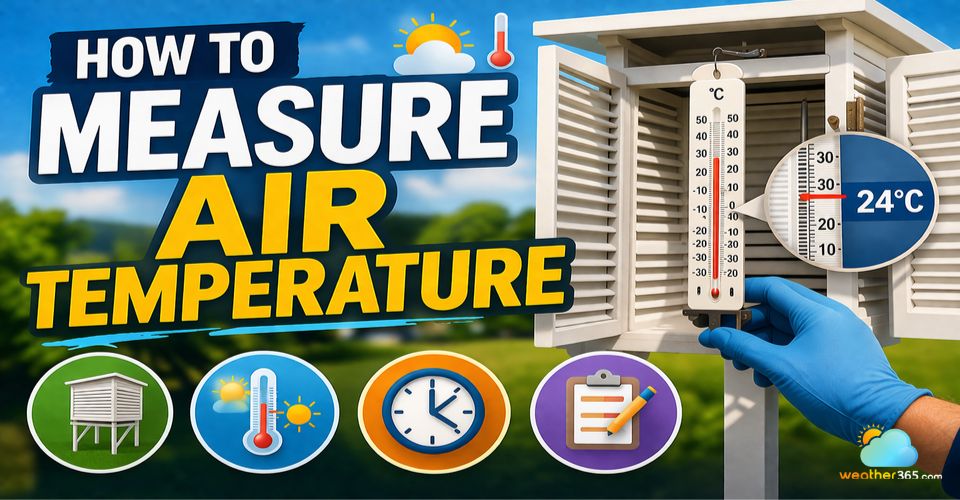
How to measure air temperature accurately?
- History of Temperature Measurement?
- Methods To Measure Air Temperature
- How To Measure Air Temperature: Step by Step Guide
- Step 1: Place the thermometer
- Step 2: Wait for stabilization
- Step 3: Read the sensor
- Step 4: Avoid contact
- How To Measure Minimum Temperature?
- Ground minimum temperature
- Concrete minimum temperature
- Soil minimum temperature
- Tips for Accurate Readings
History of Temperature Measurement?
In the early 1600s, scientists like Galileo developed the thermoscope - a simple device that could show whether the temperature was rising or falling.
However, it didn’t have a numerical scale, so it couldn’t tell you exactly how hot or cold something was. It was more about observing change than measuring it.
Things became more precise in the 18th century when standardized temperature scales were introduced.
Daniel Fahrenheit created the Fahrenheit scale along with mercury thermometers, while Anders Celsius later proposed the Celsius scale, which is now widely used around the world.
These innovations made temperature readings consistent and comparable across different locations.
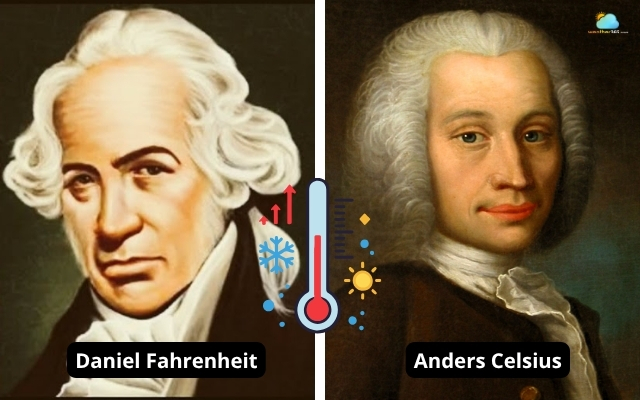
Daniel Fahrenheit and Anders Celsius
As science advanced, liquid-in-glass thermometers became the standard for weather observation. They were reliable and didn’t require electricity, which made them ideal for long-term use.
Over time, technology continued to evolve, leading to electronic sensors and digital thermometers that provide faster and more accurate readings.
Learn more about what is air temperature here!
Methods To Measure Air Temperature
When learning how to measure air temperature, choosing the right method is just as important as using the tool correctly.
Different instruments are designed for different purposes, from simple daily readings to large-scale weather monitoring.
Electronic thermometers
Electronic thermometers are the most common choice today. They use sensors like thermistors or resistance devices to detect temperature changes and convert them into digital readings.
What makes them popular is their speed and convenience - you get results almost instantly, and they’re easy to read.
That’s why they’re widely used in home weather stations, laboratories, and professional meteorology.
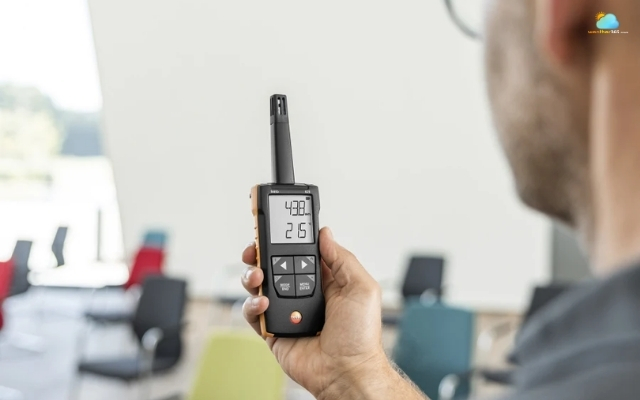
Electronic thermometers are the most common tool today
Liquid-in-glass thermometers
Liquid-in-glass thermometers are the traditional option.
Inside the glass tube, a liquid such as mercury or alcohol expands when the temperature rises and contracts when it drops. This movement along a calibrated scale gives you the reading.
While they are slower compared to electronic devices, they are highly reliable and don’t depend on batteries, making them useful for long-term observations.
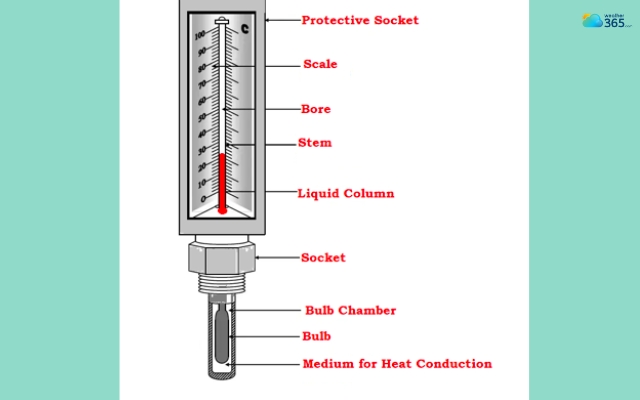
Liquid-in-glass thermometers are slower than the electronic ones
Psychrometers
Psychrometers take things a step further by measuring both temperature and humidity. They consist of two thermometers: a dry bulb and a wet bulb.
The difference between their readings helps determine moisture levels in the air, which also affects how temperature is perceived.
This method is especially useful in weather studies and indoor climate control systems.
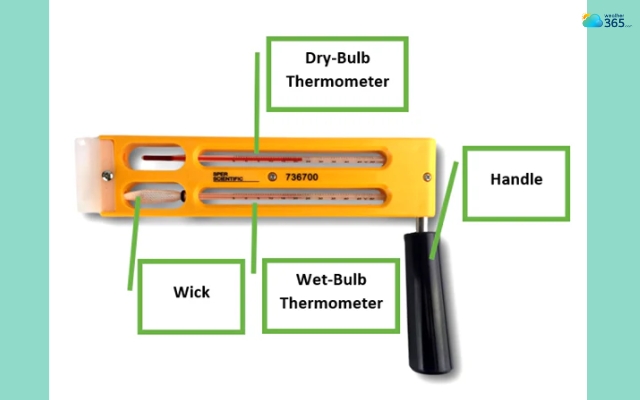
Psychrometers are useful in weather studies
Satellites
Satellites represent the most advanced method. Instead of measuring temperature directly at ground level, they detect thermal radiation from the Earth and atmosphere.
This data is then processed to estimate air temperature over large areas.
While not used for everyday measurement, satellites are essential for weather forecasting and tracking global climate patterns.
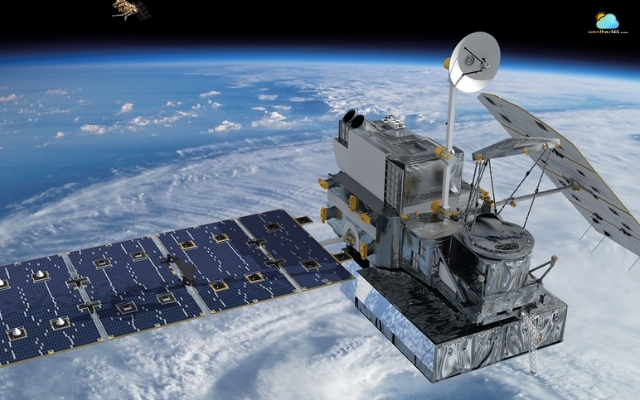
Satellites is the most advanced tool
How To Measure Air Temperature: Step by Step Guide
Knowing how to measure air temperature accurately depends on how you use the tools. Small details like where you place it or how long you wait can affect the result.
Step 1: Place the thermometer
The first step is choosing the right location. Your thermometer should be placed in a shaded, well-ventilated area where air can circulate freely.
Direct sunlight can heat the instrument itself, causing it to show a higher temperature than the actual air.
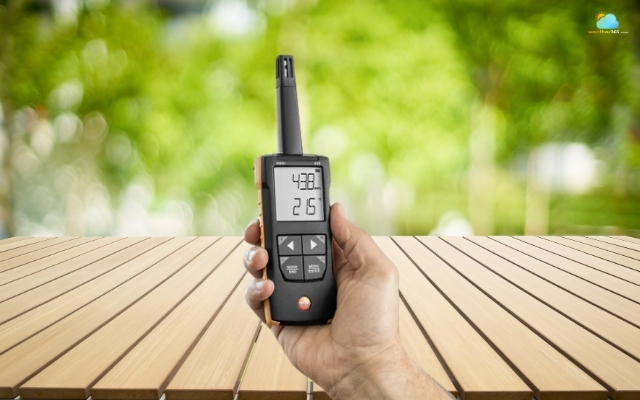
The thermometer should be placed in a well-ventilated area
It’s also important to keep it away from walls, concrete, or metal surfaces. These materials absorb and release heat, which can distort the reading.
Ideally, the thermometer should be positioned about 1.25 to 2 meters above the ground to reflect standard air temperature conditions.
Step 2: Wait for stabilization
Once the thermometer is in place, give it time to adjust to the surrounding air. This step is often overlooked, but it makes a big difference in accuracy.
Electronic thermometers usually stabilize within a couple of minutes, while liquid-in-glass thermometers may take longer.
If you move the device too soon or read it too quickly, you’re likely measuring leftover heat from a previous location rather than the current environment.
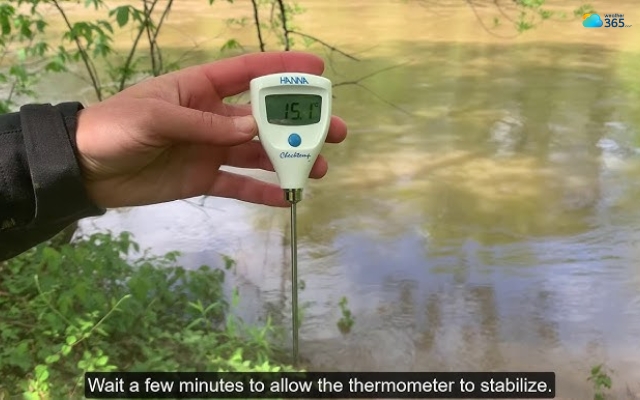
Electronic thermometers usually stabilize within a couple of minutes
Step 3: Read the sensor
After the reading stabilizes, it’s time to check the result.
For digital thermometers, simply read the display. For glass thermometers, make sure you look at the scale at eye level.
This helps avoid parallax error, where viewing the scale from an angle can lead to a slightly incorrect reading.
It may seem minor, but even small differences matter when accuracy is the goal.
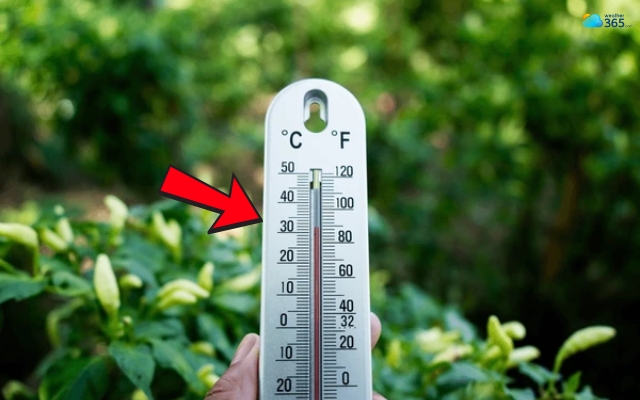
Look at the scale at eye level
Step 4: Avoid contact
Finally, avoid touching the sensing part of the thermometer, especially the bulb or probe. Your body heat can transfer to the device and affect the measurement.
If you need to handle it, hold it by the outer casing or use a stand.
Keeping the thermometer undisturbed ensures that what you’re measuring is truly the air temperature, not the heat from your hands.
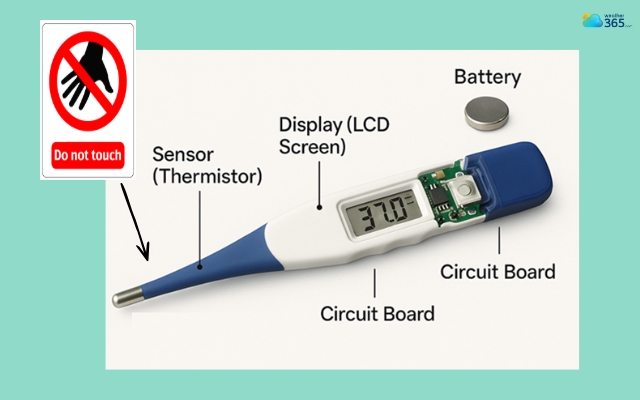
Avoid touching the sensing part of the thermometer
How To Measure Minimum Temperature?
If you want to fully understand how to measure air temperature, you can’t ignore the minimum temperature, especially the lowest values recorded overnight.
These readings are important in weather forecasting, agriculture, and even urban planning because they show how much heat the environment loses after sunset.
Unlike regular daytime measurements, minimum temperature is typically recorded using a special thermometer that “locks in” the lowest value until it’s reset.
The way you place this thermometer depends on what exactly you want to measure.
Ground minimum temperature
Ground minimum temperature focuses on the air just above natural surfaces like grass or soil. The thermometer is placed very close to the ground, usually a few centimeters above it.
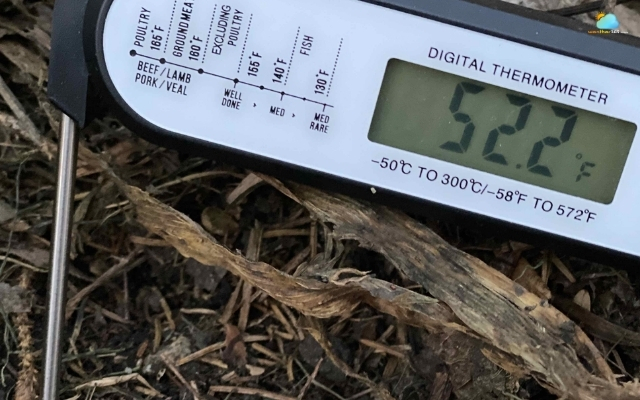
Ground minimum temperature focuses on the air above the ground
This method is widely used in agriculture because it helps detect frost risk.
Grass and soil lose heat quickly at night, so temperatures here are often lower than standard air measurements.
That’s why farmers rely on this data to protect crops from damage.
Concrete minimum temperature
In urban areas, surfaces like concrete and asphalt behave very differently. They absorb heat during the day and release it slowly at night.
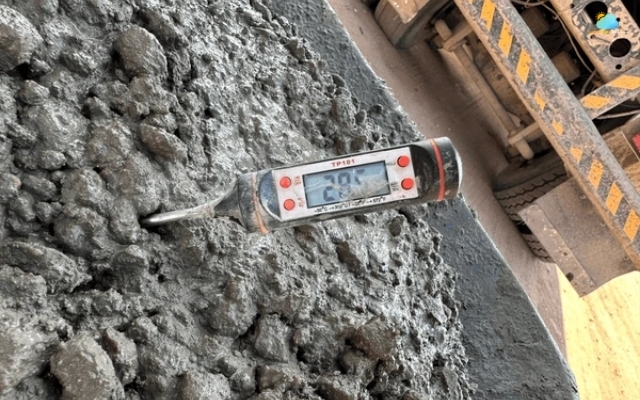
The thermometer is placed above a concrete surface
To measure this, the thermometer is placed near or just above a concrete surface. The readings are usually higher than ground minimum temperatures over grass.
This method helps explain the “urban heat island” effect, where cities stay warmer than surrounding rural areas, even at night.
Soil minimum temperature
Soil minimum temperature looks below the surface rather than above it. The thermometer or sensor is placed a few centimeters into the ground to measure how cold the soil gets.
This is especially useful for gardening and farming. Soil temperature affects seed germination, root health, and overall plant growth.
Even if the air feels cold, the soil may retain enough warmth to support plants, or the opposite can happen.
You may also like: How does temperature affect the weather!
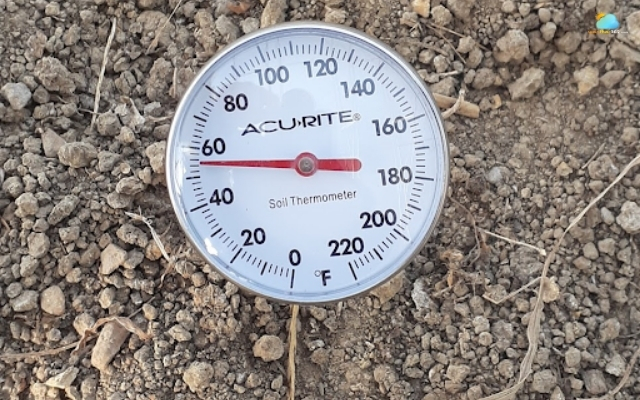
A soil thermometer measures how cold the soil gets
Tips for Accurate Readings
Make sure your readings are actually accurate.
Many people get incorrect results not because of the tool, but due to how and where they use it.
Shade
One of the most important factors is shade. A thermometer placed under direct sunlight will absorb heat and show a higher temperature than the surrounding air.
That’s why weather stations always measure temperature in shaded conditions.
For instance, thermometers must be placed in shaded, ventilated enclosures for valid Illinois air temperature forecast data.
If natural shade isn’t available, using a cover or placing the device in a ventilated enclosure can help.
Ventilation
Ventilation also plays a key role. Air needs to move freely around the thermometer so it reflects the true ambient temperature.
In enclosed or poorly ventilated areas, heat can build up and distort the reading. This is why placing a thermometer near windows, corners, or tight spaces often leads to inaccurate results.
Elevation
Elevation is another detail that’s easy to overlook. Standard air temperature is typically measured at about 1.25 to 2 meters above the ground.
Measuring too close to the surface, especially over grass, soil, or concrete can give readings that are either cooler or warmer than the actual air temperature at human level.
Distance from structures
Distance from structures matters more than you might think. Buildings, walls, and paved surfaces absorb heat during the day and release it slowly over time.
If your thermometer is too close to these surfaces, it may pick up that extra heat instead of the true air temperature.
Keeping some distance helps avoid this problem.
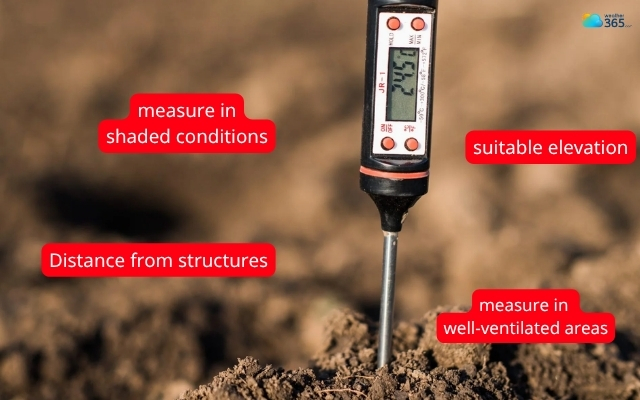
How to get the most accurate result?
Final Thought
How to measure air temperature isn’t complicated, but accuracy depends on doing the small things right. From choosing the right tool to placing it correctly, each step matters. Once you understand the basics, you’ll be able to get reliable readings anytime.
Frequently Asked Questions (FAQs)
◉ 20–22°C is often considered standard room temperature.
◉ 24–25°C is more common in warmer climates.
Related post
What's The Temperature For Tomorrow? A Simple Guide to Tomorrow’s Forecast
 566
566
 8
8
 4.7
4.7
 18/08/2026
What Is Air Temperature? Definition, Measurement, and Key Factors
432
8
4.8
18/08/2026
How Does Temperature Affect The Weather? Simply Explained
232
8
4.6
18/08/2026

7 Comment
Emily Butler
I never thought measuring air temperature could involve so many details. Small measurement choices can make a big difference in the final number!
Lexi Moore
Where should air temperature be measured for a reliable reading?
weather365
It should be measured in a suitable, well-ventilated location that is protected from direct sunlight and other sources of artificial heat.
Payton Cooper
Why shouldn’t a thermometer be placed directly in the sun?
weather365
Direct sunlight can heat the instrument and make the reading higher than the actual surrounding air temperature.
Aspen Webster
What instrument is commonly used to measure air temperature?
weather365
Thermometers are used to measure air temperature, with different types designed for accurate readings in various conditions.
Leave a comment
Your email address will not be published. Required fields are marked *