




What Is Considered High Humidity? Steps To Manage Ideal Humidity Level


What is considered high humidity and when does moisture become a problem? Humidity levels can affect comfort, health, indoor air quality, and even your home’s condition. Understanding ideal humidity ranges and the signs of excess moisture can help you create a healthier and more comfortable environment.
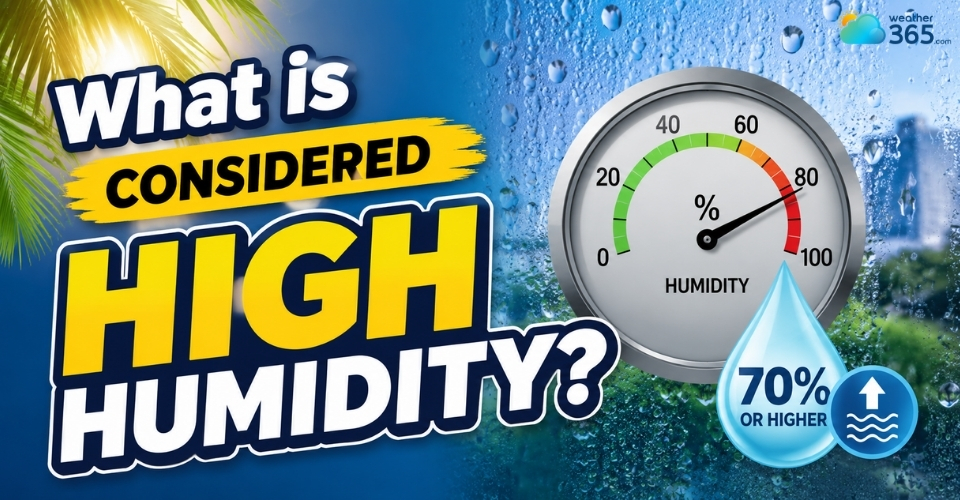
What is considered high humidity?
- What Is Considered High Humidity Outdoors?
- What is Considered High Humidity Indoor?
- Indoor Humidity range
- Ideal Humidity by Season (Summer vs. Winter)
- Common Signs Your Home Has High Humidity
- What causes high humidity indoors and outdoors
- Outdoor Causes of High Humidity
- Indoor Causes of High Humidity
- How To Manage High Humidity?
- Improve Ventilation
- Reduce Indoor Moisture Sources
- Use Moisture-Control Equipment
- Prevent Long-Term Moisture Build-Up
What Is Considered High Humidity Outdoors?
Outdoors, relative humidity levels above 60% to 70% are considered high, while a dew point of 65°F (18.5°C) or higher signals sticky, oppressive air.
(Read more: What is dew point?)
However, relative humidity can be misleading because it changes with temperature.
Cooler air reaches high relative humidity more easily than warm air, even when the actual amount of moisture in the air is lower.
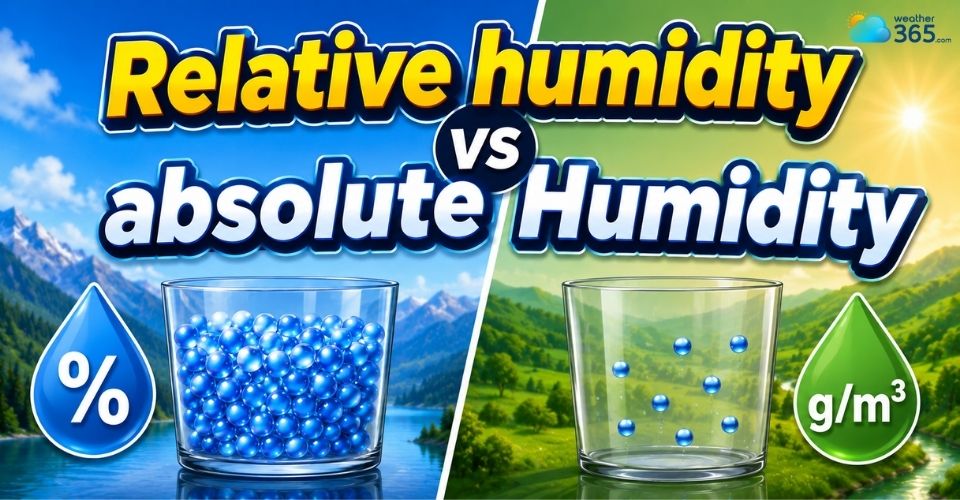
This is where relative humidity vs absolute humidity becomes important:
Relative humidity measures how close the air is to saturation at a specific temperature.
Absolute humidity represents the real amount of moisture suspended in the air.
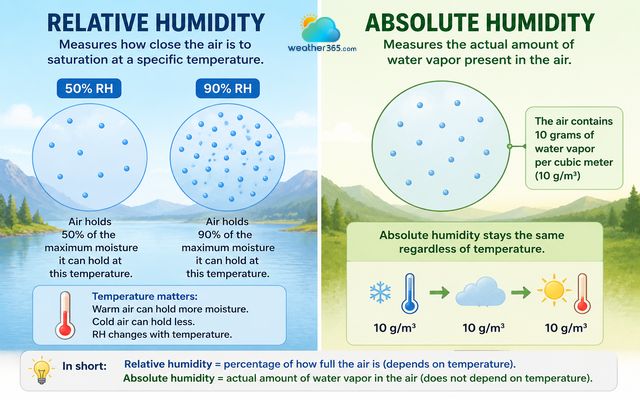
Differentiate between relative humidity and absolute humidity
Because of this limitation, meteorologists often use dew point term instead of relative humidity to describe comfort.
The dew point is the temperature at which air becomes fully saturated, and water begins to condense. Unlike relative humidity, dew point directly reflects moisture content and does not fluctuate as much with temperature.
As a general guide:
Below 55°F (13°C): Comfortable and dry
60–65°F (16–18°C): Humid but manageable
Above 65°F (18°C): Feels muggy
Above 70°F (21°C): Very humid and uncomfortable
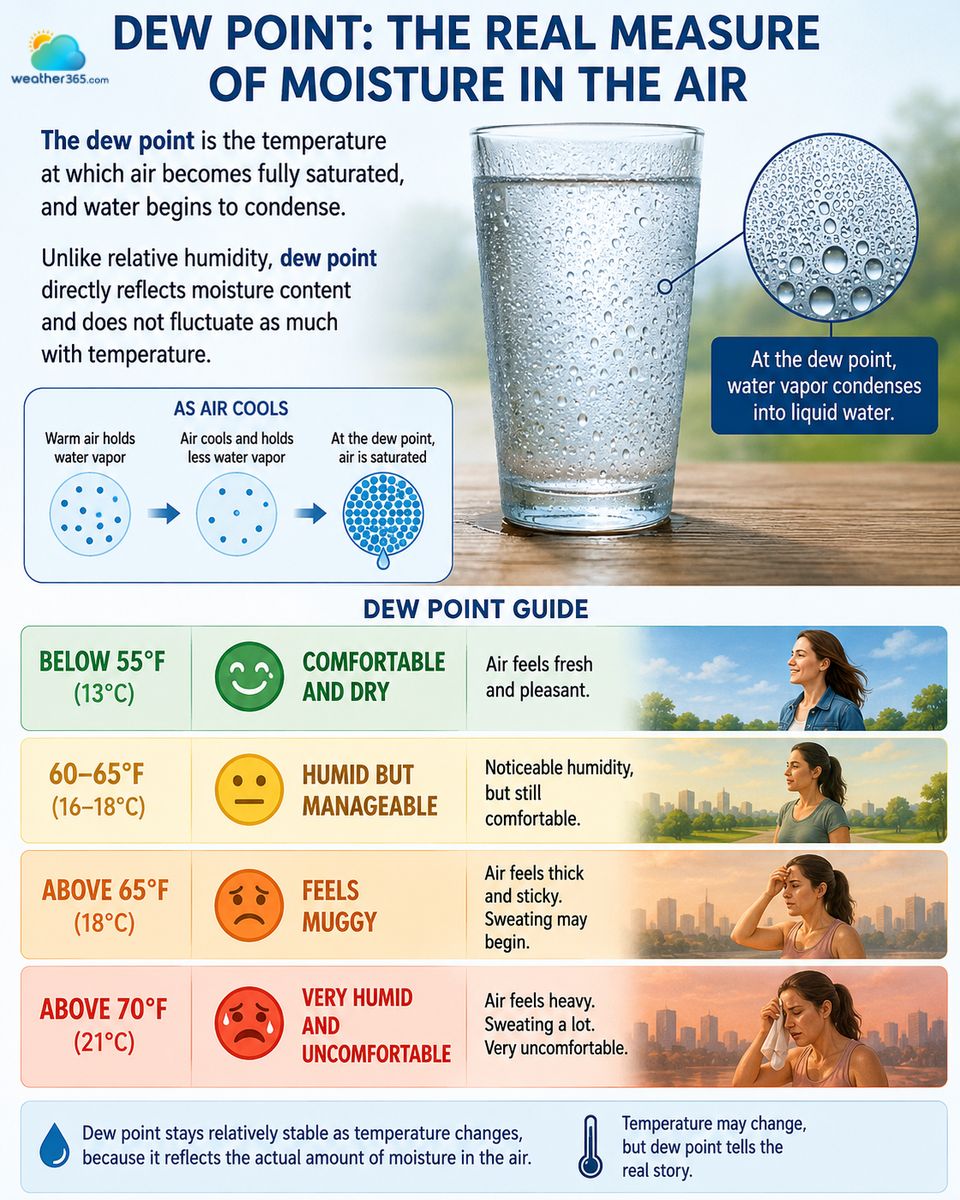
Dew point scale
For instance, dew points exceeding 65°F create uncomfortable heat stress conditions monitored via Texas summer humidity conditions, making the air feel sticky and heavy before it even reaches full saturation.
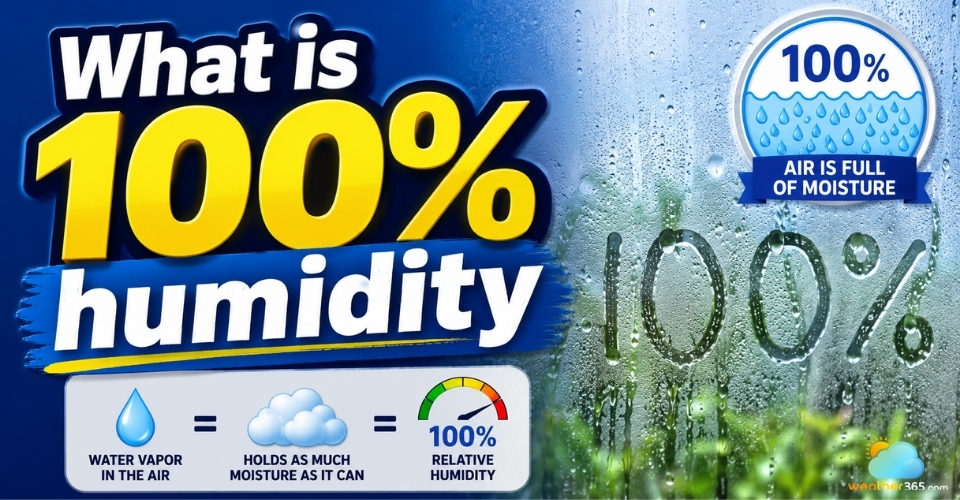
A common misconception is that 100% humidity means the air is completely water.
In reality, it means the air has reached its maximum moisture capacity at that temperature.
This often occurs during fog, mist, rain, or early morning conditions.
What is Considered High Humidity Indoor?
In general, humidity above 60% indoors is considered high, while most experts recommend keeping indoor humidity between 30% and 50%.
When moisture levels remain too high for long periods, they can promote mold growth, dust mites, and other indoor air quality issues.
Indoor Humidity range
Indoor humidity is usually measured as relative humidity (RH). Experts generally recommend keeping indoor RH between 30% and 50% for comfort and healthy indoor conditions.
Below 30%: Air becomes too dry. This may lead to dry skin, irritated sinuses, static electricity, and cracked wood furniture.
30%–50%: Ideal indoor humidity range. This level feels comfortable and can help limit allergens and excess moisture.
50%–60%: Slightly above normal. Some people may notice dampness or a heavier indoor feeling.
Above 60%: Considered high humidity. Moisture can collect on windows, walls, and surfaces, increasing the chance of mold and mildew.
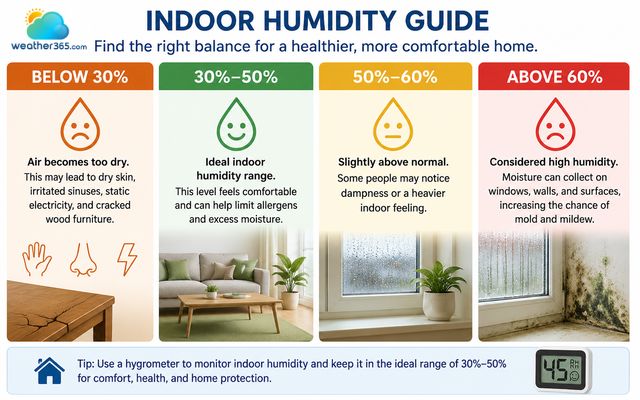
Indoor humidity guide
For example, a home with 68°F (20°C) indoor temperature and 65% humidity may begin to show condensation on cooler surfaces.
Ideal Humidity by Season (Summer vs. Winter)
The best indoor humidity level varies throughout the year because outdoor temperatures affect indoor moisture conditions.
Summer: 40%–50%
Outdoor humidity levels tend to be higher during summer.
Keeping indoor humidity between 40% and 50% helps prevent rooms from feeling sticky while maintaining comfort.
Air conditioners naturally remove some moisture, helping keep humidity within this range.
Winter: 30%–40%
In winter, lower humidity levels are recommended.
Keeping indoor humidity around 30% to 40% helps reduce condensation on cold windows.
Excess moisture during winter can lead to hidden mold growth around window frames and walls.
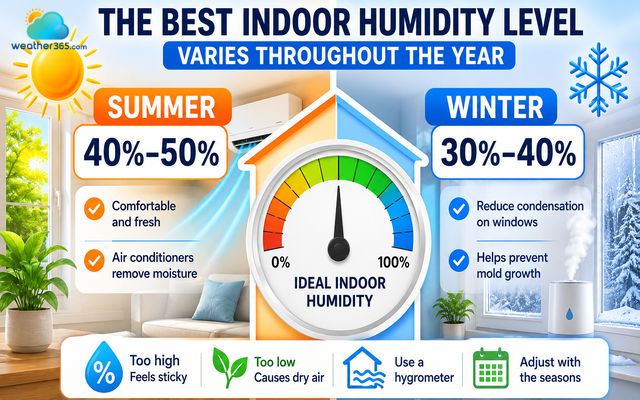
The best indoor humidity level
Interestingly, some of the most humid states in the US, including Florida, Louisiana, Mississippi, and Alabama, face greater challenges maintaining ideal indoor humidity levels year-round because of their naturally moist climates.
Homeowners in these regions often rely on dehumidifiers and proper ventilation to keep indoor humidity under control.
>>>>> Check current humidity in Florida, Louisiana, Mississippi, and Alabama today! <<<<<
Common Signs Your Home Has High Humidity
High humidity often leaves noticeable signs throughout your home. Here are the most common indicators that indoor moisture levels are too high:
Signs of High Humidity Indoors
Condensation on Windows and Wall
Foggy windows, water droplets on glass, or moisture on cold walls often indicate excessive indoor humidity.
Condensation happens when moisture-laden air cools upon touching a colder surface.
Musty Odors
A persistent damp or "basement-like" smell in bedrooms, closets, or storage areas can signal excess moisture and hidden mold growth.
Visible Mold or Mildew
Dark spots on bathroom ceilings, around baseboards, behind furniture, or near windows are common signs of high humidity.
Damp surfaces can support mold growth in as little as one to two days.
Physical Discomfort
High moisture levels in the air can leave indoor spaces feeling sticky and oppressive.
You may notice clammy skin, congestion upon waking, difficulty breathing, or worsening allergy symptoms.
Dust Mite and Allergy Problems
When humidity surpasses 50%, dust mites can multiply more easily.
Their allergens are a leading cause of year-round allergies and can trigger asthma symptoms in sensitive individuals.
Structural Damage to Wood and Building Materials
Excess moisture can cause hardwood floors to cup or warp.
Doors and windows may become difficult to open or close as wood expands.
Damage to Walls and Structure
High humidity can lead to peeling wallpaper, warped drywall, and, in severe cases, wood rot that weakens structural components.
Electronic Corrosion
Moisture can gradually corrode internal circuits in computers, televisions, and other sensitive electronics, reducing their lifespan.
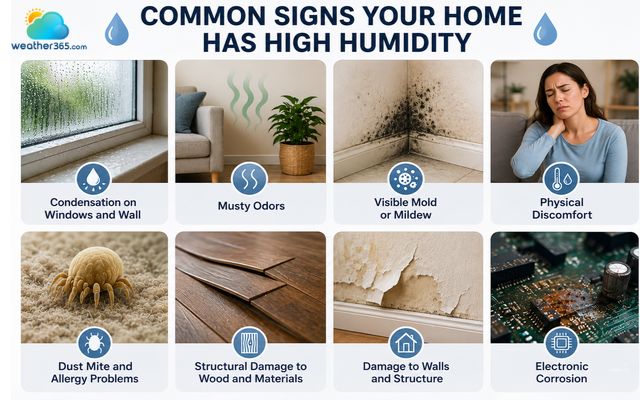
Common signs of high humidity in your home
Identifying these signs early can help prevent costly repairs while maintaining a healthier indoor environment.
What causes high humidity indoors and outdoors
High humidity is caused by moisture in the air from weather, daily human activities, and poor airflow.
Key triggers include warm weather patterns, cooking and showers, and defective ventilation or leaks.
Outdoor Causes of High Humidity
Outdoor humidity is controlled by natural environmental conditions and the Earth’s water cycle.
Common causes include:
Evaporation from oceans, lakes, and rivers that adds water vapor to the atmosphere.
Warm temperatures, because warm air can hold more moisture than cold air.
Rainfall and wet ground that release moisture back into the air after storms.
Low wind conditions that prevent humid air from dispersing.
For example, coastal and subtropical areas often experience outdoor relative humidity above 70%, especially during summer mornings and evenings.

Outdoor causes of high humidity
Indoor Causes of High Humidity
Indoor high humidity usually occurs when moisture enters the home or becomes trapped indoors.
Common indoor sources include:
Outdoor moisture entering the home through open windows, doors, crawl spaces, or air leaks.
Insufficient air circulation, especially in moisture-prone areas like bathrooms and kitchens.
Daily household activities, such as showering, cooking, drying clothes indoors, and using humidifiers.
Water leaks or plumbing issues behind walls or under floors.
Insufficient air conditioning or dehumidification, allowing moisture to accumulate.
For example, a family of four can release several liters of water vapor into indoor air each day through normal activities.
Without proper airflow, indoor humidity can quickly exceed recommended levels and create damp, uncomfortable conditions.
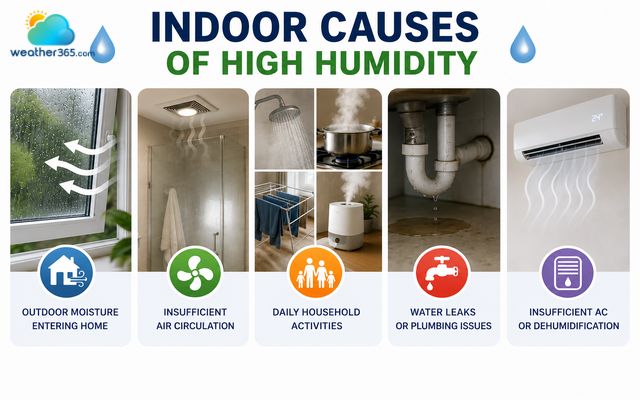
Indoor causes of high humidity
How To Manage High Humidity?
The best ways to manage high humidity are improving ventilation, reducing indoor moisture sources, using dehumidifiers or air conditioners, and preventing long-term moisture build-up through regular home maintenance.
Improve Ventilation
When airflow is restricted, moisture can build up within indoor spaces.
Operate exhaust fans while bathing and cooking to prevent humidity from building up indoors.
Open windows when outdoor air is drier to improve circulation.
Reduce Indoor Moisture Sources
Daily activities release more water vapor than many people realize.
Avoid drying clothes indoors.
Cover pots while cooking.
Fix leaking pipes and plumbing quickly.
Limit long hot showers.
For example, cooking and bathing can release several liters of moisture into indoor air each day.
Use Moisture-Control Equipment
Using air conditioning can help control moisture buildup while keeping rooms cool.
In persistently damp areas, a dehumidifier can help maintain healthier humidity levels. A hygrometer can also help track humidity and identify problems early.
Prevent Long-Term Moisture Build-Up
Seal gaps around windows and doors, improve insulation, and inspect basements and crawl spaces regularly.
Climate matters too.
People living in humid regions often need more humidity control than those in the least humid states, such as Nevada, Arizona, Utah, and Wyoming, where naturally dry conditions help keep indoor moisture lower.
Small changes in airflow and moisture control can make a noticeable difference in comfort and indoor air quality.
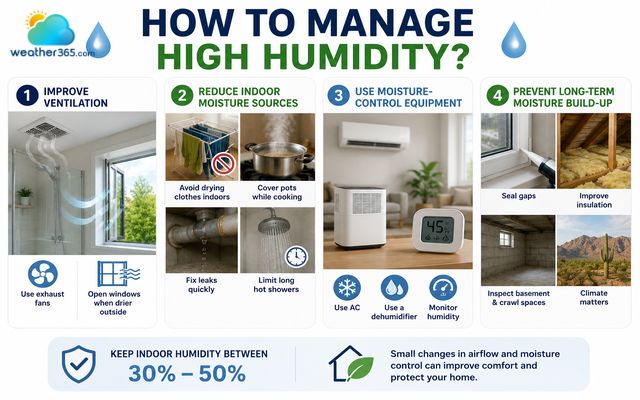
Steps to manage high humidity
Sum up
Humidity affects far more than comfort; it influences health, indoor air quality, and the condition of your home. By understanding the signs, causes, and ideal moisture levels, you can create a healthier and more comfortable environment year-round. Ultimately, knowing what is considered high humidity? helps you take the right steps before excess moisture becomes a bigger problem.
Frequently Asked Questions (FAQs)
How it feels depends on temperature:
◉ 80% humidity + hot weather → feels sticky, muggy, and uncomfortable.
◉ 80% humidity + cool weather → may feel damp but not necessarily uncomfortable.
That is why humidity is often interpreted together with temperature or dew point, not by percentage alone.
◉ Outdoors: 70% humidity often feels humid or muggy in warm weather.
◉ Indoors: Humidity above 60% is usually considered too high and may increase the risk of mold, dust mites, and condensation.
The actual comfort level also depends on temperature and dew point, not humidity alone.
◉ Outdoors: 70% humidity is common in the UK due to its maritime climate and may not always feel uncomfortable in cool weather.
◉ Indoors: 70% humidity is usually too high and can increase the risk of mold, condensation, and dust mites.
For most UK homes, indoor humidity is ideally kept between 40% and 60%.
Related post

Most humid states in the US: Which States Feel the Muggiest?
 282
282
 1
1
 4.9
4.9
 22/08/2026
Relative Humidity vs Absolute Humidity: What is the Difference?
94
0
5.0
06/09/2026
What is 100% humidity? Meaning, Misconceptions, and Science
46
0
4.8
21/08/2026

0 Comment
Leave a comment
Your email address will not be published. Required fields are marked *