




Top 10 Least Humid States in the U.S. to Live or Retire


The least humid states in the U.S. are mostly found across the Mountain West, where low dew points and dry air create a more comfortable climate year-round. Based on long-term weather data, this guide ranks the top 10 driest states and explains why they may be ideal for living, retiring, or traveling - read on to find your best match.
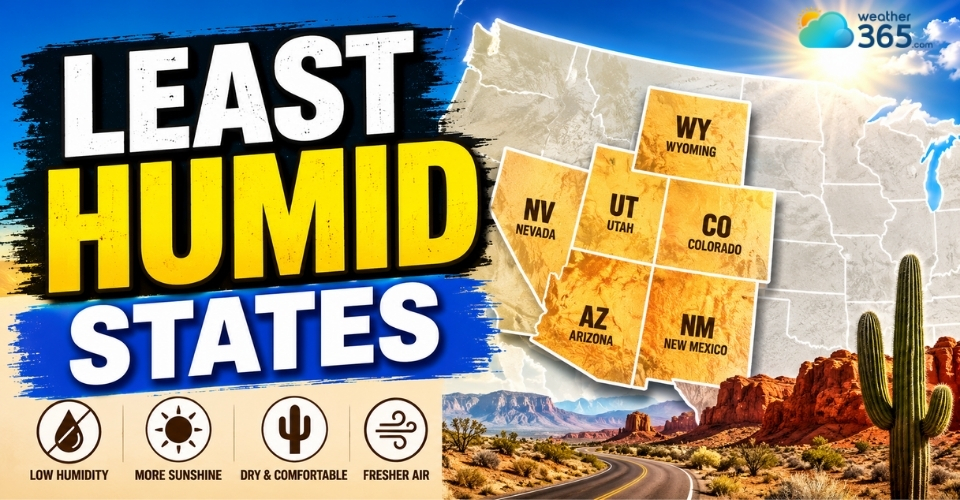
Least humid states
Top 10 least humid states
The top 10 least humid states in the U.S. include Nevada, Arizona, New Mexico, Colorado, Utah, Wyoming, Idaho, California, Montana, and Oregon.
These states are mostly located in the West, and consistently record lower dew points than the national average.
If you prefer comfortable air and fewer muggy days, these states are among the driest places to live.
Conversely, if you want to know which regions to avoid, you can check out the most humid states in the US.
Nevada
Average Annual Relative Humidity: 38.3%
Average Dew Point: 27.5°F
Nevada consistently ranks as the least humid state in the U.S. Thanks to its vast desert terrain and minimal rainfall, the air remains dry throughout most of the year.
Cities such as Las Vegas and Reno experience low dew points that help reduce the muggy feeling commonly associated with hot weather.
(Learn more: What is dew point?)
While summers can be extremely warm, many residents find the dry heat more tolerable than humid conditions found elsewhere.
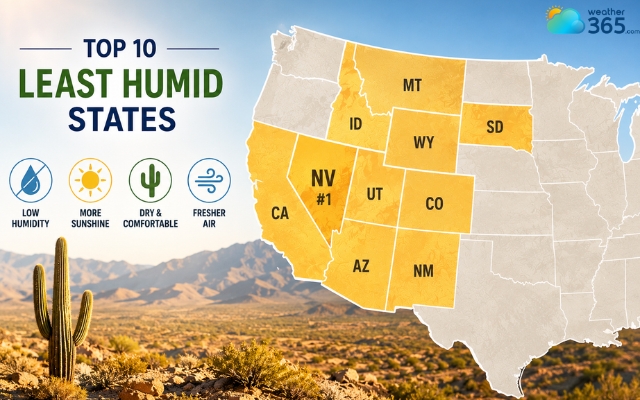
Nevada is the least humid state in the US
Arizona
Average Annual Relative Humidity: 38.5%
Average Dew Point: 32.5°F
Arizona is another desert state known for its exceptionally dry climate.
The combination of low humidity and abundant sunshine creates comfortable conditions for much of the year.
Although temperatures can soar during summer, low atmospheric moisture in desert states allows rapid night cooling.
This dry environment is one reason Arizona remains a popular destination for retirees and snowbirds.
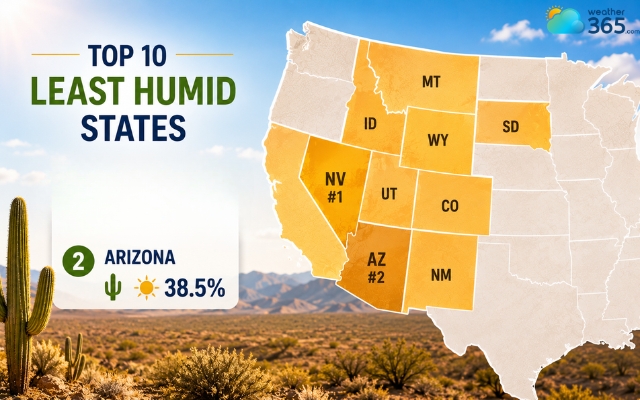
Arizona has a low humidity rate
New Mexico
Average Annual Relative Humidity: 45.9%
Average Dew Point: 30.8°F
New Mexico benefits from both desert geography and higher elevations.
The state enjoys more than 280 sunny days annually in many areas, while humidity levels remain relatively low.
Residents often experience warm days followed by cooler evenings, creating a comfortable climate that appeals to outdoor enthusiasts and those seeking relief from humid weather.
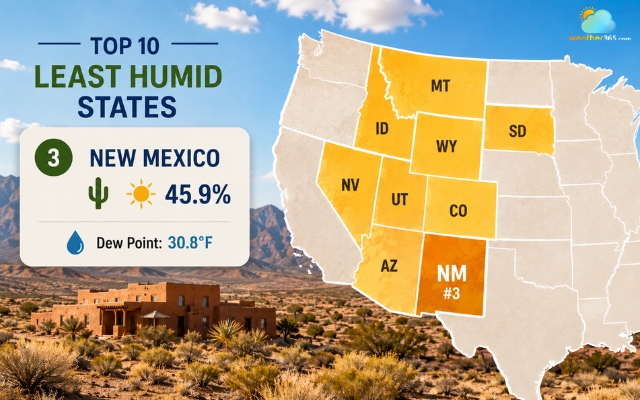
New Mexico has desert environment
Colorado
Average Annual Relative Humidity: 54.1%
Average Dew Point: 28.8°F
Colorado's high elevation plays a major role in keeping humidity levels low.
Despite receiving snowfall during winter, the state's air remains relatively dry throughout the year.
Many people relocating from humid regions are surprised by how comfortable Colorado summers feel, even on warmer days.
The state's low dew point also contributes to clearer skies and excellent outdoor recreation conditions.
Planning to visit Rocky Mountain National Park? Check the humidity in Colorado for better preparation!
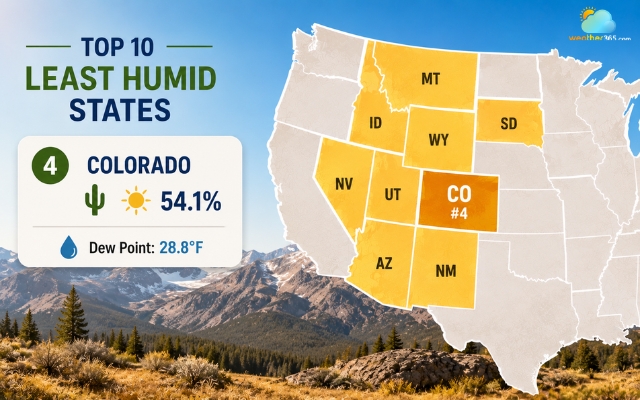
Colorado is relatively dry
Utah
Average Annual Relative Humidity: 51.7%
Average Dew Point: 28.6°F
Utah's climate is shaped by a combination of deserts, mountain ranges, and high plateaus. These geographic features help maintain low moisture levels across much of the state.
Summers are generally warm and dry, making hiking, camping, and other outdoor activities enjoyable.
The state's dry air is especially noticeable compared to many eastern and southern states.
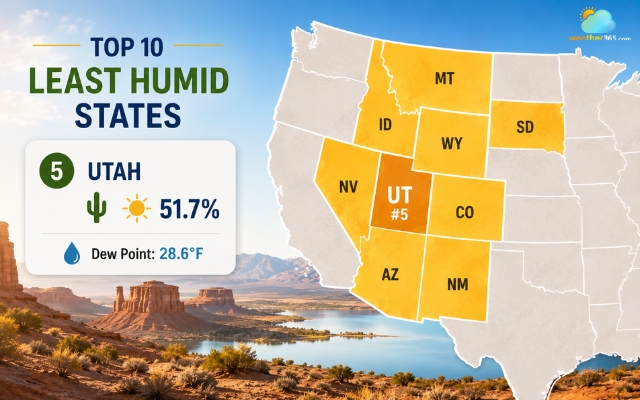
Utah has a dry climate
Wyoming
Average annual relative humidity: 57.1%
Average dew point: 24.2°F
Wyoming's high plains and mountainous terrain contribute to some of the driest air in the nation.
The state has one of the lowest average dew points on this list, which means the air contains very little moisture.
Residents enjoy crisp weather, cool evenings, and relatively few humid days, particularly during the summer months.
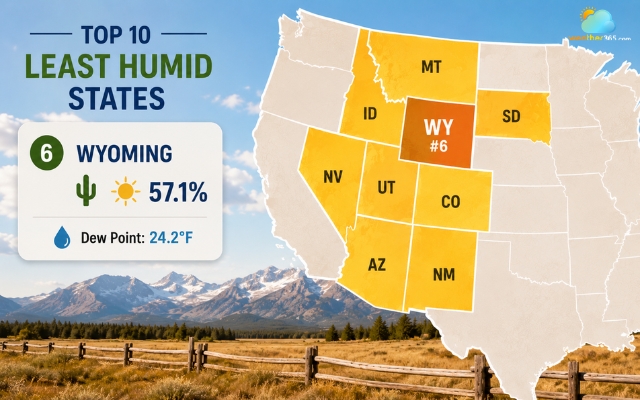
Wyoming experiences relatively low moisture
Idaho
Average annual relative humidity: 56.0%
Average dew point: 29.1°F
Idaho offers a pleasant balance of low humidity, natural beauty, and four distinct seasons.
While moisture levels vary from north to south, much of the state experiences drier conditions than the national average.
Cities like Boise are known for warm, dry summers that allow residents to spend more time outdoors without dealing with excessive humidity.
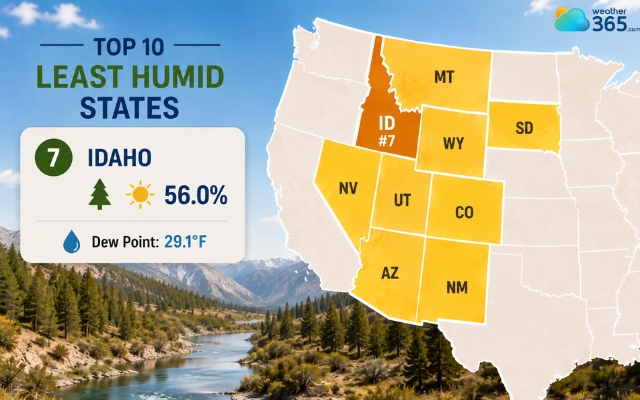
Idaho has balanced, comfortable humidity levels
California
Average annual relative humidity: 58.6%
Average dew point: 40.4°F
California's climate varies significantly across its regions, but many inland and southern areas remain relatively dry throughout the year.
Desert communities such as Palm Springs experience extremely low humidity, while coastal locations are somewhat more humid due to ocean influence.
Overall, California's Mediterranean and desert climates help keep moisture levels lower than in many other large states.
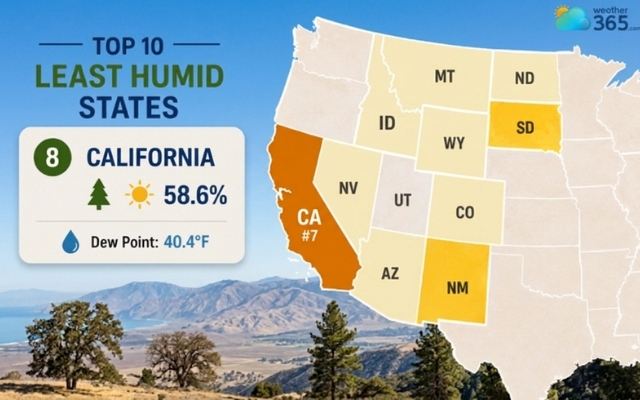
California has lower humidity than other states
Montana
Average annual relative humidity: 59.3%
Average dew point: 25.3°F
Montana combines higher elevation with a cooler climate, helping maintain relatively low humidity levels.
Even during summer, the state experiences far fewer muggy days than states in the Southeast or Gulf Coast regions.
The dry air and comfortable temperatures make Montana an attractive destination for those seeking a less humid lifestyle.
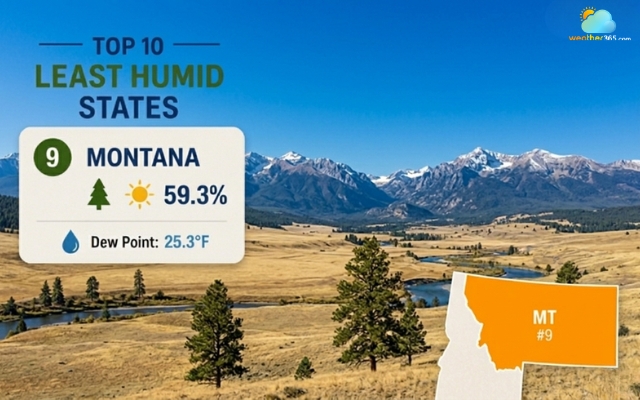
Montana has low moisture levels
Oregon
Average annual relative humidity: 60.0%
Average dew point: 38.3°F
Oregon may surprise some people on this list because of its reputation for rain. However, humidity varies greatly across the state.
While western Oregon receives significant precipitation, eastern Oregon has a much drier, semi-arid climate.
This contrast helps keep the state's overall humidity lower than many areas of the country, especially away from the coast.
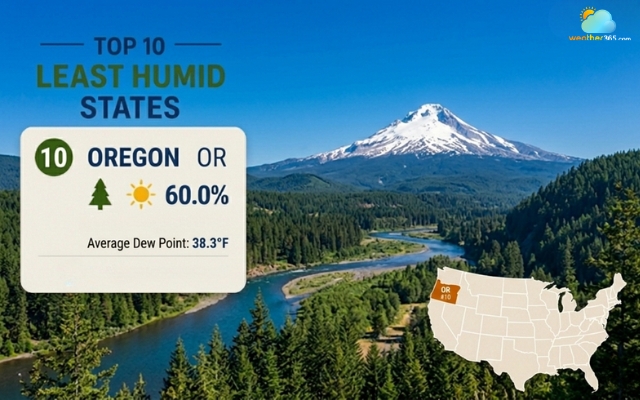
Oregon is among the least humid states
Least humid cities in the US
The least humid cities in the U.S. include Las Vegas, Phoenix, Tucson, Albuquerque, Reno, El Paso, Denver, Salt Lake City, Boise, and Colorado Springs.
These cities are mostly located along the Southwest and Mountain West.
They typically have low dew points, plenty of sunshine, and fewer muggy days than most parts of the country.
Las Vegas, Nevada
Las Vegas is often considered one of the driest major cities in America.
Located in the Mojave Desert, it receives very little rainfall and maintains low humidity throughout the year.
Even during hot summers, the dry air helps reduce that sticky feeling common in humid climates.
Phoenix, Arizona
Phoenix is known for its extremely dry desert climate.
While summer temperatures frequently climb above 100°F, the low humidity makes the heat feel different from the muggy conditions found in many southern states.
Tucson, Arizona
Tucson shares Arizona's dry climate but generally experiences slightly cooler temperatures than Phoenix due to its higher elevation.
Residents enjoy sunny weather and low moisture levels for much of the year.
Albuquerque, New Mexico
Situated more than 5,000 feet above sea level, Albuquerque benefits from both elevation and low humidity.
The city's dry air and mild climate make it a popular choice for retirees and outdoor enthusiasts.
Reno, Nevada
Reno combines a high-desert climate with relatively low humidity levels. Compared to many large U.S. cities, it experiences fewer humid days and enjoys a comfortable mix of warm summers and cool winters.
El Paso, Texas
Although Texas is often associated with humid weather, El Paso is a notable exception.
Located in the Chihuahuan Desert, the city remains dry for most of the year and consistently ranks among the least humid urban areas in the country.
Denver, Colorado
Denver's mile-high elevation helps keep humidity levels relatively low. Residents often enjoy warm summers without the heavy, damp air commonly found in lower-elevation cities.
Salt Lake City, Utah
Salt Lake City experiences a semi-arid climate with low to moderate humidity.
Surrounded by mountains and desert landscapes, the city offers plenty of sunny days and generally comfortable summer conditions.
Boise, Idaho
Boise has a dry continental climate that features warm summers and relatively low humidity. The city's weather is often considered more comfortable than that of many cities in the eastern United States.
Colorado Springs, Colorado
Colorado Springs benefits from high elevation, low moisture levels, and abundant sunshine.
Its dry air and moderate summer temperatures make it one of the most comfortable cities for people who prefer less humidity.
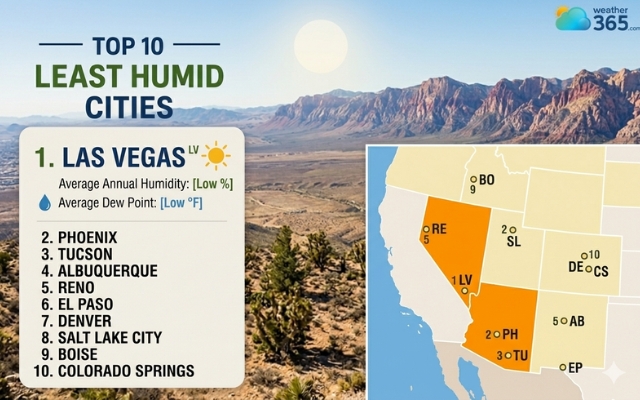
Cities have low dew points
Is low humidity bad for your health?
Yes, low humidity can affect your health when the air becomes too dry, especially below 30% to 40%.
While many people enjoy dry climates, extremely low moisture levels can cause discomfort and increase certain health risks.
Respiratory Infections
Dry air can reduce moisture in the nose and throat, making it harder for your body to trap germs and viruses. This may increase the risk of colds, flu, and other respiratory illnesses.
Dry and Irritated Skin
Low humidity pulls moisture from the skin, often causing dryness, itching, chapped lips, and worsening conditions such as eczema.
Sinus and Airway Discomfort
When the air is too dry, you may experience nosebleeds, sore throats, coughing, or increased irritation from asthma and bronchitis.
Eye Irritation
Dry conditions can also lead to red, itchy, or uncomfortable eyes, especially for contact lens wearers.
For the best balance of comfort and health, experts generally recommend keeping indoor humidity between 30% and 50%.
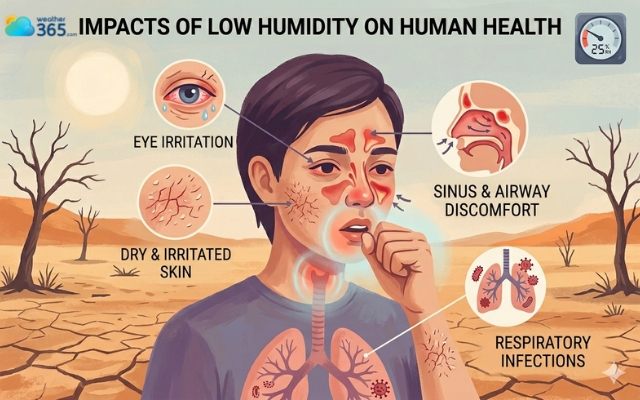
Low humidity can negatively affect your health
Sum up
The least humid states in the U.S. are concentrated primarily in the West, with Nevada, Arizona, and New Mexico leading the rankings. These states offer dry air, abundant sunshine, and relief from sticky summer conditions. However, while low humidity can improve comfort, extremely dry air may contribute to skin irritation, respiratory issues, and other health concerns if humidity levels fall too low.
Frequently Asked Questions (FAQs)
Related post
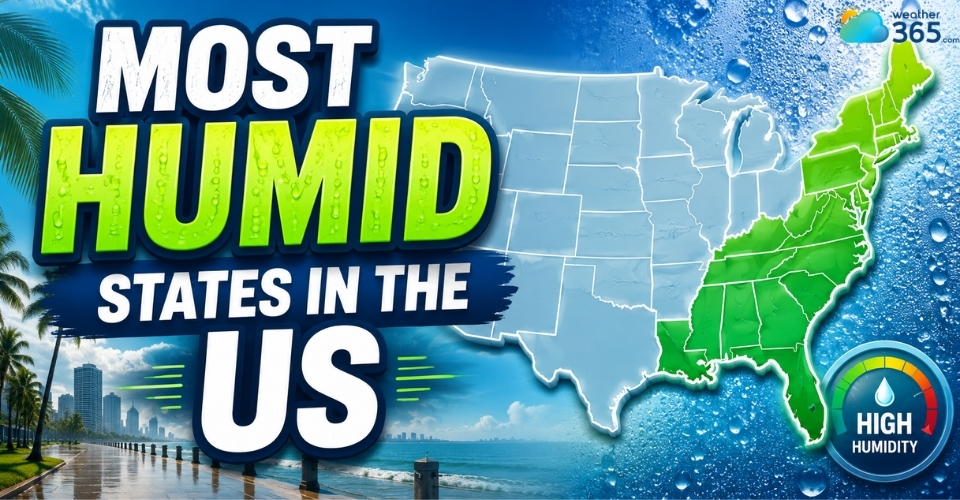
Most humid states in the US: Which States Feel the Muggiest?
 332
332
 1
1
 4.9
4.9
 22/08/2026
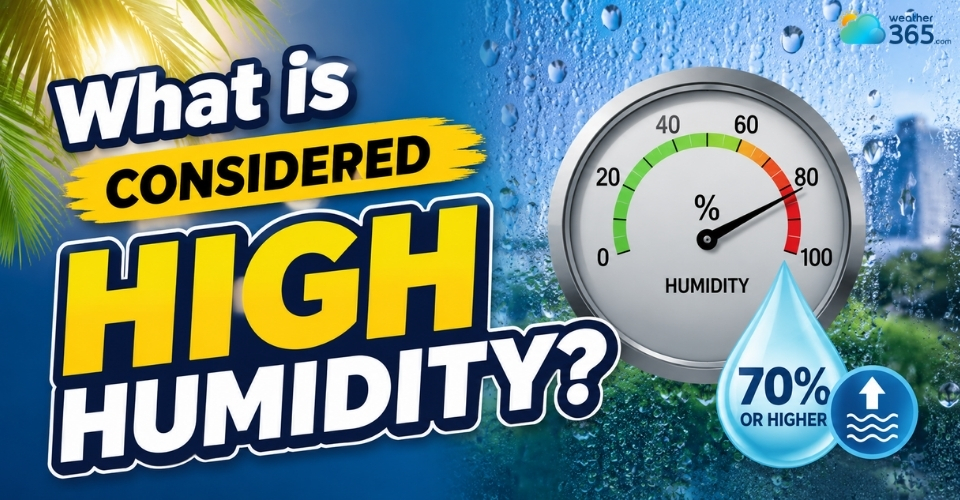
What Is Considered High Humidity? Steps To Manage Ideal Humidity Level
85
0
4.9
22/08/2026
What is 100% humidity? Meaning, Misconceptions, and Science
52
0
4.8
21/08/2026

0 Comment
Leave a comment
Your email address will not be published. Required fields are marked *