




Most humid states in the US: Which States Feel the Muggiest?


Most humid states in the US include Alaska, Florida, Louisiana, Mississippi, and Hawaii, based on long-term relative humidity and dew point data. But which states actually feel the muggiest year-round? Explore the rankings, understand what drives humidity, and learn how it affects daily comfort in this guide.
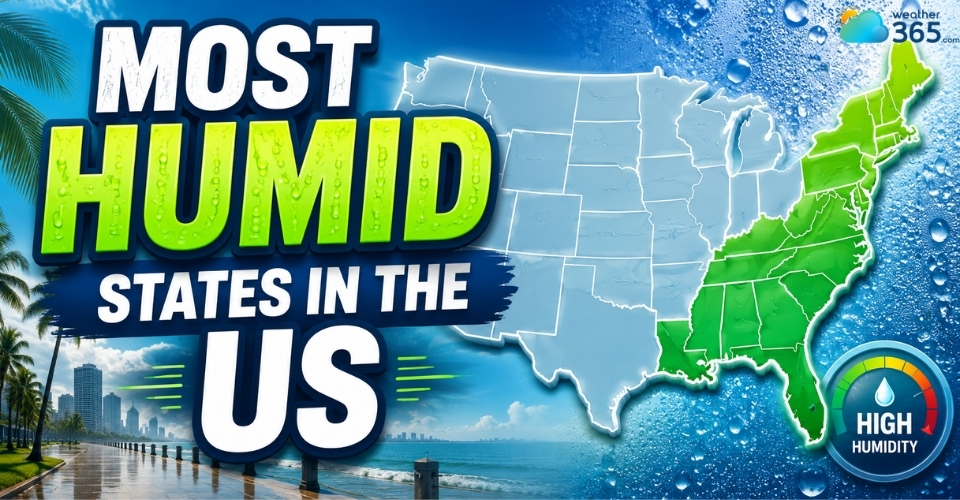
The most humid states in the US
- Most humid states in the US: By Relative Humidity
- Alaska
- Louisiana
- Mississippi
- Michigan
- Florida
- Minnesota
- Hawaii
- Iowa
- Alabama
- Missouri
- Most humid states in the US: By Dew Point
- Hawaii
- Florida
- Louisiana & Mississippi
- How High Humidity Affects Your Home?
- Structural & Material Damage
- Health & Air Quality Issues
- How to Lower Humidity in Your House
Most humid states in the US: By Relative Humidity
Based on long-term average relative humidity, the most humid states in the US include Alaska, Louisiana, Mississippi, Michigan, Florida,....
Relative humidity measures how much moisture is in the air compared to the maximum amount the air can hold at a specific temperature.
Because cooler air reaches saturation more easily than warm air, states with frequent precipitation, large water bodies, or coastal influences often rank surprisingly high.
Alaska
Average relative humidity: ~74.3%
Alaska ranks as the most humid state in the United States when measured by average relative humidity. This may seem surprising because the state is not known for hot, sticky weather.
The key reason is temperature.
Because lower temperatures limit the amount of moisture the atmosphere can retain, cooler regions often reach high humidity levels more easily.
As a result, Alaska's cool climate allows the air to reach high relative humidity levels more often.
In addition, the state has an enormous coastline along the Pacific Ocean, the Gulf of Alaska, and the Arctic Ocean.
Moist ocean air, frequent storms, snowfall, and rain all contribute to consistently moist conditions.
Many coastal communities experience fog, low clouds, and damp weather throughout the year, helping Alaska maintain the nation's highest average relative humidity.
Check the current humidity in Anchorage to explore real-time saturation data!
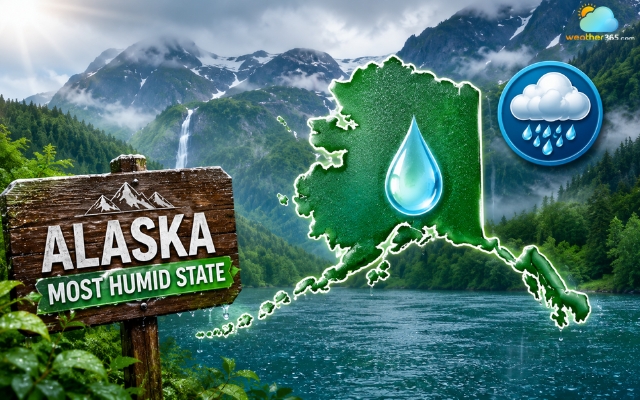
Alaska is the most humid state in the United States
Louisiana
Average relative humidity: ~74.2%
Louisiana sits along the Gulf of Mexico, one of the most important sources of atmospheric moisture in North America. Warm Gulf waters continuously evaporate, sending moisture-rich air inland.
The state's extensive wetlands, marshes, rivers, and bayous further increase moisture levels near the surface.
Combined with frequent thunderstorms and heavy summer rainfall, these factors create a humid environment year-round.
Although Alaska edges Louisiana slightly in relative humidity, Louisiana often feels much more uncomfortable because its humidity is paired with high temperatures.
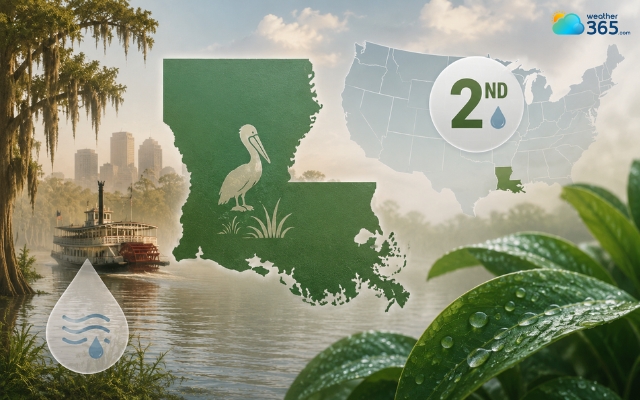
Louisiana is humid all year round
Mississippi
Average relative humidity: ~72.5%
Mississippi receives a steady flow of moisture-rich air from the nearby Gulf Coast, shaping much of its humid weather pattern.
Warm southerly winds regularly transport moisture inland, especially during spring and summer.
Its extensive network of waterways and natural landscapes continuously releases moisture into the atmosphere, helping maintain damp conditions.
During the warmer months, high humidity often combines with temperatures above 90°F, producing the muggy conditions the region is famous for.
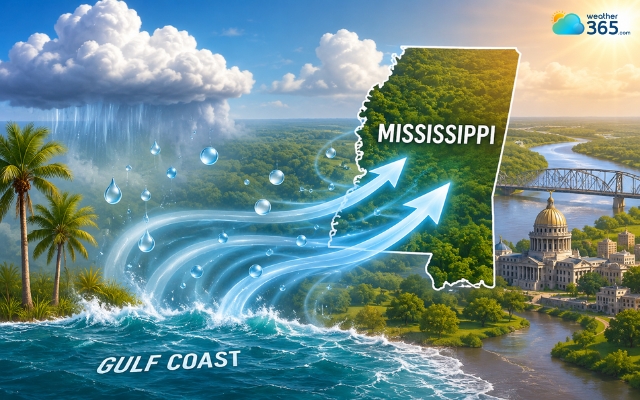
Mississippi receives moist air from the nearby Gulf Coast
Michigan
Average relative humidity: ~72.1%
Michigan's position within the Great Lakes region plays a major role in its high humidity ranking.
Surrounded by four of the five Great Lakes, the state benefits from an almost constant source of atmospheric moisture.
Water evaporating from the lakes increases humidity levels throughout the year. During cooler seasons, relative humidity often remains elevated because cold air requires less moisture to reach saturation.
While Michigan may not experience the tropical stickiness of Gulf Coast states, its average humidity remains surprisingly high.
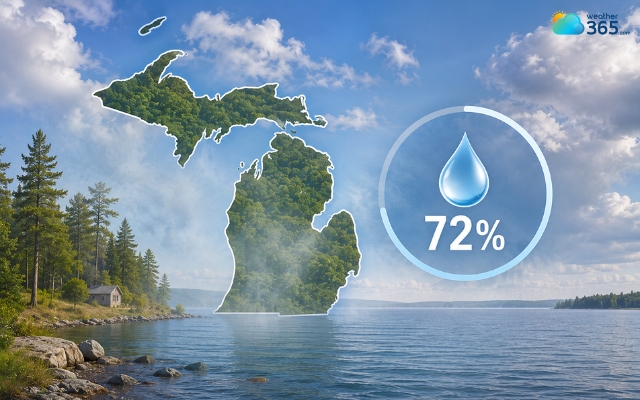
Michigan is surrounded by four of the five Great Lakes
Florida
Average relative humidity: ~72.17%
Florida is almost completely surrounded by water, with the Atlantic Ocean on one side and the Gulf of Mexico on the other.
This unique geography allows moist air to flow inland from multiple directions.
Surrounded by warm Gulf and Atlantic waters, coastal regions lead the nation on Florida average annual humidity trackers.
The state's warm climate encourages evaporation year-round, while frequent afternoon thunderstorms help replenish moisture in the atmosphere.
Coastal breezes, tropical weather systems, and abundant wetlands further contribute to consistently humid conditions.
Florida's humidity is especially noticeable during summer, when both temperatures and moisture levels peak.
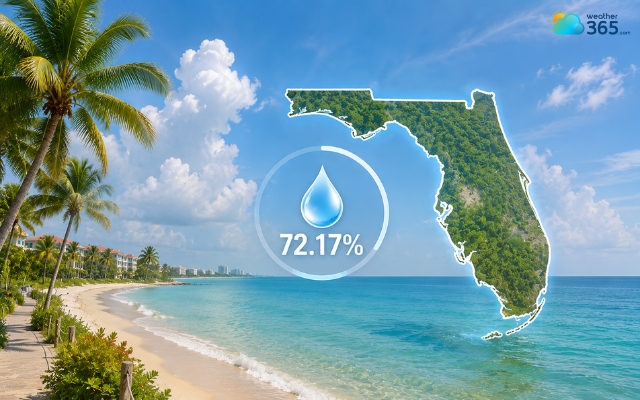
Florida is surrounded by water
Minnesota
Average relative humidity: ~71.9%
Minnesota's high ranking is largely tied to its thousands of lakes and extensive wetland systems. These water bodies continuously release moisture into the atmosphere through evaporation.
The state's long, cold winters also help increase average relative humidity because cooler air reaches saturation more easily.
During summer, humidity can become surprisingly intense, especially when warm air masses move northward from the Gulf of Mexico.
As a result, Minnesota often experiences both humid summers and damp conditions during cooler months.
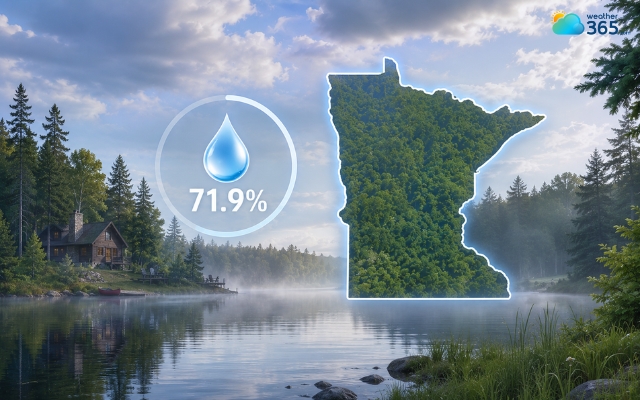
Minnesota experiences humid summers
Hawaii
Average relative humidity: ~71%
Hawaii's tropical location in the middle of the Pacific Ocean provides a constant source of moisture.
Warm ocean waters surrounding the islands generate steady evaporation throughout the year.
Trade winds transport this moisture inland, where mountain ranges force the air upward. As the air rises, it cools and condenses into clouds and rainfall, particularly on windward slopes.
This combination of tropical warmth, ocean influence, and regular rainfall keeps humidity levels consistently high across much of the state.
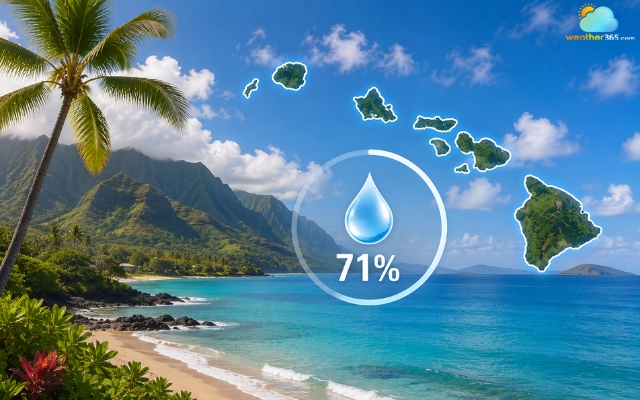
Hawaii receives constant moisture from Pacific Ocean
Iowa
Average relative humidity: ~70%
Iowa may be far from the ocean, but it still experiences relatively high humidity.
Moisture frequently arrives from the Gulf of Mexico through large-scale weather patterns that move across the central United States.
Agricultural land also contributes to local humidity.
During the growing season, crops release water vapor through transpiration, increasing atmospheric moisture near the surface.
Combined with numerous rivers and seasonal rainfall, these factors help Iowa maintain above-average humidity levels.
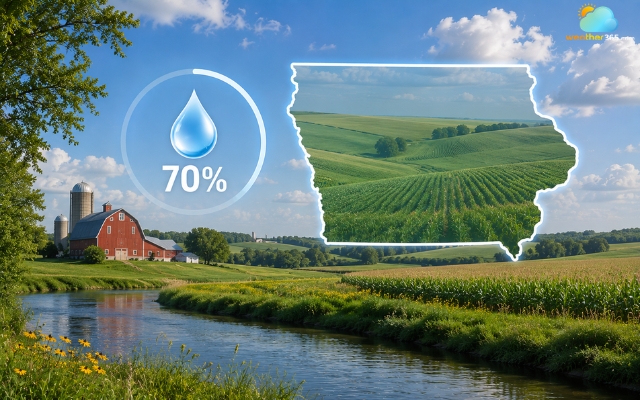
Iowa experiences relatively high humidity
Alabama
Average relative humidity: ~70%
Alabama benefits from its close proximity to the Gulf Coast. Moist air masses regularly move inland, bringing humidity across much of the state.
The combination of warm temperatures, abundant forests, rivers, and frequent thunderstorms creates ideal conditions for high humidity.
Even areas farther from the coast often experience muggy weather during summer.
Because humidity remains elevated for much of the year, Alabama consistently ranks among the nation's most humid states.

Alabama ranks among the most humid states in the US
Missouri
Average relative humidity: ~69–70%
Missouri rounds out the top ten thanks to a mix of geographic and climatic factors. The state receives moisture from the Gulf of Mexico, particularly during spring and summer.
Major waterways, including the Mississippi and Missouri Rivers, contribute additional moisture through evaporation. Seasonal thunderstorms and humid air masses frequently push humidity levels higher, especially during warmer months.
Although Missouri is not as humid as the Gulf Coast states, its combination of moisture sources and summer heat often creates noticeably muggy conditions.

Missouri experiences frequent muggy conditions
Most humid states in the US: By Dew Point
When humidity is measured by dew point, Hawaii, Florida, Louisiana, and Mississippi rank among the muggiest states in the country.
Unlike relative humidity, dew point measures the actual amount of moisture in the air. A higher dew point means the air feels stickier, heavier, and more uncomfortable.
If you're unfamiliar with this weather term, check out our guide on what is dew point to learn more.
Hawaii
Hawaii ranks as the most humid state by dew point and is the only state with an average annual dew point above 65°F (18.3°C).
The reason is simple: the islands are surrounded by warm Pacific Ocean waters that continuously supply moisture to the atmosphere.
Combined with Hawaii's tropical climate, this creates consistently high moisture levels throughout the year.
Even when temperatures are pleasant, the air often feels humid because of the large amount of water vapor present.

Hawaii ranks as the most humid state by dew point
Florida
Florida is famous for its combination of heat and humidity, and its dew point values are among the highest in the United States.
Average dew points typically range from 62°F to 63°F, with even higher readings during summer.
The state's location between the Atlantic Ocean and the Gulf of Mexico provides a constant source of moisture.
Cities such as Miami, Tampa, and Orlando frequently experience humid conditions that make temperatures feel much hotter than the actual air temperature.
Are you planning a trip or monitoring southern weather?
Look up the real-time humidity in Tampa to gauge the local comfort index before heading out.

Florida receives a constant source of moisture
Louisiana & Mississippi
Louisiana and Mississippi are well known for their long, muggy summers. Both states sit along the Gulf of Mexico, allowing warm, moisture-rich air to flow inland for much of the year.
Extensive wetlands, marshes, rivers, and frequent summer thunderstorms add even more moisture to the atmosphere. As a result, dew points often climb into levels that feel oppressive, especially during the hottest months.
This is why many residents describe summer air in these states as thick, sticky, and difficult to escape.

Louisiana & Mississippi are well known for muggy summers
How High Humidity Affects Your Home?
High humidity can damage your home, reduce indoor air quality, and create conditions that encourage mold and pests.
When moisture levels stay too high for long periods, the effects can impact both your property and your health.
Structural & Material Damage
Excess moisture doesn't just make a home feel uncomfortable, it can slowly damage building materials over time.
Warped Wood
Wood naturally absorbs moisture from the air. When humidity remains high, hardwood floors, cabinets, furniture, and interior doors can expand, warp, or become difficult to open and close.
Peeling Paint & Wallpaper
Moisture trapped inside walls can weaken paint and wallpaper adhesive. Over time, this may cause bubbling, cracking, peeling paint, or wallpaper that starts separating from the wall.
Rotting Framework
Persistent dampness can gradually break down drywall, ceiling materials, and wooden support structures. If ignored for years, moisture damage can lead to costly repairs and even structural problems.
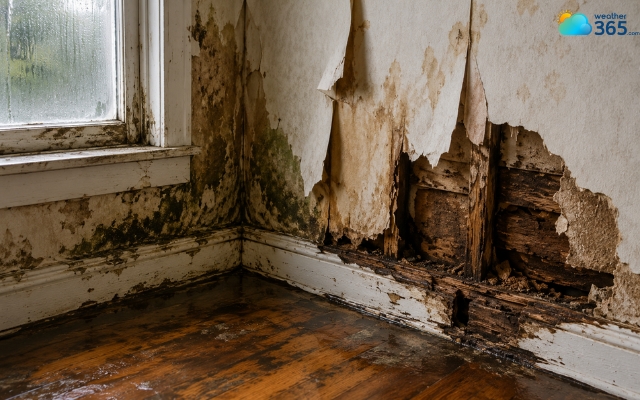
High humidity can damage building materials
Health & Air Quality Issues
High indoor humidity can also affect the air you breathe.
Mold and Mildew
Mold spores thrive in damp environments, especially in bathrooms, basements, kitchens, and poorly ventilated rooms.
Besides creating unsightly stains and odors, mold can trigger allergies, asthma symptoms, and other respiratory issues.
Dust Mites
Dust mites multiply quickly in humid conditions.
They commonly live in bedding, carpets, curtains, and upholstered furniture, where they can worsen allergy symptoms for sensitive individuals.
Accelerated Off-Gassing
Humidity may increase the release of volatile organic compounds (VOCs) from materials such as paint, flooring, furniture, and new carpets. This can contribute to poorer indoor air quality and unpleasant odors.
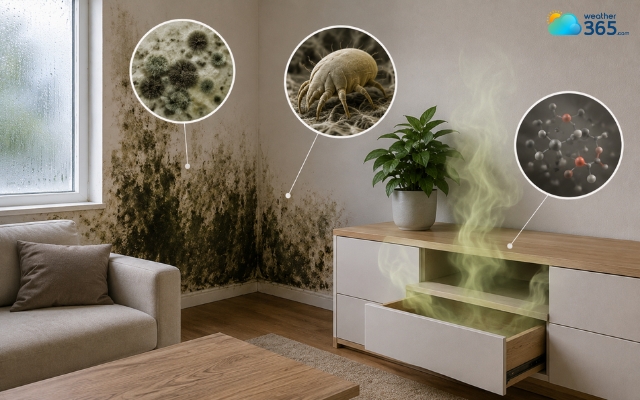
High humidity can also impact human health
How to Lower Humidity in Your House
Knowing what is considered high humidity for indoor spaces can help you protect your property and health.
If your home's humidity regularly exceeds 60%, taking a few simple steps can help.
Use a dehumidifier in damp rooms.
Run your air conditioner during warm weather.
Turn on exhaust fans when cooking or showering.
Fix leaking pipes and plumbing issues promptly.
Improve airflow by opening vents and keeping air circulating.
Seal areas where water can enter the home.
For most homes, keeping indoor humidity between 30% and 50% helps protect building materials, improves comfort, and reduces the risk of mold growth.
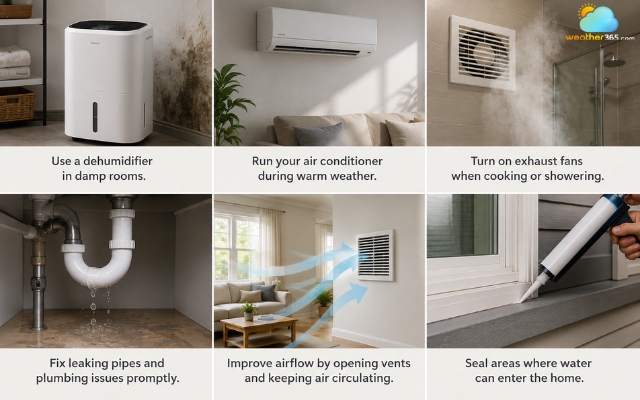
Tips to lower humidity in your house
Sum up
The most humid states in the US vary depending on whether humidity is measured by relative humidity or dew point. Alaska leads in relative humidity thanks to its cool, moisture-rich climate, while Hawaii ranks highest by dew point because of its tropical environment. Understanding both measurements helps explain why some places feel damp while others feel intensely muggy, and why managing humidity is important for both comfort and home health.
Frequently Asked Questions (FAQs)
Related post
Relative Humidity vs Absolute Humidity: What is the Difference?
 104
104
 0
0
 5.0
5.0
 07/09/2026
What Is Considered High Humidity? Steps To Manage Ideal Humidity Level
85
0
4.9
22/08/2026
What is 100% humidity? Meaning, Misconceptions, and Science
51
0
4.8
21/08/2026

1 Comment
Elizabeth Harris
that's useful
Leave a comment
Your email address will not be published. Required fields are marked *