



Relative Humidity vs Absolute Humidity: What is the Difference?


Relative humidity vs absolute humidity can seem confusing because both describe moisture in the air. Yet they measure it in different ways and are used for different purposes. Let’s discover how each humidity measurement works and why it matters.
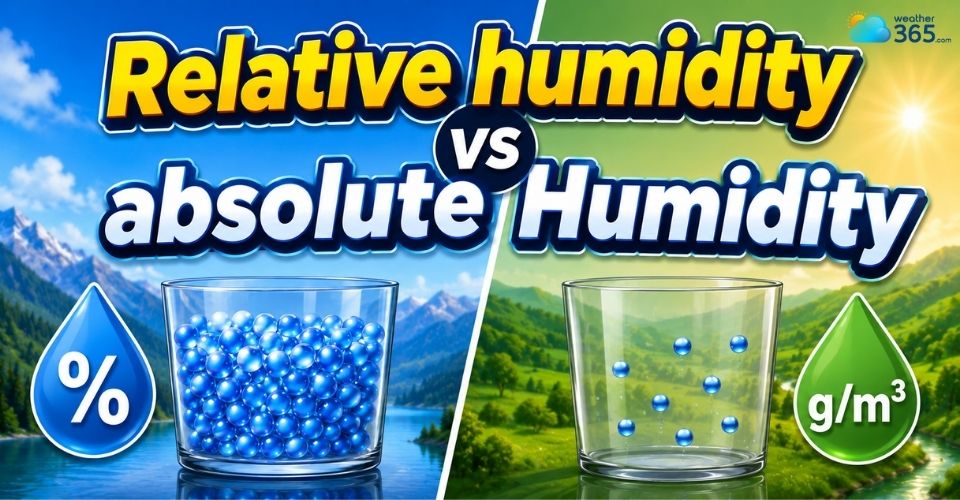
Relative humidity vs absolute humidity
What is Absolute Humidity
Absolute humidity is the actual amount of water vapor present in a specific volume of air.
In simple terms, it tells you exactly how much moisture is floating in the air, regardless of whether the air is hot or cold.
Absolute humidity focuses on the quantity of water vapor itself, not how close the air is to becoming saturated.
This measurement is usually expressed in grams of water vapor per cubic meter of air (g/m³).
For example, if one cubic meter of air contains 8 grams of water vapor, the absolute humidity is 8 g/m³.
One important thing to understand is that absolute humidity does not automatically change when temperature changes.
If no moisture is added or removed, the amount of water vapor remains the same even if the air warms up or cools down.
This makes absolute humidity useful in scientific studies, agriculture, manufacturing, and ventilation systems where knowing the exact moisture content is important.
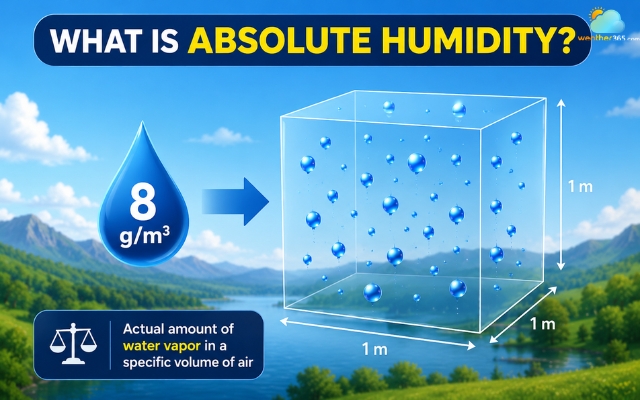
Absolute humidity is the actual amount of water vapor
Note:
Absolute humidity is often compared with dew point because both measurements relate to the actual amount of moisture in the air. However, they are not the same.
So, what is the difference between absolute humidity and dew point?
Absolute humidity tells you how much water vapor is present, while dew point tells you the temperature at which that water vapor would begin to condense into liquid water.
In other words, both measure atmospheric moisture, but from different perspectives.
Because it provides a direct measurement of moisture content, absolute humidity is valuable in technical applications.
However, it is less commonly used in everyday weather reports because it does not indicate how humid or comfortable the air feels to people.
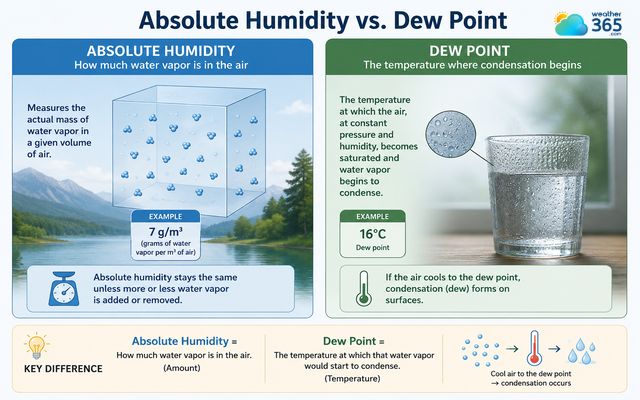
Distinguish Absolute humidity and dew point
What is Relative Humidity
Relative humidity is the percentage of water vapor in the air compared to the maximum amount the air can hold at a specific temperature.
In other words, relative humidity doesn't tell you the exact amount of moisture in the air.
Instead, it tells you how close the air is to being fully saturated.
Relative humidity is expressed as a percentage (%). For example:
50% relative humidity means the air is holding about half the moisture it could potentially contain at its current temperature.
100% relative humidity means the air is fully saturated, and condensation may begin to form as dew, fog, or clouds.
(Read more: What is 100% humidity?)
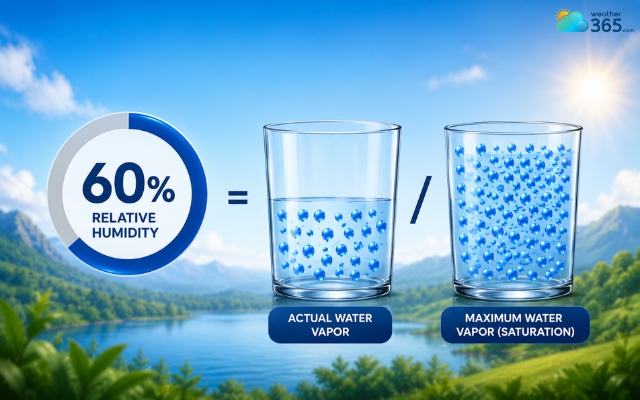
Relative humidity indicates how close the air is to being fully saturated
Which factor affect relative humidity strongly?
Relative humidity is most strongly affected by temperature and moisture content (absolute amount of water vapor in the air). Warm air can hold much more water vapor than cold air.
As a result, relative humidity can change throughout the day even when the actual amount of moisture in the air stays the same.
For example, imagine the air contains a fixed amount of water vapor.
As the temperature rises during the afternoon, the air's moisture-holding capacity increases, causing the relative humidity to decrease.
Later, when temperatures cool in the evening, the relative humidity rises again because the air can hold less moisture.
This temperature dependence is why weather forecasts almost always report relative humidity rather than absolute humidity.
It helps people understand how humid the air feels and whether conditions may become uncomfortable.
Relative humidity is also an important factor in:
Weather forecasting
Indoor air quality monitoring
HVAC system management
Mold prevention
Human comfort assessments
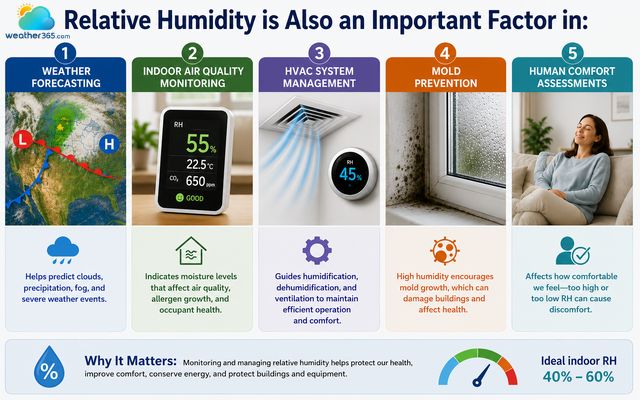
Important application of relative humidity
Generally, a relative humidity level between 30% and 60% is considered comfortable for most indoor environments.
Levels above this range can make the air feel muggy, while very low humidity can cause dry skin, irritated eyes, and respiratory discomfort.
While absolute humidity measures actual water vapor density, mugginess depends on Georgia relative humidity update.
Because it reflects both moisture and temperature, relative humidity is often the most practical measurement for understanding everyday weather conditions and indoor comfort.
Relative Humidity vs Absolute Humidity: What’s the Difference?
The key difference is that absolute humidity measures the actual moisture in the air, while relative humidity shows how close the air is to reaching its moisture limit.
Although both measurements describe humidity, they serve different purposes.
Absolute humidity is useful when you need precise moisture data, while relative humidity is more helpful for understanding weather conditions and indoor comfort.
What They Measure
Absolute humidity focuses on the total amount of water vapor present in the air.
Relative humidity focuses on the relationship between current moisture levels and the maximum amount of moisture the air can hold at a given temperature.
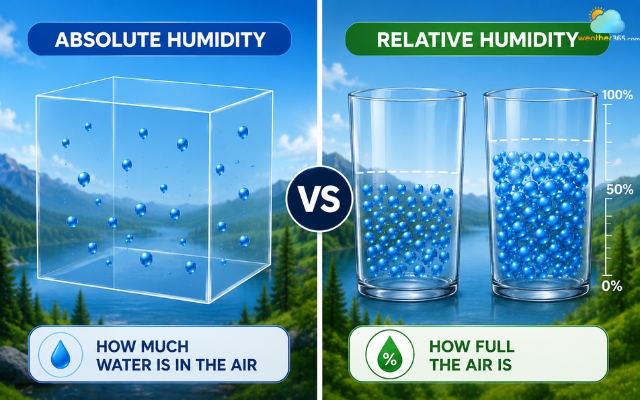
Relative and absolute humidity differs in what they measure
Units
The two measurements use completely different units.
Absolute humidity is measured in grams of water vapor per cubic meter of air (g/m³).
Relative humidity is expressed as a percentage (%).
Because relative humidity is shown as a percentage, it is generally easier for the public to understand and interpret.
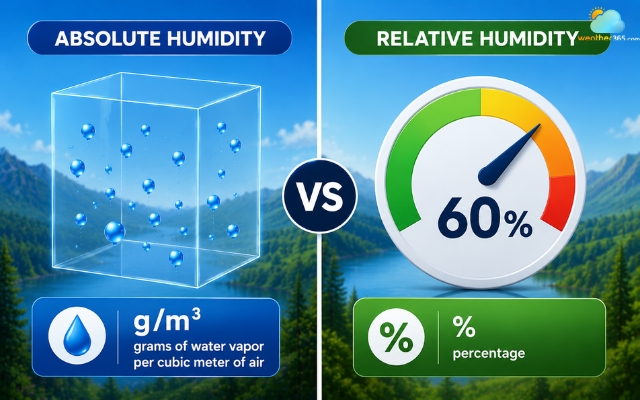
Different units of relative and absolute humidity
Effects of Temperature
One of the biggest differences between the two is how temperature influences them.
Absolute humidity only changes when moisture is added to or removed from the air.
Relative humidity, however, can rise or fall simply because the temperature changes.
This is why humidity percentages often fluctuate throughout the day even when no additional moisture enters the atmosphere.
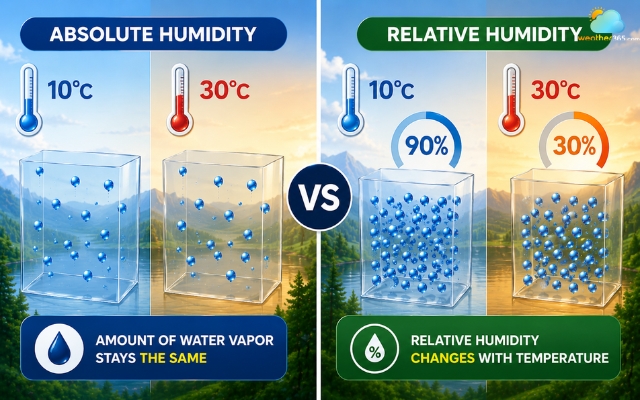
Relative humidity can rise or fall because the temperature changes
Indication of Comfort
When it comes to everyday comfort, relative humidity is usually the more useful measurement.
High relative humidity can make warm weather feel hotter and more uncomfortable because sweat evaporates more slowly.
Low relative humidity can make the air feel dry and irritating.
Absolute humidity does not provide the same insight into how the air feels because it does not account for temperature.
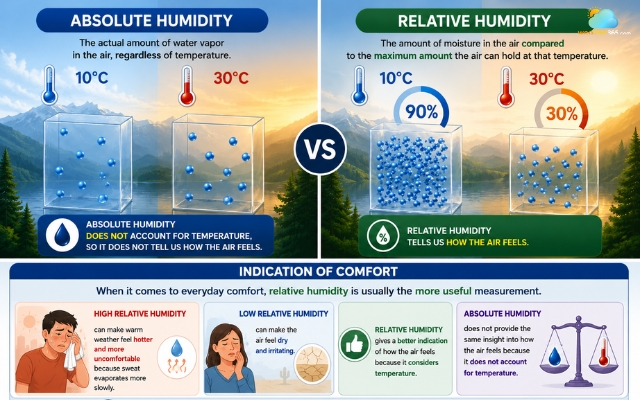
High relative humidity means hotter
Health Impacts
Humidity levels can affect both health and indoor environments.
Relative humidity
Very high relative humidity may encourage mold growth, dust mites, and poor indoor air quality.
On the other hand, very low humidity can contribute to dry skin, irritated sinuses, and respiratory discomfort.
Absolute humidity
Absolute humidity does not directly indicate how comfortable or healthy the air feels.
Instead, it measures the total amount of water vapor in the air and is maily used in scientific, industrial, and agriculture applications.
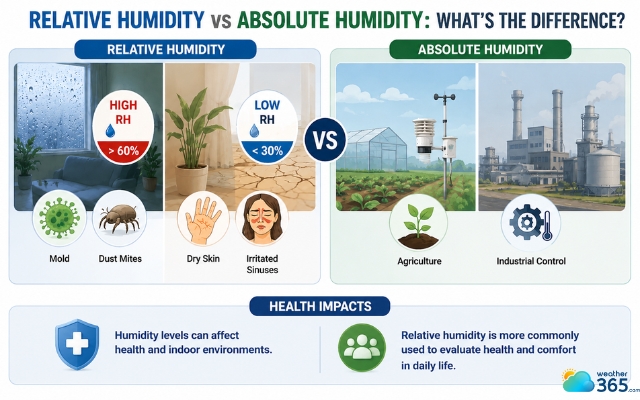
Humidity can affect human health
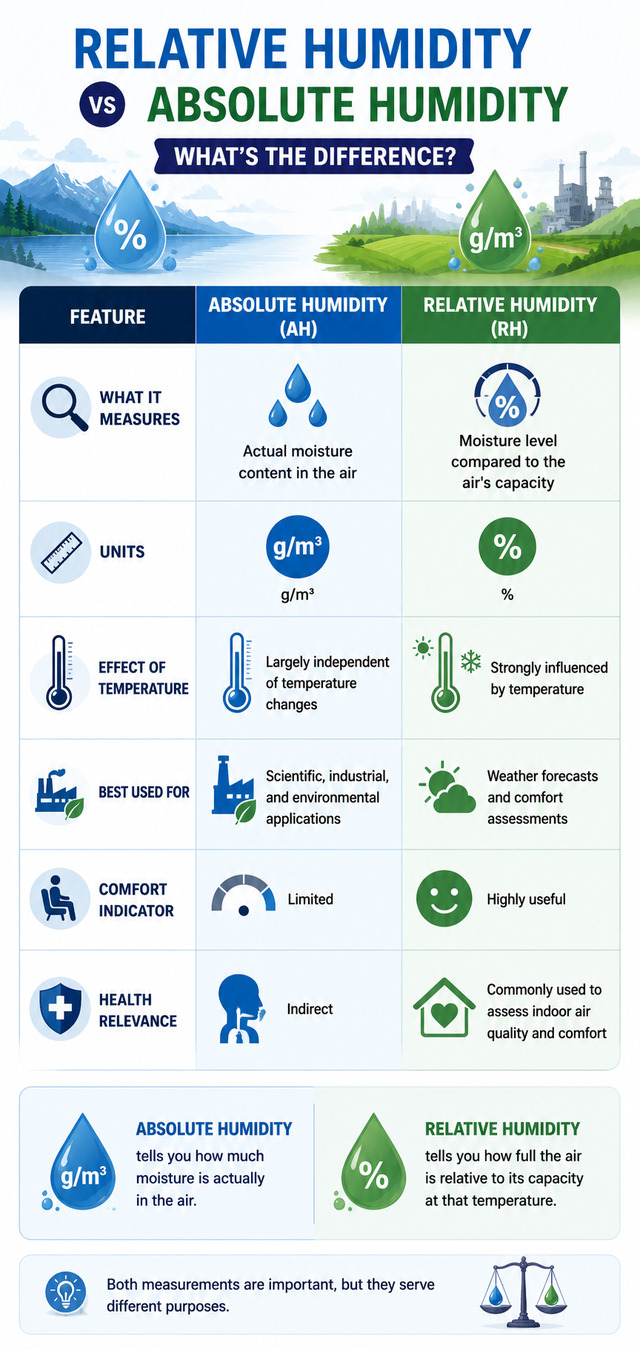
Relative humidity vs absolute humidity difference
Sum up
When comparing relative humidity vs absolute humidity, the key difference is that absolute humidity measures the actual quantity of water vapor, while relative humidity measures how close the air is to saturation. Absolute humidity is valuable for scientific and industrial applications, whereas relative humidity is more useful for weather forecasts, indoor comfort, and everyday decision-making.
Frequently Asked Questions (FAQs)
Related post
What Is Considered High Humidity? Steps To Manage Ideal Humidity Level
 85
85
 0
0
 4.9
4.9
 22/08/2026

Top 10 Least Humid States in the U.S. to Live or Retire
85
0
4.9
22/08/2026

What is Dew Point? A Complete Science & Weather Guide
65
0
4.9
22/08/2026
What is 100% humidity? Meaning, Misconceptions, and Science
51
0
4.8
21/08/2026

0 Comment
Leave a comment
Your email address will not be published. Required fields are marked *