




What is Freezing Fog: Understand Its Formation and Hazards Clearly


What is freezing fog? And why does everything suddenly turn icy even when there’s no snow? This rare phenomenon combines fog and freezing temperatures, creating hidden layers of black ice on roads and trees. Now let’s uncover how fog forms, its dangers, and how you can stay safe when it appears!
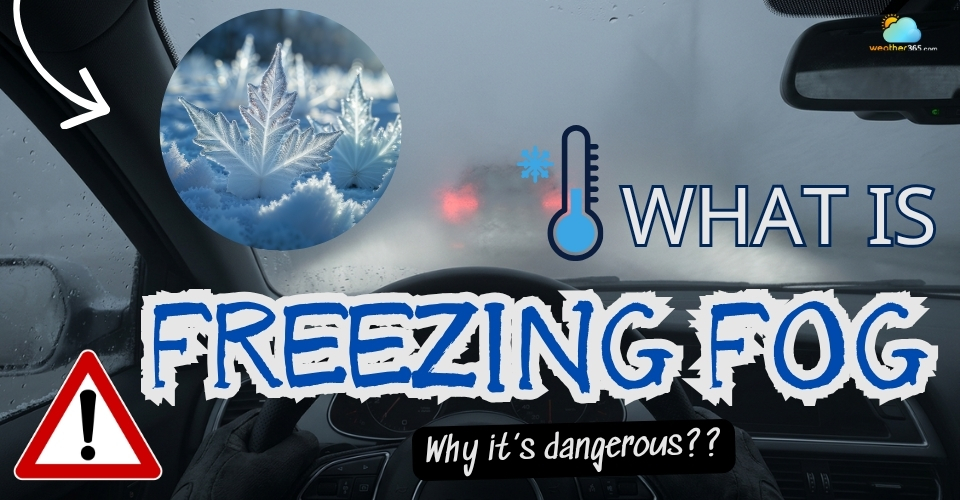
Why is freezing fog hazardous?
- What is Freezing Fog?
- What causes freezing fog?
- Is Freezing Fog The Same As Ice Fog?
- How Does Freezing Fog Form?
- Develops in moist, cooled air
- Droplets become supercooled
- Instant freezing upon contact
- Dangers of freezing fog
- What to do during freezing fog?
- On the road: Driving safely
- On water: Boating in freezing fog
What is Freezing Fog?
Freezing fog occurs when tiny water droplets in the air remain in liquid form even though the temperature is below 0°C (32°F).
Freezing fog typically forms on calm, cold, clear nights, especially in valleys of low-lying areas where the temperature drops quickly.
The most common time you can witness this phenomenon is in winter mornings, right just before sunrise. This is when air temperature and humidity reach the perfect balance for fog formation, but stay below freezing.

Freezing fog often appears on winter morning
What causes freezing fog?
Freezing fog begins much like regular fog: moist air cools overnight until water vapor condenses into small liquid droplets.
The key difference is temperature in freezing fog, when the air temperature is below freezing (0 °C / 32 °F). Despite that, the droplets remain in liquid form; they are supercooled.
These droplets don't freeze immediately because they lack a surface or particle (ice nucleus) to latch onto.
When they finally touch a surface that is also at or below freezing, they instantly solidify into rime ice.
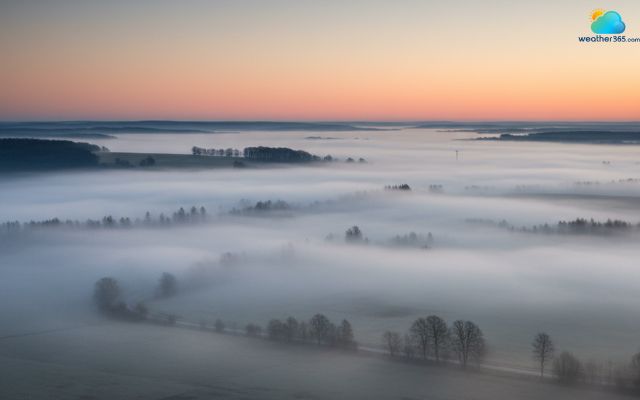
The temperature in freezing fog is below freezing 0 °C
Other factors that help freezing fog form include:
Clear skies and calm winds at night, allowing strong cooling at the ground.
Stable air near the surface, trapping the cold, moist air without mixing.
High humidity near the ground, so there is enough moisture to form droplets.
Is Freezing Fog The Same As Ice Fog?
The answer is NO.
Although freezing fog and ice fog are quite similar in name, they differ significantly in how their water particles exist.
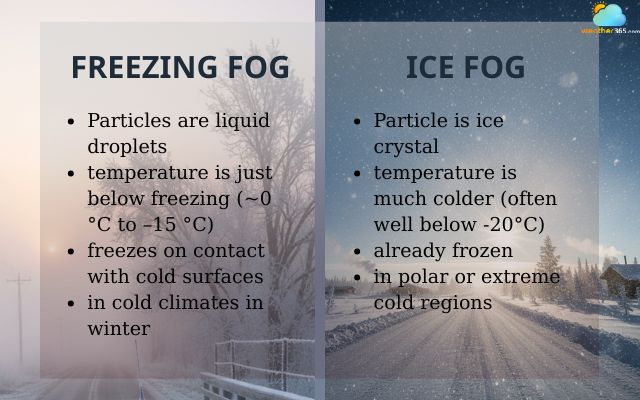
Freezing fog vs Ice fog
Freezing fog consists of supercooled liquid droplets in the air (below freezing but still liquid). When these droplets touch a cold surface, they instantly freeze into ice.
Ice fog, by contrast, is made up entirely of tiny ice crystals that form directly in the air. There is no liquid stage involved.
Let’s take a look at the table below to see the difference between these two types of fog:
Feature | Freezing Fog | Ice Fog |
Particle type | Liquid droplets (supercooled) | Ice crystals |
Temperature range | Near or just below freezing (e.g. ~0 °C to –15 °C) | Much colder (often well below –20 °C) |
Freezing behavior | Freezes on contact with cold surfaces | Already frozen, may not need a surface to form |
Occurrence region | cold climates in winter | Polar or extreme cold regions |
How Does Freezing Fog Form?
Knowing what is freezing fog helps explain why it’s so dangerous, but how does it actually form?
It starts as regular fog, yet subfreezing air keeps droplets liquid until they hit a surface and solidify.
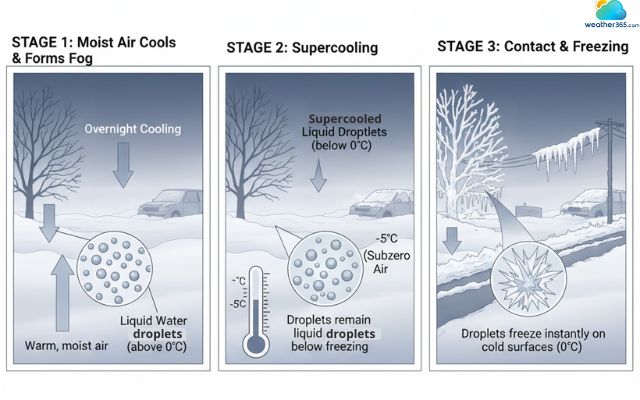
How is freezing fog formed?
Develops in moist, cooled air
Fog forms when air becomes saturated - meaning it holds as much moisture as it can at its temperature.
This often happens overnight under clear skies and light winds, allowing the ground and nearby air to cool by radiating heat into space.
As the cooling air reaches its dew point, water vapor condenses into microscopic droplets suspended near the surface.
In some cases, moist air slides over a colder surface (for example, warm moist air over snow), cools, and triggers fog formation.
Droplets become supercooled
In freezing fog, the temperature of the air drops below 0 °C (32 °F). Yet the tiny fog droplets do not immediately become ice; they remain as liquid droplets in a supercooled state.
This happens because there are not enough ice-nucleating particles (tiny particles that help water freeze) present to trigger crystallization.
Supercooling is delicate: droplets remain liquid even though they are colder than the freezing point. They are in a metastable state, ready to freeze under the right trigger.
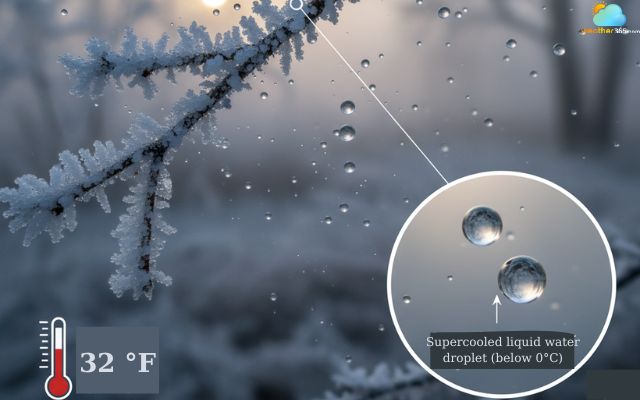
Droplets remain liquid even though they are colder than the freezing point
Instant freezing upon contact
Once these supercooled droplets collide with a solid surface (like a tree branch, car, road, or power line) that is also at or below freezing, they freeze instantly.
This instantaneous freezing deposits a thin ice coating called rime ice or glaze.
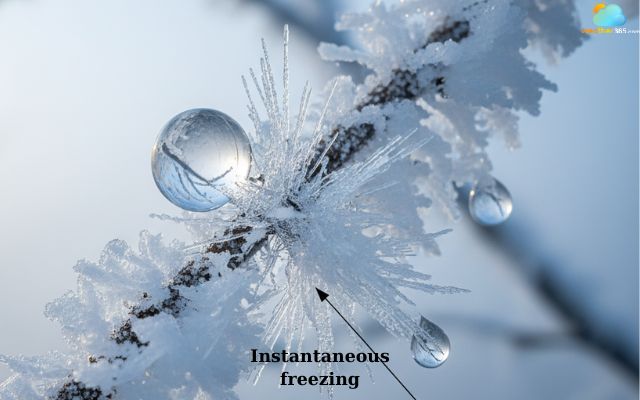
Supercooled droplets freeze instantly
Because the droplets freeze on contact, surfaces can build up ice even though the air seems only foggy.
This is what makes freezing fog especially dangerous: an environment that looks misty can hide sudden ice accretion on everything it touches.
Dangers of freezing fog
Fog ranks among the most dangerous weather conditions.
When it appears suddenly, visibility can shrink so quickly that recognizing obstacles, estimating distances, or keeping a proper course becomes extremely difficult.
Icy surfaces & “invisible” black ice
One of the biggest threats is the formation of black ice: a thin, transparent glaze of ice that’s nearly invisible on roads, bridges, or sidewalks.
Because it blends into the pavement, drivers or pedestrians often don’t notice it until it’s too late.
Even surfaces that appear wet or just damp can actually be slick with ice in freezing fog conditions.
As droplets freeze upon contact, they create a glassy layer that reduces traction dramatically.
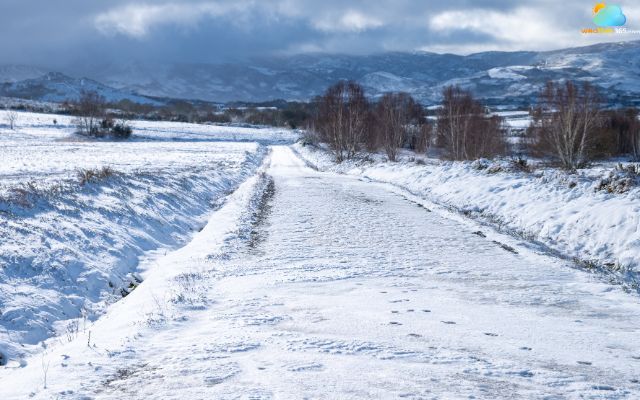
Freezing fog can create icy surface that endangers people
Severely reduced visibility
Fog significantly reduces visibility, and when combined with ice, the danger multiplies. In freezing fog, you may struggle to spot obstacles, road edges, or hazards in time.
This poor visibility complicates safe navigation, whether walking, driving, or cycling.
Mistakes made in such conditions tend to be more serious because you have less time to react.
According to the US Coast Guard’s 2023 Recreational Boating Statistics, more than 3,800 boating accidents occurred across the country, resulting in 564 fatalities, with poor lookout cited as one of the leading contributing factors.
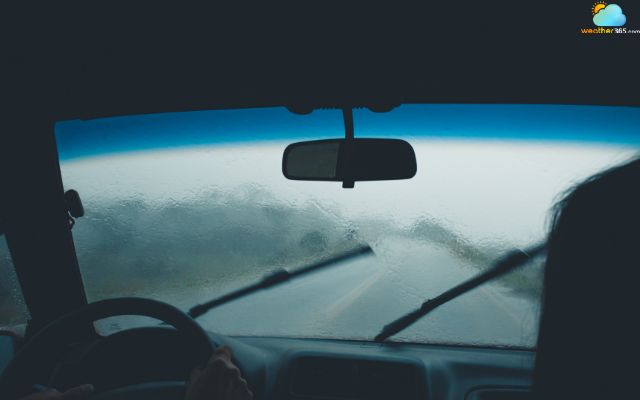
Poor visibility in freezing fog can bring about multiple hazards
Damage to flora, infrastructure & power lines
As supercooled droplets freeze onto tree branches, shrubs, or utility lines, ice accumulates.
Over time, this weight can cause branches to snap or power lines to sag and break.
These failures may lead to power outages, blocked roads, and costly repairs.
Even houses and structures near heavily iced trees are at risk of damage if branches fall.
Aviation & aircraft hazards
Aircraft operating in freezing fog can suffer ice accumulation on wings, windshields, sensors, or control surfaces.
Even a thin ice layer can disrupt aerodynamics and pose serious safety risks.
Airports may delay departures or require rigorous de-icing procedures before flights can safely take off or land.
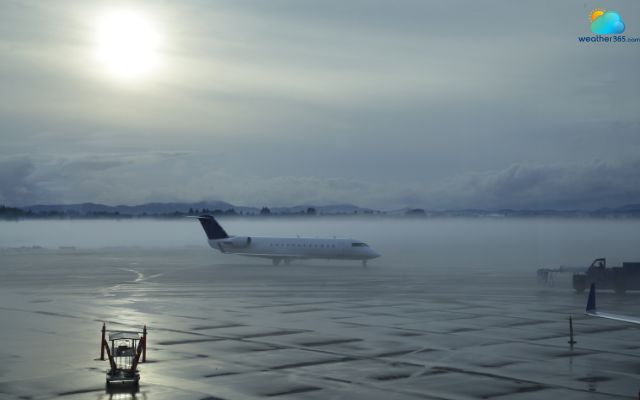
Airports may have to delay departures on a freezing fog day
What to do during freezing fog?
When freezing fog strikes, it can turn roads, sidewalks, and waterways into hidden hazards.
Therefore, knowing what is freezing fog is inadequate; follow these steps below to stay secure until the icy mist clears:
On the road: Driving safely
When you’re forced to drive in freezing fog, follow these key practices:
Slow down and extend the following distance as the reaction time is reduced on slick roads.
Use low-beam headlights or fog lights, not high beams, because high beams reflect off droplets, creating glare.
Stay in your lane and use pavement lines as guides, especially the right edge line to avoid drifting.
Do not stop on the road unless absolutely necessary. If you must pull over, use a safe area, turn on hazards, and turn off other lights to avoid confusion.
Avoid distractions like mute radios, silence phones, and don’t use cruise control so you maintain full control.
Use windshield wipers and defrosters to keep windows clear from moisture or ice buildup.
See detailed guidance on how to drive in fog!
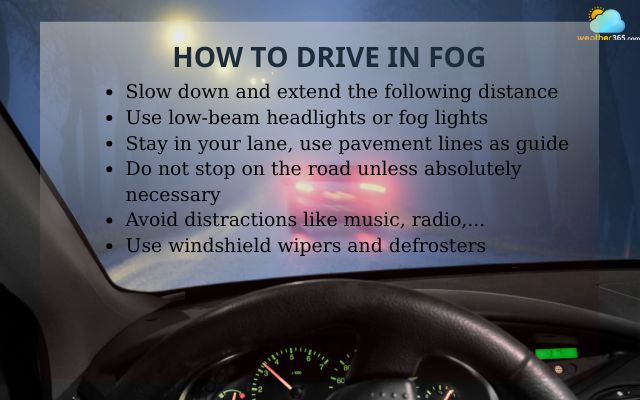
How to stay safe while driving in fog?
On water: Boating in freezing fog
If you’re on a boat and fog, especially freezing fog, rolls in, adopt heightened caution. Here’s how to stay safer:
Reduce speed significantly, as low visibility gives little time to react to obstacles or other vessels.
Turn on navigation lights and running lights even during the daytime so you’re more visible to others.
Use sound signals like horns or bells per maritime rules to alert nearby vessels of your position.
Rely on radar, GPS, or charts to maintain course and spot hidden hazards.
Drop anchor or stay put if disoriented, as it’s safer to wait for fog to lift than risk collision.
Avoid main shipping lanes when possible, especially in dense fog zones.
If you want a more detailed guide on navigating safely in low-visibility conditions, check out our full article on boating in fog for practical tips and common mistakes to avoid.
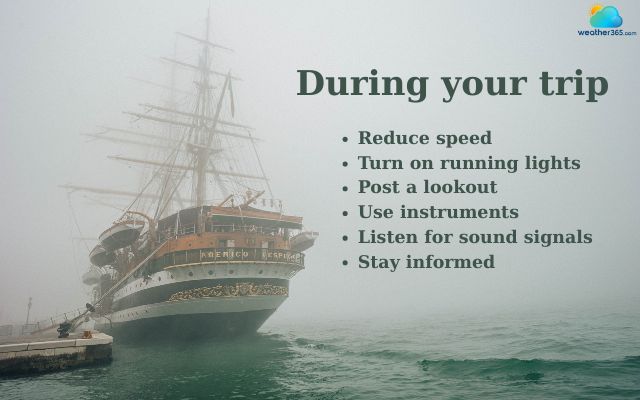
How to stay safe while boating in fog?
Conclusion
What is freezing fog, and why should you take it seriously? Because it can turn ordinary conditions into icy, low-visibility hazards in minutes. Staying informed and applying simple safety measures can help you avoid accidents and stay in control, no matter where you are.
Frequently Asked Questions (FAQs)
Related post
7 Common Types of Fog and What Makes Each One Unique
 224
224
 0
0
 4.7
4.7
 13/04/2026

13 Interesting Fact about Fog: You Will Be Surprised At The Last One
223
0
4.9
13/04/2026

What Is Fog? Understand Its Formation, Causes, and Impacts
201
0
4.6
06/04/2026

0 Comment
Leave a comment
Your email address will not be published. Required fields are marked *