




How to Drive in Fog: A Complete Guide to Handling Reduced Visibility


You are driving on the road, fog suddenly rolls in, and you wonder how to drive in fog safely. You are not alone! Driving in fog can feel disorienting as it blurs your surroundings and heightens your anxiety. But don’t worry, in this guide, we will help you understand the hazards of fog, common mistakes drivers make, and essential tips that keep you safe while driving in misty conditions.
How to Drive in Fog
Fog Hazards
Fog can seem harmless; however, it is one of the most hazardous weather conditions for drivers.
Fog reduces visibility to mere feet, making it harder to see road markings, oncoming vehicles, and pedestrians.
According to the Federal Highway Administration (FHWA), fog leads to over 38,700 vehicle crashes each year in the United States alone, resulting in more than 16,300 injuries and approximately 600 fatalities annually.
Specifically, nearly 30% of fog-related fatal crashes occur in December and January, when temperature inversions and high humidity make fog more persistent.
Moreover, crashes occurring in fog have a fatality rate of 17.3 per 1,000 crashes.
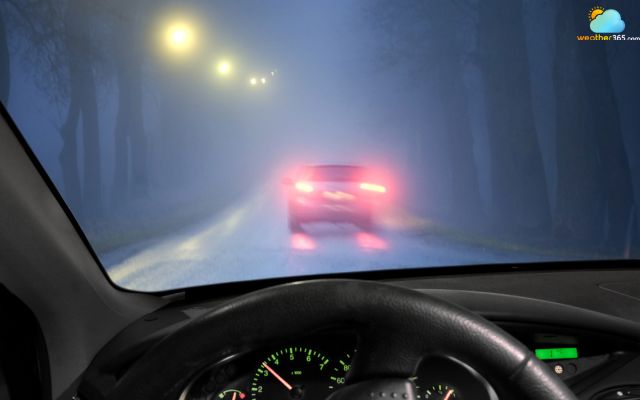
Fog reduces visibility and makes it harder to see road markings
In fact, many drivers instinctively slow down too much or speed up when they think visibility has slightly improved, creating sudden speed differences that lead to collisions.
Moisture from fog can also make roads slick, increasing the likelihood of skidding or hydroplaning.
Check out our detailed guide on What is fog to grasp the science behind this mysterious phenomenon.
Common mistakes while driving in the fog
In fact, even the most cautious drivers can make errors when faced with reduced visibility.
Recognizing these common mistakes while driving in fog can prevent accidents and save lives.
Use high beams
It’s a natural instinct to turn on your high beams when you can not see well, but in fog, that’s one of the worst things you can do!
The light from high beams reflects off the tiny water droplets in the fog, bouncing back into your eyes and reducing visibility even further.
Stick to low beams or fog lights instead.
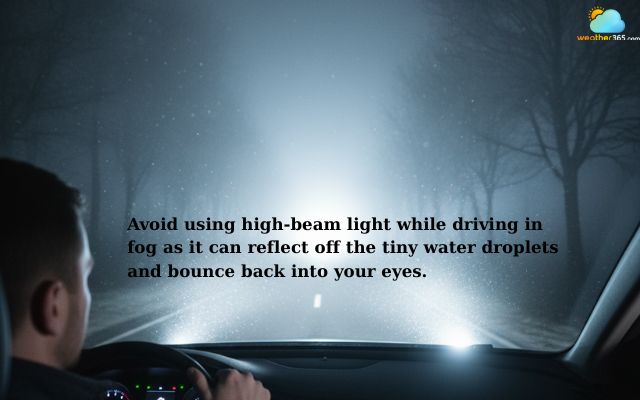
Avoid using high-beam lights while driving in fog
Speeding
Fog can distort your sense of speed. You might feel like you are driving slowly when, in fact, you are moving too fast for the conditions.
This misjudgment often leads to chain-reaction crashes. Always check your speedometer rather than relying on your instincts.
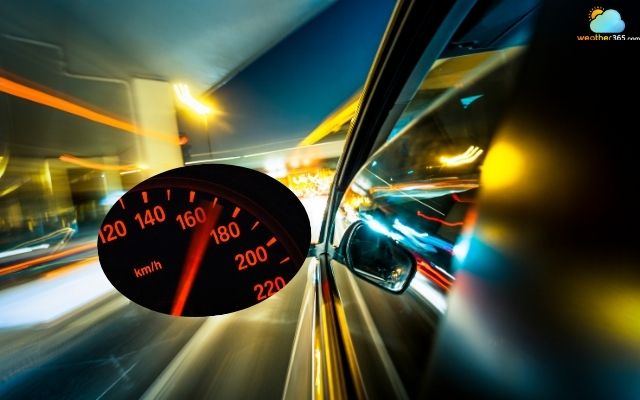
Always check your speedometer while driving in fog
Tailgating
Following too closely drastically reduces your reaction time. In fog, you might not notice brake lights ahead until it’s too late.
Maintain a longer following distance, at least double your normal gap.
Distracted driving
Using your phone, blasting loud music, or fiddling with the GPS divides your attention when you need it most.
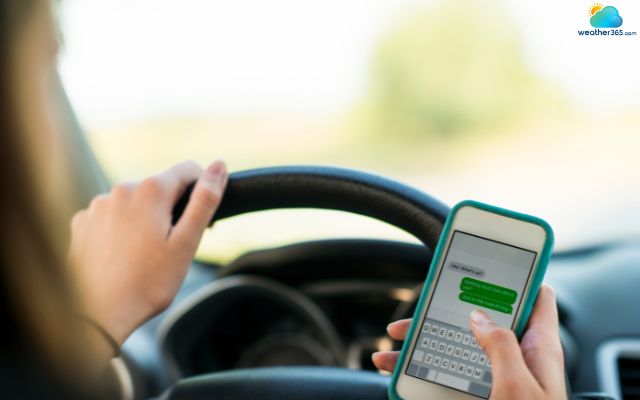
Avoid using your phone while driving in fog
In foggy conditions, sound cues like approaching vehicles can be just as valuable as visual ones.
Keep distractions minimal and stay alert.
Sudden movements
Abrupt braking or swerving can confuse drivers behind you, especially if they can’t see your car’s movements clearly.
Gentle, deliberate steering and braking are key to maintaining safety and stability.
How to Drive in Fog?
We’ve talked about what not to do when driving in fog: high beams, speeding, and tailgating.
But what about the right way to handle it? Learning how to drive in fog safely below:
Before You Drive
Remember to get ready before entering foggy conditions. All you should do is:
Check the lighting system
Ensure that the headlights (low beam), taillights, brake lights, and fog lights (if your vehicle has them) are all working properly.
Clean the lamp lenses: dirt or a thin water film can greatly reduce the brightness of the lights.
If you can adjust the beam light, make sure the light is not glaring too high, only illuminate low to avoid reflecting back in the fog
Do not just turn on the parking lights without turning on the headlights (it is not bright enough and can make it difficult to see, as well as for others to see you).
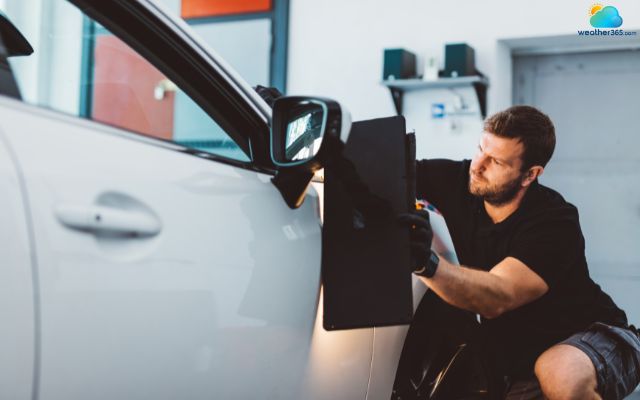
Fully check your vehicle before driving in fog
Check the windshield, mirror, and defogging system
Use the windshield heading function, window heating, or the dry air intake mode to keep the windshield and windows from fogging up.
Clean both side mirrors and the rearview mirror (dirty mirrors can cause glare when light reflects off moisture).
Ensure that the wipers and windshield washer system are working properly. If fog or water accumulates on the windshield, there should be a way to wipe it away promptly.
Plan your route & estimated time
Check the weather forecast and any fog warnings before departure. If dense fog is predicted, consider postponing or choosing a different route.
Avoid routes with many curves, mountain roads, bridges, or low-lying areas prone to fog.
Allow extra time: in foggy conditions, speeds will be lower than normal, so plan to travel more slowly.
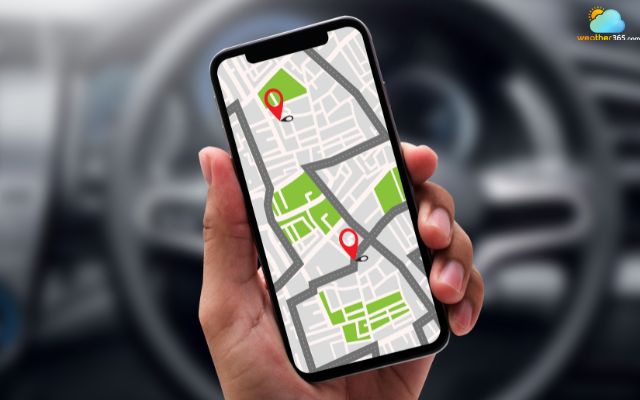
Avoid routes with many curves before driving in fog
Minimize distractions
Before leaving: Turn off music, put your phone on silent or in glow compartment, and avoid using it while driving.
Ask passengers to remain quiet or help you observe if needed.
If the vehicle has support systems (GPS, navigation), set them up before entering foggy areas, and avoid adjusting them while driving.
Stay calm and focused
Take deep breaths, stay calm, and stay focused as fog often causes stress and triggers strong reflexes.
Be aware that you will need to drive more slowly and less decisively.
While Driving
Let’s see what you need to do to stay safe while driving in fog:
Slow down & maintain steady throttle
Reduce speed much more than usual and drive at a speed that allows you to stop within your current visibility (Fog makes it difficult for your eyes to gauge distant objects, you may feel like you are going slower than you actually are).
Avoid using cruise control in fog because you need full control of your speed and quicker reactions.
Do not accelerate suddenly. If you want to slow down, do it gradually, checking mirrors and surroundings before maneuvering.
Use light properly
Turn on headlights (low beam) and fog lights if available (do not use high beams as the light will reflect off water vapor in the air, and reducing visibility)
Do not use only fog lights or parking lights because they don’t provide enough visibility for you or others to see your vehicle.
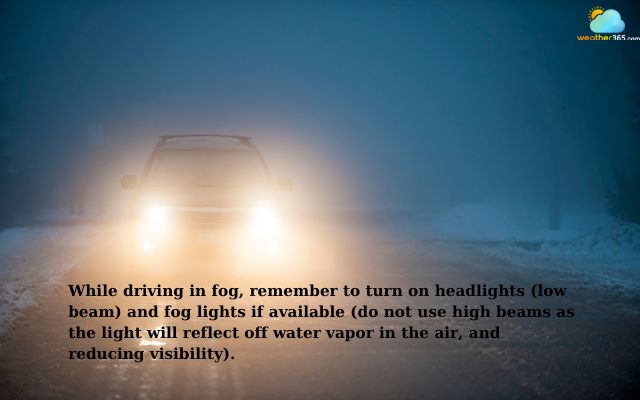
Turn on headlights and fog lights if available
Increase distance & maintain a stable position
Increase the safe distance from the vehicle in front to at least twice the normal distance, or more (5 seconds or more) to have time to react if the car ahead stops suddenly.
Use the right lane line (fog line) or roadside reflectors as a reference point to keep your vehicle from drifting into the opposite lane.
Avoid looking at the center line as it may lead you into oncoming traffic.
Avoid changing lanes or overtaking other vehicles unless absolutely necessary (in fog, sudden steering is very dangerous).
Turn on your turn signals earlier than usual to give the car behind time to react.
Using sound & other senses
Lower the window a little when you need to go through an intersection or a place with poor visibility so you can hear other vehicles from afar.
Turn off the radio and other noisy sources in the car so you can hear the engine, tire noise, and car horns from a distance.
If You Need to Stop
Sometimes, the safest option is to pull over and wait for the fog to lift. Here’s how to do it correctly:
Pull over completely: Find a safe place to pull completely off the roadway, such as a parking lot or driveway.
Turn on hazard lights: Once stopped, turn on your hazard lights to make your vehicle visible to other drivers.
Keep your headlights off: Turning off your headlights when pulled over prevents them from looking like a moving vehicle to other drivers, but ensures your hazard lights are visible.
(You might also like: Boating in fog)
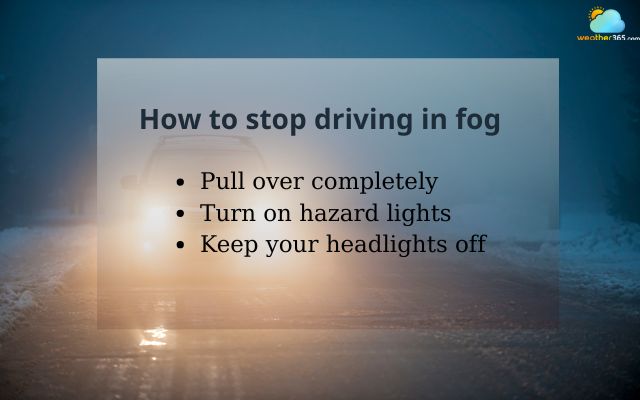
Find a safe place to pull completely off the roadway
Conclusion
Knowing how to drive in fog is essential for anyone. Foggy conditions demand extra patience, slower speeds, and heightened awareness. By understanding fog hazards, avoiding common mistakes, and applying the right driving techniques, you’ll navigate even the thickest fog with confidence and control.
Frequently Asked Questions (FAQs)
Related post

13 Interesting Fact about Fog: You Will Be Surprised At The Last One
 246
246
 8
8
 4.9
4.9
 13/04/2026

Boating in Fog: How to Navigate a Boat in Foggy Conditions and Stay Safe
205
8
4.7
01/04/2026

Foggiest Cities in the US: Top 10 Foggy Hotspots to Explore
204
8
4.8
01/04/2026

8 Comment
Elise Gross
What should you do if the fog becomes too thick to continue driving?
weather365
Pull completely off the road into a safe place, turn on your hazard lights, and wait for visibility to improve.
Scarlett Barrett
Is it really necessary to leave twice as much distance from the car ahead?
weather365
Yes. A longer gap gives you more time to react if the vehicle ahead suddenly brakes.
The tip about avoiding sudden lane changes is something I’d definitely keep in mind. You can’t see other cars as clearly in thick fog.
Maeve James
Should you use cruise control when driving through dense fog?
weather365
It’s better to avoid it. You need full control of your speed and quick reactions when visibility is poor.
Troy Porter
Why is it better to use low beams instead of high beams in fog?
weather365
High beams reflect off the tiny water droplets and create glare, which can reduce visibility even more.
Leave a comment
Your email address will not be published. Required fields are marked *