




Foggiest Cities in the US: Top 10 Foggy Hotspots to Explore


You might see fog a million times, but did you know what the foggiest cities in the US are? Some places do not just have fog, but they seem to live in a cloud. Scrolling down as we will reveal the top 10 foggiest cities in the US, explain where fog mostly occurs, and share why certain regions are prone to low visibility. Let’s dive into the mist!
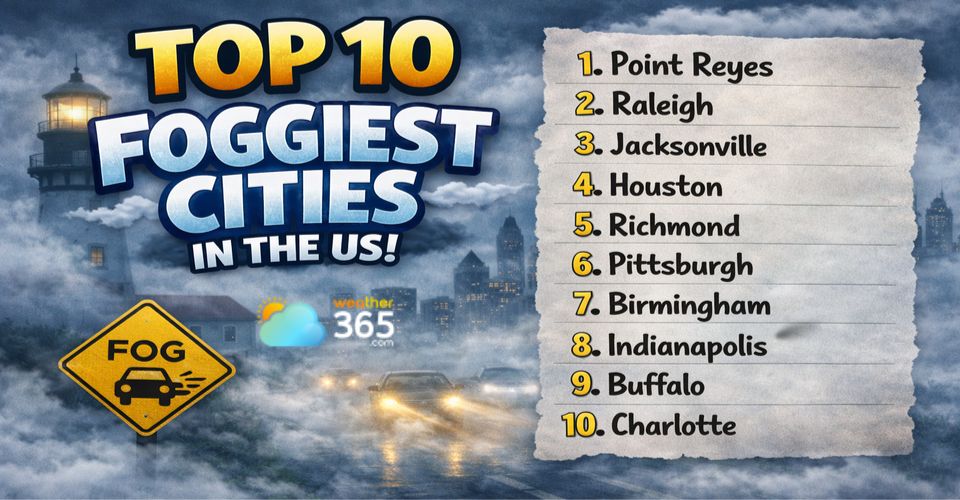
What is the foggiest city in the US?
Take away
Here are several numbers about current fog conditions in the US:
Each year, fog causes about 38,700 traffic crashes, over 600 fatalities, and 16,000 injuries in the US.
Many of the foggiest cities lie in humid, low-lying, or riverine regions
Coastal and lake-influenced cities see more fog from sea or lake effect
Some inland cities like Richmond, Pittsburgh, and Birmingham have more foggy days due to local geography and cooling patterns
Freezing fog in colder regions and rare super fog events can reduce visibility to near zero, creating extremely dangerous driving conditions.
The National Weather Service issued Dense Fog Advisories when visibility drops below ¼ mile.
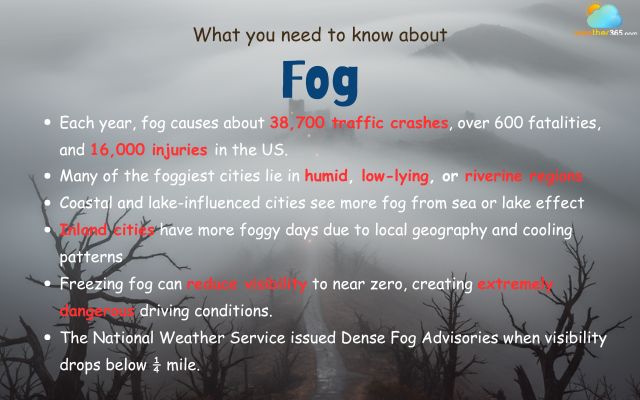
What you need to know about fog
Where does fog mostly occur?
Fog formation depends on temperature, humidity, and geography. These are the main areas in the US where fog tends to appear most often:
Coastal areas: Common along the Pacific Coast (California, Oregon, Washington), where cold currents like the California Current meet warm air masses.
Valleys and low-lying areas: Cool air tends to sink into valleys overnight, causing radiation fog in places like Appalachia or the Central Valley of California.
Mountainous regions: Unslope fog often forms when moist air rises along mountain slopes, cooling and condensing as it climbs. Areas around the Rocky Mountains and the Blue Ridge Mountains often see this type of fog.
Over water bodies in cold weather: Steam fog develops when cold air moves over warmer lakes or rivers, common in Great Lakes states during winter.
Northern plains: Flat terrains like the Dakotas or Nebraska often experience advection fog during cold, humid air movements.
To learn why fog often drops by these regions, read our full guide on What is fog!
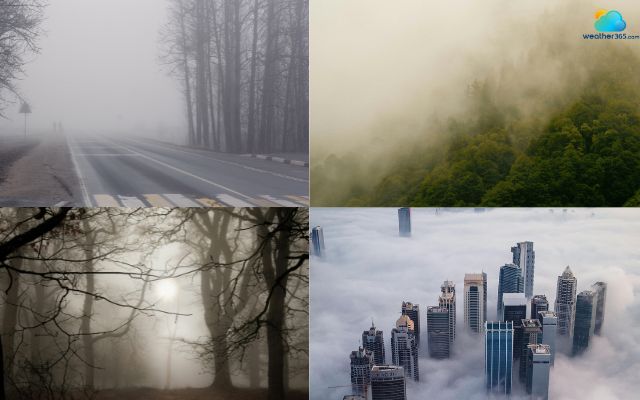
Fog mostly occurs in places with high humidity and temperature differences
Foggiest Cities in the US
Now let's see what the foggiest cities in the US are!
Point Reyes, California
Rank the foggiest city in the US is Point Reyes in California.
Point Reyes is often recognized as the foggiest place in the US, with around 200 foggy days each year.
Its location on the Pacific Coast exposes it to the cold California Current, which cool warm and moist air often move inland.
When this air condenses, a thick marine layer forms, rolling across the cliffs and grasslands almost daily.
Coastal winds then push this fog deeper inland, especially in summer, creating the iconic misty landscapes.
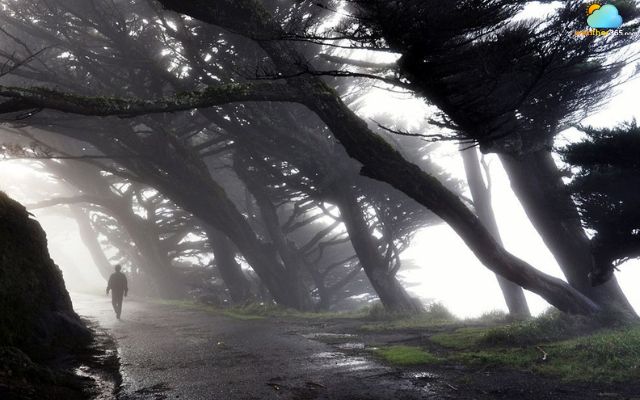
Dense fog in Point Reyes National Seashore
Raleigh, North Carolina
Raleigh in North Carolina experiences nearly 198 foggy days per year, mostly during fall and winter.
The city’s humid subtropical climate, combined with calm, clear nights, allows the ground to cool rapidly, reaching the dew point by dawn.
This leads to radiation fog, which is especially dense in valleys and near rivers.
Morning commuters often find low visibility across the region before sunlight gradually lifts the mist.

A foggy path in Raleigh
Jacksonville, Florida
Jacksonville in Florida is also one of the foggiest cities in the US, with around 198 foggy days annually. Fog here often occurs between late autumn and early spring.
Located between the Atlantic Ocean and the St. John River, the city often sees sea fog and ground fog when warm and moist air meets cooler air above land or water.
The flat coastal terrain and high nighttime humidity allow fog to linger through early mornings, wrapping the city’s bridges and marshes in a soft haze.
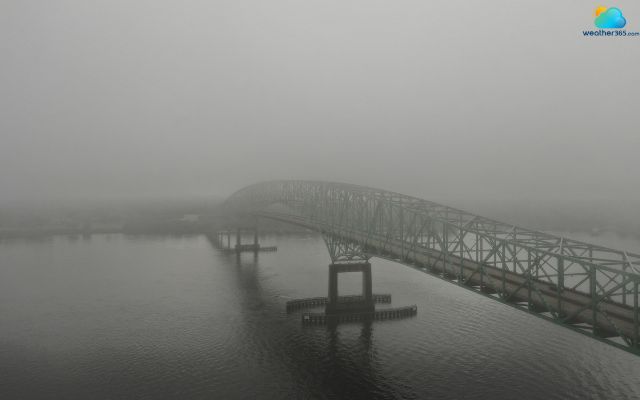
Fog lingers in the Main Street Bridge, Jacksonville
Houston, Texas
Houston faces around 194 foggy days each year, mostly from November to February.
Its proximity to the Gulf of Mexico makes it a magnet for advection and radiation fog, as warm, moisture-rich air flows over cooler ground surfaces overnight.
Temperature fluctuations, combined with pollution particles in the air, help fog droplets form more easily.
This creates frequent low-visibility mornings that can affect traffic and flight operations across the city.
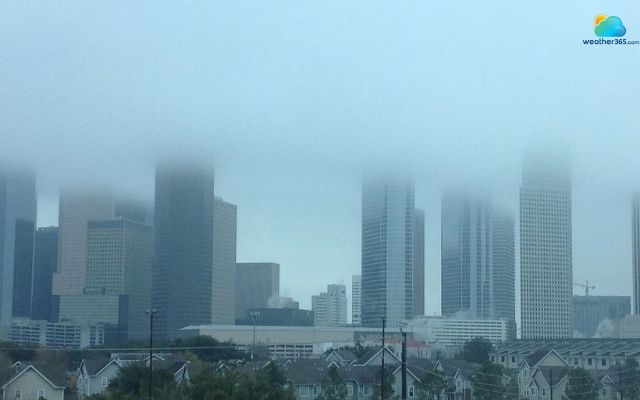
Fog in Houston
Richmond, Virginia
Richmond, located along the James River, sees about 185 foggy days each year.
The city’s basin-like geography and river moisture make it prone to valley and river fog, particularly during the transitional seasons.
Cool nights followed by humid mornings often trap mist in low-lying areas, giving the city a calm, ghostly appearance until the sun burns it away.
This recurring fog contributes to Richmond’s moody yet picturesque landscape.
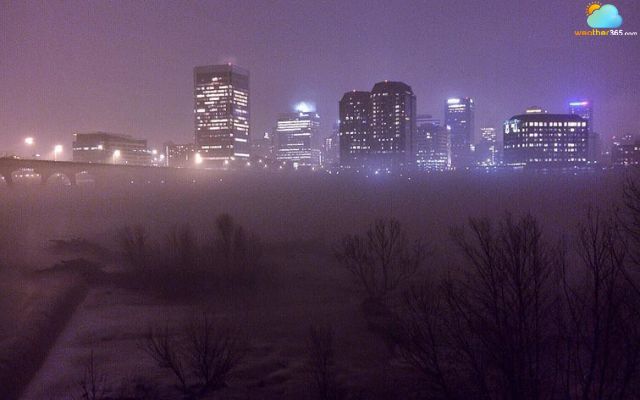
Richmond is one of the foggiest cities in the US
Pittsburgh, Pennsylvania
Pittsburgh experiences about 183 foggy days per year, making it one of the foggiest inland cities in the US.
Surrounded by three rivers - the Allegheny, Monongahela, and Ohio, and enclosed by steep hills, the city’s unique topography traps cool, moist air near the surface.
When nighttime temperatures drop, fog frequently develops and lingers through early morning.
The combination of river moisture, industrial humidity, and calm winds often creates dense, low-lying fog that veils the skyline in a silvery mist, especially during autumn and winter.
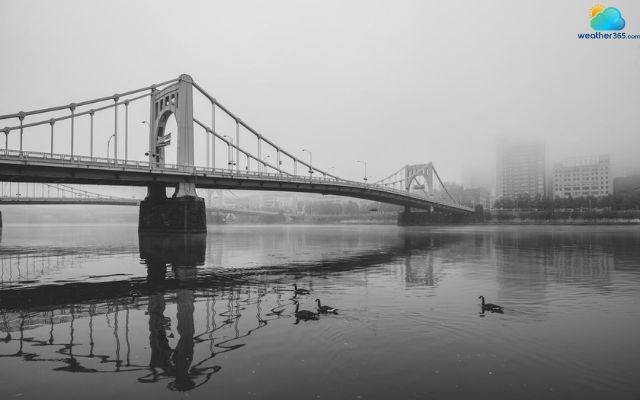
Pittsburgh experiences about 183 foggy days annually
Birmingham, Alabama
Birmingham records nearly 178 foggy days annually, largely during late fall and winter.
The city’s location in a low basin and its humid subtropical climate make it ideal for radiation fog formation.
On clear nights, heat escapes quickly from the ground, cooling the air and leading to condensation.
Early mornings often bring a soft fog that drapes the city’s hills and valleys, gradually clearing as the temperature rises.

Birmingham’s frequent fog due to its location
Indianapolis, Indiana
Indianapolis experiences roughly 175 foggy days per year, primarily in the colder months.
Its position in the Midwest exposes it to frequent temperature inversions, where cold air gets trapped near the ground under a layer of warmer air.
Combined with high winter humidity and light winds, this creates ideal conditions for radiation and advection fog.
Flat terrain allows the mist to spread widely, turning highways and farmlands into ghostly, low-visibility zones before sunrise.
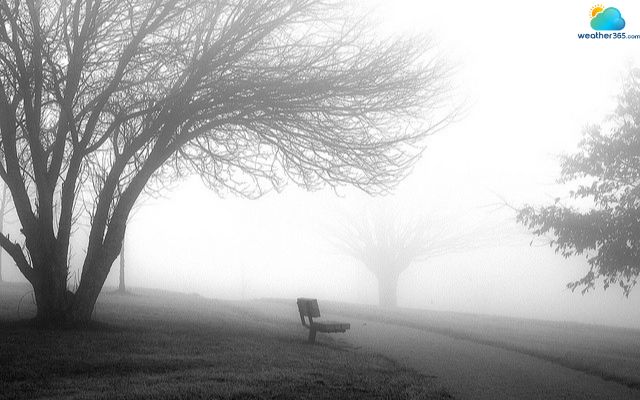
Thick fog in Indianapolis, Indiana
Buffalo, New York
Buffalo sees around 174 foggy days each year, heavily influenced by its proximity to Lake Erie.
When cold air flows over the relatively warm lake surface, steam fog often develops, especially in late fall and early winter.
The moisture from the lake rises into the cold air, condensing into a thick, milky fog that can blanket the waterfront and nearby neighborhoods.
This “lake effect” fog, along with heavy cloud cover, gives Buffalo its trademark gray, misty mornings.
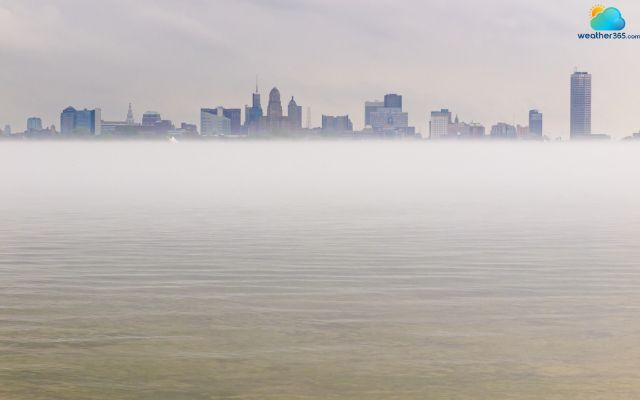
Fog over a river in Buffalo, New York
Charlotte, North Carolina
Charlotte experiences close to 168 foggy days per year, most often in the cooler months.
The city’s location within the Piedmont region, between the Appalachian Mountains and the Atlantic Coastal Plain creates a mix of humid and stable air masses.
Overnight cooling frequently produces radiation fog, especially in low-lying and suburban areas.
The fog is typically shallow but can be dense enough to limit visibility during early commutes before the sun disperses it.
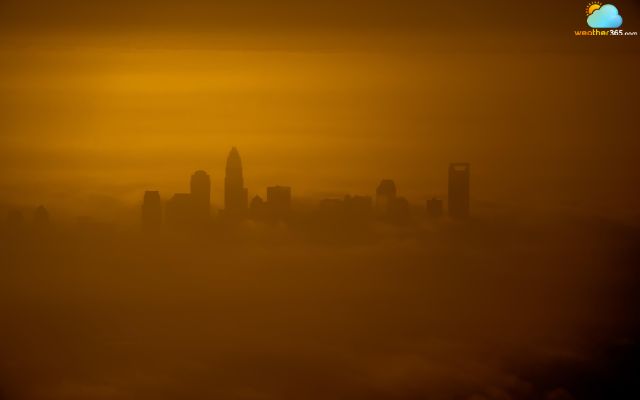
Charlotte often experiences fog in cooler months
Conclusion
That wraps up our look at the foggiest cities in the US! From Point Reyes to Buffalo, these fog-prone areas show how moisture, temperature, and geography blend to shape local weather. Keep an eye on Weather365 forecast if you live near the coast or rivers, tomorrow’s sunrise might come wrapped in mist.
Frequently Asked Questions (FAQs)
Related post

13 Interesting Fact about Fog: You Will Be Surprised At The Last One
 223
223
 0
0
 4.9
4.9
 13/04/2026
Foggiest Places on Earth: What are the Top 10 Areas with the Densest Fog?
215
0
5.0
06/04/2026

What Is Fog? Understand Its Formation, Causes, and Impacts
201
0
4.6
06/04/2026

0 Comment
Leave a comment
Your email address will not be published. Required fields are marked *