




Why Is Air Pollution Worse In Winter? Explore 3 Main Factors


Do you know why is air pollution worse in winter? This is a common question, as many cities record noticeably higher pollution levels during colder months. In fact, winter air quality can drop by up to 30–50% in some urban areas due to trapped emissions and weather conditions. Scrolling down, you’ll discover the key causes and practical ways to protect your health.
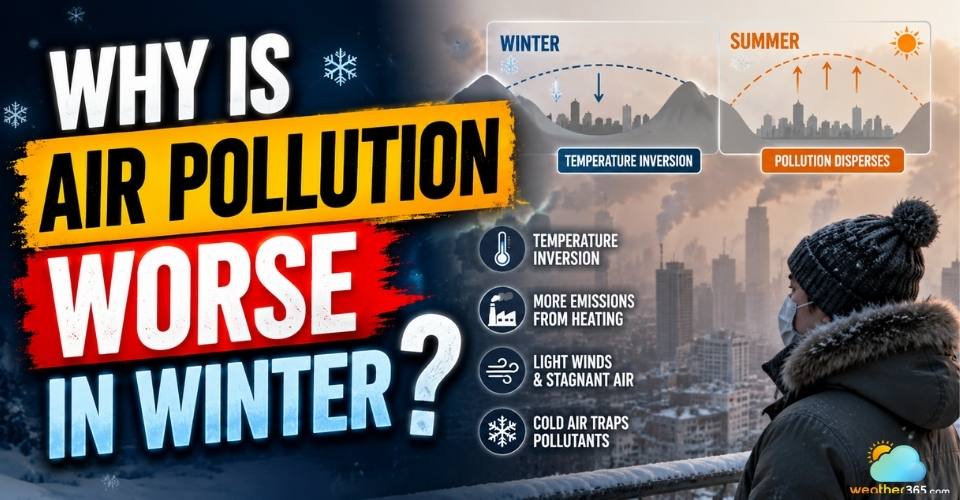
Why is air pollution worse in winter
Why is air pollution worse in winter?
Air pollution is worse in winter mainly because cold weather traps pollutants near the ground, limits natural air circulation, and increases human emissions from heating and daily activities.
These combined factors make it harder for polluted air to disperse, causing it to build up more quickly than in warmer seasons.
Cold Air Traps Pollution
In winter, a weather condition called temperature inversion often occurs, where a layer of warm air sits above colder air near the ground.
This acts like a “lid,” preventing polluted air from rising and spreading.
As a result, emissions from vehicles, factories, and heating systems stay trapped close to where people live and breathe, making air quality worse in a short time.
If you live in mountain-basin areas prone to strong inversions, make sure to check today's Salt Lake City weather forecast and inversion alerts before planning heavy outdoor workouts.
Drier Air Holds Pollution
Winter air is usually much drier, which reduces the natural ability of the atmosphere to cleanse itself.
Without enough moisture or rainfall, fine particles such as dust, smoke, and soot remain suspended in the air longer.
This leads to higher concentrations of PM2.5 and other harmful pollutants, which can easily enter the lungs and affect health.
Winter Habits Increase Pollution
Human behavior also contributes significantly to winter air pollution.
People tend to use more heating systems, especially those that burn fossil fuels or wood, which release additional emissions.
At the same time, colder weather can lead to increased traffic congestion as more people rely on private vehicles.
These combined activities add extra pollutants into already stagnant air, worsening overall air quality.
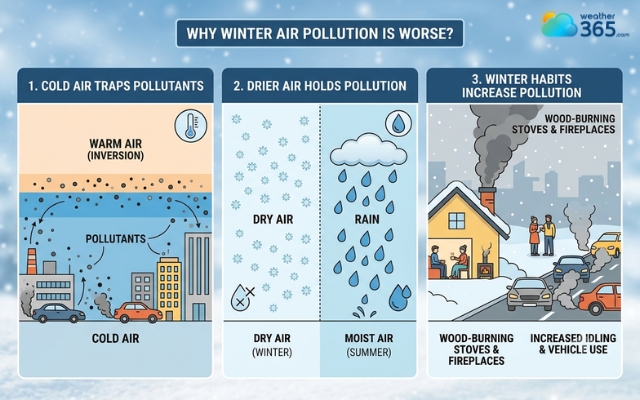
Cold weather traps pollutants in the air
Air pollution varies by region
Yes, air pollution levels can vary significantly from one region to another.
While winter often worsens air quality, the severity depends on local weather patterns, geography, population density, and pollution sources.
Cities located in valleys or surrounded by mountains are often more vulnerable to winter pollution. These geographical features can limit airflow, allowing pollutants to accumulate near the ground for longer periods.
You can view real-time Santa Clara weather conditions and wind speeds to see how regional mountain topography impacts local air movement.
In contrast, areas with stronger winds tend to experience better air circulation, which helps disperse pollutants more effectively.
The main sources of pollution also differ by region. Urban areas typically face higher emissions from traffic, industrial activities, and energy consumption.
Rural regions may have cleaner air overall, but some still experience seasonal pollution from agricultural burning, wood stoves, or nearby industrial facilities.
Read more: What causes air pollution
Climate plays a role as well.
Regions with long, cold winters often see higher emissions from residential heating, while milder climates may experience less seasonal variation in air quality.
As a result, two locations can have very different pollution levels even during the same season.
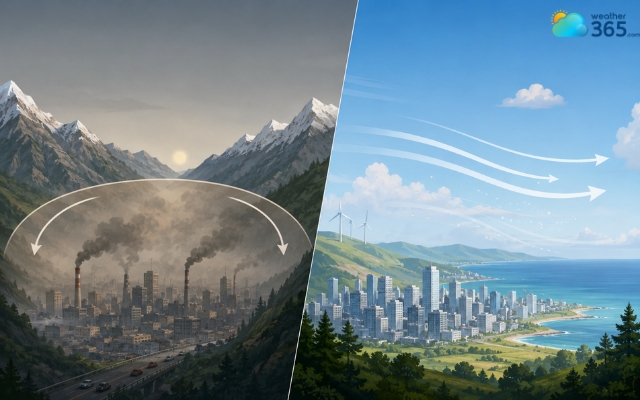
Air pollution levels can vary from one region to another
Relationship among weather, climate, and air pollution
Weather, climate, and air pollution are closely connected because atmospheric conditions affect how pollutants are produced, dispersed, and removed from the air.
Weather influences air quality on a daily basis. Factors such as temperature, wind, humidity, and rainfall determine whether pollutants accumulate or disperse.
For example, strong winds can carry pollutants away from populated areas, while calm conditions allow them to build up.
Rain can help wash pollutants out of the atmosphere, temporarily improving air quality.
Climate affects air pollution over longer periods.
Regions with cold winters may experience more emissions from heating systems, while hot, sunny climates can encourage the formation of ground-level ozone, a harmful air pollutant.
Seasonal climate patterns also influence how often pollution episodes occur throughout the year.
The relationship works both ways.
Air pollution can also affect weather and climate. Certain pollutants, such as greenhouse gases, trap heat in the atmosphere and contribute to climate change.
Other particles, known as aerosols, can influence cloud formation, rainfall patterns, and even local temperatures.
Because weather, climate, and air pollution constantly interact, changes in one can impact the others.
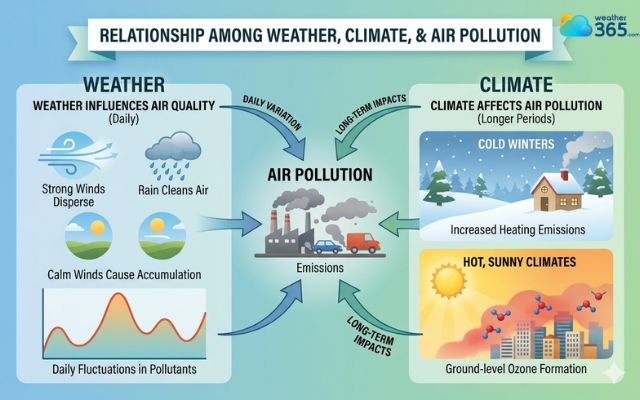
Weather, climate, and air pollution are closely connected
How to reduce air pollution in winter?
The best way to reduce air pollution in winter is to lower emissions from heating, transportation, and energy use while improving indoor air quality.
Although weather conditions are harder to control during winter, small changes in daily habits can help reduce pollution and limit your exposure to harmful particles.
Use cleaner heating options whenever possible. Replacing wood-burning stoves or older heating systems with cleaner, energy-efficient alternatives can significantly reduce emissions.
Reduce unnecessary car trips. Vehicle exhaust is a major source of winter pollution. Walking, cycling, carpooling, or using public transportation can help lower the amount of pollutants released into the air.
Improve home ventilation. Many people keep windows closed during cold weather, which can trap pollutants indoors. Briefly opening windows or using a proper ventilation system can help maintain healthier indoor air.
Use an air purifier. A quality air purifier with a HEPA filter can remove fine particles, dust, and other pollutants that accumulate indoors during winter.
Monitor local air quality. Checking the Air Quality Index (AQI) allows you to plan outdoor activities when pollution levels are lower and avoid unnecessary exposure during high-pollution days.
Reducing winter air pollution requires both personal actions and broader community efforts, but even small changes can make a meaningful difference for your health and the environment.
For more practical tips and long-term solutions, read our guide on How to Reduce Air Pollution.
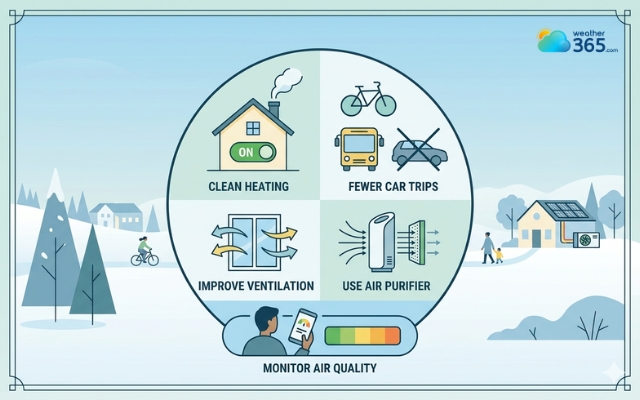
Lower emissions to reduce air pollution in winter
Closing thoughts
So, why is air pollution worse in winter? The answer lies in a combination of weather conditions and increased human activities that allow pollutants to build up more easily. By understanding these seasonal factors and taking simple steps to reduce emissions and exposure, you can help protect both your health and the environment during the colder months.
Frequently Asked Questions (FAQs)
Related post
Symptoms of Poor Air Quality and Their Impact on Your Health
 28
28
 0
0
 4.6
4.6
 06/09/2026

What AQI Is Unhealthy to Run In? Understanding Air Quality Risks
22
0
4.6
08/09/2026
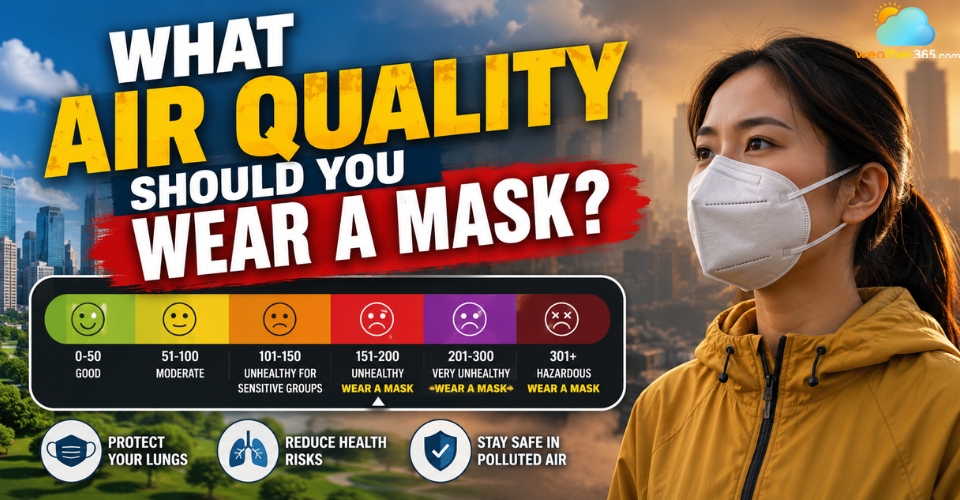
What Air Quality Should You Wear a Mask? AQI Levels & Safety Tips
22
0
4.9
08/09/2026

0 Comment
Leave a comment
Your email address will not be published. Required fields are marked *