



What Air Quality Should You Wear a Mask? AQI Levels & Safety Tips


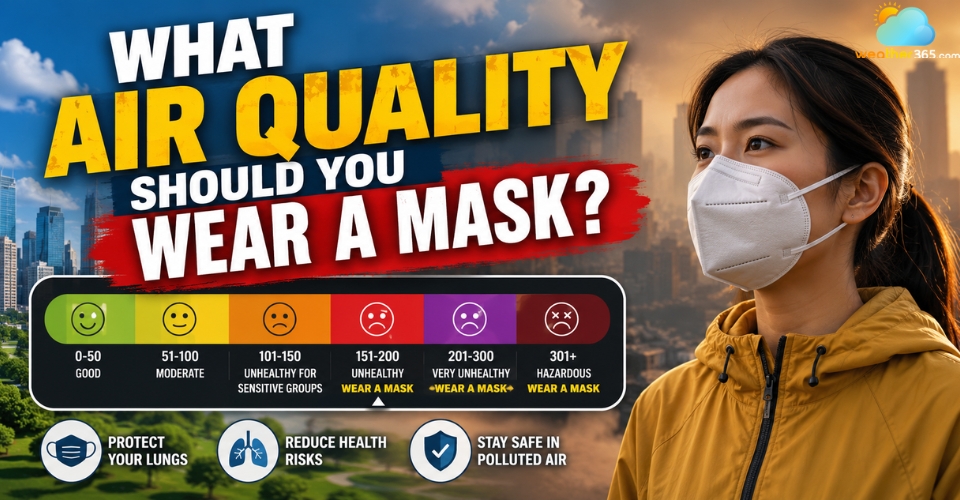
What air quality should you wear a mask? Health experts generally recommend wearing a high-quality mask when AQI reaches 101 or higher, especially during wildfire smoke, smog, or high-pollution days. In this guide, you'll learn AQI thresholds, health risks, and how to choose the right mask for effective protection.
What air quality should you wear a mask
- What is air quality index (AQI)?
- What air quality should you wear a mask?
- AQI 0-100: Generally No Mask Needed
- AQI 101–150: Sensitive Groups Should Wear a Mask
- AQI 151–200: Most People Should Wear a Mask Outdoors
- AQI 201–300: Mask Strongly Recommended for Everyone
- AQI Above 300: Avoid Outdoor Exposure
- Other Situations When You Should Wear a Mask
- Choose the right mask to wear during polluted air
What is air quality index (AQI)?
The Air Quality Index (AQI) is a scale used to show how clean or polluted the air is and what potential health risks it may pose.
AQI turns complex air pollution data into a simple number that helps people quickly understand whether outdoor air is safe.
Government agencies and environmental organizations use this index to report daily air quality conditions and issue health warnings when pollution levels rise.
The AQI is calculated based on several common air pollutants, including:
Fine particulate matter (PM2.5)
Coarse particulate matter (PM10)
Ground-level ozone
Nitrogen dioxide
Sulfur dioxide
Carbon monoxide
As the AQI number increases, air pollution becomes more severe and the potential health effects become greater.
This is why AQI is often used to determine when precautions, such as limiting outdoor activities or wearing a mask, may be necessary.
Air Quality Scale Explained
The AQI scale is divided into six categories that indicate different levels of air quality:
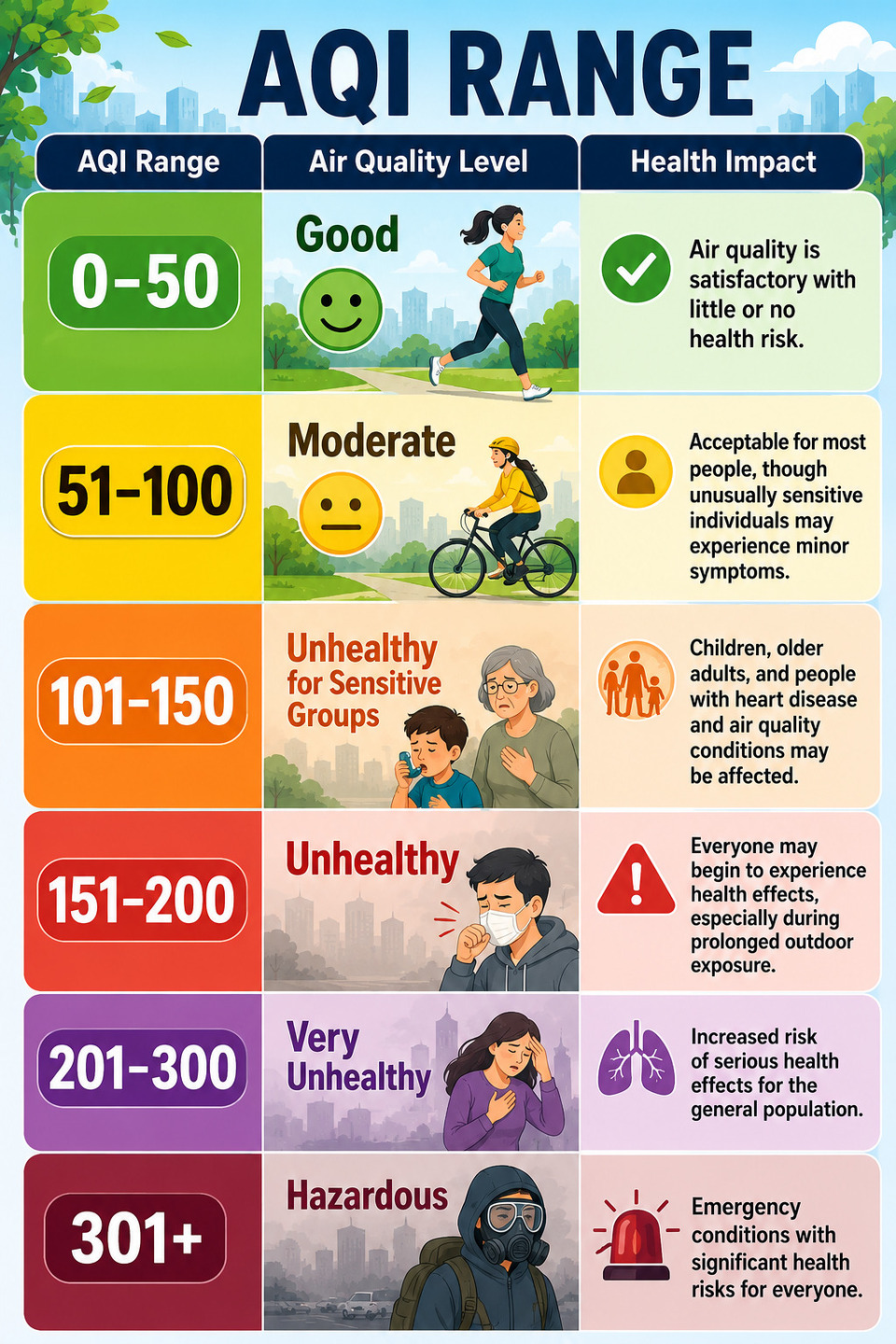
Air quality range and its health impact
What air quality should you wear a mask?
You should start wearing a mask when the AQI reaches 101 or higher, especially if you belong to a sensitive group or plan to spend extended time outdoors.
Once air quality moves beyond the "Moderate" category, pollution levels can begin affecting health.
Fine particles such as PM2.5 are small enough to travel deep into the lungs and, in some cases, enter the bloodstream.
Wearing a properly fitted mask can help reduce the amount of harmful pollutants you breathe in.
However, the need for a mask isn't the same at every AQI level.
Here's a practical guide to help you decide.
AQI 0-100: Generally No Mask Needed
When AQI is between 0 and 100, air quality ranges from Good to Moderate. Most people can safely enjoy outdoor activities without wearing a mask.
That said, individuals with severe asthma or other respiratory conditions may still choose to monitor air quality closely, especially if pollution levels are approaching the upper end of this range.
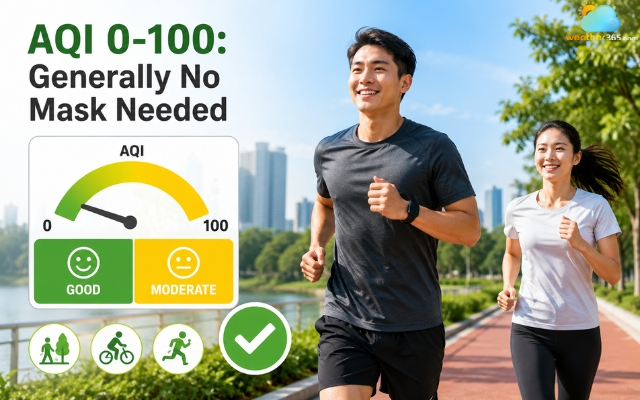
You don’t need to wear a mask in 0-100 AQI
AQI 101–150: Sensitive Groups Should Wear a Mask
This category is labeled Unhealthy for Sensitive Groups, making it the first AQI range where mask use becomes important.
People who should consider wearing a high-quality mask include:
Children and teenagers
Older adults
Pregnant women
People with asthma, COPD, or other lung diseases
Individuals with heart conditions
Even healthy adults may notice mild symptoms of poor air quality during prolonged outdoor activities, such as throat irritation or coughing.
In historic industrial hubs like Pennsylvania, industrial emissions and river valley topography often push the air quality in Pittsburgh into this moderate-to-unhealthy orange zone.
If you live in this region, make sure to check the daily AQI and grab a certified mask before heading out.
Quickly tracking air quality in Pittsburgh to protect your health!
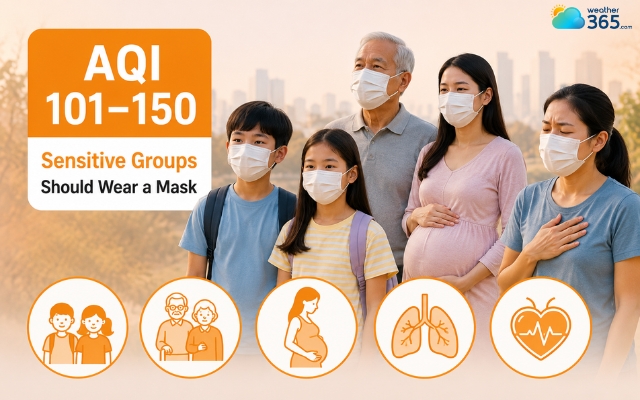
Older adults should wear a mask in 101-150 AQI
AQI 151–200: Most People Should Wear a Mask Outdoors
At this stage, air quality is considered Unhealthy for everyone.
Pollution levels are high enough that even healthy individuals may experience symptoms such as:
Eye irritation
Sore throat
Persistent coughing
Shortness of breath during exercise
Headaches or fatigue
If you need to spend time outdoors, especially for work, commuting, or exercise, wearing a certified respirator is strongly recommended.
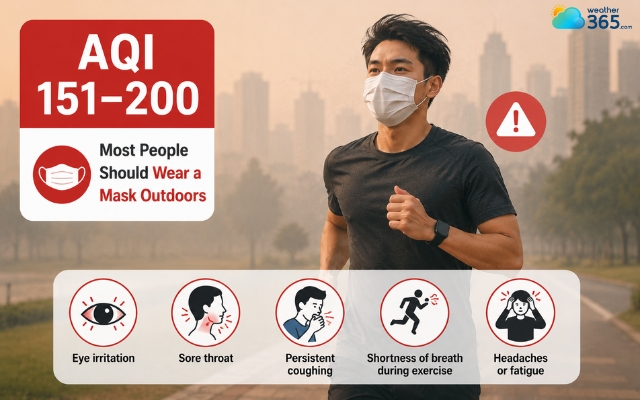
Everyone should wear a mask in 151-200 AQI
AQI 201–300: Mask Strongly Recommended for Everyone
An AQI above 200 falls into the Very Unhealthy category.
At these pollution levels, health risks increase significantly, and prolonged exposure can affect both respiratory and cardiovascular health.
Outdoor activities should be reduced whenever possible.
If you must go outside, wear a properly fitted respirator such as an N95, KN95, KF94, or FFP2 mask to help filter harmful particles.
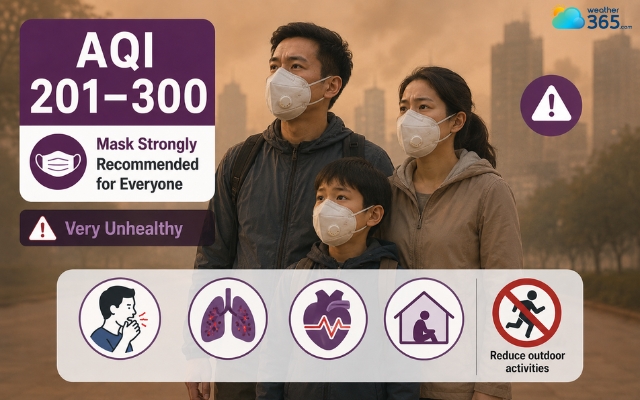
You should restrict outdoor activities in 201-300 AQI
AQI Above 300: Avoid Outdoor Exposure
When AQI exceeds 300, air quality reaches the Hazardous category.
These conditions are often associated with severe smog events, dust storms, or wildfire smoke.
Health warnings typically apply to the entire population, not just vulnerable groups.
During hazardous air quality events:
Stay indoors whenever possible
See more: Indoor air pollution vs outdoor
Keep windows and doors closed
Use an air purifier if available
Avoid outdoor exercise
Wear a certified respirator if outdoor travel is unavoidable
We saw this crisis firsthand during recent historic wildfires, when windblown smoke caused the air quality in San Francisco to skyrocket past the extreme 300 AQI mark, turning the sky orange.
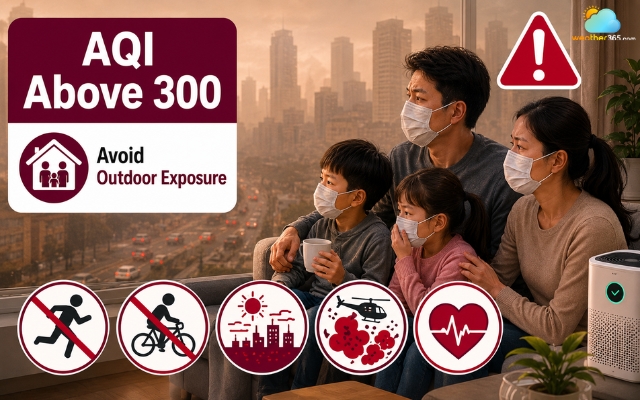
The air is fully polluted when the AQI exceeds 300
Other Situations When You Should Wear a Mask
AQI is a useful guideline, but it's not the only factor to consider. Wearing a mask may also be a good idea when:
Wildfire smoke is visible in the area
You can smell smoke, chemicals, or heavy pollution
Dust levels are unusually high
You have a respiratory condition that makes you sensitive to pollution
You spend several hours outdoors each day
In short, AQI 101 is the key threshold where mask use should start becoming part of your air-quality safety routine.
As pollution levels rise above that point, wearing a high-quality respirator becomes increasingly important for protecting your lungs and overall health.
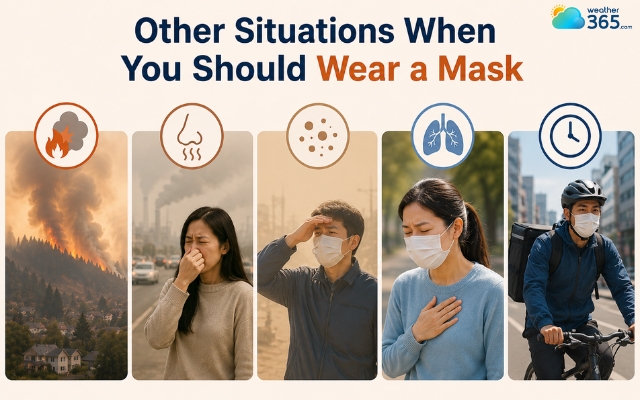
Wear a mask in these situations
Choose the right mask to wear during polluted air
The best mask for polluted air is a certified respirator that filters fine particles and fits securely on your face.
When air quality worsens, wearing the right mask can significantly reduce your exposure to harmful pollutants such as PM2.5.
However, not all masks provide the same level of protection.
Certified Respirator Ratings
Start by checking for recognized certifications such as N95, KN95, KF94, or FFP2.
These respirators are designed to filter most airborne particles that contribute to poor air quality and respiratory irritation.
Airtight Fit & Seal
A mask's effectiveness depends not only on its filter but also on its fit.
A snug seal around the nose, cheeks, and chin helps prevent polluted air from leaking in through gaps.
Exhalation Valve (Optional)
Some masks include an exhalation valve to improve comfort and reduce heat buildup.
While this can make breathing easier during extended wear, it is not essential for pollution protection.
Disposable vs. Reusable
Disposable respirators are convenient and easy to replace, while reusable masks can be more economical for frequent use.
Both options can work well as long as they provide certified filtration and are used correctly.
Some well-known brands that offer high-quality pollution masks include 3M, Honeywell, Moldex, Cambridge Mask, Airinum, and Vogmask.
Regardless of the brand, certification, and proper fit should always be your top priorities.
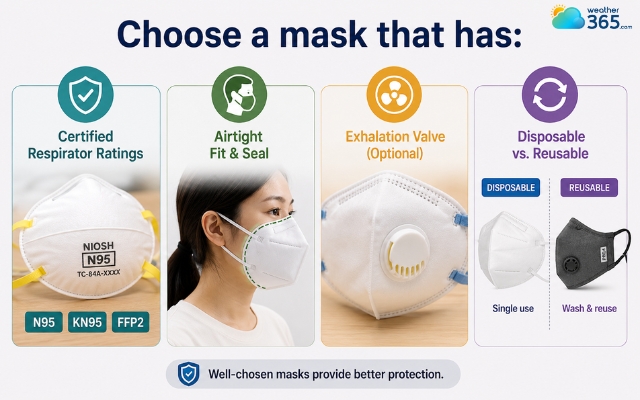
Choose a mask with a certified respirator
Closing thoughts
What air quality should you wear a mask? For most situations, the key threshold is AQI 101 or higher, especially if you're part of a sensitive group or spending extended time outdoors. Choosing a certified respirator with a secure fit can significantly reduce exposure to harmful airborne particles and help protect your long-term respiratory health.
Frequently Asked Questions (FAQs)
Related post
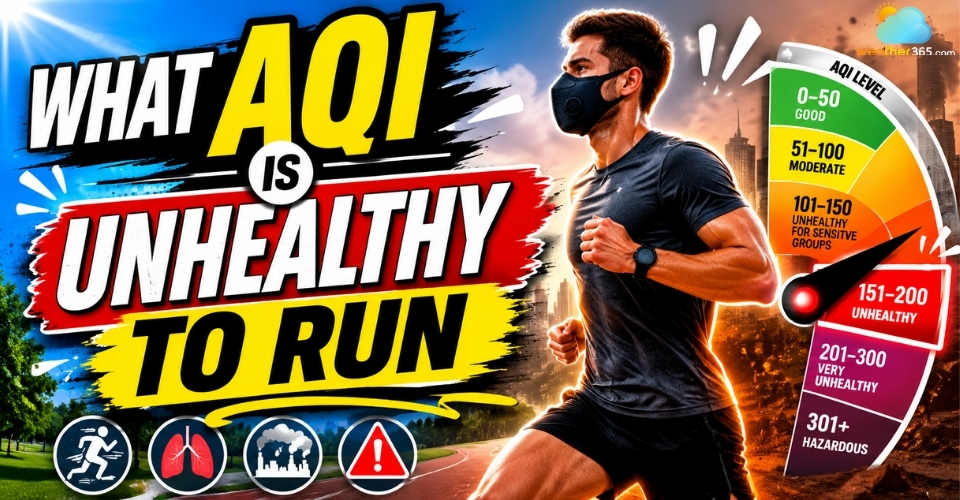
What AQI Is Unhealthy to Run In? Understanding Air Quality Risks
 75
75
 8
8
 4.6
4.6
 15/09/2026
What Is PM2.5? Overview, Health Risks and Top Tips to Reduce PM Levels
73
8
5.0
09/09/2026
What Is an Air Quality Alert? A Complete Guide to AQI Warnings
57
8
4.8
17/09/2026

8 Comment
Jessica Harrison
Checking AQI before a long bike ride or outdoor workout seems especially useful. Spending hours outside is very different from simply walking from one building to another.
Hailey Schultz
One thing I appreciate is that air-quality decisions aren’t simply about whether the sky looks hazy. Having an AQI reading gives you something more objective to work with.
Giselle Holmes
Can opening windows be a bad idea when outdoor air quality is poor?
weather365
Yes. If outdoor pollution levels are high, opening windows can allow polluted air to enter an indoor space. Indoor air quality strategies may need to change depending on the situation.
Hannah Clark
Can indoor air still be affected when outdoor AQI is unhealthy?
weather365
Yes. Outdoor pollutants can enter buildings through open windows, doors, ventilation systems, and other pathways, although indoor concentrations may differ from outdoor levels.
Gracie Anderson
Does a regular cloth mask provide the same protection against fine particles as a properly fitted particulate respirator?
weather365
No. Cloth masks generally provide much less filtration of fine particles. Masks or respirators designed and rated for particle filtration can provide better protection when properly fitted.
Leave a comment
Your email address will not be published. Required fields are marked *