




What Is PM2.5? Overview, Health Risks and Top Tips to Reduce PM Levels


Air pollution affects billions of people every day, but many still ask: what is PM2.5? These tiny airborne particles are among the most dangerous pollutants because they can enter deep into the lungs and even the bloodstream. Understanding PM2.5 can help you make better decisions to protect your health.
Understanding what PM2.5 is
- What is PM2.5?
- Explanation PM2.5
- Difference between PM2.5 and PM10: table
- Difference between PM and AQI
- PM2.5 indicates poor air quality
- How does PM2.5 impact human health?
- How to reduce PM2.5 rating?
- Reduce Vehicle Emissions
- Control Industrial and Energy Emissions
- Reduce Indoor PM2.5 Levels
- Protect Yourself During High PM2.5 Events
What is PM2.5?
PM stands for Particulate Matter, a mixture of tiny solid particles and liquid droplets suspended in the air. These particles vary in size and composition.
PM2.5 refers to particulate matter that is 2.5 micrometers or smaller in diameter.
To put that into perspective, a PM2.5 particle is about 30 times smaller than the width of a human hair.
Because these particles are extremely small, they can remain airborne for long periods and travel hundreds of miles from their source.
Common components of PM2.5 include:
Dust
Soot
Smoke
Sulfates
Nitrates
Organic chemicals
Metal particles
Scientists and environmental agencies monitor PM2.5 closely because it poses significant health risks.
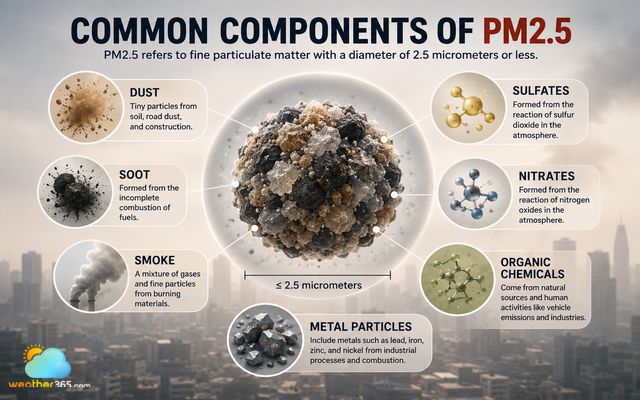
Common components of PM2.5
PM2.5 pollution comes from a wide range of natural and human-made sources.
The largest contributors are combustion processes, including vehicle exhaust, coal-fired power plants, industrial manufacturing, residential wood burning, and agricultural activities.
Wildfires can also release massive amounts of fine particles, causing PM2.5 levels to spike over large regions.
In addition, some PM2.5 forms in the atmosphere through chemical reactions involving gases such as sulfur dioxide and nitrogen oxides.
Because these particles are extremely small and lightweight, they can remain suspended in the air for days and travel hundreds of miles from their source.
Explanation PM2.5
To better understand why PM2.5 is considered a major air pollutant, it helps to compare it with other common air quality measurements.
The sections below explain how PM2.5 differs from PM10, how it relates to AQI, and why elevated PM2.5 levels are often linked to the symptoms of poor air quality.
Difference between PM2.5 and PM10: table
PM2.5 and PM10 are both types of particulate matter, but they differ significantly in size and health effects.
Feature | PM2.5 | PM10 |
Diameter | 2.5 micrometers or smaller | 10 micrometers or smaller |
Visibility | Invisible to the naked eye | Sometimes visible as dust |
Penetration into body | Reaches deep lungs and bloodstream | Mostly affects the upper respiratory system |
Main sources | Vehicle emissions, combustion, smoke | Dust, pollen, mold, construction |
Health risk | Higher | Moderate |
Because PM2.5 particles are much smaller, they generally pose a greater threat to human health than PM10.
Difference between PM and AQI
PM (Particulate Matter) refers to tiny particles suspended in the air, such as PM2.5 and PM10, that are measured by their concentration in micrograms per cubic meter (µg/m³).
AQI (Air Quality Index), on the other hand, is a numerical scale used to communicate overall air quality conditions.
AQI considers multiple pollutants, including particulate matter, ozone, carbon monoxide, and nitrogen dioxide.
While PM measures a specific pollutant, AQI provides a broader picture of how air pollution may affect human health.
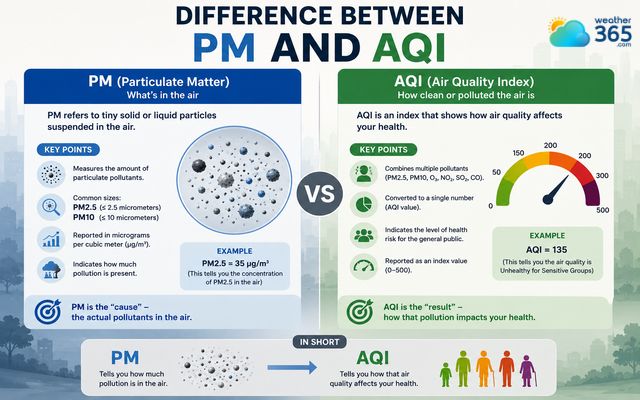
Difference between PM and AQI
PM2.5 indicates poor air quality
When PM2.5 levels go above 55 μg/m³, the air quality is poor and unhealthy to breathe.
At this level, the Air Quality Index (AQI) usually hits 151–200, which is classified as "Unhealthy."
This means sensitive groups like children, seniors, and people with heart or lung disease should limit time outdoors.
If PM2.5 rises even higher, the AQI can jump to 201–300 (Very Unhealthy) or above 300 (Hazardous), putting everyone at risk.
High PM2.5 levels can trigger symptoms of poor air quality like coughing, wheezing, trouble breathing, and irritated eyes.
While different countries use slightly different standards, most experts agree that PM2.5 above 55 μg/m³ is a clear warning sign of bad air.
Checking PM2.5 levels helps you protect your health when pollution gets dangerous.
If you are on the West Coast, check the Phoenix AQI forecast to see if dust levels are rising!
How does PM2.5 impact human health?
The health impacts of PM2.5 are significant and affect millions of people worldwide.
According to the World Health Organization (WHO), air pollution contributes to approximately 7 million premature deaths each year, with fine particulate matter being one of the leading causes.
Studies have also shown that every 10 µg/m³ increase in long-term PM2.5 exposure is associated with a higher risk of heart disease, stroke, lung cancer, and respiratory illnesses.
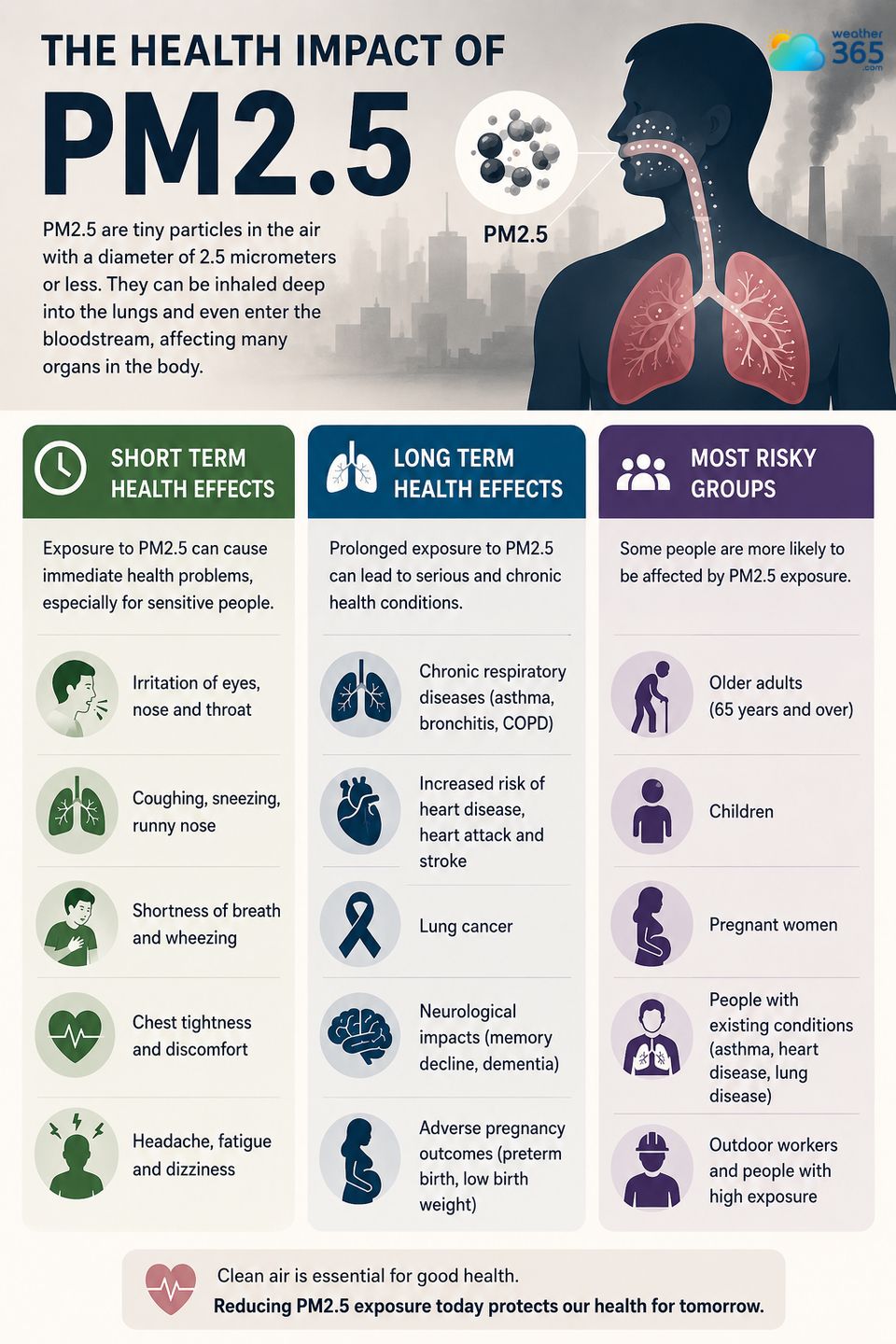
Health impacts of PM2.5
How to reduce PM2.5 rating?
Reducing PM2.5 levels is important for improving air quality and protecting health.
PM2.5 can remain airborne and travel long distances; reducing pollution requires both government action and individual efforts.
Reduce Vehicle Emissions
Transportation is one of the major sources of PM2.5 in many cities. Using public transportation, walking, cycling, or carpooling can help reduce the number of vehicles on the road.
Drivers can also lower emissions by maintaining vehicles regularly, avoiding unnecessary idling, and choosing electric or low-emission vehicles when possible.
Traffic congestion heavily influences fine particle concentrations, especially during morning and evening rush hours.
Commuters can view the Chicago traffic weather report and smog alerts to adjust travel times!
Control Industrial and Energy Emissions
Factories, power plants, and construction sites can release large amounts of fine particles into the atmosphere.
Governments can reduce PM2.5 pollution by enforcing stricter emission standards, improving industrial filters, and promoting cleaner energy sources.
Switching from coal and other high-pollution fuels to renewable energy, such as solar and wind power, can significantly improve air quality.
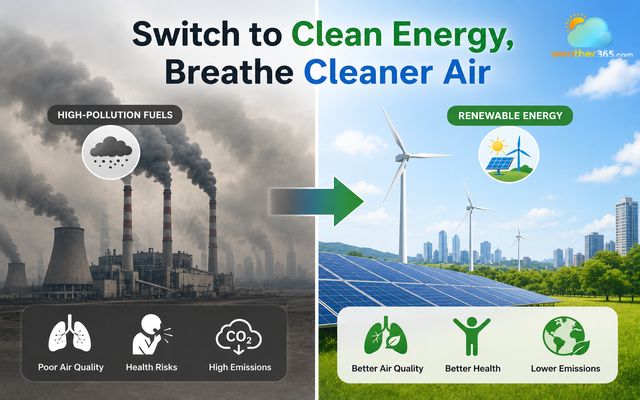
Switch from coal fuels to renewable energy
Reduce Indoor PM2.5 Levels
Indoor air can also contain high levels of PM2.5, especially from cooking, smoking, candles, and wood-burning stoves.
To improve indoor air quality, people can:
Use a HEPA air purifier to capture fine particles
Avoid smoking indoors
Use kitchen ventilation when cooking
Keep indoor spaces clean to reduce dust accumulation
Close windows during severe outdoor pollution events
Protect Yourself During High PM2.5 Events
Monitoring daily air quality forecasts can help reduce exposure.
When PM2.5 levels reach unhealthy levels, you should limit outdoor activities.
Wearing a properly fitted N95 mask can also reduce the amount of fine particles entering the lungs.

Wearing an N95 or KN95 mask during unhealthy PM levels
According to air quality studies, reducing PM2.5 exposure by even a small amount can provide health benefits, especially in highly polluted regions.
Long-term improvements require cooperation between governments, businesses, and communities.
By reducing emissions and making cleaner choices, individuals can help lower PM2.5 levels and create healthier environments.
Check the Los Angeles live air quality to avoid peak pollution hours!
In conclusion
PM2.5 is one of the most dangerous forms of air pollution because its tiny particles can travel deep into the lungs and affect multiple body systems. By understanding pollution sources, monitoring air quality, and taking protective measures, you can reduce exposure and improve your overall health. If you have ever wondered what is PM2.5, it is a critical indicator of air pollution that everyone should understand.
Frequently Asked Questions (FAQs)
Related post
What Is the Air Quality Index? Understanding AQI Levels and Health Risks
 222
222
 8
8
 4.9
4.9
 09/09/2026
What Is an Air Quality Alert? A Complete Guide to AQI Warnings
56
8
4.8
17/09/2026
How is air quality measured? Reduction tips you should know
49
8
4.9
09/09/2026

8 Comment
Vincent Murphy
What surprised me is how many different sources can contribute to PM2.5. It’s not just one type of pollution coming from one obvious place.
Carson Murphy
Traffic is something I normally think about in terms of noise and congestion, but it can also contribute to the tiny particles we breathe. That connection made me pay more attention to air quality in busy areas.
Alexander Kelly
Why might PM2.5 be higher near busy roads?
weather365
Vehicle exhaust, tire and brake wear, and other traffic-related emissions can contribute to fine particulate pollution, especially where air circulation is limited.
Cole Baker
Can weather conditions influence PM2.5 concentrations?
weather365
Yes. Wind, temperature, humidity, and atmospheric stability can affect how particles are dispersed, accumulated, or removed from the air.
Johnny Perkins
Why can PM2.5 levels remain high even after the original pollution source has stopped?
weather365
Fine particles can remain suspended in the atmosphere for some time, especially when there is little wind or poor air circulation.
Leave a comment
Your email address will not be published. Required fields are marked *