




How To Reduce Air Pollution? TOP Effective Solutions


How to reduce air pollution is not just a global concern but a daily responsibility that directly affects your health and quality of life. With over 90% of the world’s population exposed to polluted air (WHO data), learning simple yet effective actions can make a real difference. In this guide, you’ll discover practical solutions you can apply today - read on and take action for cleaner air.
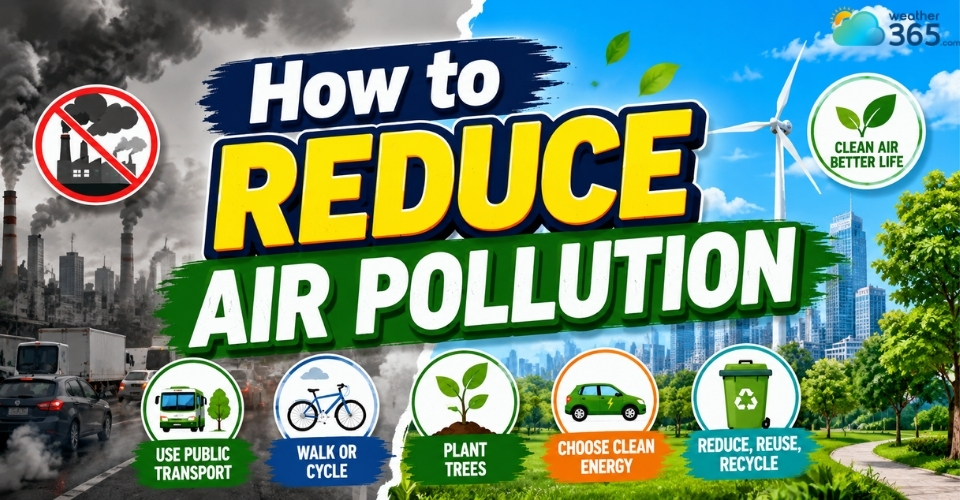
How to reduce air pollution
Everything you need to know about air pollution
Air pollution is the presence of harmful substances in the air that we breathe, and yes - it can be both visible (like smog) and invisible (like fine particles).
To truly understand how to reduce it, we first need to know what it is, where it comes from, and how it affects our health and environment.
Where does air pollution come from?
Air pollution comes from a mix of human activities and natural sources, and most of it today is linked to daily human behavior.
According to environmental research, transportation is one of the biggest contributors, especially vehicles that burn gasoline or diesel and release harmful gases directly into the air.
Another major source is industrial and power production, where factories and power plants burn fossil fuels to generate electricity, releasing pollutants such as sulfur dioxide and nitrogen oxides.
These emissions build up in urban areas and contribute heavily to smog.
If you live in major traffic hubs, make sure to check today's AQI in Los Angeles before heading out.
Agricultural activities also play a role. Fertilizers, livestock farming, and burning crop waste release ammonia and methane, which can react in the atmosphere and form secondary pollutants.
At the household level, everyday activities like cooking, heating, using cleaning chemicals, or burning wood also release pollutants indoors and outdoors.
While often overlooked, these sources significantly affect local air quality.
Finally, there are natural sources such as wildfires, dust storms, and volcanic eruptions.
Although less controllable, they can still dramatically worsen air quality for short or long periods.
In short, air pollution happens because modern life depends heavily on energy, transport, and production systems that release emissions into the atmosphere.
Learn details on What causes air pollution!
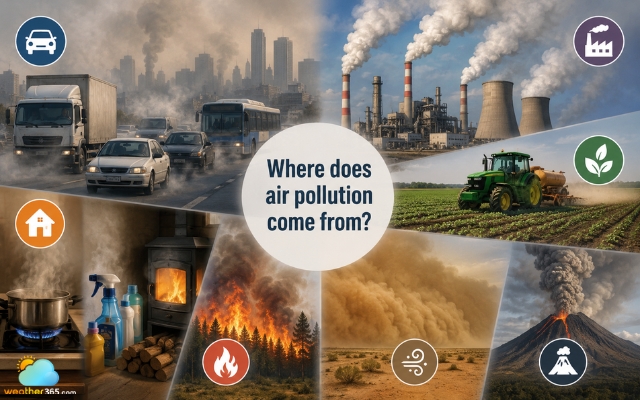
Air pollution comes from many sources
Effects of air pollution
Air pollution has wide-ranging impacts on both human health and the environment, and many of these effects build up over time with continuous exposure.
Human health impacts
One of the most serious consequences is damage to the respiratory system. Breathing polluted air regularly can trigger asthma, bronchitis, and reduce overall lung capacity.
Even healthy people may experience coughing, throat irritation, or shortness of breath during high pollution days.
It also increases cardiovascular and neurological risks, as fine particles (PM2.5) can enter the bloodstream and contribute to heart disease, stroke, and even cognitive decline over time.
Certain groups are more vulnerable, including children, older adults, pregnant women, and people with pre-existing health conditions.
For them, even short-term exposure can lead to noticeable health issues.
Environmental consequences
Air pollution doesn’t only affect people, it also harms nature.
Pollutants can damage plant leaves, reduce crop growth, and make ecosystems less stable.
Wildlife is also affected as toxic particles enter food chains and disrupt natural habitats.
Over time, this leads to biodiversity loss and weaker ecosystems.
Another major impact is the acceleration of climate change.
Greenhouse gases and black carbon trap heat in the atmosphere, contributing to global warming and shifting weather patterns worldwide.
Keep track of environmental changes by viewing the current Houston TX weather forecast and air conditions.
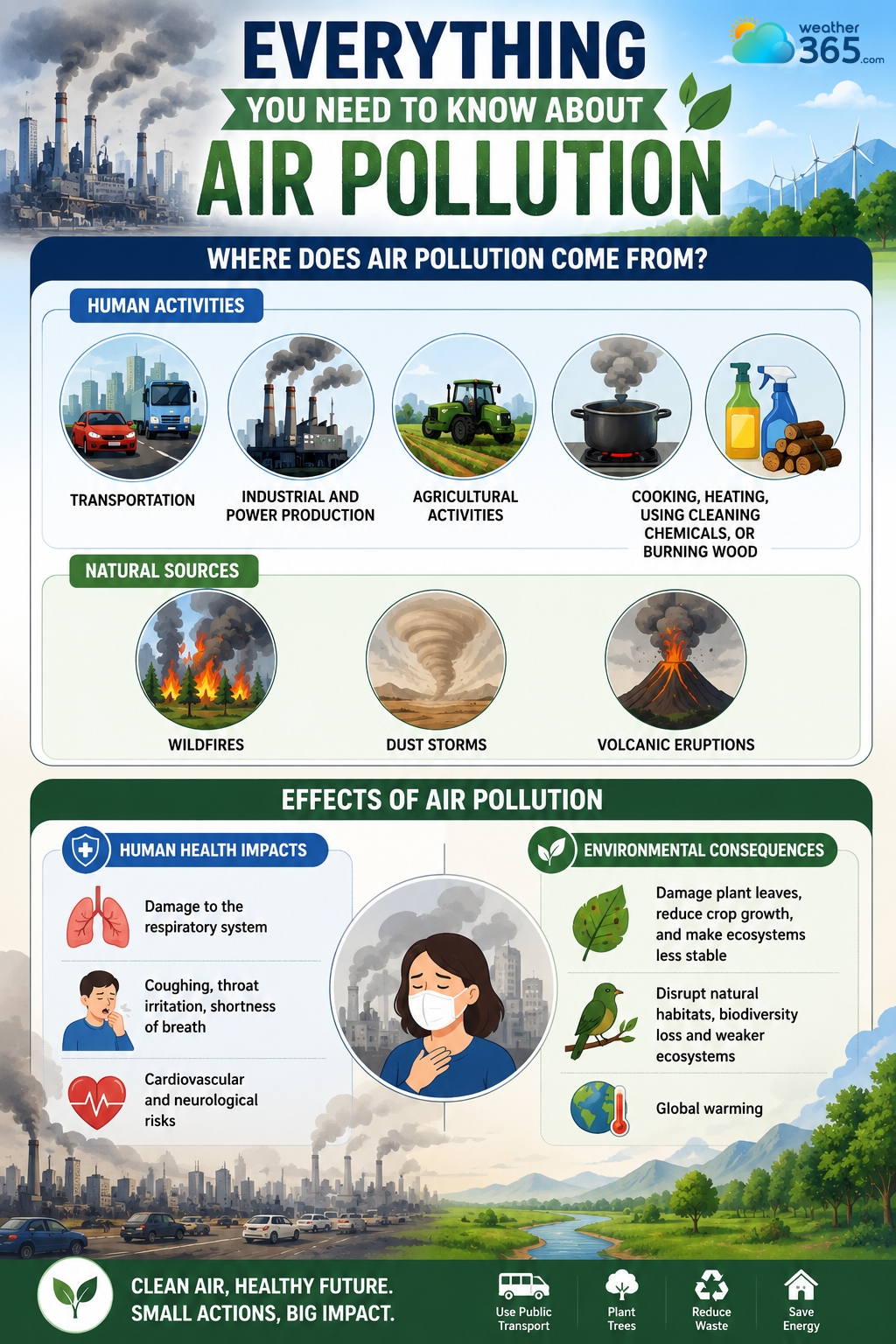
Causes and impacts of air pollution
How To Reduce Air Pollution
The most effective way to reduce air pollution is to cut emissions from daily activities while supporting cleaner habits at both personal and community levels.
Small, consistent changes in how we travel, use energy, and manage waste can significantly improve air quality over time.
Transportation & Commuting
Transportation is one of the largest sources of air pollution, so changing how we travel can make an immediate impact.
Walk or cycle for short local trips instead of using cars
Use public transportation like buses, trains, or subways
Carpool with coworkers, friends, or neighbors to reduce the number of vehicles on the road
Maintain your vehicle regularly (engine tuning, tire pressure, oil checks)
Avoid unnecessary engine idling in traffic or parking situations
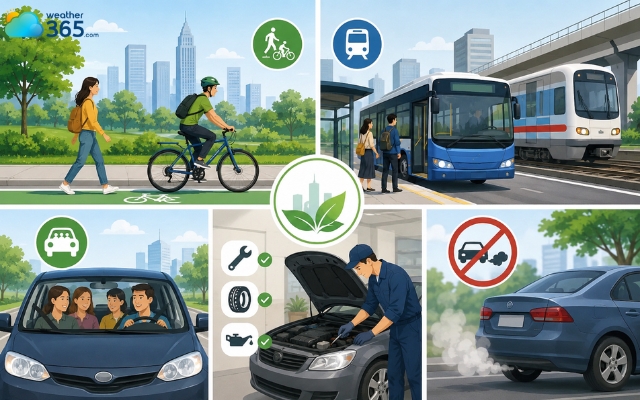
Transportation is one of the largest sources of air pollution
Energy & Home Maintenance
Energy consumption at home directly affects air quality, especially in cities powered by fossil fuels.
Turn off lights, electronics, and appliances when not in use
Use energy-efficient appliances (such as ENERGY STAR-rated devices)
Switch to cleaner systems like heat pumps or induction stoves when upgrading
Reduce reliance on wood burning or open fireplaces
Use dry, seasoned wood if burning is necessary to reduce smoke emissions.
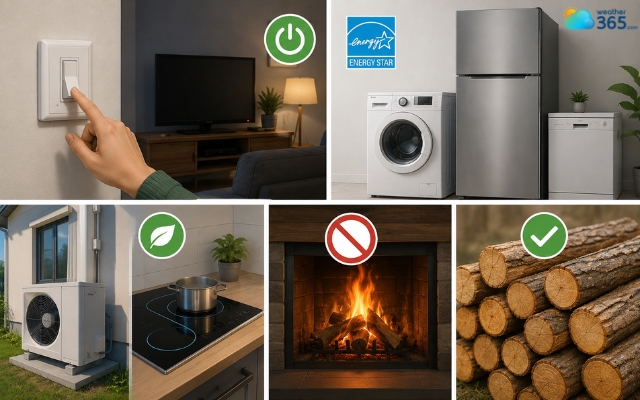
Energy consumption affects air quality
Products & Waste
Everyday product choices and waste habits can either increase or reduce toxic air emissions.
Choose low-VOC or zero-VOC paints and eco-friendly cleaning products
Avoid burning household waste such as plastic, rubber, or treated wood
Compost organic waste like leaves, grass, and food scraps instead of burning
Reduce use of aerosol sprays and chemical-heavy products
Reuse and recycle materials to minimize waste production
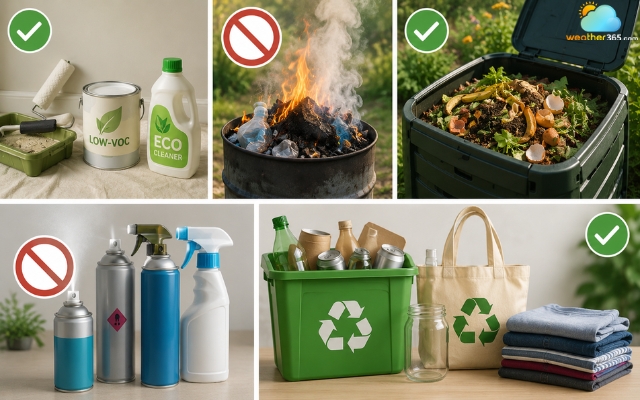
Avoid burning household waste to reduce air pollution
Community & Long-term action
Long-term improvement in air quality depends on collective effort and supportive policies.
Plant trees and expand green spaces in urban areas
Support renewable energy projects and clean transportation systems
Advocate for low-emission zones and stricter air quality regulations
Participate in local environmental programs and awareness campaigns
Encourage schools, workplaces, and communities to adopt greener practices
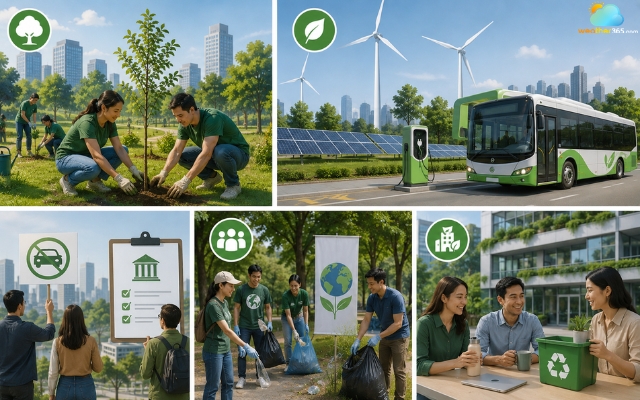
Air pollution requires long-term efforts and actions
How To Minimize Ozone Pollution
You can minimize ozone pollution by reducing activities that release vehicle and fuel-based emissions, especially during hot sunny hours when ozone forms most strongly.
Ground-level ozone is not emitted directly but is created when nitrogen oxides and volatile organic compounds react under sunlight.
That’s why controlling everyday emissions during peak heat is key to keeping air cleaner.
In case you have not fully understood the role of ozone to out planet’s life, drop by our guide on What is ground level ozone!
Before planning your daily outdoor routine or commute, see real-time Chicago weather updates and UV index to time your activities safely.
Limit car use, especially during hot afternoons when ozone formation is highest
Choose walking, cycling, or public transport instead of driving short distances
Reduce electricity use during peak demand times to lower power plant emissions
Avoid idling your car in traffic or parking areas for long periods
Delay using gas-powered tools (like lawn mowers or leaf blowers) until cooler evening hours
Refuel vehicles in the evening or early morning to reduce fuel vapor emissions
Support cleaner energy sources that reduce overall nitrogen oxide emissions
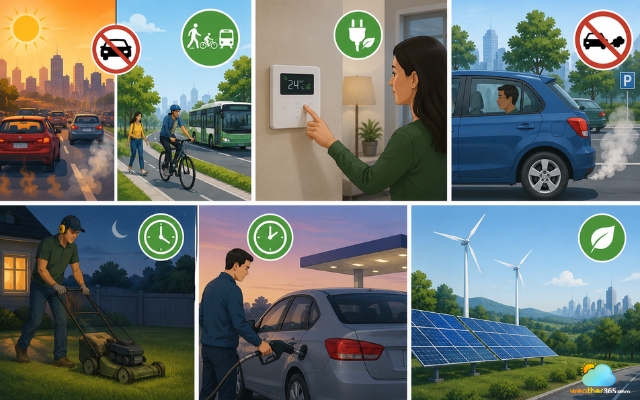
Protect the ozone layer to save the air
Sum up
How to reduce air pollution starts with simple daily choices like using cleaner transport, saving energy, and reducing waste. When combined, these actions significantly improve air quality and health. By staying consistent and supporting greener habits, you help create cleaner cities and a safer environment for everyone in the long term.
Frequently Asked Questions (FAQs)
Related post
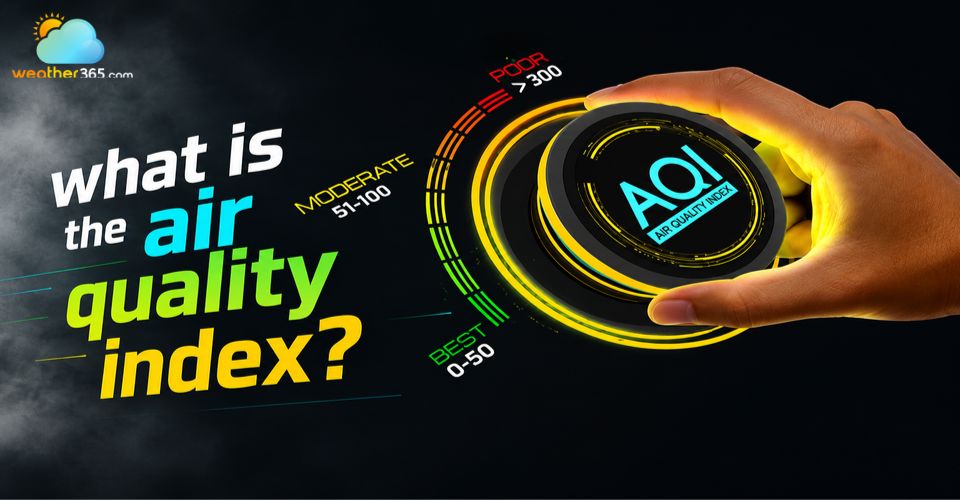
What Is the Air Quality Index? Understanding AQI Levels and Health Risks
 103
103
 0
0
 4.9
4.9
 09/09/2026
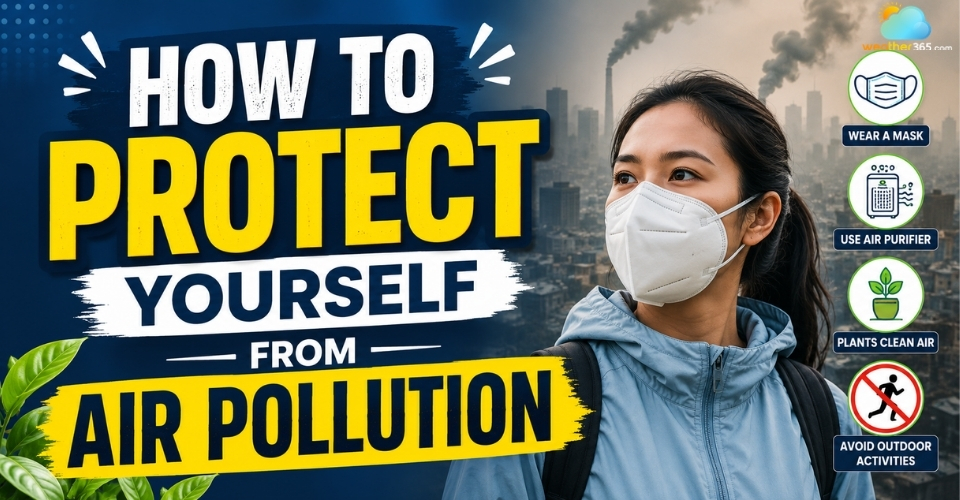
How to protect yourself from air pollution? Effective ways to stay healthy
7
0
4.7
17/09/2026
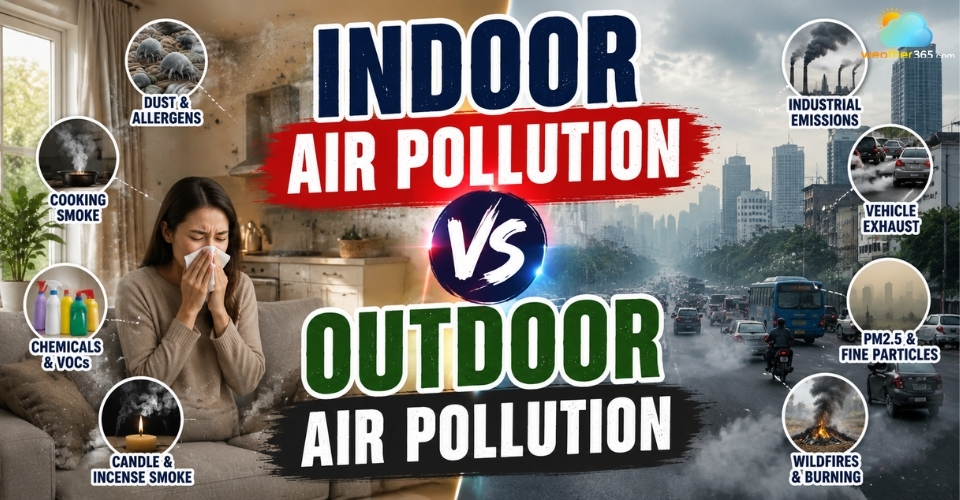
Indoor Air Pollution vs Outdoor Air Pollution: What is the Difference?
4
0
4.7
17/09/2026

0 Comment
Leave a comment
Your email address will not be published. Required fields are marked *