




What Causes Air Pollution? Major Emission Sources You Should Know


What causes air pollution, and why does it affect billions of people every day? From vehicle exhaust to industrial emissions, air pollution remains one of the world's biggest environmental health threats. In this guide, you'll discover the key pollutants, major emission sources, and practical solutions to help protect your health and the environment. Diving in!
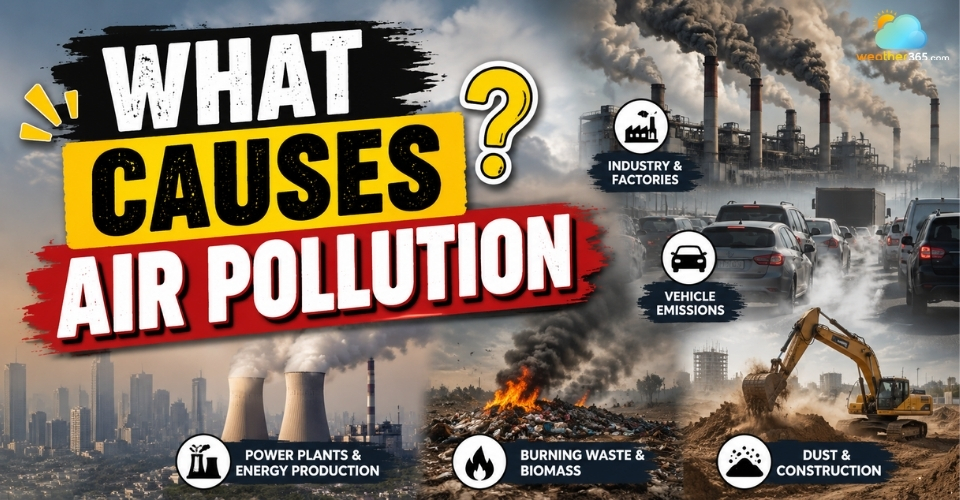
What causes air pollution?
- Key Statistics
- What causes air pollution? Key pollutants
- Particulate Matter (PM2.5 and PM10)
- Ground-Level Ozone (O₃)
- Carbon Monoxide (CO)
- Nitrogen Dioxide (NO₂)
- Sulfur Dioxide (SO₂)
- Volatile Organic Compounds (VOCs)
- Lead and Other Toxic Air Pollutants
- What causes air pollution? Main emission sources
- What to do to reduce air pollution?
Key Statistics
Air pollution statistics show that polluted air is a major global health and environmental issue, affecting billions of people and contributing to millions of premature deaths every year.
Air pollution causes millions of premature deaths annually.
Polluted air is linked to millions of early deaths worldwide each year, making it one of the leading environmental risk factors for human health.
Both developed and developing countries continue to face significant challenges in reducing harmful emissions.
Air pollution contributes to 28,000–36,000 premature deaths each year in the UK.
Long-term exposure to fine particulate matter (PM2.5), nitrogen dioxide (NO₂), and other pollutants can gradually damage the lungs and cardiovascular system.
Over time, this increases the risk of chronic illnesses such as heart disease, stroke, and respiratory conditions.
Transportation is a major contributor to air pollution.
In the UK, cars are responsible for around 13% of total CO₂ emissions.
Without wider adoption of cleaner vehicles and sustainable transport, emissions from this sector are expected to remain a significant environmental challenge.
Vehicles emit several pollutants that reduce air quality.
According to the U.S. EPA, transportation sources, including cars, buses, trains, and aircraft - produce approximately 45% of nitrogen oxide (NOx) emissions, nearly 10% of volatile organic compounds (VOCs), and about 10% of particulate matter (PM).
These pollutants contribute to smog formation and poor air quality, especially in urban areas.
Nearly 90% of urban residents breathe unhealthy air.
Research shows that almost 90% of people living in cities worldwide are exposed to air pollution levels that exceed recommended guidelines.
As cities continue to grow, reducing emissions becomes increasingly important for protecting both public health and the environment.
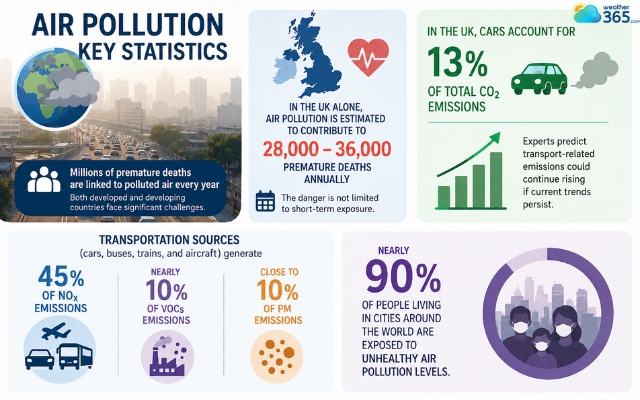
Air pollution contributes to thousands of fatalities annually
What causes air pollution? Key pollutants
Air pollution is caused by several harmful pollutants that are released into the atmosphere from transportation, industry, energy production, and even natural events.
To fully understand what causes air pollution, it's important to look at the pollutants themselves.
Some are emitted directly into the air, while others form through chemical reactions in the atmosphere.
Together, they reduce air quality and can affect both human health and the environment.
Particulate Matter (PM2.5 and PM10)
Particulate matter, often abbreviated as PM, refers to tiny particles suspended in the air.
These particles can be made up of dust, smoke, soot, or liquid droplets.
The two most commonly monitored categories are PM2.5 and PM10.
PM2.5 particles are extremely small - 2.5 micrometers or less in diameter- which allows them to penetrate deep into the lungs and even enter the bloodstream.
PM10 particles are larger and typically include dust, pollen, and debris from construction activities.
Major sources include vehicle exhaust, industrial operations, fossil fuel combustion, wildfires, and construction sites.
Because of their small size and ability to travel throughout the body, particulate pollutants are considered among the most harmful forms of air pollution.
You can learn more in our guide on What is PM2.5.
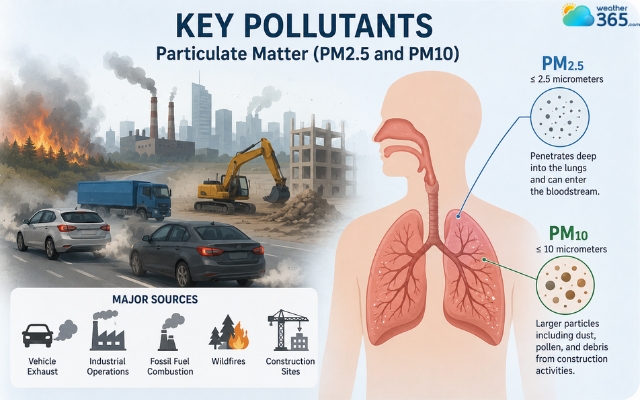
Particulate matter is tiny particles suspended in the air
Ground-Level Ozone (O₃)
Ground-level ozone is not emitted directly into the atmosphere. Instead, it forms when sunlight triggers reactions between nitrogen oxides (NOx) and volatile organic compounds (VOCs).
Unlike the ozone layer high above the Earth that protects us from harmful ultraviolet radiation, ground-level ozone is a pollutant that can irritate the respiratory system and contribute to smog.
It is especially common during hot, sunny days when the chemical reactions that create ozone occur more rapidly.
If you live in high-sunlight regions prone to smog, you can check the current Los Angeles air quality to plan outdoor activities during cooler hours.
Vehicle emissions, industrial facilities, gasoline vapors, and chemical solvents are among the most common contributors to ozone formation.
Read more: What is ground level ozone?
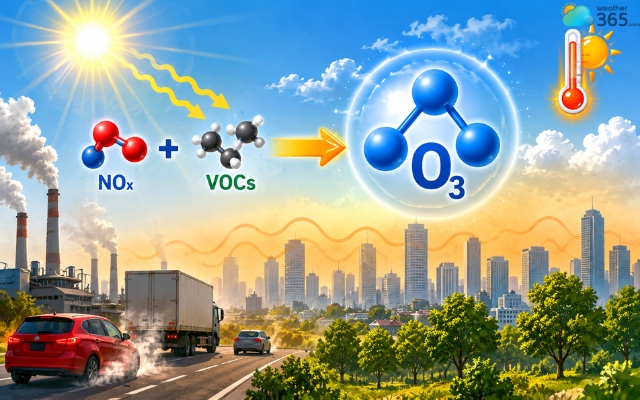
Ground-level ozone can irritate the respiratory system
Carbon Monoxide (CO)
Carbon monoxide is a colorless, odorless gas produced when fuels do not burn completely.
Because it cannot be detected by sight or smell, it can be particularly dangerous in both indoor and outdoor environments.
Common sources include motor vehicles, generators, fireplaces, gas stoves, and various industrial processes.
Once inhaled, carbon monoxide reduces the blood's ability to carry oxygen efficiently throughout the body.
This can lead to symptoms such as headaches, dizziness, fatigue, and reduced concentration.
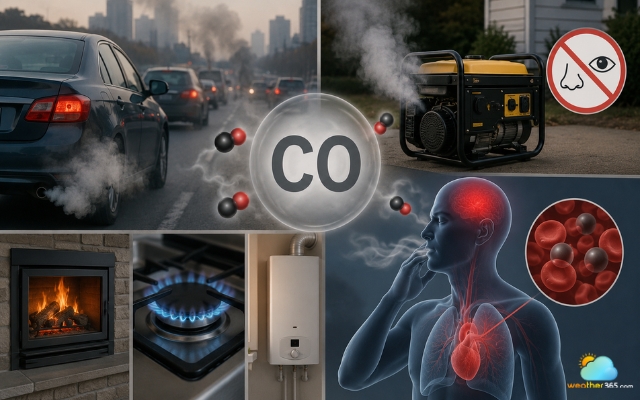
Carbon monoxide can’t be tracked by sight
Nitrogen Dioxide (NO₂)
Nitrogen dioxide is a reddish-brown gas that plays a significant role in urban air pollution.
It is commonly released during the combustion of fuels and is heavily associated with traffic emissions.
Cars, trucks, power plants, and industrial facilities are among the largest sources of NO₂.
Beyond contributing to smog formation, this pollutant can irritate airways and worsen existing respiratory conditions such as asthma.
Long-term exposure may also affect lung development and overall respiratory health.
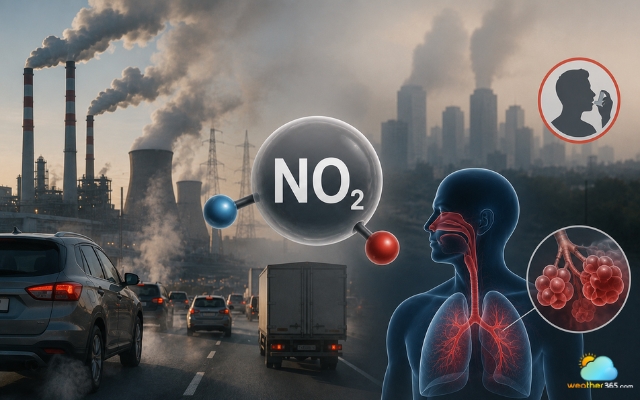
Long exposure to NO2 can affect lung development
Sulfur Dioxide (SO₂)
Sulfur dioxide is primarily released when sulfur-containing fuels such as coal and oil are burned.
Although regulations have reduced emissions in many countries, it remains an important air pollutant in areas that rely heavily on fossil fuels.
Power plants, oil refineries, industrial facilities, and large ships are common sources of sulfur dioxide.
Exposure can cause breathing difficulties and respiratory irritation, particularly for people with asthma or other lung conditions.
SO₂ is also one of the pollutants responsible for the formation of acid rain.
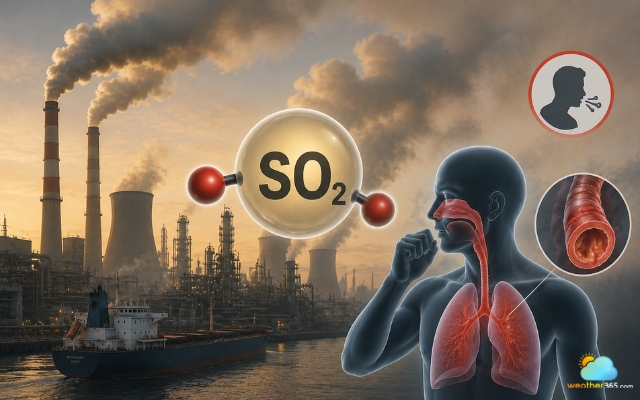
SO2 can cause breathing difficulties
Volatile Organic Compounds (VOCs)
Volatile organic compounds are a group of gases released from numerous household products and industrial activities.
They may seem less visible than smoke or dust, but they play a major role in air pollution.
VOCs can be emitted from paints, cleaning products, solvents, fuel evaporation, and manufacturing processes.
In addition to causing irritation of the eyes, nose, and throat, VOCs react with other pollutants in the atmosphere to form ground-level ozone.
This means their impact extends beyond their direct health effects.
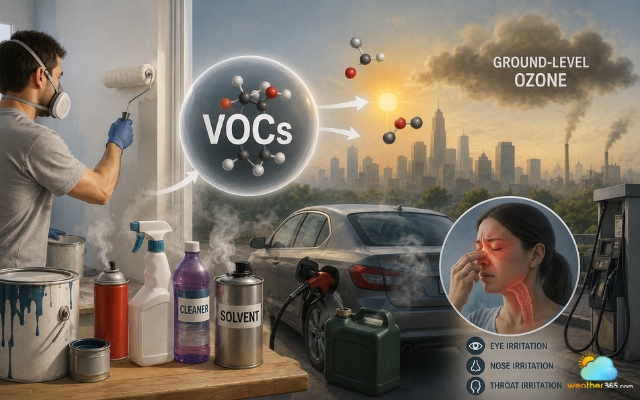
VOCs can be emitted from paints
Lead and Other Toxic Air Pollutants
While lead pollution has declined significantly since the removal of leaded gasoline in many countries, toxic air pollutants remain a concern in certain industries and regions.
Metal processing facilities, battery manufacturing plants, and industrial operations can still release lead and other hazardous substances.
Even low levels of exposure may have serious consequences.
Children are particularly vulnerable because lead can interfere with brain development, learning ability, and behavior.
Other toxic pollutants may also contribute to neurological and cardiovascular problems.
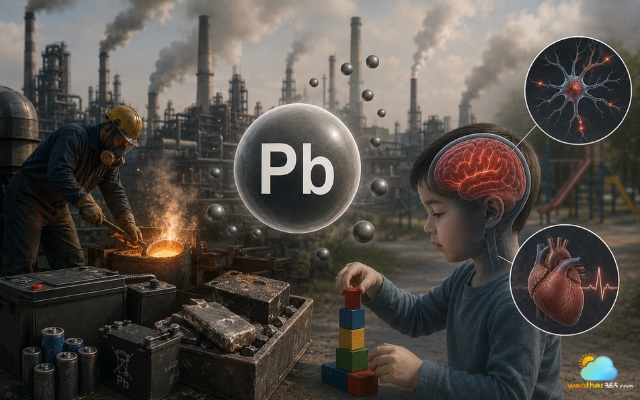
Lead is released from metal processing facilities
What causes air pollution? Main emission sources
The biggest causes of air pollution come from transportation, energy production, industry, agriculture, and other everyday human activities.
While pollutants such as PM2.5, ozone, and nitrogen dioxide directly affect air quality, they all originate from specific emission sources.
Some are linked to modern lifestyles and economic growth, while others occur naturally.
Understanding where pollutants come from makes it easier to identify effective solutions.
Transportation
Transportation is one of the largest sources of air pollution worldwide.
Every day, millions of vehicles burn gasoline, diesel, and other fuels, releasing pollutants into the atmosphere.
Cars, trucks, buses, motorcycles, ships, and aircraft all contribute to air pollution.
These vehicles emit particulate matter (PM), carbon monoxide (CO), nitrogen oxides (NOx), and volatile organic compounds (VOCs).
In densely populated cities, heavy traffic can significantly reduce air quality, especially during rush hours.
Power Plants and Energy Production
Much of the world's electricity is still generated by burning fossil fuels such as coal, oil, and natural gas.
Although energy production is essential for modern life, it remains a major source of air pollution.
Power plants release pollutants including sulfur dioxide (SO₂), nitrogen oxides (NOx), particulate matter, and carbon dioxide (CO₂).
Areas located near large power generation facilities often experience higher levels of pollution, particularly when older technologies are used.
Industrial Activities
Manufacturing plays a vital role in the global economy, but industrial processes can release large amounts of harmful emissions.
Facilities such as cement plants, steel mills, oil refineries, and chemical factories generate pollutants including PM2.5, PM10, sulfur dioxide, nitrogen oxides, VOCs, and heavy metals.
Without proper emission controls, industrial pollution can affect both local communities and surrounding ecosystems.
Residential and Commercial Buildings
Many people associate air pollution with factories and vehicles, but everyday activities inside homes and buildings also contribute to the problem.
Heating systems, fireplaces, cooking fuels, paints, cleaning products, and other household materials can release carbon monoxide, particulate matter, and VOCs.
In some regions, residential heating during winter becomes a significant source of local air pollution.
Track Kansas 3-day weather forecast to prepare for heating demands and indoor air filtration needs!
Agriculture
Agriculture is another important contributor to air pollution, although its impact is often overlooked.
Livestock farming produces methane, while fertilizer use releases ammonia into the atmosphere. Crop residue burning can also generate smoke and particulate matter.
These emissions may react with other pollutants and contribute to haze, smog, and poor air quality over large areas.
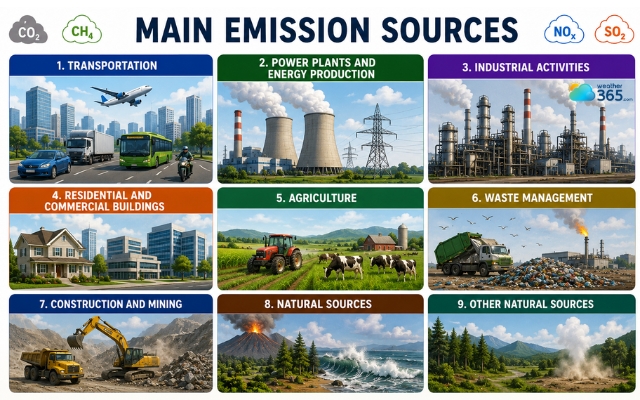
Significant emission source of air pollution
Waste Management
The way waste is handled can have a direct impact on air quality. When waste is not properly managed, harmful pollutants may be released into the atmosphere.
Landfills produce methane as organic materials decompose. Open waste burning generates particulate matter and toxic gases, while some waste treatment processes can release VOCs.
In many developing regions, improper waste disposal remains a significant source of local pollution.
Construction and Mining
Construction projects and mining operations generate large amounts of dust and airborne particles.
Activities such as excavation, demolition, drilling, and material transportation release PM10, PM2.5, and other dust particles into the air.
Although these emissions are often temporary, they can create serious air quality issues for nearby communities and workers.
Natural Sources
Not all air pollution is caused by human activity. Nature can also release pollutants that temporarily reduce air quality.
Wildfires produce smoke and fine particulate matter that can travel hundreds or even thousands of miles.
Volcanic eruptions release ash and gases into the atmosphere, while dust storms can carry large amounts of airborne particles across entire regions.
Even pollen and other biological particles may contribute to air quality concerns during certain seasons.
Natural pollution events are often short-term, but they can still create hazardous conditions for sensitive groups.
Interestingly, weather conditions can sometimes help clear pollutants from the air. For example, rainfall can wash airborne particles out of the atmosphere.
You can learn more in our article on does rain improve air quality.
What to do to reduce air pollution?
Reducing air pollution starts with lowering emissions from transportation, energy use, and everyday activities.
While governments and industries play a major role, individual actions can also make a meaningful difference.
Small changes made consistently by millions of people can help improve air quality and reduce overall pollution levels.
Here are some practical ways to reduce air pollution:
Drive less and use public transportation when possible.
Walk or cycle for short trips.
Avoid unnecessary vehicle idling.
Keep vehicles properly maintained.
Use energy-efficient appliances and LED lighting.
Reduce electricity consumption at home and work.
Choose cleaner energy sources when available.
Avoid burning leaves, trash, or yard waste.
Use environmentally friendly paints and cleaning products.
Reduce, reuse, and recycle to minimize waste.
Support local initiatives that promote cleaner air.
Check daily air quality forecasts and plan outdoor activities accordingly.
Although these actions may seem simple, they can collectively reduce harmful emissions and improve public health over time.
If you'd like a more detailed guide with practical tips for individuals, households, and communities, read our article on how to reduce air pollution.
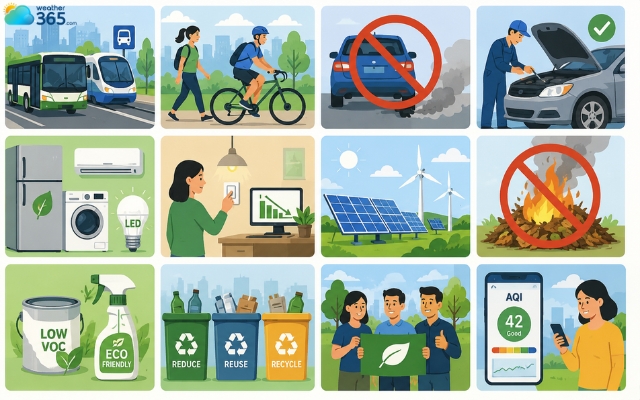
Reduce air pollution to protect our health
To sum up
Understanding what causes air pollution is the first step toward reducing its impact. Pollutants such as particulate matter, ozone, carbon monoxide, and nitrogen dioxide come from multiple sources, including transportation, industry, power generation, agriculture, and even natural events. By making informed choices and supporting cleaner technologies, individuals and communities can help create healthier air for everyone.
Frequently Asked Questions (FAQs)
Related post
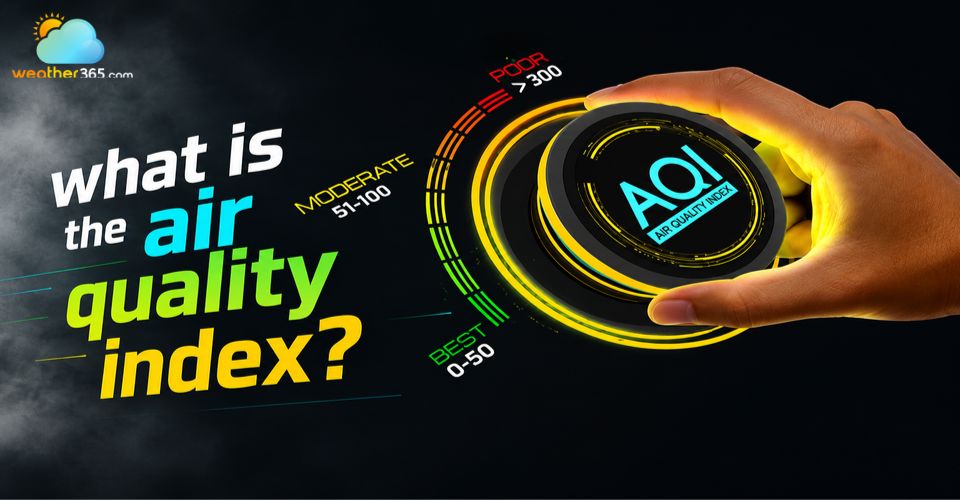
What Is the Air Quality Index? Understanding AQI Levels and Health Risks
 222
222
 8
8
 4.9
4.9
 09/09/2026
Symptoms of Poor Air Quality and Their Impact on Your Health
52
8
4.6
15/09/2026
How is air quality measured? Reduction tips you should know
49
8
4.9
09/09/2026

8 Comment
Marcus Smith
One thing I took away from this article is that air pollution isn’t caused by a single source. It’s more like a combination of emissions, atmospheric conditions, and human activity.
Harrison Webster
Air pollution feels a lot less straightforward after reading this. Sometimes the important question isn’t just “Where did the pollution come from?” but also “What is the atmosphere doing with it?”
Erik Green
Why can the same amount of emissions lead to different air-quality levels on different days?
weather365
Weather conditions such as wind, temperature, humidity, and atmospheric stability affect how pollutants disperse, react, and accumulate.
Jack Mills
Can temperature affect how pollutants build up near the ground?
weather365
Yes. Certain temperature patterns, including temperature inversions, can trap pollutants close to the surface and make air quality worse.
Christian Horton
Why can air pollution become worse when there is very little wind?
weather365
Weak winds can prevent pollutants from dispersing, allowing them to accumulate near the ground and increase local concentrations.
Leave a comment
Your email address will not be published. Required fields are marked *