




Worst snowstorm in U.S. history: Dates, Locations, and Record Impacts


Although snowstorms are a part of many Americans’ lives, they still become one of the greatest obsessions in the US. Which is the worst snowstorm in U.S. history? Let’s explore the top 10 severe weather events that caused widespread dread, death, and costly damage.
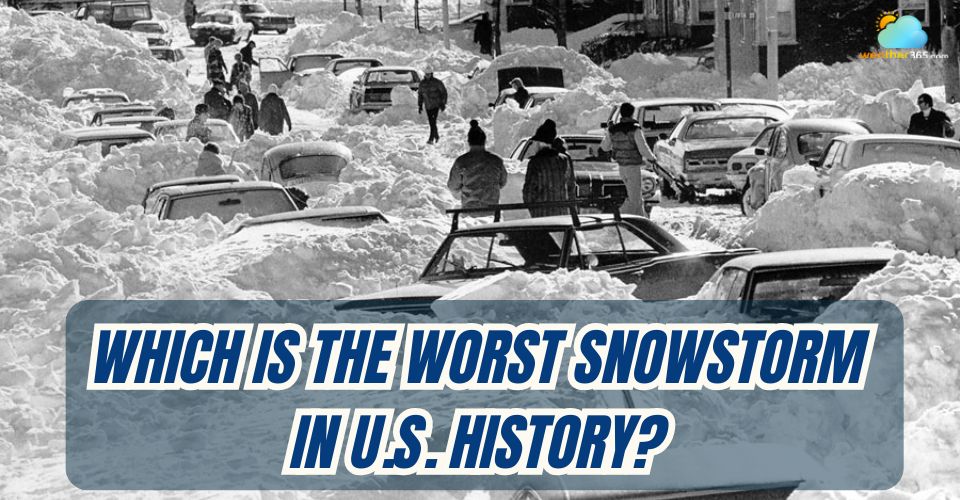
Which is the worst snowstorm in US history?
- The worst snowstorm in U.S. history
- Other worst snowstorms in US history
- The Great Blizzard of 1899
- The Knickerbocker Storm of 1922
- The Great Appalachian Storm of 1950
- The Blizzard of 1978
- The 1993 "Storm of the Century"
- New York City Blizzard of 2006
- Lhunze County, Tibet of 2008
- Great Texas Snowstorm of 2021
- Trends in Recent Snowstorms in the US
The worst snowstorm in U.S. history
Name: 1888 Great Blizzard
Time: March 11–14, 1888
Location: Northeastern United States
Wind speed: 45mph
Snow/Rain Drop: 45- 50 inches
The Great Blizzard of 1888, often called the “Great White Hurricane,” is the worst snowstorm in US history. Striking the Northeast from March 11–14, 1888, the blizzard buried cities like New York, Boston, and Philadelphia under up to 55 inches of snow.
Fierce winds exceeding 45 mph created massive snowdrifts, some as high as 50 feet, making roads impassable and paralyzing the region for days.
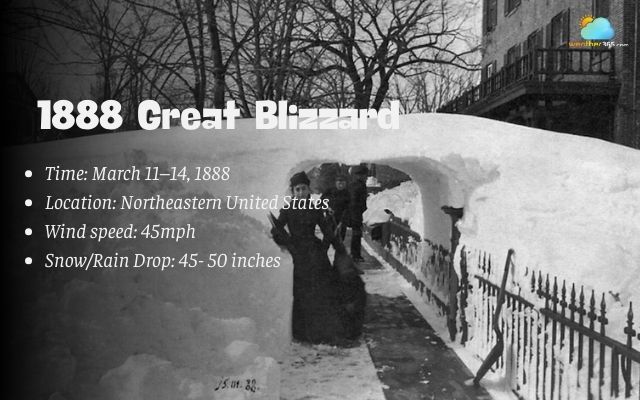
The Great Blizzard of 1888
This catastrophic winter storm claimed over 400 lives, stranded thousands of travelers, and left telegraph and transportation systems crippled.
The storm also highlighted the need for underground utilities and improved weather forecasting, changing how the nation prepares for extreme weather events.
The Great Blizzard of 1888 remains a powerful reminder of nature’s force, ranking as the worst snowstorm in US history due to its devastating impact on infrastructure, transportation, and human life.
Other worst snowstorms in US history
Aside from the Great Blizzard of 1888, the U.S. has faced several other catastrophic winter storms that left a lasting impact.
These worst snowstorms in U.S. history brought record-breaking snowfalls, extreme winds, and widespread disruption across multiple states.
Below are some of the most notable blizzards that paralyzed communities and set weather records.
The Great Blizzard of 1899
Time: Feb 1899
Location: Florida, Louisiana, Georgia, and Alabama
Snow/Rain Drop: 29 inches
Wind speed: 74 mph (119 km/h)
The Great Blizzard struck in February 1899, impacting states like Florida, Louisiana, Georgia, and Alabama.
This rare Southern blizzard brought an astonishing 29 inches of snow to areas unaccustomed to such extreme winter weather.
Wind speeds reached up to 74 mph (119 km/h), creating blinding whiteout conditions and dangerously low wind chills.
The storm paralyzed transportation, disrupted communications, and caused widespread hardship across the Southeast.
Therefore, it became one of the worst snowstorms in US history.
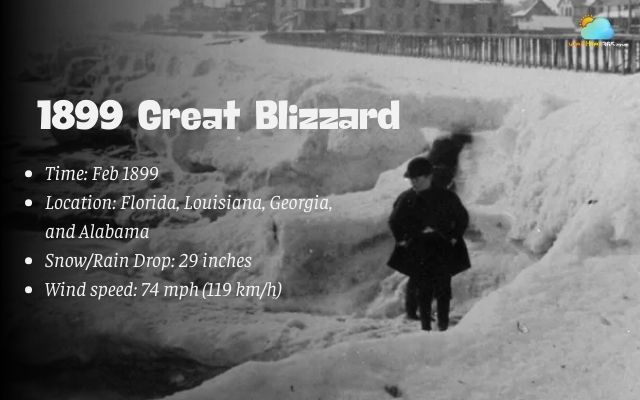
The Great Blizzard of 1899
The Knickerbocker Storm of 1922
Time: Jan 1922
Location: Mid-Atlantic United States
Snow/Rain Drop: 20 inches
Wind speed: 36 - 42mph (58 - 67 km/h)
The historic Knickerbocker Storm struck the Mid-Atlantic region of the United States from January 27–29, 1922.
The storm dumped up to 28 inches of snow on the city and became the largest snowfall in its history at the time.
The extreme snow accumulation led to the tragic collapse of the Knickerbocker Theatre’s roof during a movie screening, killing 98 people and injuring 133 others.
Wind speeds were moderate compared to other major blizzards, but the sheer weight of the snow made this storm particularly deadly.
The Knickerbocker Storm remains infamous not only for its record-breaking snowfall but also for the devastating human toll it caused.
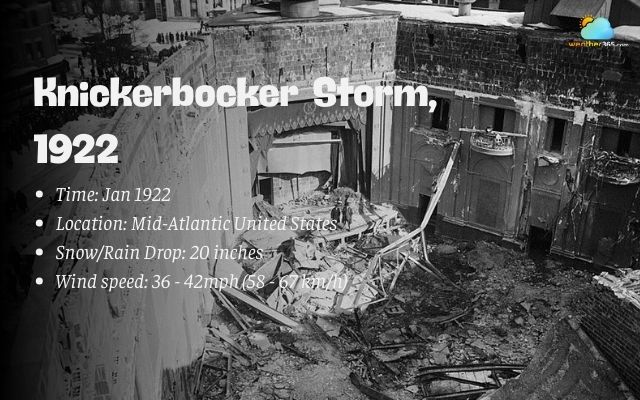
The Knickerbocker storm in 1922
The Great Appalachian Storm of 1950
Time: November 1950
Location: The Eastern United States
Snow/Rain Drop: 57 inches
Wind speed: 108 - 160 mph
The Great Appalachian Storm of 1950 is one of the worst snowstorms in U.S. history. This massive winter storm in 1950 affected 22 states, stretching from the Midwest through the Appalachian Mountains and into the Northeast.
It brought hurricane-force winds exceeding 160 mph in some areas, record-breaking snowfall with up to 57 inches reported in parts of West Virginia, and frigid temperatures that plunged well below zero.
The storm paralyzed transportation, caused widespread power outages, and devastated homes, businesses, and infrastructure.
Sadly, over 350 lives were lost, and the damages totaled $66.7 million at the time—equivalent to around $800 million today.
The Great Appalachian Storm remains one of the most expensive snowstorms of the 1950s.
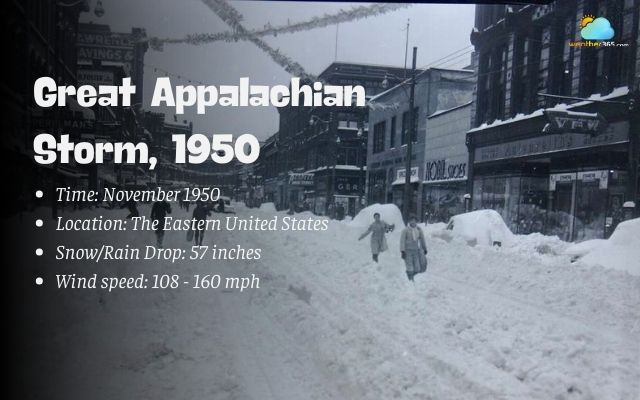
The Great Appalachian storm in 1950
The Blizzard of 1978
Time: Feb 8, 1978
Location: Massachusetts
Snow/Rain Drop: 20 - 30 inches
Wind speed: 70 - 100mph
On February 8, 1978, the Blizzard struck Massachusetts with 20–30 inches of snow across the region.
Besides, wind speeds reached 70–100 mph. All created blinding whiteout conditions and massive snowdrifts.
Entire neighborhoods were buried under snow, transportation systems shut down, and thousands were left without power for days.
The blizzard paralyzed the state, caused widespread damage, and tragically claimed dozens of lives. It is considered one of the most devastating winter storms to hit New England.
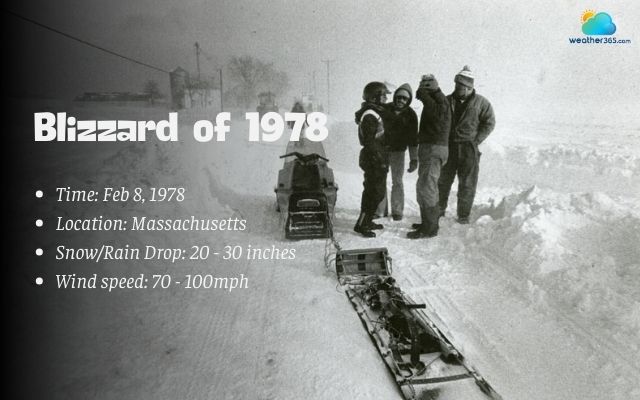
The Blizzard of 1978
Read also: Top 7 Snowiest Cities In The US - Where Winter Hits Hardest?
The 1993 "Storm of the Century"
Time: March 1993
Location: Honduras, all across the Eastern United States, and into Eastern Canada
Snow/Rain Drop: 35 - 55 inches
Wind speed: 70 - 144mph
The "Storm of the Century" struck the eastern United States from March 12–14, 1993. It is ranked as one of the most powerful and destructive winter storms in U.S. history.
The storm widespreaded states from Alabama to Maine with 35 - 55 inches of snow, while producing hurricane-force winds reaching up to 110 mph along the East Coast.
It triggered severe coastal flooding, whiteout conditions, and record-low temperatures. As a result, many airports, highways, and businesses must be closed for days. Tragically, the storm claimed over 300 lives and caused billions of dollars in damage.
In US history, the "storm of the century" always ranks as one of the deadliest and costliest winter storms ever recorded.
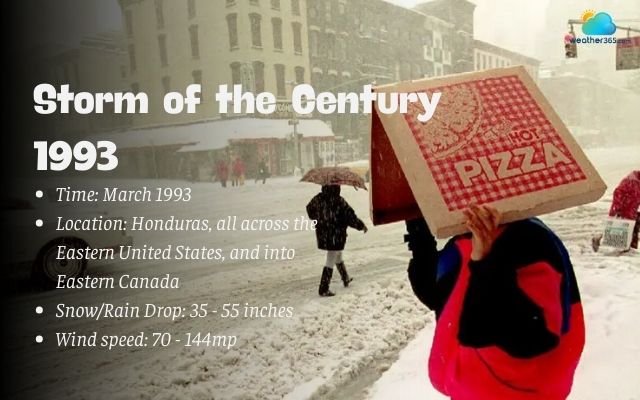
The “storm of the century” 1993
New York City Blizzard of 2006
Time: Feb 11, 2006
Location: NYC and the Northeastern United States
Snow/Rain Drop: 26.9 inches
Wind speed: 60mph
The New York City Blizzard of 2006 hit the U.S. Northeast from February 11–12, 2006, and brought record-breaking snowfall to the region.
Central Park recorded 26.9 inches of snow in less than 16 hours, setting a new single-storm record for New York City at the time.
Wind speeds reached 50–60 mph, creating whiteout conditions and paralyzing transportation networks, including airports and highways.
The storm cut power to millions and forced the closure of Kennedy International, LaGuardia, and Newark Liberty International Airports.
Despite the massive snowfall, the storm resulted in relatively few fatalities thanks to advance warnings, but it still caused major disruptions to daily life and economic activities across the city.
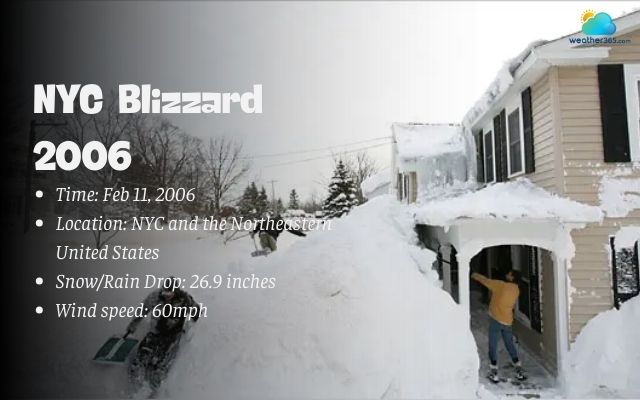
The New York City blizzard in 2006
Lhunze County, Tibet of 2008
Time: Oct 2008
Location: Lhunze county
Snow/Rain Drop: 59 inches
Duration: 36 hours
In March 2008, Lhunze County in Tibet experienced one of the worst snowstorms in US history. The storm blanketed the area with nearly 59 inches (150 cm) of snow, cutting off transportation and isolating thousands of residents.
Temperatures plummeted far below freezing, and strong winds worsened the already treacherous conditions. Consequently, it led to widespread livestock losses and significant damage to homes and infrastructure.
The heavy snowfall caused power outages and food shortages, forcing emergency response teams to deliver relief supplies to affected communities.
This devastating storm highlighted the vulnerability of high-altitude regions like Tibet to extreme winter weather, where even a single storm can have long-lasting effects on the local population and economy.

The Lhunze county, Tibet in 2008
Great Texas Snowstorm of 2021
Time: Feb 14, 2021
Location: Texas
Snow/Rain Drop: 3-8 inches
In February 2021, Texas faced one of the most historic winter storms in its history, often referred to as the Great Texas Snowstorm.
The storm brought record-breaking snowfall across large parts of the state, with some areas seeing up to 10 inches (25 cm) of snow and temperatures plunging well below freezing for several days.
The extreme cold led to massive power outages, leaving more than 4.5 million homes and businesses without electricity as the state’s power grid struggled to keep up with demand.
The storm caused frozen pipes, water shortages, and widespread infrastructure damage.
Tragically, hundreds of lives were lost due to hypothermia, carbon monoxide poisoning, and other storm-related causes.
Economically, the Great Texas Snowstorm of 2021 is estimated to have caused over $195 billion in damages, making it one of the costliest winter storms in U.S. history.

The worst snowstorm in Texas in 2021
Trends in Recent Snowstorms in the US
Recent data shows that snowstorms in the U.S. are becoming more frequent, intense, and expensive.
Over the past 40 years, the number of billion-dollar winter disasters has more than doubled from 31 events between 1985–2004 to 73 events between 2005–2024.
Extreme storms like Nor’easters have grown stronger, with higher wind speeds and heavier snowfall fueled by warming oceans and increased atmospheric moisture.
Record-breaking snow events are also on the rise, such as the November 2022 Great Lakes storm with over 81 inches in New York and the January 2024 blizzard that dropped nearly 50 inches in Colorado.
Another concerning trend is the expanding reach of severe winter storms into regions unaccustomed to heavy snow, like the Gulf Coast in January 2025.
While better forecasting and emergency responses have reduced fatalities, the economic impact has surged—NOAA estimates average damages of $4.1 billion per winter storm since 1980.
Experts point to climate change, shifting jet streams, and greater atmospheric moisture as major drivers behind these increasingly destructive winter storms.
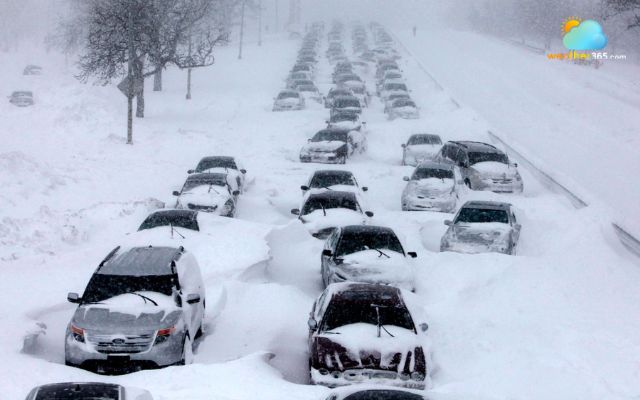
Snowstorms are becoming more and more frequent, intense, and expensive
Conclusion
The worst snowstorm in U.S. history 1888 and other devastating winter storms left the US many damage both human and property. Besides, they are also a big lesson to deal with natural disaster. From past events, it is crucial for improving forecasting, strengthening emergency preparedness, and protecting communities from future blizzards.
Frequently Asked Questions (FAQs)
Related post
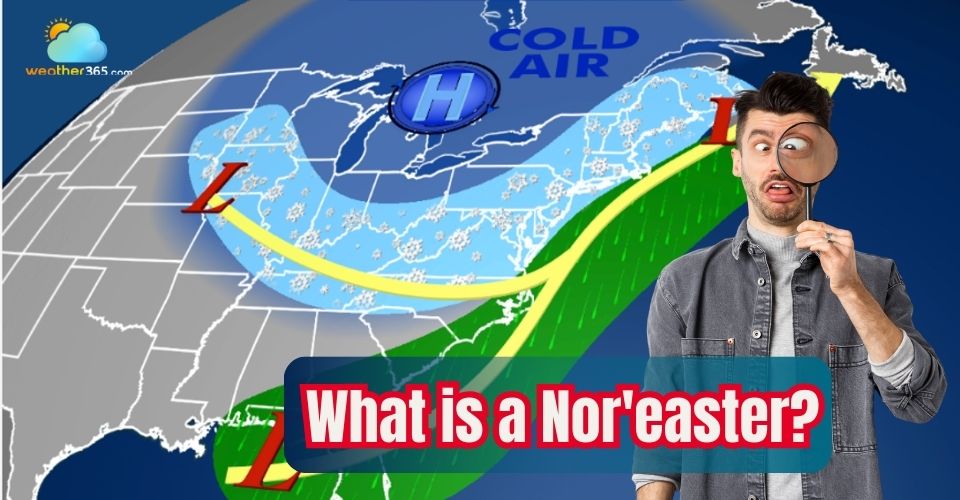
What Is A Nor'easter? Definitions, Weather Effects And Safety Tips
 2339
2339
 8
8
 5.0
5.0
 01/04/2026

What is the difference between snowstorm and blizzard? Full explained
1546
8
4.8
26/07/2026

Extreme Cold Weather Tips: Best Ways to Stay Safe in Severe Conditions
1473
8
4.8
28/04/2026

8 Comment
Skylar Woods
160 mph winds during the Great Appalachian Storm? That’s basically hurricane-force weather in winter.
June Parker
The 2006 NYC Blizzard dropping 26.9 inches in less than 16 hours is incredible
Maria Martin
Was the 1993 “Storm of the Century” really that widespread?
weather365
Yes. It affected much of the eastern U.S., from Alabama to Maine, with heavy snow, hurricane-force winds, coastal flooding and major travel disruptions
Lola Ross
How can a snowstorm cause so much damage even without extreme snowfall?
weather365
Strong winds, extreme cold, poor visibility, power outages, and heavy snow loads can make a storm dangerous even when snowfall totals are moderate.
Wynter Simpson
Why was the Great Blizzard of 1888 considered the worst snowstorm in U.S. history?
weather365
Its combination of heavy snow, strong winds, massive snowdrifts, transportation failures, and more than 400 deaths made it especially devastating.
Leave a comment
Your email address will not be published. Required fields are marked *