




What is the difference between snowstorm and blizzard? Full explained


What is the difference between snowstorm and blizzard? Many people make mistakes between these common winter terms. If you are still in that situation, let’s Weather365 give you full explanation about them. Keep reading!

What is the difference between a snow storm and a blizzard?
What is a snowstorm?
A snowstorm is a weather event characterized by heavy snowfall over a specific area within a relatively short period.
A snowstorm typically involves intense and sustained snowfall that significantly reduces visibility and creates hazardous conditions on roads, sidewalks, and public spaces.
Key features of a snowstorm include strong winds, heavy snow accumulation, and reduced visibility. Snowstorms can sometimes bring gusty winds that cause blowing and drifting snow.
They may also lead to extreme cold temperatures, icing conditions, and disruptions to power lines and transportation systems.
The duration of a snowstorm can vary depending on the storm’s strength and movement. Some snowstorms last only a few hours, while others can continue for 24 hours or longer.
Prolonged storms often result in deeper snow accumulation, increasing the risk of road closures and power outages.
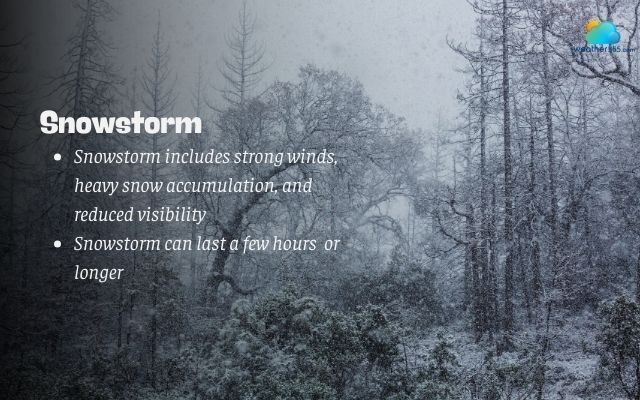
Features of a snowstorm
Several snowstorms in history have caused severe damage and loss of life.
For example, the Great Blizzard of 1888 in the United States brought over 40 inches of snow to parts of the Northeast, paralyzing cities for days.
More recently, Winter Storm Jonas in 2016 dumped record-breaking snow across the East Coast, affecting millions of people and causing significant economic losses.
Some major winter storms are tied to large coastal systems. If you want to understand how a nor’easter compares with a hurricane in formation and impacts, see What’s the difference between a nor’easter and a hurricane.
What is a blizzard?
A blizzard is a severe winter storm characterized by strong, sustained winds and heavy snowfall, leading to extremely low visibility.
In a blizzard, intense winds can reach at least 35 mph or 56 km/h and visibility is very low (less than ¼ mile) for an extended period.
Blizzards bring heavy snow, strong winds, and often bitterly cold temperatures.
The blowing and drifting snow drastically reduce visibility, sometimes leading to “whiteout” conditions where it’s nearly impossible to see or travel safely.
Power outages, road closures, and stranded travelers are common during these storms.
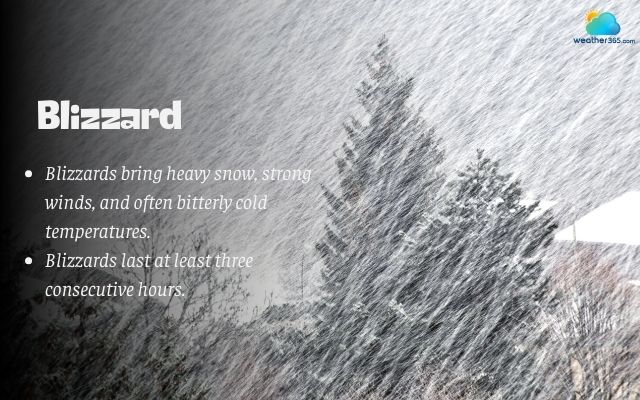
Features of a blizzard
For a storm to be classified as a blizzard, the harsh conditions must last at least three consecutive hours. However, some blizzards can persist for much longer, with severe impacts on transportation, emergency services, and daily life in affected areas.
Some notable example of hazard blizzard include:
Blizzard of 1888. It buried parts of the northeastern U.S. in snow and claimed hundreds of lives.
Storm of the Century in 1993 impacted over 100 million people across the eastern United States.
Buffalo Blizzard of 2022 brought record-breaking snow totals and dangerous conditions to western New York.
Difference between snowstorm and blizzard
Snowstorms and blizzards are both severe winter weather events, but they differ significantly in intensity and impact.
While snowstorms mainly bring heavy snowfall, blizzards combine snow with powerful winds and low visibility, creating far more dangerous conditions.
Since both snowstorms and blizzards fall under the broader category of winter storms, you may also find this overview helpful: Winter storm.
Here are main differences between them.
Let’s explore!
Wind speeds
Blizzards are far more intense than regular snowstorms.
A blizzard is officially defined by sustained winds or frequent gusts of at least 35 mph (56 km/h), combined with blowing snow that drastically reduces visibility.
In contrast, a snowstorm may bring heavy snowfall but typically has lighter winds below this threshold.
The stronger winds in a blizzard not only worsen visibility but also create life-threatening wind chills and drifting snow. This makes blizzards much more hazardous than ordinary snowstorms.
Snowstorm: Winds are typically lighter, usually below 35 mph (56 km/h).
Blizzard: Winds must be 35 mph (56 km/h) or stronger, creating dangerous blowing and drifting snow.
Snowfall and accumulation
Snowfall is often the most recognized feature of any winter storm.
However, there is no strict snowfall requirement to classify a storm as either a blizzard or a snowstorm.
The amount of snow that falls during the event can vary, but it plays a different role in each case.
Here is common difference between them in snowfall and accumulation.
Snowstorm: Heavy snowfall is the main feature, often 2–4 inches or more within 12 hours.
Blizzard: Snow amounts may be moderate or heavy, but wind and visibility define a blizzard rather than snowfall totals alone
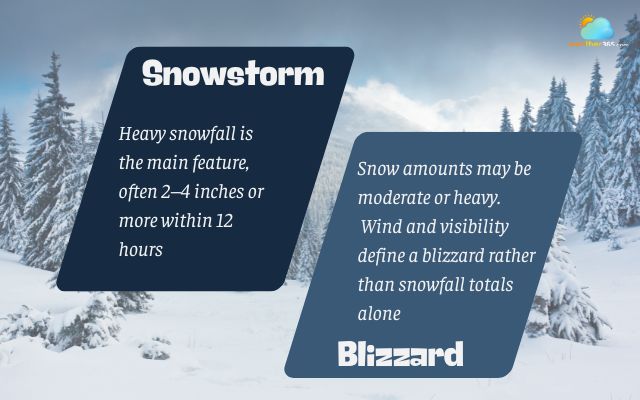
Compare snowfall and accumulation between snowstorm and blizzard
Visibility
When wind and snow combine, visibility drops dramatically, especially during blizzards where it can fall to a quarter-mile or less.
Factors like wind speed, snowflake size, and moisture levels can reduce visibility by up to ten times.
While snowstorms refer broadly to any snowfall event, blizzards are more severe, bringing intense winds, heavy snow, and hazardous conditions that can cause property damage, blackouts, and life-threatening risks.
Snowstorm: Visibility may decrease, but typically stays above ¼ mile unless snow is hefty.
Blizzard: Visibility falls to ¼ mile or less, creating dangerous whiteout conditions.
Snow squalls can create near-whiteout conditions in a very short time, even when total snowfall is not extreme. See What is a snow squall.
Duration
Snowstorm can vary widely in length, lasting anywhere from a few hours to over a day depending on weather patterns.
Blizzards, on the other hand, have stricter criteria for duration and must persist for at least three consecutive hours with strong winds and heavy snow.
Many blizzards last longer, sometimes stretching over an entire day or even more if conditions remain severe.
While both can disrupt travel and daily life, blizzards typically have a longer-lasting and more dangerous impact due to the combination of wind, snow, and reduced visibility.
Snowstorm: Can last a few hours to a full day, depending on storm strength.
Blizzard: Must last 3 hours or longer with strong winds and low visibility to meet official criteria.
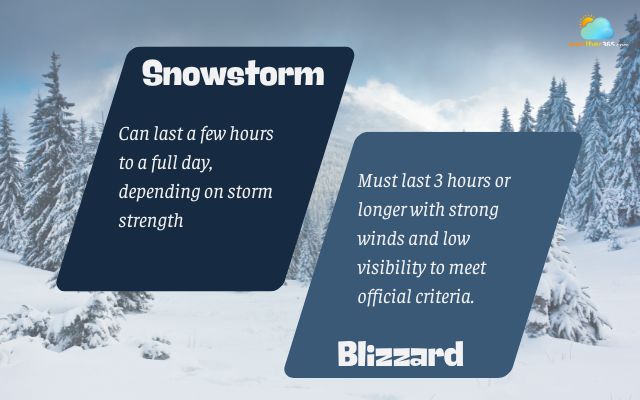
Duration of a snowstorm and a blizzard
Temperature
Both snowstorm and blizzard typically occur in cold conditions, but blizzards often bring more extreme cold.
Snowstorms can happen with temperatures just below freezing, sometimes hovering around 32°F (0°C).
Blizzards, however, are usually accompanied by much colder air, with temperatures often dropping well below freezing due to strong winds pulling in Arctic air.
The wind chill during a blizzard can make it feel dramatically colder, increasing the risk of frostbite and hypothermia.
As a result, blizzards pose a greater danger to health and safety compared to ordinary snowstorms.
Snowstorm: Temperatures can vary and may hover near freezing in some cases.
Blizzard: Typically brings colder air and wind chills, often well below freezing, making conditions more dangerous.
The table below summarizes main differences between two hazard winter terms. Have a look.
Aspect | Snowstorm | Blizzard |
Definition | A winter storm with heavy snowfall but no strict wind or visibility requirements. | A severe winter storm with heavy snow, winds ≥ 35 mph, and visibility ≤ 0.25 miles for at least 3 hours. |
Wind Speeds | Generally lighter winds, below 35 mph. | Strong, sustained winds or frequent gusts ≥ 35 mph. |
Snowfall Accumulation | Often 2–4 inches or more within 12 hours | Also brings heavy snow, often combined with blowing and drifting snow. |
Visibility | Visibility may be reduced by snow but no strict standard. | Visibility ≤ 0.25 miles due to wind-driven snow and blowing snow. |
Duration | Can last for several hours or even days. | Must last at least 3 hours to meet the blizzard definition. |
Temperature | Cold conditions, often below freezing. | Usually colder, with dangerous wind chills due to high winds. |
Severity | Can disrupt travel and daily activities. | Poses life-threatening risks and can cause major damage and outages. |
Closing thoughts
You’ve known the difference between snowstorm and blizzard. While both storms bring heavy snowfall, blizzards are far more intense, with stronger winds, lower visibility, and harsher conditions that can last for hours. Recognizing these distinctions helps you prepare better, minimize risks, and respond effectively when extreme winter weather strikes.
Frequently Asked Questions (FAQs)
◉ Whiteout conditions
◉ Strong winds cause snowdrifts
◉ Increased risk of diseases like hypothermia and frostbite.
Related post
What's the difference between a nor'easter and a hurricane? Full explained
 1633
1633
 8
8
 4.8
4.8
 01/04/2026
Power outage safety tips: What to do Before - During - After a blackout
1564
8
4.9
28/04/2026
Extreme Cold Weather Tips: Best Ways to Stay Safe in Severe Conditions
1472
8
4.8
28/04/2026

8 Comment
Haven Brooks
So a snowstorm can become a blizzard if the wind picks up enough?
weather365
Exactly. Heavy snow alone doesn't make a blizzard; strong winds and prolonged low visibility are what set it apart.
Lyla Phillips
The Great Blizzard of 1888 must have been an unbelievable event. Over 40 inches of snow!
Lia Butler
Can you have a blizzard without a huge amount of new snowfall?
weather365
Yes. There is no strict snowfall requirement. Blowing snow and reduced visibility are key to the classification.
Morgan Parker
35 mph winds with blowing snow sounds terrifying, especially while driving.
Leilani Brooks
What actually makes a snowstorm a blizzard?
weather365
A blizzard needs winds of at least 35 mph, very low visibility, and those conditions must last for at least three hours
Leave a comment
Your email address will not be published. Required fields are marked *