




What Is Graupel? Differences Between Graupel, Hail, and Sleet


What is graupel and how does it differ from other frozen precipitation like hail or sleet? You may have seen tiny white pellets falling during a winter storm and mistaken them for hail, but that’s actually graupel. Scrolling down and exploring interesting facts about these fascinating tiny snowflakes!
If you want a broader picture of winter weather hazards and storm types, see our Winter storm overview.
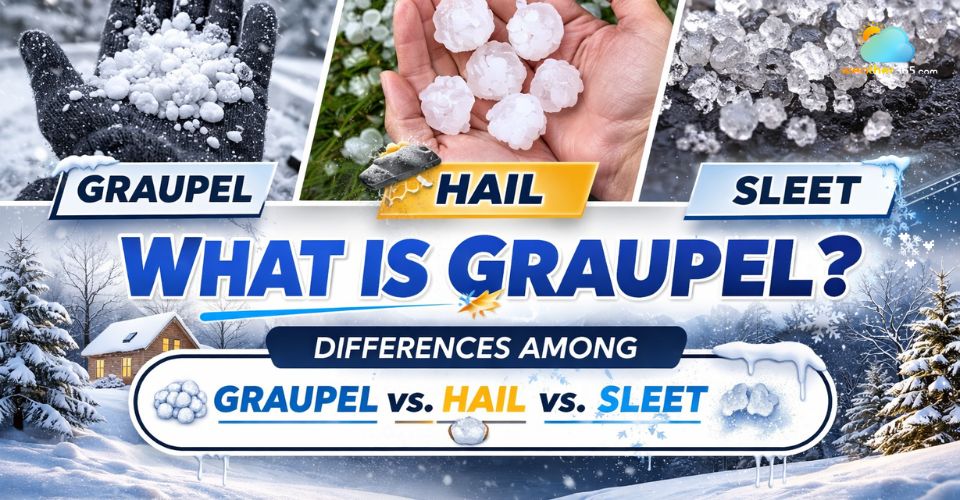
What Is Graupel?
What is graupel?
The term “graupel” comes from the German word Graupel, meaning “soft hail” or “snow pellet.” It refers to the white ice pellets that form when supercooled water droplets freeze onto snow crystals.
These droplets stay liquid even at temperatures below 32°F (0°C).
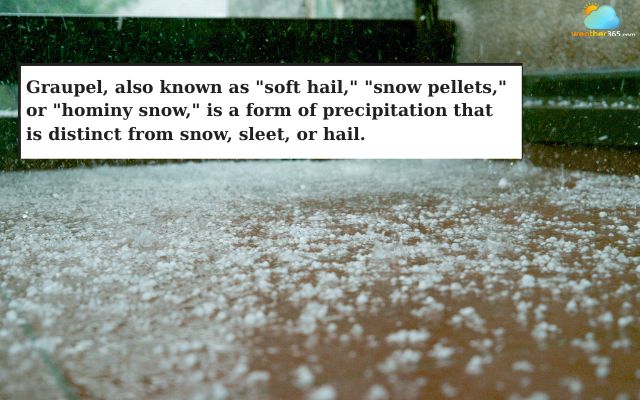
Graupels are small, soft, and white ice pellets
Graupel are soft, small pellets that typically remain under 0.2 inches in diameter. Because they are fragile and loosely packed, graupel disintegrates easily when touched or compressed, unlike solid hailstones.
Commonly called snow pellets or soft hail, graupel is a fascinating in-between form of precipitation that bridges the worlds of snow and hail.
Key features of Graupels
Graupel has several unique physical traits that make it easy to distinguish from other frozen precipitation types.
Appearance: White, opaque, and soft pellets that resemble tiny Styrofoam balls.
Texture: Graupel is fragile and easily crushed between your fingers. This is one of its key differences from the much harder hailstones.
Size: Typically ranges from 2 to 5 millimeters (0.08 to 0.2 inches) in diameter.
Common names: Snow pellets, soft hail, or soft snow hail are the most frequently used alternative terms.
Because of its delicate nature, graupel tends to fall gently rather than bounce or scatter like sleet or hail.
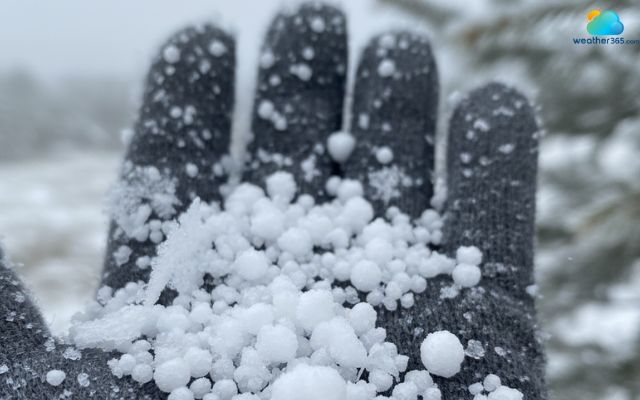
Graupel is fragile and easily crushed
What is graupel formation?
Graupel forms in clouds when supercooled water droplets freeze onto falling snowflakes - a process called riming. It typically occurs during winter storms or in convective clouds, such as those in thunderstorms.
Some fast-moving winter setups can also produce sudden bursts of heavy snow and near-whiteout conditions. Learn more in What Is a Snow Squall?.
However, if the air below the cloud is warm, graupel often melts before reaching the ground.
Here’s a breakdown of how graupel forms:
Snowflakes form: Ice crystals begin to take shape high in the atmosphere.
Supercooled droplets: As the snowflakes descend, they pass through a layer of liquid water droplets that are below freezing temperature (0–32°F).
Riming: The supercooled droplets instantly freeze upon contact with the snowflake’s surface, coating it with ice.
Growth: As riming continues, the snowflake becomes more spherical and dense.
Falling: Once it’s heavily rimed, the snowflake loses its original crystal structure and falls to the ground as graupel.
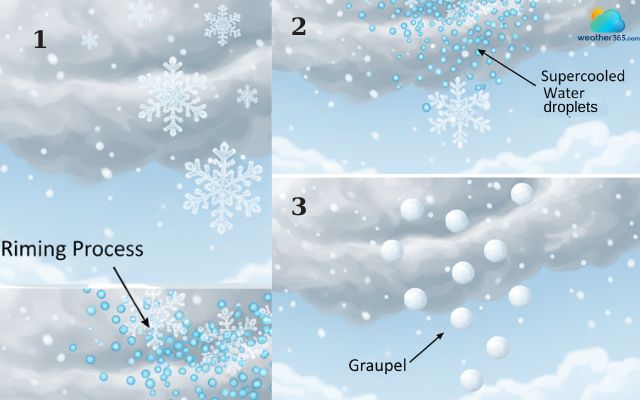
How is graupel formed?
Difference between graupel and other precipitation
People often get confused between graupel and other precipitation, especially hail, ice pellets, or snow.
Since many winter terms get mixed up, it may also help to review the difference between a snowstorm and a blizzard.
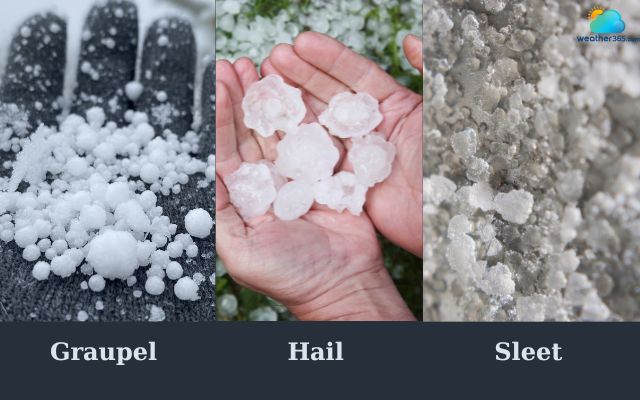
Difference between graupel, hail, and sleet
These precipitation types are quite similar; however, they have distinct features and formation processes:
Hail forms in powerful thunderstorms with strong updrafts, allowing layers of ice to build up, making it much harder and larger than graupel. Hail’s size can exceed 1 inch, and even reach 8 inches to become the largest hail ever recorded.
Sleet (also called ice pellets) results from raindrops freezing on their way down, creating small, hard balls of ice. Sleet’s size often ranges from 1 to 5 mm.
Snow consists of delicate ice crystals that form directly from water vapor. Graupel occurs when snowflakes collect a coating of supercooled water droplets. This process creates soft, white pellets, typically 2 to 5 millimeters wide, with a grainy, frosted texture.
Type | Description | Formation | Texture | Size |
Graupel | Soft, white pellets formed by riming | Supercooled droplets freeze on snowflakes | Soft and crushable | 2–5 mm |
Hail | Hard, layered balls of ice | Strong thunderstorm updrafts | Hard and solid | Can exceed 1 inch |
Sleet | Frozen raindrops | Raindrops freeze before hitting the ground | Hard, bounces on impact | 1–5 mm |
Snow | Ice crystals forming directly from vapor | Deposition (no liquid phase) | Fluffy, crystalline | Varies |
Also read: How does hail form?
Graupel and Avalanches
While graupel looks harmless, it can influence snowpack stability in mountainous regions.
When it accumulates on slopes, graupel can act as a slippery layer that reduces friction between snow layers.
This weak layer can make slopes more prone to avalanches, particularly when new snow falls on top of a layer of graupel.
That’s why mountain weather forecasters and avalanche experts pay close attention to graupel events during the winter season.
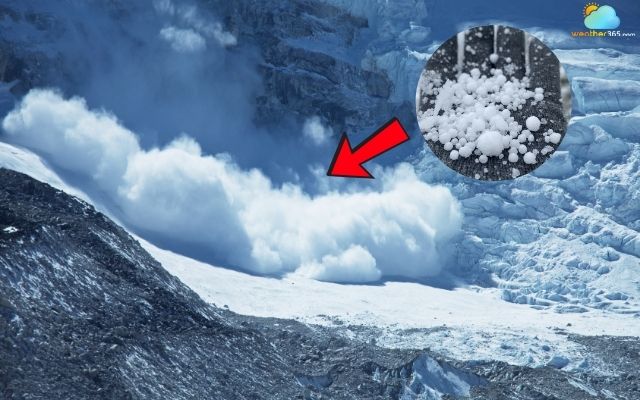
Can graupel become avalanches?
Conclusion
Now you’ve got an answer for what is graupel. It may look similar to hail or sleet, but it’s a unique type of frozen precipitation that forms through the riming of snowflakes by supercooled water droplets. Soft, white, and fragile, it often melts quickly, but it plays an important role in winter weather and even avalanche formation.
Frequently Asked Questions (FAQs)
Related post

What is the difference between snowstorm and blizzard? Full explained
 1495
1495
 8
8
 4.8
4.8
 26/07/2026
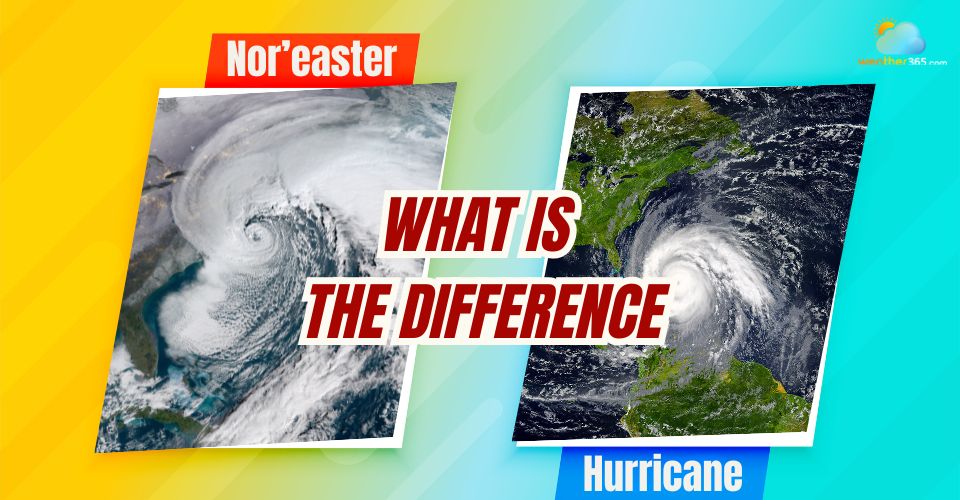
What's the difference between a nor'easter and a hurricane? Full explained
1415
8
4.8
01/04/2026

What Is a Snow Squall? Key Facts and Safety Advice for Drivers
1322
8
4.8
31/03/2026

8 Comment
Briella Collins
Can graupel actually turn into hail?
weather365
Yes. Strong updrafts can carry graupel higher into a thunderstorm, where more layers of ice build up around it and form hail.
Lauren Peterson
Is graupel the same thing as sleet?
weather365
No. Sleet forms when raindrops freeze before reaching the ground, while graupel forms when supercooled droplets freeze directly onto snowflakes.
Summer Watson
Those little white pellets really do look like tiny Styrofoam balls.
Kobe Gill
What exactly makes graupel different from hail?
weather365
Graupel forms when supercooled water droplets freeze onto snowflakes, so it stays soft and easy to crush. Hail forms through strong thunderstorm updrafts and becomes much harder.
Everett Jackson
I’ve definitely seen graupel before, but I always thought it was tiny hail.
Leave a comment
Your email address will not be published. Required fields are marked *