




What Is a Snow Squall? Key Facts and Safety Advice for Drivers


What is a snow squall, and why does it cause so much chaos on the road in just a few minutes? You might have heard the term during winter weather alerts but weren’t sure how it differs from a regular snowstorm. In this post, we will break down exactly what a snow squall is, why it’s so dangerous, and how you can stay safe when one suddenly hits.
What Is a Snow Squall?
What is a snow squall?
A snow squall is a short, intense burst of heavy snowfall and gusty winds that dramatically reduces visibility and creates dangerous “whiteout” conditions.
Unlike a snowstorm, which can last for hours or even days, a snow squall is brief but violent, typically lasting less than an hour.
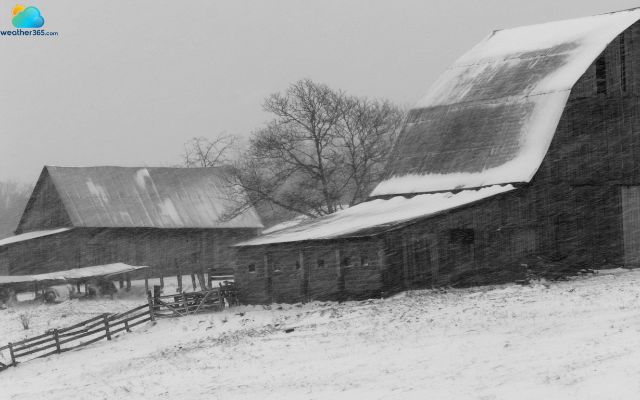
Snow squall can create “whiteout” conditions
Key characteristics of a snow squall include:
Sudden and intense: They start and end abruptly. Visibility can drop from clear conditions to near zero within minutes.
Heavy snowfall: The snowfall rate is extremely high, quickly covering roads.
Strong winds: Gusty winds blow snow around, worsening visibility and making it hard to control a vehicle.
Brief duration: Most squalls last only 30–60 minutes, with skies clearing shortly afterward.
Localized: They often affect small areas rather than entire regions.
Winter precipitation can show up in different forms. If you’ve ever noticed soft, pellet-like ice that looks like tiny snowballs, learn more in What is graupel.
Difference between a snow squall and a snowstorm
The main difference between a snow squall and a snowstorm lies in duration, scale, and suddenness.
What is the difference between a snow squall and a snowstorm?
Duration and scale
Snow squall: Very short, usually 30–60 minutes. Affects a small, localized area.
Snowstorm: Can last for many hours or even days. Covers a much larger region.
Suddenness and intensity
Squall: It arrives quickly. Visibility can drop to near zero in minutes, and strong, gusty winds make driving dangerous.
Storm: It develops more gradually. Brings steady snow that builds up over time. The danger comes from heavy accumulation.
How they form
Squalls: Often linked to fast-moving cold fronts or lake-effect conditions. They are localized and short-lived.
Storms: Usually tied to large low-pressure systems that pull in widespread moisture and cold air.
Warnings and forecasts
Snow squall warning: Issued shortly before a squall hits. Focused on very specific areas.
Winter storm warnings/watches: Issued hours or even days in advance, since storms are easier to track
If you want a broader look at winter storm types, warnings, and common hazards, see our Winter storm overview.
Impact
Squalls: The biggest risk is sudden whiteout conditions and rapid traffic accidents. A snow squall on Interstate 81 in Pennsylvania in March 2022 caused a massive pileup involving dozens of vehicles, leading to fatalities and injuries.
Storms: The main hazard is long-lasting disruption, including deep snow, power outages, and blocked roads. The blizzard of 1978 in the US, for instance, paralyzed the Northeast with several feet of snow, leaving thousands stranded in their homes.
If you’re still not sure what officially separates a snowstorm from a true blizzard, read Difference between snowstorm and blizzard.
Criteria | Snow Squall | Snowstorm |
Duration | Short, usually 30-60 minutes | Long, from several hours to multiple days |
Affected Area | Localized, small area | Wide, can cover entire regions or multiple states |
Snow and Wind Intensity | Very high in a short time; strong gusty winds | Continuous snow, moderate or strong winds over a longer period |
Visibility | Drops rapidly to near zero, creating whiteout conditions | Decreases gradually; poor visibility, but not sudden |
Formation Cause | Fast-moving cold fronts or lake-effect snow | Large low-pressure systems bring widespread moisture and cold air |
Warnings | Snow squall warning: short-term, targeted to specific areas | Winter storm warning/watch: issued hours or days in advance |
Real-Life Impact | Sudden traffic accidents due to whiteout; rapid road icing | Long-lasting disruptions: power outages, school closures, heavy snow accumulation |
Why are snow squalls so dangerous?
Snow squalls are most prevalent during the winter months, especially from November through March.
In Western Montana, for instance, 74 snow squall events were recorded between 2000 and 2020, with wind gusts reaching 26 knots (30 mph) and visibility dropping to less than 0.8 kilometers (0.5 miles).
It is estimated that snow and sleet are responsible for an average of 210,341 car accidents and nearly 740 fatalities over a ten-year period.
You may wonder why snow squalls are so dangerous, then here’s why:
Sudden whiteout conditions: Visibility can drop to zero in seconds, making it impossible to see the road or nearby vehicles.
Rapid onset: They form quickly along strong cold fronts, often without much warning.
Icy roads: Snow and falling temperatures rapidly create slick, icy surfaces.
High winds: Strong gusts make steering and controlling a vehicle even harder.
Accident risk: The combination of whiteouts and ice often leads to multi-vehicle pileups.
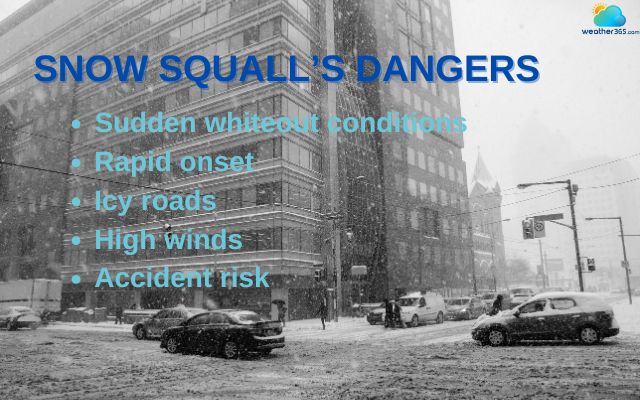
Snow squalls can reduce visibility and create hazardous road conditions
What is a snow squall warning?
A snow squall warning is an urgent alert issued when a brief but intense burst of snow is expected to create dangerous travel in a very short time.
Unlike regular winter storm warnings, which are announced hours in advance, a snow squall warning is typically issued just minutes before the event.
In 2018, a snow squall warning was first issued as a weather alert by the National Weather Service (NWS) to inform the public of imminent or occurring snow squalls.
The primary goal of a snow squall warning is to alert individuals to rapidly changing weather conditions that can lead to dangerous travel situations.
Snow squalls can cause sudden whiteout conditions, making driving hazardous.
The brief duration and intensity of these events can lead to flash freezes, where wet roads quickly become icy, further increasing the risk of accidents.
According to snow squall warning, individuals are advised to:
Avoid travel if possible until conditions improve.
Reduce speed and increase following distance if driving is necessary.
Use headlights to increase visibility.
Stay informed by monitoring local weather updates and alerts.
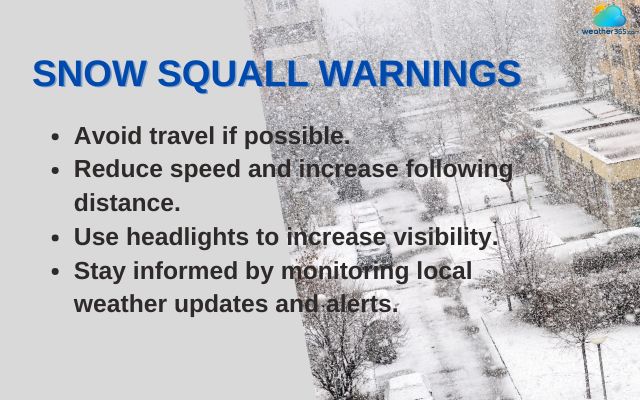
Follow the snow squall warnings to stay safe
Stay safe during a snow squall
Snow squalls are sudden and intense bursts of snow that can create dangerous conditions in a matter of minutes.
To protect yourself and others, it's crucial to take immediate and informed actions when one is imminent.
Check the weather forecast regularly
Stay informed by monitoring weather updates from reliable sources like the National Weather Service (NWS).
Use weather apps, weather sites ( Weather365.com) and NOAA Weather Radio to receive real-time alerts.
This proactive approach allows you to anticipate changing conditions and make timely decisions.
Stay updated with weather forecasts
Delay travel
If a snow squall warning is issued or conditions are deteriorating, postpone non-essential travel.
Snow squalls can reduce visibility and road traction rapidly, making driving hazardous. Waiting until conditions improve can prevent accidents and ensure your safety.
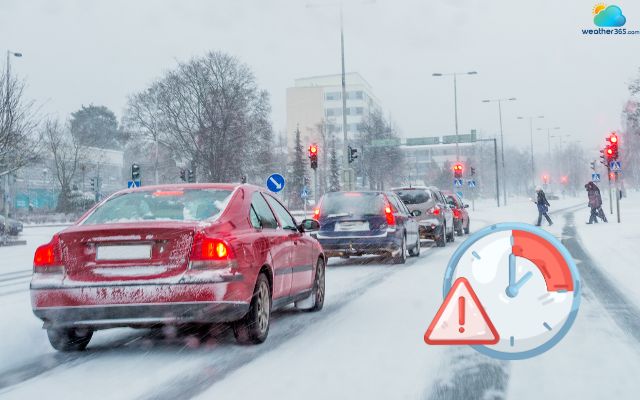
Postpone your travel in case of a snow squall
Enable Wireless Emergency Alerts on your phone
Activate Wireless Emergency Alerts (WEA) on your smartphone to receive timely notifications about snow squalls and other severe weather events.
These alerts provide critical information, helping you respond appropriately and stay safe.
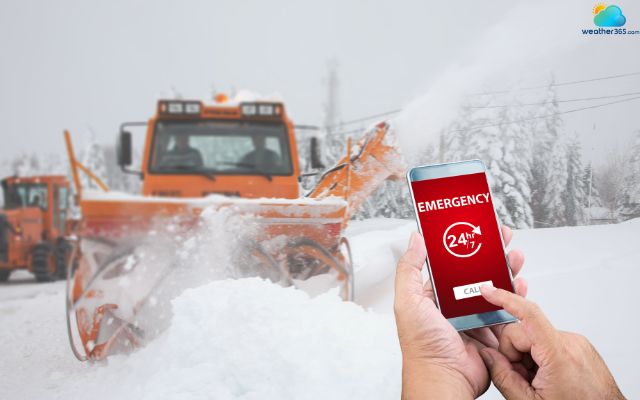
Activate WEA on your smartphone to receive timely notifications
Drive defensively
If you must drive during a snow squall, exercise heightened caution.
Below are several tips you can follow to minimize risks while driving in a snow squall:
Reduce your speed
Increase the following distance
Avoid sudden maneuvers
Use low-beam headlights
Be prepared for rapidly changing conditions and adjust your driving accordingly
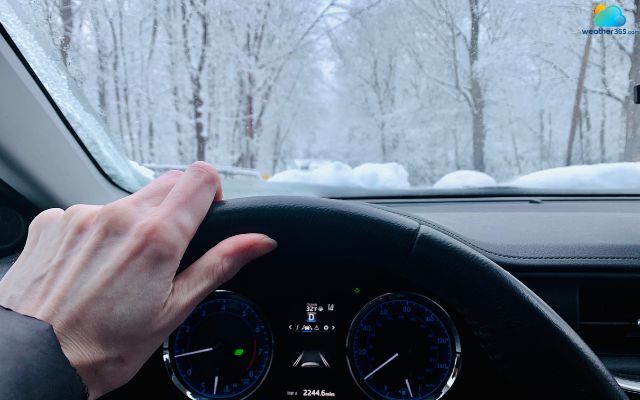
Reduce speed while driving in a snow squall
Stay calm
In the event of a snow squall, remain calm and focused as panicking can impair your judgment and reaction time.
If visibility becomes near zero, calmly pull over to the side of the road, turn on your hazard lights, and remain in your vehicle until conditions improve.
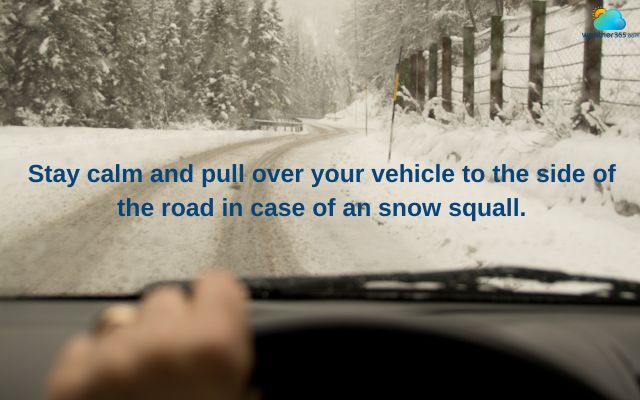
If visibility becomes near zero, pull over safely to the side of the road
Conclusion
In short, what is a snow squall? It is a fast-moving, short-lived but dangerous winter weather event that brings heavy snow, and sudden whiteout conditions. Unlike long-lasting snowstorms, squalls strike quickly, making them especially hazardous for drivers. By staying informed, heeding snow squall warnings, and following safety precautions, you can significantly reduce your risk during these extreme conditions.
Frequently Asked Questions (FAQs)
Related post
What is the difference between snowstorm and blizzard? Full explained
 1546
1546
 8
8
 4.8
4.8
 26/07/2026
Extreme Cold Weather Tips: Best Ways to Stay Safe in Severe Conditions
1473
8
4.8
28/04/2026
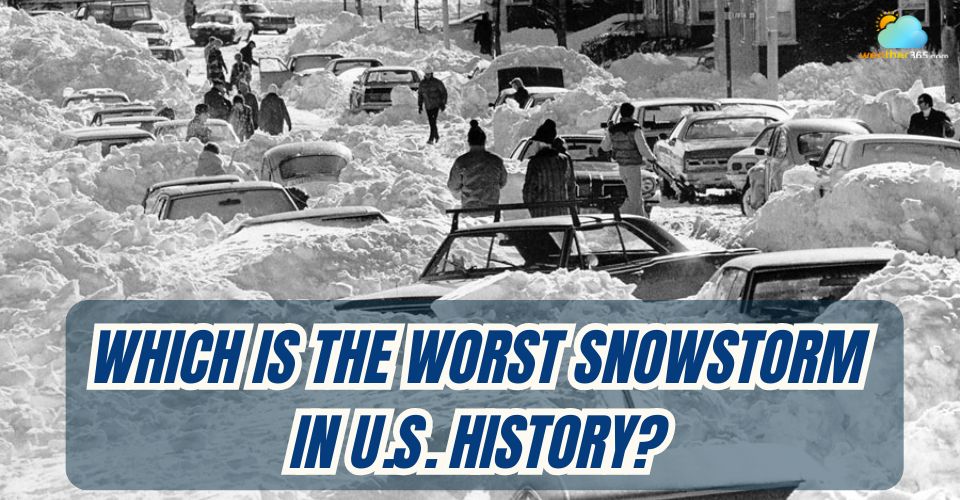
Worst snowstorm in U.S. history: Dates, Locations, and Record Impacts
1265
8
4.7
01/04/2026

8 Comment
Adalyn Carter
Why are snow squalls especially dangerous on highways?
weather365
The sudden drop in visibility and rapid road icing can leave drivers with almost no time to react.
Brynn Webster
Is a snow squall basically a mini snowstorm?
weather365
Not exactly. A snow squall is much shorter and more localized, but it can be extremely intense for a brief period.
Jensen Wright
The fact that they can start and end so suddenly makes them really dangerous for drivers.
Heidi Stokes
How long does a snow squall usually last?
weather365
Most snow squalls last around 30–60 minutes, although the conditions can change very quickly.
Nico Johnston
I never realized a snow squall could reduce visibility to almost zero within minutes.
Leave a comment
Your email address will not be published. Required fields are marked *