




Difference Between Thunder and Lightning: What Truly Tells Them Apart?


What is the difference between thunder and lightning? These two natural phenomena often appear together during a thunderstorm, but they are not the same. Learn about how lightning forms, why thunder follows, and the key differences between them in this post. Through that, you can clear up common misconceptions and have practical knowledge to stay safe during severe weather. Now let’s start!
What is the difference between lightning and thunder
- What is Lightning?
- How Lightning Forms
- Building Cloud Charges
- Formation of an Electric Field
- The Lightning Strike
- Different Types of Lightning
- What is Thunder?
- How Thunder Forms?
- Extreme Heat from Lightning
- Sudden Air Expansion
- Shock Wave
- Why Thunder Sounds Different?
- Difference between Thunder and Lightning
- Why We See Lightning Before Hearing Thunder?
What is Lightning?
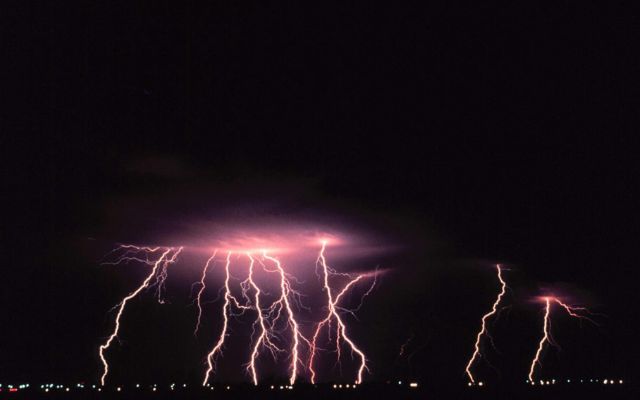
Lightning is a sudden flash of electricity in the sky, usually during a thunderstorm.
It happens when electrical charges inside a cloud, or between a cloud and the ground, build up and discharge.
This release of energy is extremely powerful and can be really dangerous.
More about the dangers of lightning here!
What is Lightning?
To truly understand the difference between thunder and lightning, it is important to explore what lightning is, how it forms, and the different types it can take.
How Lightning Forms
Lightning may look simple, but behind that flash is a complex process inside the storm cloud. Below are the key stages that explain how it forms.
Building Cloud Charges
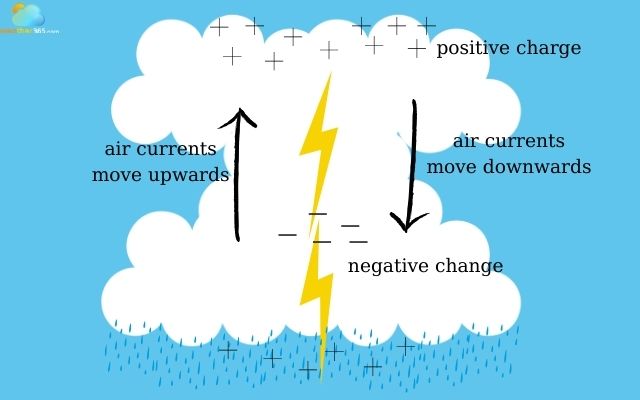
A thunderstorm causes warm, humid air to climb swiftly. When tiny drops, ice crystals, and hail collide with one another as they lift, the first spark of electrical activity is ignited.
These collisions work like rubbing materials together, producing static electricity. Small, lightweight ice crystals tend to gain positive charges, while larger particles like graupel (soft hail) become negatively charged.
The ice crystals that are positively charged are pushed to the top of the cloud by strong updrafts. Meanwhile, the heavier, negatively charged particles sink to the bottom. This separation sets the stage for lightning.
Formation of an Electric Field
Since the top of the cloud has positive charges and the bottom has negative charges, an electric field that goes all the way down to the ground forms inside the cloud.
Air normally resists the flow of electricity, acting as an insulator. But when the charge difference becomes too great, the air can no longer hold it back, and a discharge is triggered.
How Lightning Forms
The Lightning Strike
A narrow stream of negative charge, called a stepped leader, moves downward from the cloud in a branching, zigzag pattern.
Meanwhile, positive charges rise from tall objects such as trees, buildings, or antennas. These upward channels, called streamers, try to connect with the descending leader.
When the two paths meet, electricity rushes through the completed channel. The massive surge of current moves upward, creating the brilliant flash of light we see as a lightning bolt.
Different Types of Lightning
Not all lightning looks or behaves the same. Depending on where the electrical discharge happens, scientists classify lightning into several main types.
Here are the four most common ones:
Lightning Within a Cloud (Intra-cloud)
This is the type you see most often during a storm.
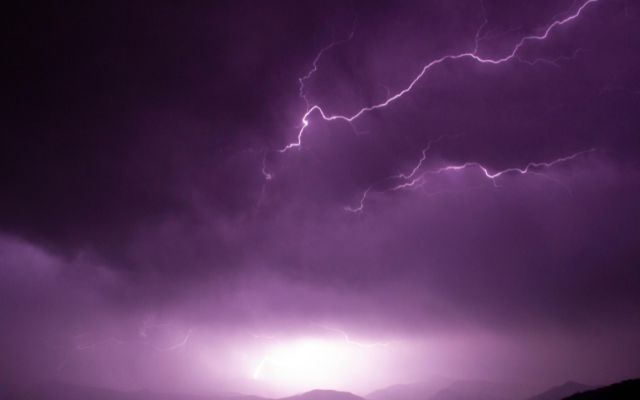
The discharge takes place inside a single cloud, jumping between the positively and negatively charged regions. It lights up the cloud but usually does not touch the ground.
Intra-cloud lightning
Lightning Between Clouds (Cloud-to-cloud)
Sometimes the electrical charge travels from one cloud to another.
This creates a flash that stretches across the sky, connecting different storm systems.
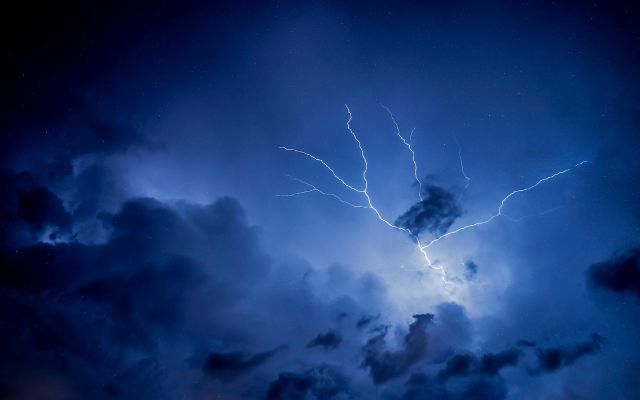
Cloud-to-cloud
Lightning Striking the Ground (Cloud-to-ground)
This is the most well-known form of lightning due to its potential to reach the ground and cause damage.
👉 Negative strikes: The usual type, often with a forked appearance.
👉 Positive strikes: Less common but much stronger, capable of causing more damage.
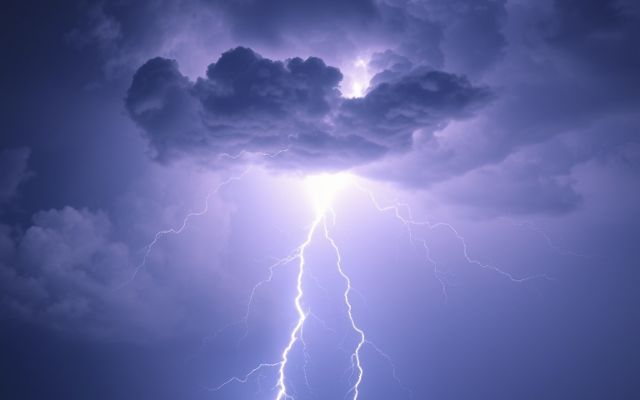
Cloud-to-ground lightning
Lightning Into the Air (Cloud-to-air)
In this case, the electrical current leaps from the cloud into the surrounding air without reaching another cloud or the ground. It appears as a bright branch extending outward into the sky.
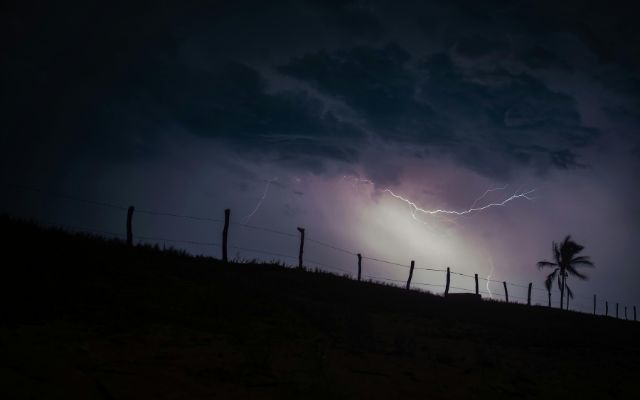
Cloud-to-air lightning
What is Thunder?
In short, thunder is the sound created by lightning.
The air around a lightning bolt can heat up to temperatures much higher than the surface of the sun, and this sudden rise causes the air to expand explosively.
That rapid movement produces the rumbling or cracking noise we recognize as thunder.
How Thunder Forms?
Thunder is the loud sound we often hear after seeing lightning. But how exactly did this sound form?
To answer this question, we need to look at what happens to the air when lightning releases its enormous energy.
Extreme Heat from Lightning
A lightning bolt's surrounding air may reach around 30,000°C (~54,000°F) hotter than the surface of the sun.
This sudden temperature rise happens almost instantly, changing the air’s state in a fraction of a second.
Sudden Air Expansion
Because of the extreme heat, the air expands explosively at supersonic speed.
This violent expansion pushes surrounding air outward, much like a shockwave caused by an explosion.
Shock Wave
The air's quick expansion and contraction create strong pressure waves.
These waves travel outward in all directions, and when they reach our ears, we hear them as thunder, sometimes a sharp crack, other times a long, rolling rumble.
Why Thunder Sounds Different?
Not all thunder sounds the same.
Sometimes it is a sharp crack, other times it is a long, rolling rumble.
The difference depends on distance, the shape of the lightning bolt, and even the weather conditions at that moment.
Distance from the strike: Nearby bolts produce sharp cracks, while distant strikes sound like rolling rumbles because higher tones fade out over distance.
Shape of the lightning path: A single straight bolt creates one sharp sound, but branching bolts release multiple shock waves that overlap, leading to a longer rumble.
Weather conditions: Temperature layers, humidity, and inversions in the atmosphere can bend or trap sound waves, changing how loud or long the thunder seems.
Echo and reflection: Sound bouncing off clouds or layers of air can stretch the thunder’s duration, making it roll across the sky.
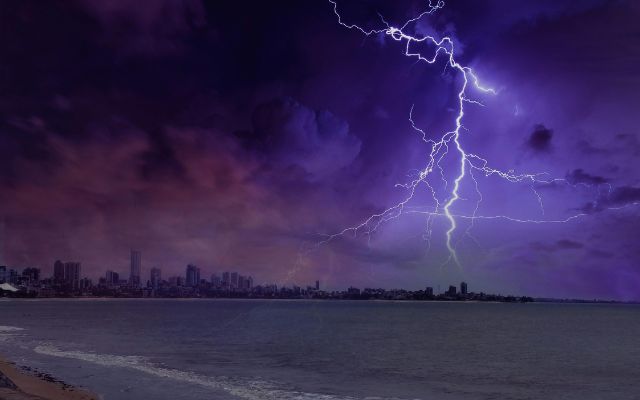
Why Does Thunder Sound Different?
Difference between Thunder and Lightning
Although thunder and lightning always occur together, they are very different phenomena.
While tracking storms on a Georgia live thunderstorm radar, it helps to remember that lightning is the electrical discharge, while thunder is the sound shockwave that follows.
Lightning is the brilliant electrical flash (the cause), and thunder is the acoustic result (the effect).
The infographic below shows their main differences:
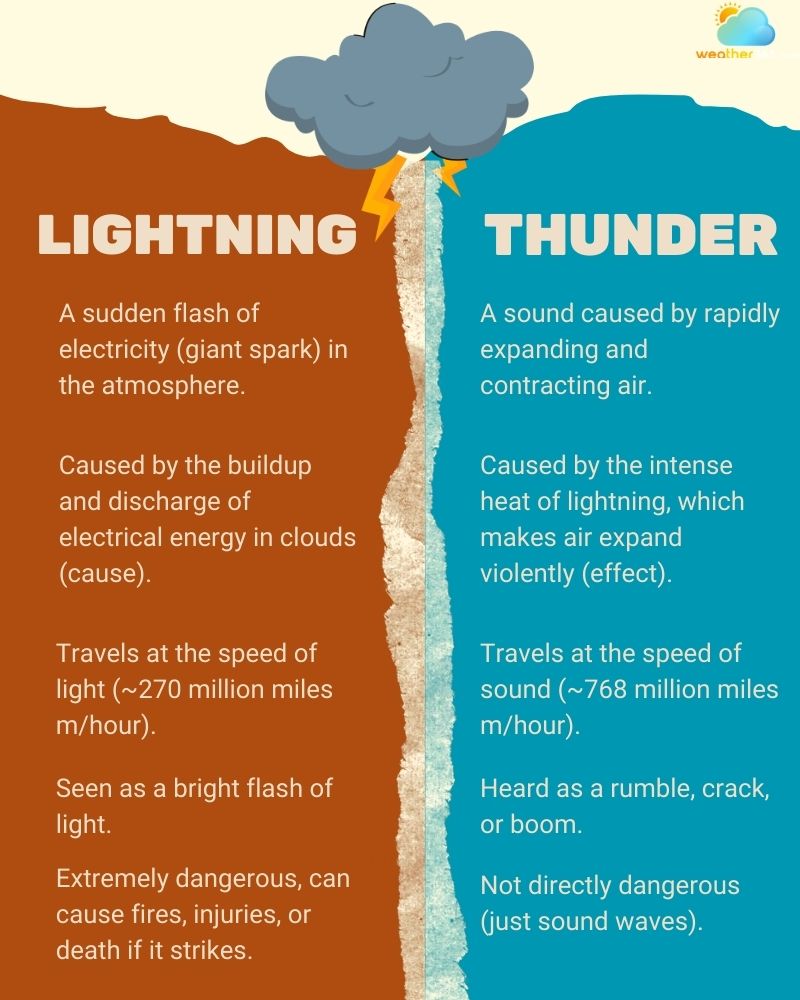
Difference between Thunder and Lightning
Why We See Lightning Before Hearing Thunder?
In fact, during a storm, lightning and thunder happen at the same time.
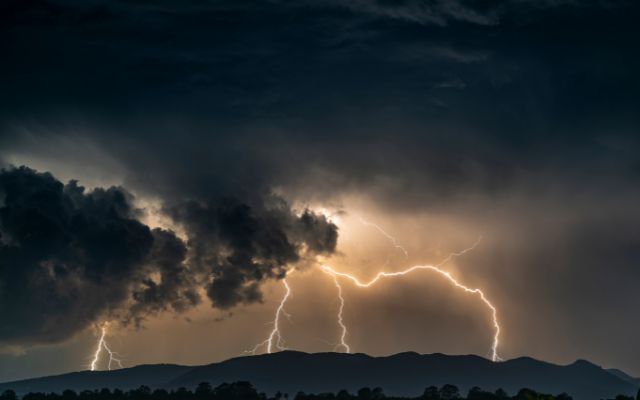
Why We See Lightning Before Hearing Thunder?
However, our eyes catch the flash long before our ears pick up the sound. The reason lies in the difference between the speed of light and the speed of sound.
Light travels incredibly fast, about 300,000 kilometers per second. That means the moment lightning strikes, we see the flash almost instantly.
Sound, on the other hand, moves much more slowly, around 343 meters per second in air. Because of this, thunder takes longer to reach us.
This delay also explains why counting the seconds between a flash and the rumble can help estimate how far away the lightning struck.
Roughly, every three seconds between seeing lightning and hearing thunder equals about one kilometer in distance.
Conclusion
Understanding the difference between thunder and lightning helps us appreciate both the science and the safety behind storms. Lightning is the flash of electricity, while thunder is the sound that follows. By knowing how they work together, we can stay safer during storms and see nature’s power in a clearer way.
Frequently Asked Questions (FAQs)
Related post
Exploring Types of Thunderstorms and Their Unpredictable Impacts
 1687
1687
 8
8
 4.7
4.7
 15/09/2026
What Causes Thunderstorms? Explore the Science Behind Intense Events
1645
8
4.8
15/09/2026
What Is a Supercell Thunderstorm? Key Features and How It Forms
1386
8
4.8
15/09/2026

8 Comment
Gracie Anderson
I always count the seconds between lightning and thunder. It’s a simple way to estimate how far away the storm is.
Kamila Larson
I’ll probably pay more attention to the gap between lightning and thunder now. It’s surprisingly useful during a storm.
Remi Johnson
Does louder thunder mean the lightning is closer?
weather365
Usually, louder thunder can indicate a closer lightning strike, though conditions also affect the sound.
Caroline Nelson
Can lightning happen without thunder?
weather365
Lightning always produces thunder, although it may be too far away for us to hear.
Delilah Gill
Why do we see lightning before hearing thunder?
weather365
Because light travels much faster than sound.
Leave a comment
Your email address will not be published. Required fields are marked *