




Can Lightning Strike Through A Window? Scientific Facts & Life-Saving Tips


Can lightning strike through a window? Many people assume staying indoors keeps them safe - but this might not always be true. Here is what science reveals, and how to protect your family when storms hit. Let’s explore!
Can Lightning Strike Through A House Window?
How Does Lightning Hit a Building?
Before exploring the ways lightning can impact buildings, it is necessary to understand what lightning actually is, how it forms, and its various types.
Learn more about it in our guide on the difference between thunder and lightning.

How Does Lightning Hit a Building?
Lightning can affect structures in three primary ways:
Direct Impact
A direct lightning strike occurs when lightning hits a building's highest point.
Without proper protection, this can lead to fires, structural damage, or electrical hazards.
Lightning rods and grounding systems are designed to safely channel this energy into the ground and eventually minimize the damage.

Direct hit from lightning
Utility Systems
Lightning can also strike nearby utility lines, such as power or telephone lines.
The electrical surge travels through these lines into the building, potentially damaging electrical systems and appliances.
However, it is not likely the case, as now most buildings are equipped with surge protectors to mitigate this risk by diverting excess voltage.
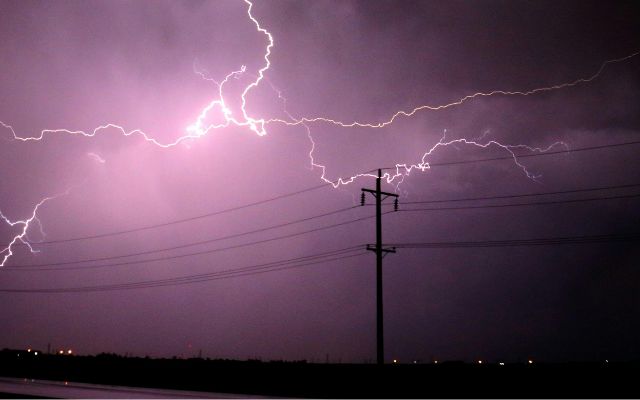
Lightning can strike utility lines
Ground Conduction
When lightning strikes the ground, the electrical current doesn’t stay in one place; instead, it spreads outward in all directions.
A single strike can release up to 300 million volts, and this energy may radiate through the soil for several yards.
With an estimated 40 million cloud-to-ground lightning strikes occurring in the U.S. each year, the risk of this phenomenon is far from rare.
If a building’s foundation is in contact with the ground, the charge can move through buried metal reinforcements, plumbing, or other conductive pathways, eventually reaching the interior.
This process, known as ground conduction, is one of the main reasons lightning can trigger sudden electrical surges inside homes and other structures.

Light strikes the ground
Can Lightning Strike Through A Window?
Yes, lightning can strike through a window, but it is rare. Open windows, metal frames, or nearby strikes increase the risk. Here’s why:
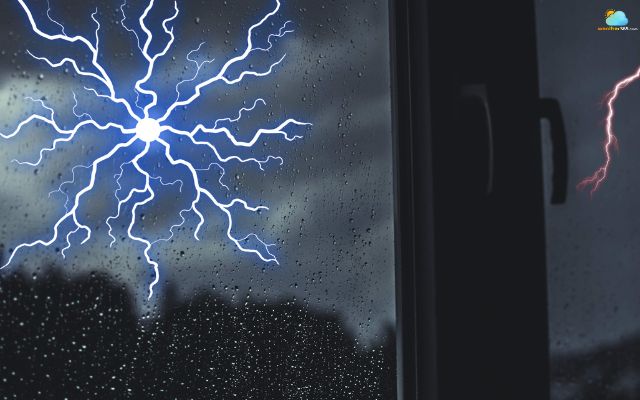
Can lightning strike you through a window?
Is Glass a Conductor or Insulator?
Glass is an excellent electrical insulator, which means that it does not conduct electricity well.
This makes it very rare for lightning to travel directly through a closed window.

Is Glass a Conductor or Insulator?
When Can Lightning Strike Through a Window?
While a direct strike through a closed window is improbable, lightning can still pose a risk:
Open Windows:
An open window provides a direct path for lightning to enter, especially if there is metal nearby.
This increases the risk of a strike.
Closed windows:
Even if the glass stays intact, lightning may still cause damage by traveling through surrounding materials.
The intense heat from a nearby strike can shatter the glass, and if the window frame is metal, the electrical current can travel through it.
Lightning can also generate electrical currents in nearby conductive objects, creating a risk even without a direct strike.

When Can Lightning Strike Through a Window?
During a thunderstorm, keeping windows closed generally makes you safer.
If lightning were to strike a window, it might shatter the glass, but the electrical current would need to hit the exact same spot again to reach you.
While not impossible, such a scenario is extremely rare.
To minimize risk, it is advisable to stay away from windows during thunderstorms, whether they are open or closed.
How to Stay Safe from Lightning Indoors
Staying indoors does not mean that you are completely safe since, as mentioned above, there is still a chance that you are struck by lightning even with a closed window.
Therefore, you should follow the following safety tips:
Avoid standing near open windows, doors, or skylights during a thunderstorm.
Keep your distance from plumbing, heaters, and household electronics during a storm.
Unplug electronics to prevent power surges from nearby strikes.
Follow the 30-30-30 rule: If you see lightning and hear thunder within 30 seconds, stay indoors for at least 30 minutes after the last clap.
Simple precautions dramatically reduce your risk of injury caused by lightning during thunderstorms.
For comprehensive lightning safety tips, drop by the dangers of lightning.
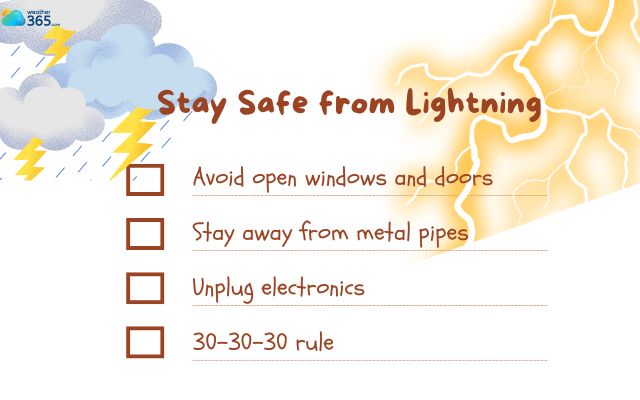
How to Stay Safe from Lightning Indoors
Final Word
Can lightning strike through a window? In short, it is not very likely for this to happen, yet it is not completely impossible. Certain conditions, such as open windows, metal frames, or wet surfaces, may increase the risk of lightning-related damage. Understanding the science behind it and following indoor safety tips will keep you safer during storms.
Frequently Asked Questions (FAQs)
Related post

Difference Between Thunder and Lightning: What Truly Tells Them Apart?
 1383
1383
 0
0
 4.8
4.8
 01/04/2026

What Causes Thunderstorms? Explore the Science Behind Intense Events
1342
0
4.8
29/03/2026

How To Survive a Thunderstorm: Essential Survival Tips for Your Safety
1175
0
4.7
29/03/2026

0 Comment
Leave a comment
Your email address will not be published. Required fields are marked *