




What Is The Highest Recorded Temperature In The World? Shocking Event Revealed


What is the highest recorded temperature in the world, and could humans actually survive it? You might think it’s just a number, but behind it lies a story of extreme environments, scientific debate, and real-world consequences. Diving in to discover!
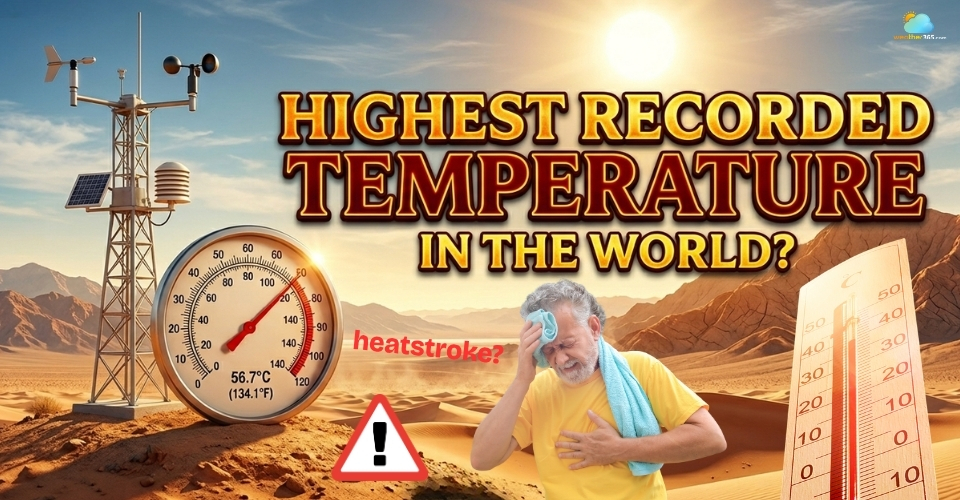
What is the highest recorded temperature in the world?
What Is The Highest Recorded Temperature In The World?
So, what is the highest recorded temperature in the world?
Location: Death Valley, California
Date: July 10, 1913
According to the World Meteorological Organization (WMO), the official record stands at 134°F (56.7°C).
This extreme temperature was recorded on July 10, 1913, at Greenland Ranch in Death Valley, California - a place widely known as the hottest location on Earth.
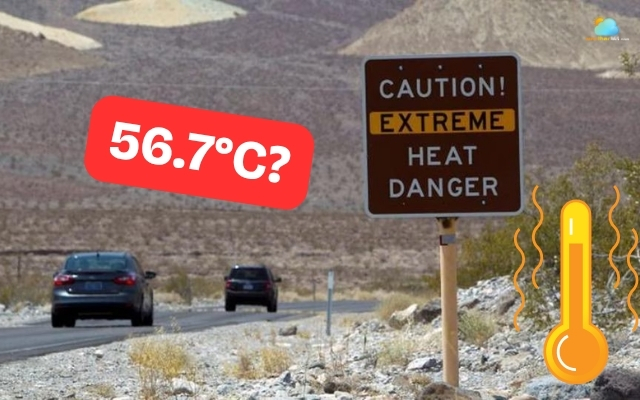
Dead Valley hit the highest temperature in the world
In real-life conditions, what people actually feel can be even more intense due to factors like humidity. That’s called the heat index.
Learn more about this heat index here!
Over the years, scientists have started to question whether this famous 1913 record is completely accurate.
Some modern studies suggest that the measurement may have been influenced by human error or limitations in early weather instruments.
For example, temperature readings from nearby locations on the same day were noticeably lower, which raises doubts about how reliable the data really is.
Because of this, some researchers believe the true highest temperature might be slightly lower than 56.7°C.
More recent measurements in Death Valley and other hot regions have recorded temperatures above 54°C (129°F), which are still incredibly extreme but more consistent with modern data.
Even so, the 1913 record remains officially recognized today because it has not been formally invalidated.
Beyond the debate, what really matters is what temperatures like this mean in real life.

Extreme heat can lead to heat stroke
Heat at this level is not just uncomfortable - it’s dangerous. The human body struggles to cool itself when the air temperature is too high, especially in dry conditions.
Heatstroke can happen quickly, and without proper hydration or shelter, the risk becomes life-threatening.
Extreme heat also affects the world around us. Roads can soften, power systems can become overloaded, and water sources may dry up faster. Plants and animals are pushed to their limits, and entire ecosystems can be disrupted.
Why is the Dead Valley so hot?
Death Valley’s extreme heat is the result of several natural factors working together rather than a single cause.
One of the most important reasons is its low elevation. The valley lies below sea level, which means the air is denser and can trap more heat.
As sunlight heats the ground, that heat gets compressed in the lower atmosphere, making the air even hotter.
The surrounding mountain ranges also play a key role. They act like barriers, blocking cooler air from flowing into the valley.
Instead of circulating, hot air gets trapped and continues to build up throughout the day.
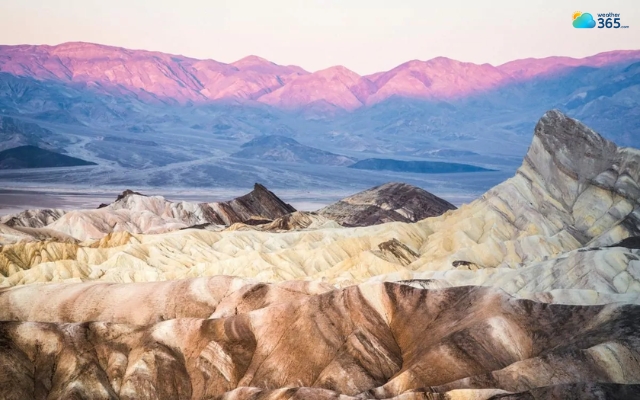
The terrain of Dead Valley
Another factor is the dry desert environment. With very little moisture in the air, there are no clouds to reflect sunlight or provide cooling through evaporation.
The ground absorbs heat quickly and releases it slowly, especially during long summer days with nearly constant sunshine.
All of these elements combine to turn Death Valley into a natural heat basin, where temperatures can rise to extreme levels and stay there.
Could it get hotter?
Even though 56.7°C is the official record, scientists believe temperatures in Death Valley, or similar environments can reach extreme levels again, and perhaps even exceed records.
In recent years, modern measurements have recorded temperatures above 54°C (129°F) in the area.
Official world high heat records on Death Valley California weather show that these readings are considered more reliable because they use advanced instruments and standardized methods.
Some experts argue that these newer values may better represent the true limits of Earth’s heat.
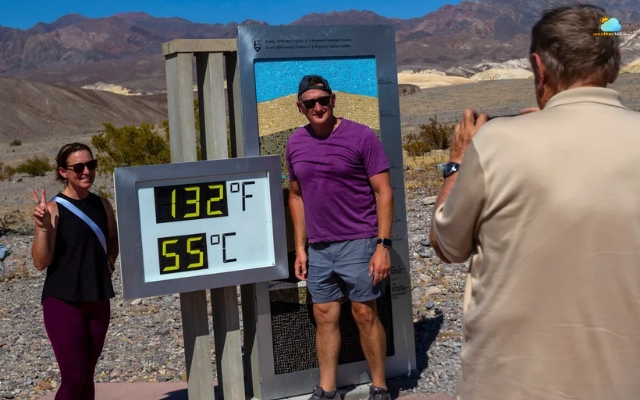
Will we have a new record of heat in Dead Valley?
There is also an ongoing debate about the 1913 record itself. Some researchers suggest it may have been influenced by human error or less accurate equipment.
If that record were ever re-evaluated and adjusted, a more recent temperature could take its place as the highest ever recorded.
Looking to the future, climate change makes things harder to predict. As the planet warms, periods of extreme heat are happening more often and with greater intensity.
While it’s impossible to predict an exact future record, the conditions that create extreme heat are becoming more common in many parts of the world.
What Is The Lowest Recorded Temperature In The World?
If extreme heat shows us one limit of Earth’s climate, extreme cold reveals the other. So, what is the lowest recorded temperature in the world?
Location: Vostok Station, Antarctica
Date: July 21, 1983
The official record is -89.2°C (-128.6°F), measured on July 21, 1983, at Vostok Station in Antarctica.
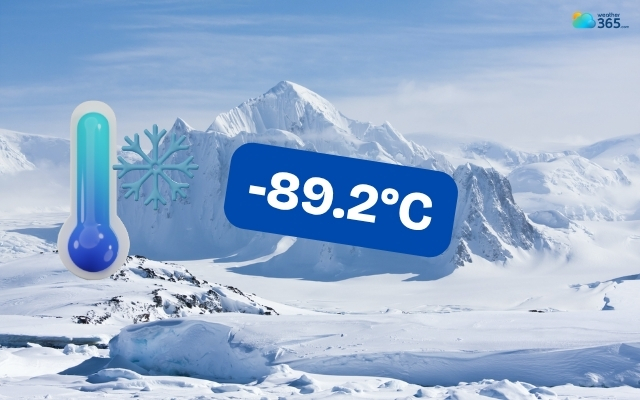
The lowest temperature is recorded in Antarctica
This record has been verified by the World Meteorological Organization (WMO) and remains the lowest air temperature ever directly recorded on Earth.
At this temperature, exposed skin can freeze in seconds, and even breathing becomes difficult without protection.
But to understand why it gets this cold, we need to look at the environment where the record was set.
Discover why Antarctica is so cold and unpack whether it could get much colder in the future here!
How Are Extreme Temperatures Measured?
After exploring both the hottest and coldest temperatures ever recorded, a natural question comes up: how do scientists actually measure extreme temperatures accurately?
Measuring temperature (especially extreme values) requires strict standards and controlled conditions. Without these, the data could easily be misleading or even completely wrong.
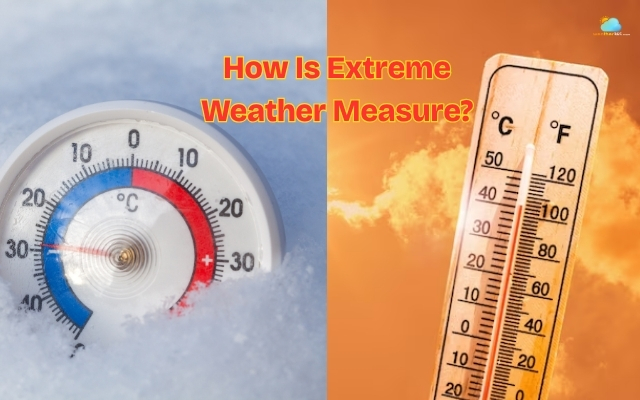
Measuring extreme weather is uneasy
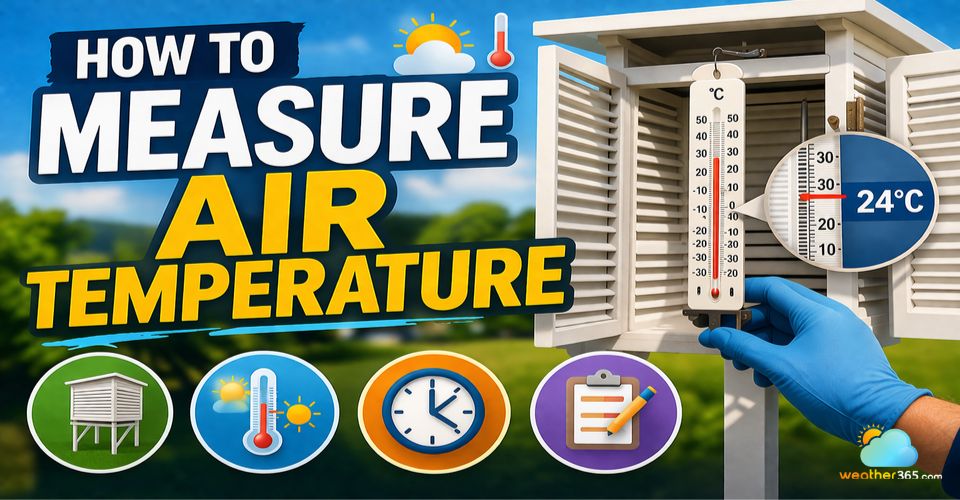
To begin with, temperature is measured using instruments placed inside specially designed shelters called Stevenson screens.
These are specially designed white boxes with ventilation, used to shield thermometers from direct sunlight, rain, and heat coming off the ground.
This setup ensures that what’s being measured is the true air temperature, not heat from surrounding surfaces.
Another important factor is placement.
Weather stations are typically positioned about 1.25 to 2 meters above the ground, over natural surfaces like grass or soil, not concrete or asphalt. This helps avoid artificial heat sources that could distort the reading.
In extreme environments like Death Valley or Antarctica, even small placement differences can lead to noticeable changes in temperature data.
Modern measurements rely on digital sensors and automated systems, which continuously record temperature throughout the day. These systems are far more precise than older tools used in the early 1900s.
That’s one reason why some historical records like the 1913 Death Valley reading are still debated today.
At the same time, organizations like the World Meteorological Organization (WMO) carefully review extreme temperature records before recognizing them.
They analyze not just the number itself, but also the conditions in which it was recorded, such as instrument calibration, observer practices, and consistency with nearby data.
It’s also worth noting that not all temperature readings are considered equal.
For example, satellite data can detect even lower surface temperatures in Antarctica, but these are not officially recognized as air temperature records because they don’t follow the same measurement standards.
If you’re curious about the process in more detail, you can explore our full guide on measuring air temperature, which explains everything step by step in a practical, easy-to-follow way.
Final Thought
What is the highest recorded temperature in the world helps us see the limits of life under extreme heat. Combined with insights into the coldest places on Earth, it paints a complete picture of our planet’s climate and why monitoring these changes matters more than ever.
Frequently Asked Questions (FAQs)
Related post
What's The Temperature For Tomorrow? A Simple Guide to Tomorrow’s Forecast
 565
565
 8
8
 4.7
4.7
 18/08/2026
What Is Air Temperature? Definition, Measurement, and Key Factors
431
8
4.8
18/08/2026
How To Measure Air Temperature? Step-by-Step Guide To Accurate Measurement
305
7
4.9
18/08/2026

8 Comment
Alexis Lindsey
The temperature records are fascinating because they show just how extreme the Earth’s climate can get in certain places.
Demi Barnes
Death Valley really earns its reputation after reading this. That number is almost impossible to picture in everyday life!
Elaina Morris
Is the highest recorded temperature the same as the “feels like” temperature?
weather365
No. The record refers to measured air temperature, while a “feels like” value can also account for factors such as humidity.
Brynlee Briggs
Why can some places reach such extreme temperatures?
weather365
Factors such as intense sunlight, very dry air, geography, and local atmospheric conditions can contribute to extreme heat.
Felicity Carter
What is the highest officially recorded air temperature in the world?
weather365
The officially recognized record is 134°F (56.7°C), recorded at Furnace Creek in Death Valley, California, in 1913.
Leave a comment
Your email address will not be published. Required fields are marked *