




What to do in a dust storm while driving: Essential safety tips for every driver


What To Do in a Dust Storm While Driving? If you’ve ever wondered how to stay safe when visibility drops to zero, this guide has you covered. We will explore smart preparation, critical actions during the storm, and essential safety steps afterward to keep you protected. Let’s dive in!
What to do while driving in a dust storm
How To Prepare Before A Dust Storm
Dust storms are powerful wind events that lift massive amounts of dust and sand into the air, creating sudden drops in visibility and dangerous driving conditions.
If you do not know clearly about how they form, check out our full guide on what is a dust storm.
Because of their unpredictable nature, preparation is your strongest defense.
Follow these steps below to protect you, your passengers, and your vehicle when visibility drops and conditions become dangerous:
Monitor weather alerts proactively
Keep an eye on forecasts from reliable sources (meteorological agencies, weather apps, or local news).
When there is a Dust Storm Advisory or Warning, take it seriously - dust storms often appear suddenly as walls of dust and high winds.
Plan your route and timing
If you know a storm may develop, avoid driving through regions prone to dust storms (like arid zones or open plains).
During the times storms often occur - late afternoon or when thunderstorms produce strong outflow winds, choose alternate roads or delaying travel can reduce risk.
More: What is a haboob
Inspect your vehicle in advance
Make sure brakes, tires, windshield wipers, and headlights are in good condition.
Clean your air filters if needed. A well-maintained car is better able to cope with debris or sudden visibility loss caused by dust.
Use cabin settings to limit dust intrusion
If your vehicle has air conditioning or ventilation modes, switch to “recirculate” rather than pulling outside air in.
This helps reduce how much dust enters the passenger compartment, which improves comfort and visibility inside the car.
Prepare emergency supplies
Keep essentials on hand: water and “emergency hydration,” a flashlight, clean towels or cloths for wiping windows, a first-aid kit, and a fully charged phone or communication device.
In case you need to wait it out or become stranded, these supplies matter.
Mental readiness and driving mindset
Before starting your trip, accept that conditions may worsen quickly. Be prepared to slow down or stop.
Stay alert, avoid distractions, and give yourself extra space and time to react.
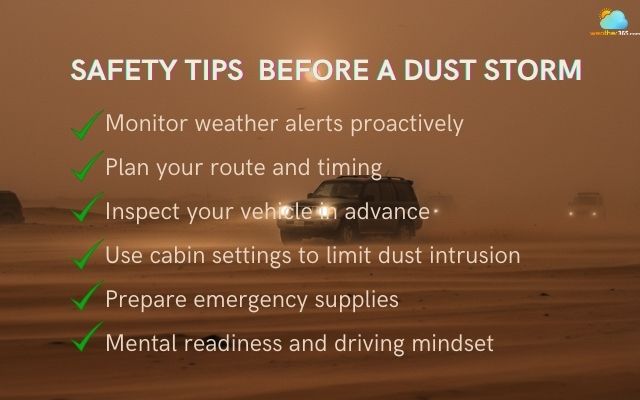
Get ready before a dust storm hits
What To Do In A Dust Storm While Driving
When a dust storm hits while you’re driving, every decision matters.
Here are the steps you should take to maximize safety, reduce risk, and protect yourself and others.
If You Can Safely Pull Over
Check the surroundings first: Look in your mirrors for traffic ahead, behind, and to the sides. Slow down gradually before making any maneuver.
Move completely off the road: Exit the paved or traveled lane; pull as far away from traffic as you can. Avoid stopping in emergency lanes or shoulders where you're exposed.
Turn off all lights: Headlights, taillights, hazard lights, everything. Leaving them on might lead others to follow your lights, thinking you’re still driving, which can cause collisions.
Set the emergency brake and release the foot from the brake pedal: This stops your brake lights from staying on, which could mislead other drivers.
Stay inside and buckle up: Keep the doors closed, windows up, seatbelt fastened. Remaining in the vehicle gives you more protection.
Wait patiently: Do not try to resume driving until you can see well ahead, and the roadway looks clear.
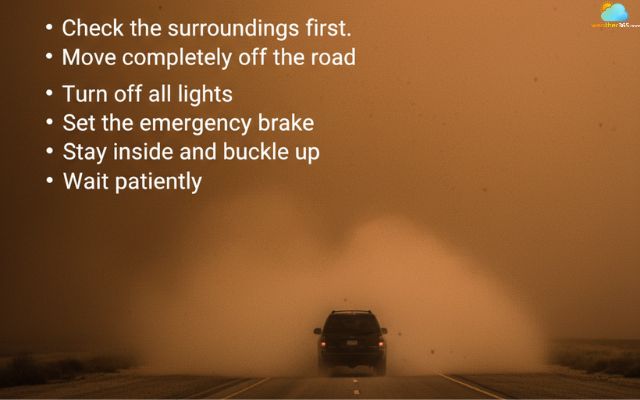
Safety tips to minimize risks in a dust storm while driving
If You Cannot Pull Over Immediately
Reduce speed significantly: Slow down to match how far you can see; driving too fast in low visibility is dangerous.
Use road markings: Follow painted lines, edge lines, or reflectors if visible; these give visual guidance when everything else is blurred.
Make your presence known: Turn on headlights (low beam) or hazard lights if safe, and use your horn occasionally; this helps alert other drivers to your location.
Scan for a safe exit: Keep an eye open for a safe spot to pull off - an exit ramp, rest area, or wide shoulder.
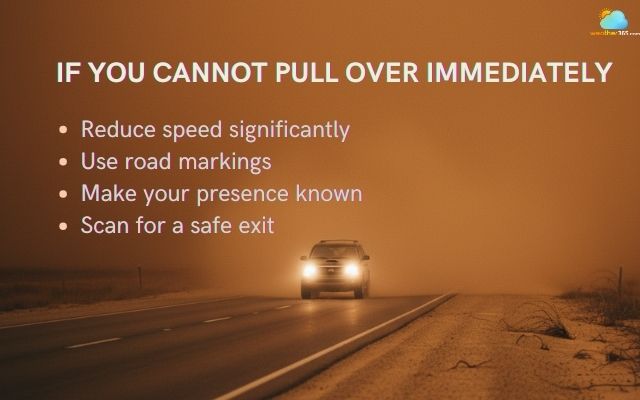
What to do if you can not pull over while driving in a dust storm?
Safety Tips After The Dust Storm
Once the dust settles, danger does not always end immediately.
Taking careful, thoughtful steps after a dust storm ensures your safety, your vehicle’s health, and helps avoid lingering hazards.
Verify road conditions before resuming travel
Use traffic updates, navigation apps, or local alerts to confirm that the road ahead is safe - no debris, no stalled vehicles, no washed-out surfaces.
Visibility may improve, but hazards often remain.
Drive with extra caution
Even after visibility returns, dust, sand, or small debris may still cover the roadway, making surfaces slippery.
Slow down, increase your following distance, and avoid sudden braking or turns.
Inspect your vehicle for damage or buildup
Check air filters, windshield wipers, exterior lights, grilles and engine vents.
Dust can clog vital components, reducing performance or causing overheating. Clean surfaces and replace filters if needed.
Watch for hidden hazards
Fallen branches, rocks, other debris, or even potholes might have been created or exposed by the storm.
Also look out for damp or slick patches if moisture mixed with dust.
Safeguard your health
Dust can irritate eyes, throat, and lungs. Rinse or flush eyes if needed, wash exposed skin, drink water.
If breathing remains difficult, coughing persists, or symptoms worsen, seek medical help.
Be mentally ready & patient
Post-storm situations may involve delays or detours. Give yourself grace. Plan extra time for slow driving or stops.
Your calmness ensures better decisions and safety for you and others.
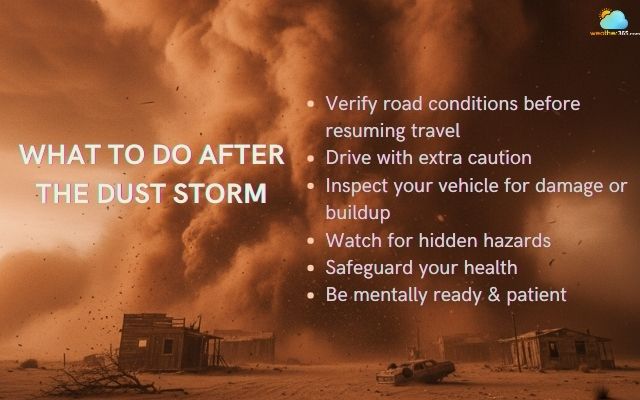
Be careful after a dust storm to ensure your safety
Conclusion
Dust storms are sudden and potentially dangerous. Knowing what to do in a dust storm while driving, from preparing ahead of time to reacting smartly during low visibility to driving safely after the storm, can make the difference between safety and disaster. Stay informed, stay cautious, and above all, stay alive.
For driving in strong crosswinds How to drive in high winds
Frequently Asked Questions (FAQs)
Related post

What Is A Dust Storm? Understanding Its Origins, Health Risks, and Survival Tips
 1294
1294
 0
0
 4.7
4.7
 06/05/2026

What is A Haboob? Exploring the Science, Dangers, and Safety Measures
1282
0
4.9
06/05/2026
What Is Derecho? Discover Definition, Causes, and Safety Tips
1276
0
4.7
06/05/2026

0 Comment
Leave a comment
Your email address will not be published. Required fields are marked *