




What Is A Dust Storm? Understanding Its Origins, Health Risks, and Survival Tips


What is a dust storm? You’ve probably heard the term before, but what does it really mean? Dust storms are more than just windy days with flying dirt. They have unique causes, occur in specific regions, and bring serious challenges to health, travel, and the environment. In this article, we’ll explore how they form, why they matter, and what you should know to stay safe. Diving in!
Browse more Storm guides and Severe Weather hub
What Is A Dust Storm?
- What is A Dust Storm?
- Dust storm statistics
- Difference between dust storm, sand storm, and haboob
- What Causes a Dust Storm?
- Dry conditions
- Strong Winds
- Arid/Semi-Arid Regions
- Where do dust storms most likely occur?
- North Africa - Sahara Dessert
- The Middle East
- Southwest United States - Arizona
- Northern China and Mongolia
- Australia
- Why Dust Storms Are a Serious Problem
- Impact on Health
- Impact on Transportation and Safety
- Environmental and Economic Effects
- Can Dust Storms be Warned?
- Warnings from the National Weather Service (NWS)
- GOES-R Satellite and ABI Technology
- How to Stay Safe During a Dust Storm
What is A Dust Storm?
A dust storm is a weather event that occurs when strong winds lift loose dust and fine soil into the air, creating massive walls of airborne particles. What is a windstorm
These storms are not only impressive in scale but also significant on a global level.
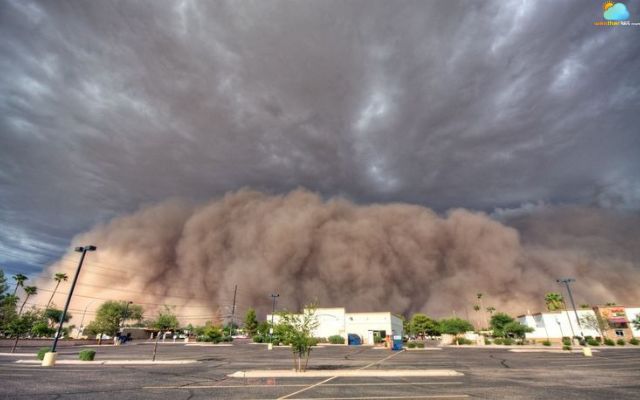
A dust storm near Phoenix, Arizona
Dust storm statistics
Dust storms are not local or rare events. They are massive, recurring phenomena that shape ecosystems, travel across continents, and affect billions of lives:
Around 3.8 billion people worldwide are affected by sand and dust storms each year.
Every year, about 2.000 million tons of dust enter the atmosphere, equal in weight to more than 307 Great Pyramids of Giza.
25% of global dust emissions are linked to human-related activities such as agriculture and land use changes.
Over 80% of the world’s dust originates from deserts in North Africa and the Middle East, making them the largest global sources.
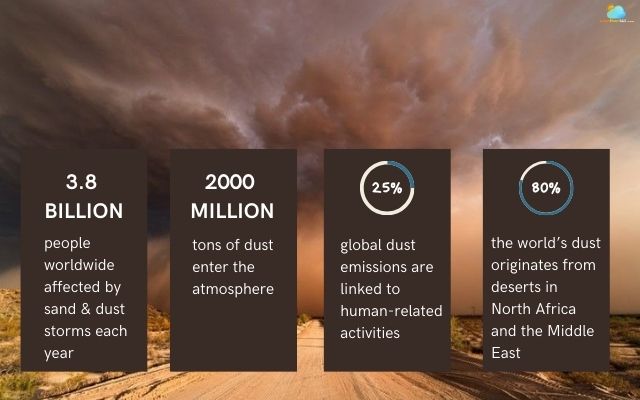
Dust storm statistics
Difference between dust storm, sand storm, and haboob
Although dust storm, sand storm, and haboob are used interchangeably, they describe different phenomena.
The differences come down to particle size, storm formation, and how far these particles can travel.
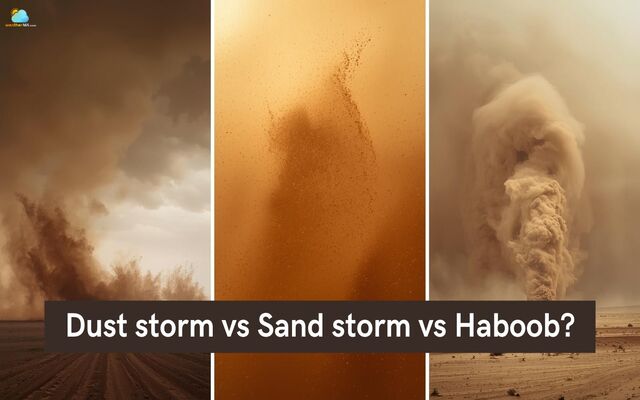
Difference between dust storm, sand storm, and haboob
A dust storm refers to storms made up of very fine dust particles that are light enough to be lifted thousands of feet into the atmosphere.
Because of their small size, these particles can travel vast distances across regions and even continents.
Dust storms can last for hours or days and often reduce visibility over very large areas.
A sand storm, by contrast, involves coarser, heavier particles like sand grains. Since sand is heavier than dust, it usually stays closer to the ground - often below 50 feet in height.
Sandstorms are typically confined to desert areas, where strong winds sweep sand across open landscapes. While they may look dramatic, they generally do not travel as far or last as long as dust storms.
A haboob is a special type of dust storm that develops in association with thunderstorms.
When powerful downdrafts hit the ground, they push air outward, lifting massive amounts of dust and debris into a towering wall that advances rapidly.
Haboobs are most common in Sudan and the southwestern United States, particularly Arizona, and can appear suddenly with little warning.
Feature | Dust Storm | Sand Storm | Haboob |
Main Particles | Fine dust, clay, and soil particles | Coarser sand grains | Dust and soil lifted by thunderstorm downdrafts |
Height | Can reach thousands of feet into the atmosphere | Usually under 50 feet, close to the ground | Towering walls, often thousands of feet high |
Distance Traveled | Can cross entire regions or continents | Limited, usually local to desert areas | Localized, but sudden and intense |
Duration | Hours to days | Typically shorter, less than a few hours | Short but violent, often less than an hour |
Main Regions | Sahara, Middle East, China, Australia, US Southwest | Desert areas like Sahara, Arabian Desert | Sudan, Arizona (USA), parts of the Middle East |
Cause | Strong winds lifting fine particles | Strong winds lifting heavy sand grains | Thunderstorm downdrafts (collapsing storms) |
Visibility Impact | Near zero, large-scale | Near zero but localized | Abrupt, dramatic drop in visibility |
What Causes a Dust Storm?
To understand why dust storm is triggered, we need to look at the core conditions that set them in motion:
Prolonged dryness that loosens the soil,
Strong winds that lift particles into the air,
Vast arid landscapes where little vegetation exists to hold the ground in place.
Dry conditions
Dryness is the foundation of every dust storm.
When the soil lacks moisture, it becomes loose and fragile, making it easier for the wind to lift particles into the air.
In wet environments, water binds soil grains together, preventing them from scattering.
But in hot, dry regions, especially after long droughts, the soil surface often turns into fine dust. Without this dryness, the wind would not be able to carry massive amounts of particles into the sky.
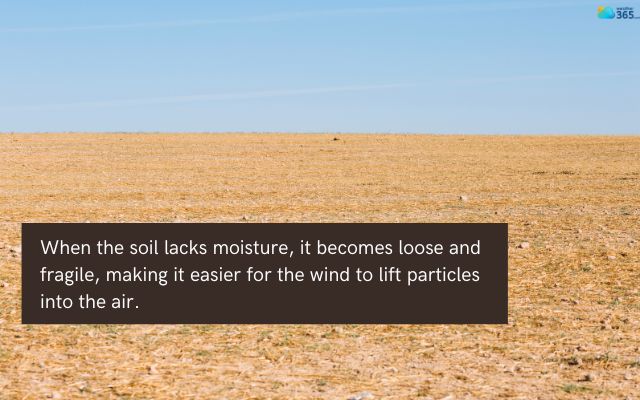
Dryness is the foundation of every dust storm
Strong Winds
Winds are the engine that powers every dust storm. They can develop in two major ways.
The first comes from thunderstorms, where collapsing storm clouds release powerful downdrafts.
When these downward blasts of air hit the ground, they spread outward at high speed, scooping up dust in their path and creating dramatic walls of airborne particles.
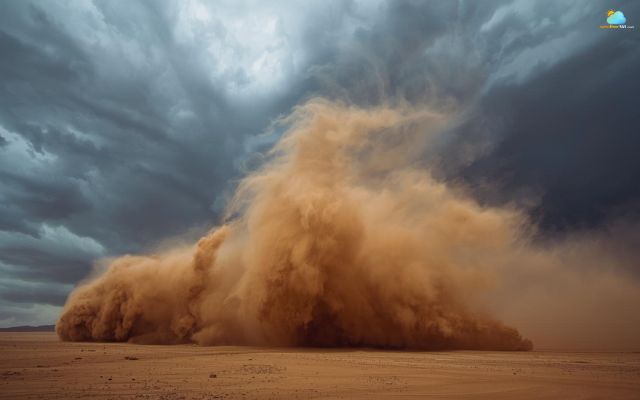
Thunderstorm downdrafts kick up dust and form towering walls.
The second driver is pressure gradients: large differences in air pressure between regions. These gradients generate steady, strong winds across open landscapes, which can strip the soil surface and transport dust far beyond its source.
Arid/Semi-Arid Regions
Geography also shapes where dust storms occur. The world’s deserts and semi-arid regions are natural hotspots because they have little vegetation to hold the soil in place.
Plants normally act as a shield, covering the ground and stabilizing it with roots. In their absence, the soil surface is bare and exposed, leaving it vulnerable to erosion.
Vast areas like the Sahara, the Middle East, and parts of northern China are prime examples. Here, wide stretches of loose soil and sand provide endless fuel for storms whenever strong winds arrive.
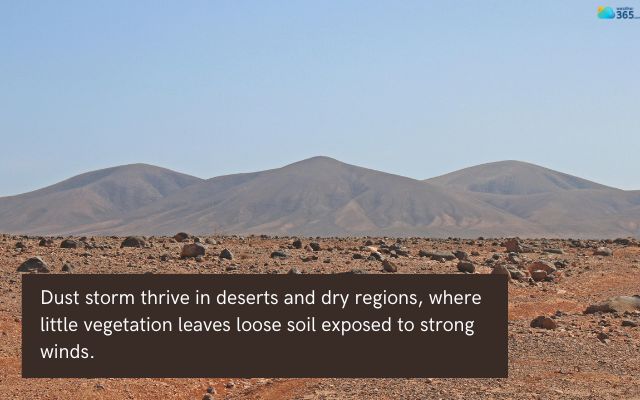
Lack of vegetation leaves soil exposed and fuels massive dust storms
Where do dust storms most likely occur?
Let’s explore the main global hotspots where dust storms are most frequent and intense:
North Africa - Sahara Dessert
The Sahara Desert is the world’s largest and most significant source of dust, accounting for more than half of all global emissions each year.
Scientists estimate that nearly 1,000 million tons of dust rise from this region annually.
Within the Sahara, the Bodélé Depression in Chad is often described as the “dustiest place on Earth,” with storms powerful enough to release up to 700,000 tons of dust in a single day.
These events are fueled by extremely dry conditions and powerful seasonal winds such as the Harmattan, which sweep westward across Africa and even transport particles across the Atlantic Ocean.
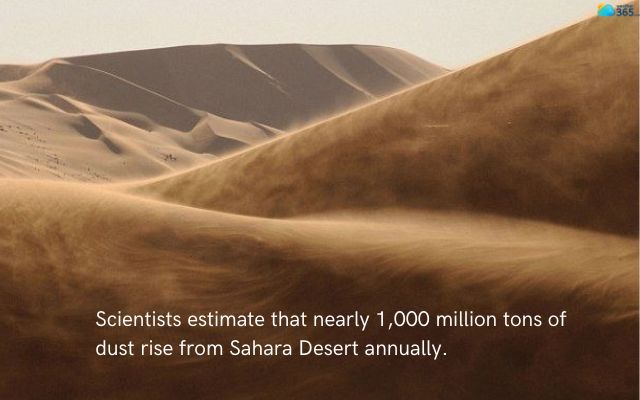
The Sahara Desert is home to a million tons of dust rising each year
The Middle East
The deserts of Iraq, Iran, Saudi Arabia, and Syria form another major dust-producing zone.
In recent decades, the number of storms in this region has risen by an estimated 25 to 30 percent.
This is a change linked to prolonged drought, desertification, and human-driven water shortages.
Also read: Which country has the worst drought?
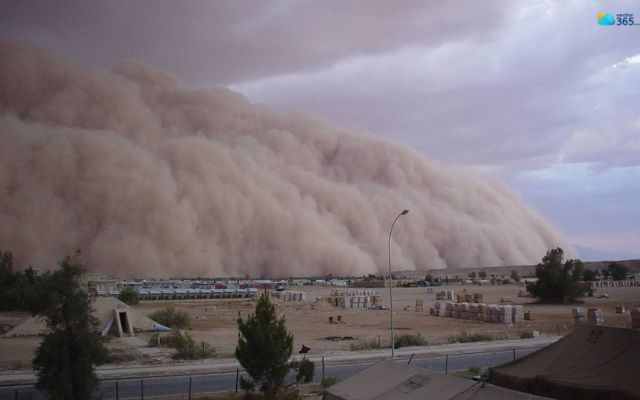
A dust storm in Middle East
Seasonal winds, especially the Shamal winds that blow across the Persian Gulf in summer, frequently stir up massive storms that can blanket entire cities.
Unlike the Sahara, the Middle Eastern problem is compounded by human land use, which has accelerated soil degradation and made the region increasingly vulnerable.
Southwest United States - Arizona
In the American Southwest, Arizona is particularly well known for its seasonal dust storms.
These storms peak during the July to September monsoon season, when collapsing thunderstorms create powerful downdrafts that trigger sudden haboobs.
In places like Phoenix, walls of dust can rise thousands of feet and reduce visibility to nearly zero in a matter of minutes.
The combination of naturally dry desert soil and expanding urban areas - where construction leaves large surfaces exposed, makes Arizona especially prone to these dramatic storms.
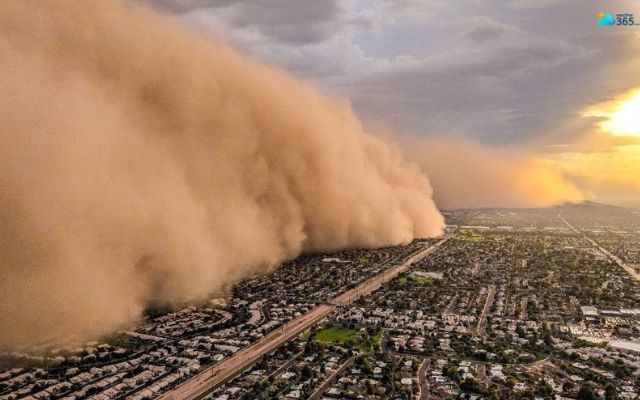
A dust storm in Arizona
Northern China and Mongolia
The Gobi Desert and surrounding dry plains in northern China and Mongolia are another hotspot for dust activity.
Each spring, powerful winds sweep across the region, producing what is often called “yellow dust.”
These storms are strong enough to carry particles thousands of kilometers, affecting air quality in South Korea, Japan, and sometimes even reaching North America.
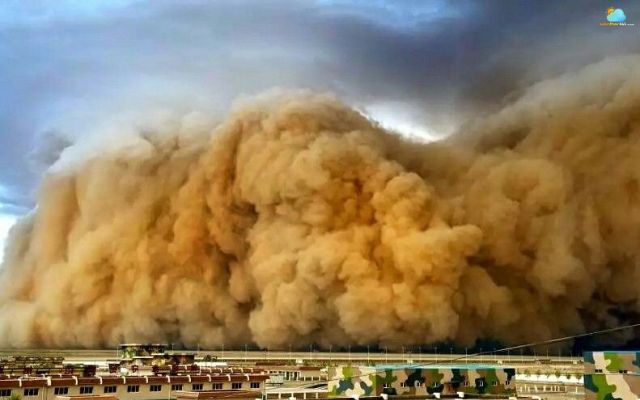
A dust storm hit a village in Golmud in Qinghai Province (China)
In March 2021, Beijing recorded its worst storm in a decade, with particulate matter levels more than 20 times the recommended safe limit.
Overgrazing, deforestation, and land degradation intensify the natural desert conditions, making this region a persistent global dust contributor.
Australia
Dust storms are less frequent in Australia than in Africa or Asia, but when they occur, they can be dramatic.
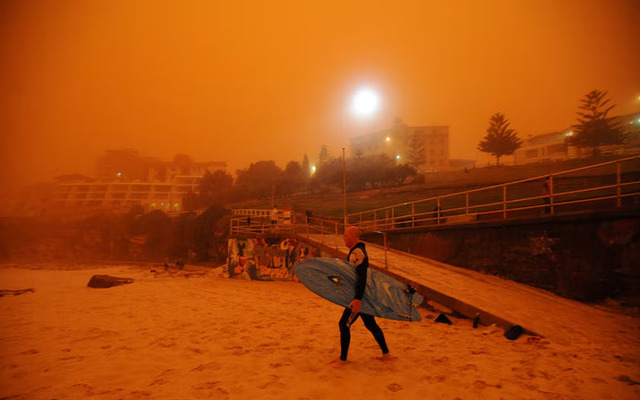
A red dawn storm struck Australia in 2009
Central and western Australia, with its extensive dry lakebeds and desert interiors, are the main sources.
During periods of prolonged drought, massive amounts of dust are lifted and swept eastward toward major cities.
One of the most striking examples was the 2009 “Red Dawn” storm, which carried about 16 million tons of dust and turned the skies of Sydney a vivid red.
Why Dust Storms Are a Serious Problem
Dust storms can make breathing harder, travel more dangerous within seconds, and farmland slowly loses its strength.
Over time, these storms create challenges that touch both people and the environment.
Impact on Health
The fine particles carried in a dust storm are small enough to penetrate deep into the lungs. For people with asthma or chronic respiratory illnesses, this can trigger severe attacks.
Even healthy individuals may experience coughing, eye irritation, or shortness of breath.

Dust storms can result in respiratory-related illnesses
Medical studies show that dust often carries bacteria, fungi, and chemical pollutants, which increase the risk of infections and long-term health issues.
In regions with frequent storms, prolonged exposure is linked to higher rates of bronchitis and other lung diseases.
The invisible nature of these particles makes them particularly dangerous, as people may not realize the extent of harm until symptoms appear.
Impact on Transportation and Safety
On highways, dust storms can drop visibility to near zero in seconds. Drivers caught in these conditions often have little time to react, leading to chain-reaction collisions.
See more: What to do in a dust storm while driving
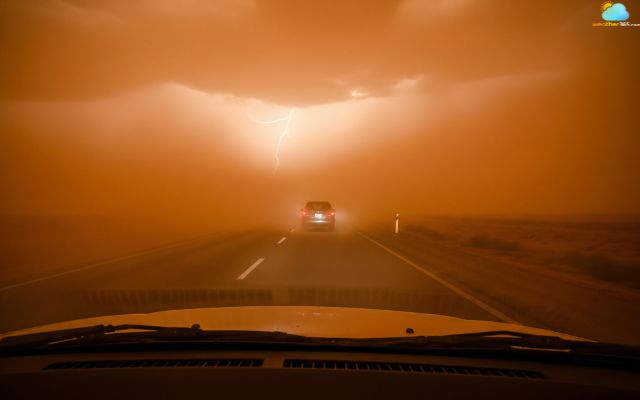
Dust storms can hinder visibility while driving
Arizona, for example, reports multi-vehicle pileups almost every year during its “monsoon season,” when haboobs sweep across major interstates.
Air travel is also affected, as thick dust clouds can ground flights and disrupt schedules for hours or even days.
Apart from the risk of accidents, such disruptions also slow down emergency services, making it harder to deliver medical help or supplies when they are most needed.
Environmental and Economic Effects
The environmental toll of dust storms is just as severe. When winds strip away fertile topsoil, farmlands lose their productivity, forcing farmers to spend more on irrigation and soil restoration.
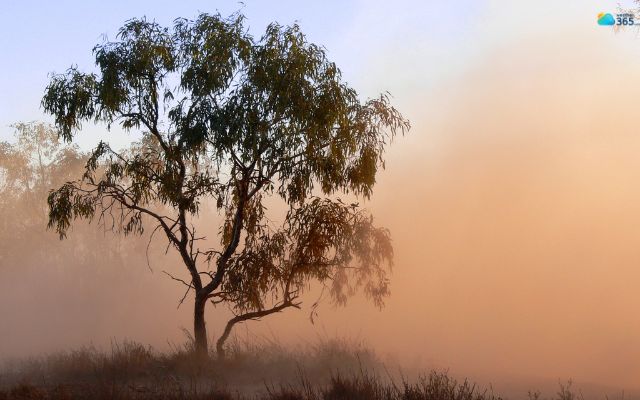
Dust storms can severely affect the environment
Crops exposed to abrasive dust layers can wither, reducing yields and threatening food security.
Dust storms also clog machinery, wear down infrastructure, and damage power lines, creating costly repairs for communities.
In regions already struggling with water shortages and fragile ecosystems, the combined environmental and financial burden makes dust storms a recurring setback to development.
Can Dust Storms be Warned?
Dust storms can strike suddenly, but thanks to modern technology and weather monitoring, it’s often possible to receive warnings before they hit.
Warnings from the National Weather Service (NWS)
In the United States, the National Weather Service (NWS) plays a central role in monitoring dust storms and issuing warnings.
When conditions indicate a high likelihood of a dust storm, local forecast offices issue a Dust Storm Warning to alert the public.
These warnings are communicated through multiple channels, including television, radio, mobile alerts, and online platforms.
The alerts typically provide information on the affected areas, expected duration, and recommended safety actions, such as slowing down on highways, seeking shelter, and keeping windows closed.
Can Dust Storms be Warned?
GOES-R Satellite and ABI Technology
Beyond ground-based monitoring, satellites provide crucial early detection.
The GOES-R satellite series is equipped with the Advanced Baseline Imager (ABI), a multi-spectral “camera” that observes the Earth in various wavelengths.
By analyzing these images, meteorologists can distinguish dust in the atmosphere from surface haze or pollution.
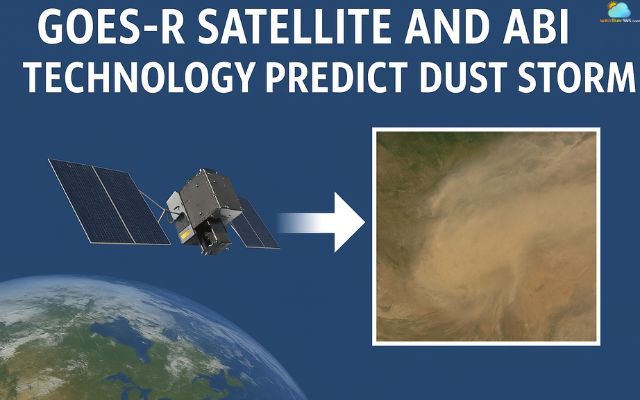
The GOES-R Satellite is used to predict the dust storm
This technology enables tracking the movement, density, and height of dust clouds in near real-time.
With ABI data, weather services can issue faster, more accurate warnings, giving communities, airports, and drivers the information they need to respond safely.
How to Stay Safe During a Dust Storm
Dust storms can be sudden and dangerous, but knowing how to respond can protect your health, prevent accidents, and reduce property damage.
Follow these safety tips:
Seek shelter immediately
Avoid driving when visibility is low
Wear protective gear if outside is unavoidable
Stay updated with weather alerts
Protect your home and property
Prepare an emergency kit
Follow health precautions after the storm
Drop by What is haboob for a comprehensive safety guide!
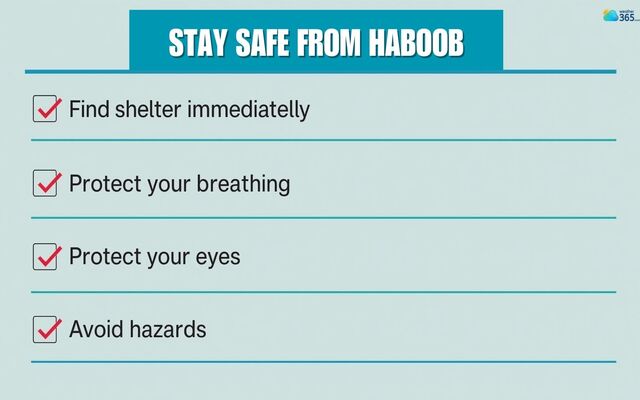
How to stay safe during a haboob outdoor
Conclusion
So, what is a dust storm? In short, it is a powerful natural event that can affect health, safety, and the environment. By understanding how dust storms form, where they occur, and how to stay safe, you can better prepare and protect yourself when these massive clouds of dust sweep through.
Frequently Asked Questions (FAQs)
Related post
What is a Windstorm? An In Depth Look at High-Speed Winds
 1290
1290
 0
0
 4.7
4.7
 06/05/2026
What is A Haboob? Exploring the Science, Dangers, and Safety Measures
1282
0
4.9
06/05/2026
What Is Derecho? Discover Definition, Causes, and Safety Tips
1276
0
4.7
06/05/2026

0 Comment
Leave a comment
Your email address will not be published. Required fields are marked *