




What is a Windstorm? An In Depth Look at High-Speed Winds


What is a windstorm, and why does it matter? With winds strong enough to uproot trees, tear apart roofs, and disrupt daily life, these storms can leave lasting impacts. In this article, we’ll break down their definition, causes, types, and effects, and share safety tips to help you stay prepared.
Browse more Storm guides and Severe Weather hub
What Is a Windstorm?
- What is a Windstorm?
- Key features
- Difference among Windstorm, Hurricane, and Tropical Storm
- What Causes a Windstorm?
- Pressure Gradients
- Low-Pressure Systems
- Jet Stream
- Temperature Differences
- Types of windstorms
- Derecho
- Straight-line winds
- Downbursts, Macrobursts, and Microbursts
- Gust Front
- Haboob
- How Windstorms Cause Damage
- Wind speed damage
- Common types of wind damage
- Safety Tips for Windstorms
What is a Windstorm?
A windstorm is a weather event defined by strong, sustained winds that can reach or exceed 34 mph (55 km/h). Unlike regular breezes or storms with heavy rain, a windstorm’s primary feature is the force of the wind itself, which may or may not come with precipitation.
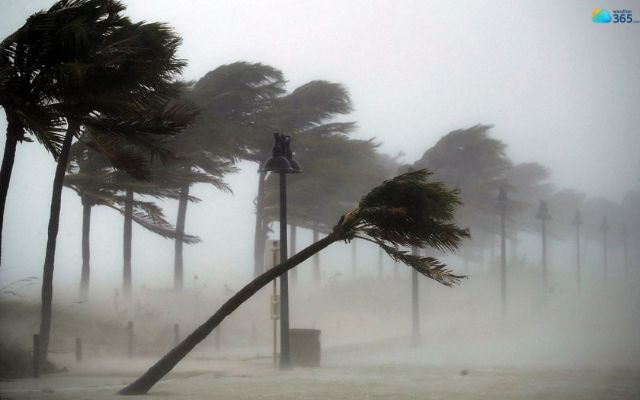
What is a Windstorm?
Key features
High wind speeds: Windstorms typically involve winds over 34 mph, but destructive events often reach 55 mph or more. At this strength, branches snap, and lightweight structures become unstable.
Minimal precipitation: Windstorms often produce little or no rain, dust, or snow. Instead, the main destructive force comes from the powerful winds.
Wide geographic impact: Unlike a local thunderstorm, windstorms can extend across hundreds of miles, affecting multiple towns or states.
Significant damage potential: Windstorms can cause serious harm, from uprooting trees and knocking down power lines to stripping roofs and damaging buildings.
Difference among Windstorm, Hurricane, and Tropical Storm
Although windstorms, hurricanes, and tropical storms are often used interchangeably, they describe different types of wind-driven events with distinct causes, classifications, and impacts.
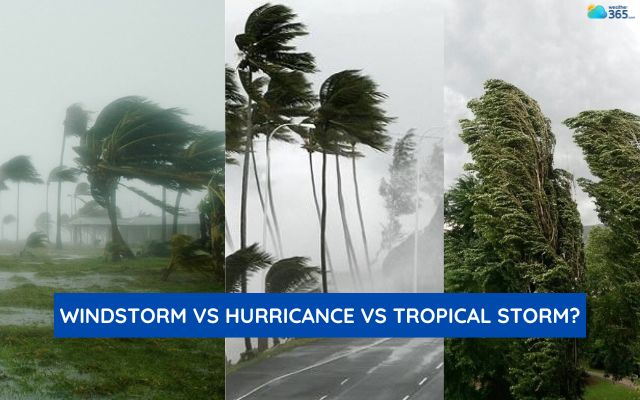
Difference among Windstorm, Hurricane, and Tropical Storm
Wind Speed
Windstorms usually start at about 34 mph (55 km/h).
Tropical storms range from 39 to 73 mph (63–118 km/h).
Hurricanes are the strongest, beginning at 74 mph (119 km/h) and often far exceeding that.
Formation Process
Windstorms form from sharp pressure differences, jet stream shifts, or sudden temperature changes.
Tropical storms develop over warm oceans when low-pressure systems draw in moist air, and if they intensify further, they become hurricanes.
Location
Windstorms can happen almost anywhere, inland or along coastlines.
Tropical storms occur in tropical and subtropical oceans, while hurricanes are most common in the Atlantic and Pacific where sea temperatures are warm.
Impacts
Windstorms mainly damage trees, roofs, and power lines.
Tropical storms add heavy rain and flooding to strong winds.
Hurricanes are the most destructive, combining violent winds, flooding rains, and storm surges.
Intensity
Windstorms vary from mild to severe but are usually less intense than tropical systems.
Tropical storms sit in the middle and may strengthen into hurricanes, which stand at the top with catastrophic force.
Aspect | Windstorm | Tropical Storm | Hurricane |
Wind Speed | Usually 34 mph (55 km/h) or higher, can be stronger in extreme cases. | 39–73 mph (63–118 km/h). | 74 mph (119 km/h) or more. |
Formation Process | Formed by pressure gradients, jet streams, or temperature contrasts. | Develops over warm oceans when low pressure and convection intensify. | Evolves from a tropical storm, fueled by warm ocean waters and high humidity. |
Location | Can occur over land or coastal areas, not limited to specific climates. | Mostly in tropical and subtropical oceans. | Found in tropical oceans, especially the Atlantic and Pacific. |
Impacts | Causes direct wind damage, such as uprooted trees, roof damage, and power outages. | Brings heavy rain and strong winds, often leading to flooding. | Produces severe destruction with extreme winds, torrential rain, flash floods, and storm surges. |
Intensity | Variable, generally less severe than hurricanes. | Moderate level, with potential to strengthen into a hurricane. | Most intense of the three, with catastrophic and widespread effects. |
What Causes a Windstorm?
A windstorm develops when air is forced to move rapidly due to various atmospheric and topographic factors, from strong pressure differences to thunderstorm downdrafts.
Here are the main factors leading to a windstorm.
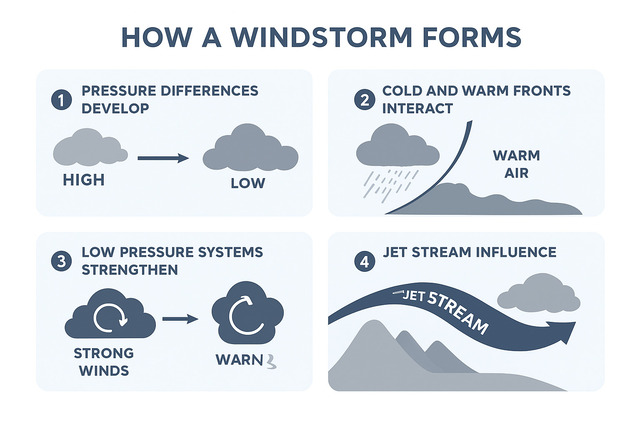
How a windstorm forms
Pressure Gradients
Air always moves from areas of high pressure to areas of low pressure.
When this difference (known as a pressure gradient) is strong, the air rushes quickly to balance it out. The steeper the gradient, the faster the winds.
In extreme cases, this rapid movement creates a windstorm capable of toppling trees, damaging roofs, and disrupting travel.
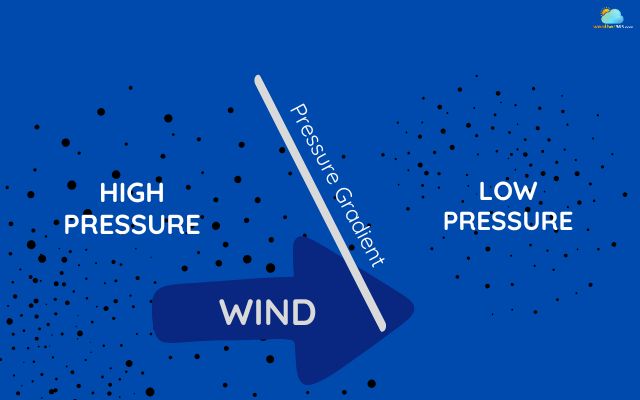
Air moves from areas of high pressure to areas of low pressure
Low-Pressure Systems
A low-pressure system acts like a vacuum, pulling air inward and upward. As air converges toward the center, wind speeds increase.
Large-scale low-pressure zones are often linked to stormy weather and can develop into powerful windstorms.
When combined with cold or warm fronts, these systems intensify, producing sustained strong winds over wide areas.
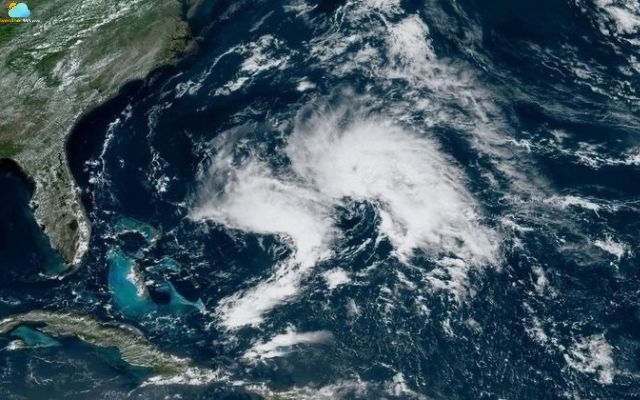
A low-pressure system can develop into a powerful windstorm
Jet Stream
The jet stream is a high-altitude band of fast-moving air that influences weather patterns worldwide. When the jet stream dips or shifts, it can funnel strong winds toward the surface.
These surges often trigger sudden windstorms, especially across open plains or coastal regions, where there is little to block the wind’s force.
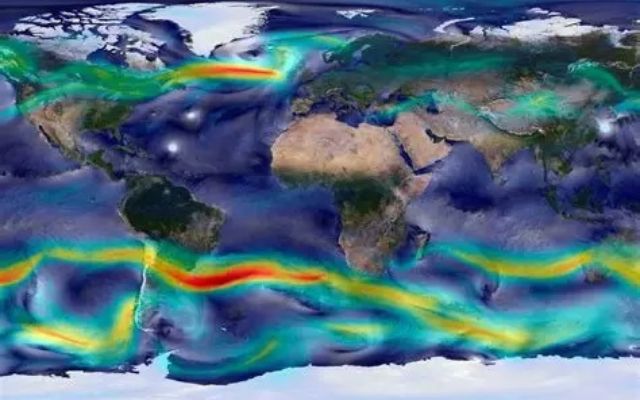
Jet stream can funnel strong winds toward the surface
Source: ThoughtCo.
Temperature Differences
Differences in temperature between two air masses create instability.
For example, when cold, dense air collides with warm, lighter air, the imbalance forces air to move rapidly. This clash can generate strong gusts that evolve into windstorms.
Seasonal shifts, such as the transition from winter to spring, often amplify this effect, leading to widespread wind events.
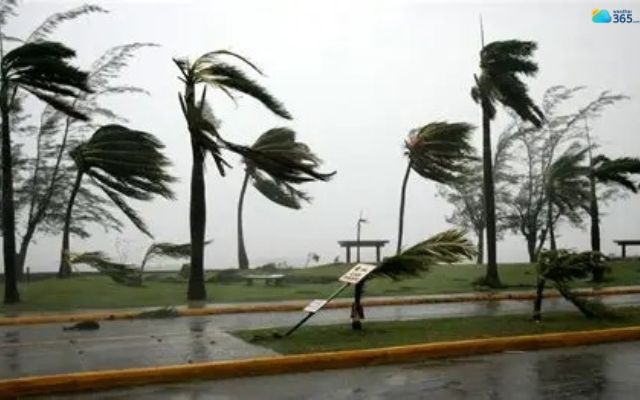
The imbalance in air temperature can generate strong winds
Types of windstorms
Windstorm comes in many forms, each shaped by unique weather conditions.
While all involve strong, damaging winds, their origins and impacts vary. Below are the most common types of windstorms:
Derecho
A derecho is a long-lasting, fast-moving line of thunderstorms that produces widespread damaging winds.
Unlike short-lived gusts, derechos can travel hundreds of miles, leaving behind large paths of destruction.
Specifically, if the wind damage swath extends more than 240 miles (about 400 kilometers) and includes gusts of at least 58 mph (93 km/h) or greater along most of its length, then the event may be classified as a derecho.
Derecho often strike during summer and are considered among the most dangerous wind events.
Learn more in our detailed guide on what is a derecho.
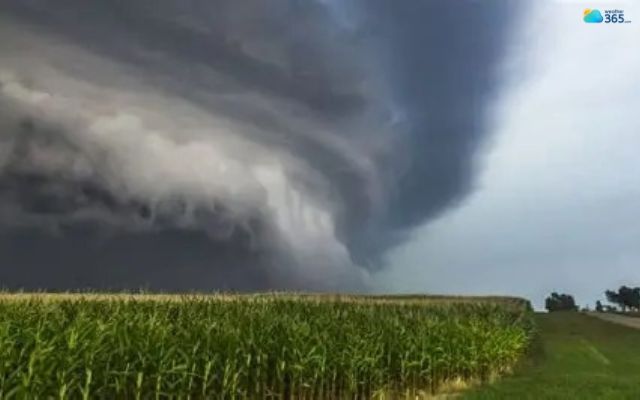
Derecho can cause widespread damage
Straight-line winds
Straight-line winds are powerful, non-rotational winds that spread outward from thunderstorms.
Though they lack the twisting motion of tornadoes, their force can still rip off roofs, uproot trees, and snap power lines.
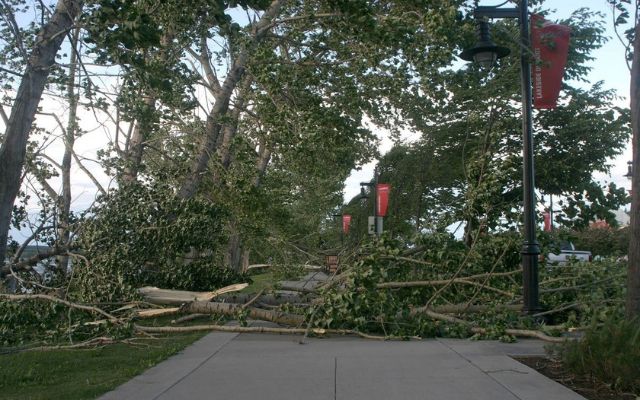
Windstorm in Central Alberta
Downbursts, Macrobursts, and Microbursts
These terms describe intense downdrafts from thunderstorms:
Downbursts (often refers both macro and microburst) occur when cold airs rushes downward from a storm cloud, striking the ground and spreading out in all directions.
Macrobursts are large downbursts covering more than 2.5 miles, capable of producing hurricane-force winds.
Microbursts are compact downdrafts, typically less than 4 km (2.5 miles) wide and lasting only 5–10 minutes. Despite their small size, they can unleash winds of 100 mph or more, sometimes exceeding 150 mph, causing sudden and destructive damage in a very short time.
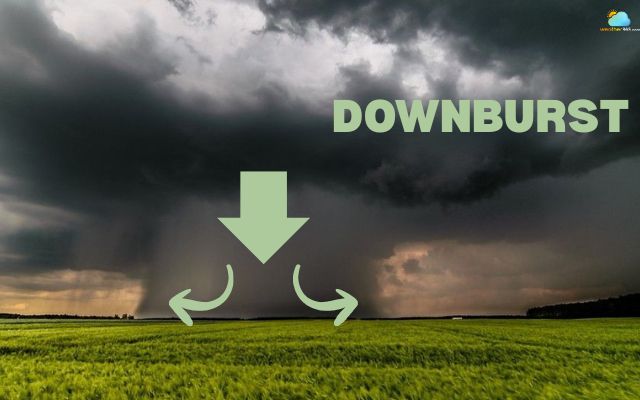
Downburst winds are powerful
Gust Front
A gust front forms when cool air from a thunderstorm pushes out and undercuts warmer air at the surface.
This sudden shift creates sharp, powerful winds ahead of the storm.
Gust fronts are often noticeable by a sudden drop in temperature and fast-moving clouds near the horizon.
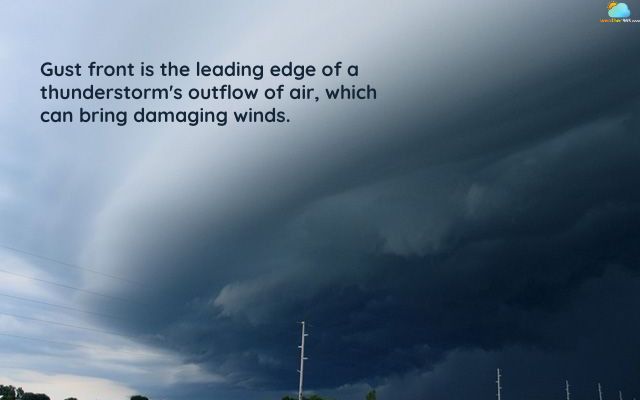
Winds in the gust front can sometimes turn into a weak tornado
Haboob
A haboob is a massive dust storm caused by strong downdrafts in arid regions. As the wind rushes outward, it lifts dust and sand into towering walls that can stretch for miles.
Haboobs reduce visibility to near zero, creating dangerous driving conditions and serious health risks for people with respiratory issues.
Learn more about this type of dust storm " What is a Haboob"!
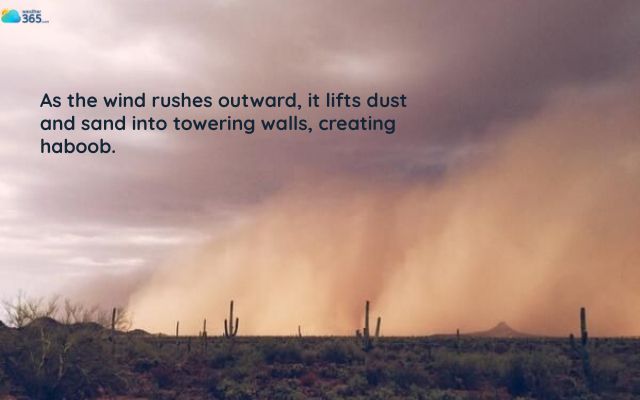
A haboob in Arizona
How Windstorms Cause Damage
Windstorms can damage homes, trees, and power lines when powerful gusts carry debris and weaken structures. The severity of this damage often depends on wind intensity and the vulnerability of the area they hit.
Wind speed damage
The severity of a windstorm often correlates with its speed. Even moderate gusts can disrupt daily life, while extreme winds may cause catastrophic losses:
45-57 mph (72-92 km/h): Small tree branches may snap, and unsecured outdoor items like trash bins or patio furniture can become airborne.
58-74 mph (93-119 km/h): Structural damage begins. Shingles or siding may tear away, large tree limbs can fall, and vehicles may be difficult to control on the road.
75-89 mph (120-143 km/h): Widespread destruction occurs. Trees may uproot, weaker roofs can fail, and power outages are likely as lines collapse.
90+ mph (144+ km/h): Severe devastation is possible. Even well-built structures face significant risk, windows may shatter, and communities may be left with long-term outages and blocked roads.
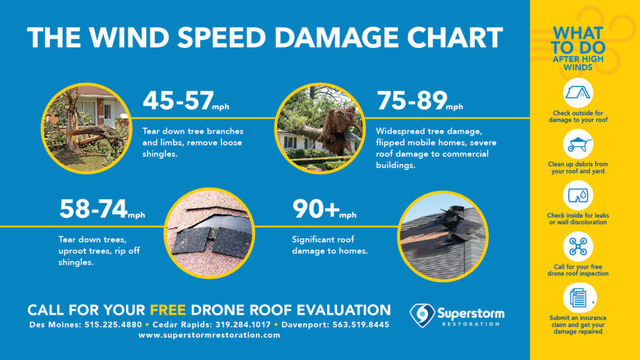
Windstorm’s destruction level depends on the wind speed ( Source: superstormrestoration.com)
Common types of wind damage
Windstorms can cause different kinds of destruction depending on wind speed, building structure, and landscape.
Below are the most common forms of wind damage that homeowners and communities often face.
Roof damage
High winds can lift shingles, crack tiles, or even peel away entire sections of roofing.
Once the protective layer is gone, rain can seep inside, leading to leaks, mold growth, and long-term structural issues. Homes with older or poorly maintained roofs are especially at risk.
It is estimated that the average cost to repair wind-damaged roofs ranges from $2,000 to $10,000, depending on the extent of the damage.

Roof damage due to a windstorm
Siding damage
Strong gusts can warp or loosen exterior siding, exposing the frame of the building. Vinyl and aluminum siding are particularly prone to cracking or tearing during storms.
In some cases, sections may be ripped off entirely, leaving the home unprotected against further wind and water intrusion.
It is reported that from 2018 to 2022, nearly 49% of all homeowners’ property damage claims (for wind and hail) were due to strong winds and hail events.
Moreover, in 2023, wind damage accounted for 1,720,000 homeowner insurance claims in the US - about 32.6% of all claims that year. Specifically, the average payout per claim is approximately $12.900 - $13.500.
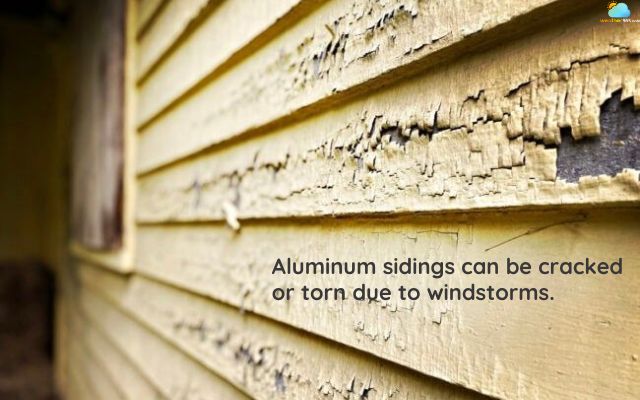
Windstorms can cause siding damage
Tree damage
In stronger storms, entire trees may be uprooted, blocking roads or causing injuries. Large branches can break off and crash onto roofs, vehicles, or power lines.
In 2020, a derecho occurring in Iowa damaged around 2.67 million trees and killed across 23,000 hectares of forest land.
The damage was not just branch breakage; a large share was stem breakage, especially in dominant canopy trees.
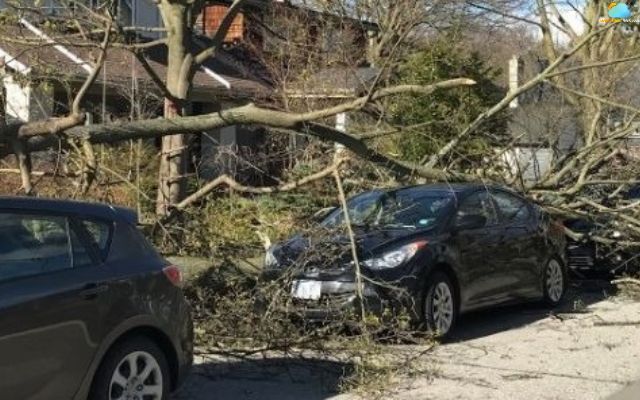
Windstorm in Ontario, Canada
Water damage
Although wind is the main driver of destruction, water often causes the most lasting impact. When roofs or siding are compromised, wind-driven rain can penetrate walls, ceilings, and insulation.
This not only damages the structure but also creates conditions for mold and mildew. Repairing water damage is often more expensive and time-consuming than fixing the initial wind-related issues.
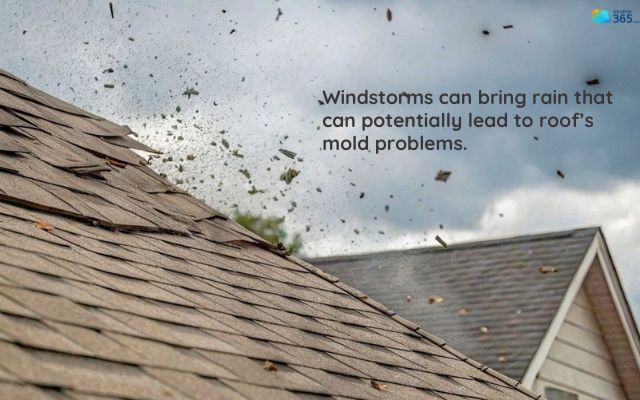
Windstorms can lead to mold problems
Safety Tips for Windstorms
Windstorms can strike with little warning, but taking the right precautions will greatly reduce risks to your safety and property. Here are key steps to follow before, during, and after a windstorm.
Identify a safe room: Choose an interior room or basement without windows where you and your family can stay until the storm passes.
Stay informed: Monitor weather alerts. A “watch” means conditions are possible, while a “warning” means immediate action is required.
Prepare an emergency kit: Stock essentials like bottled water, non-perishable food, flashlights, first aid supplies, and important documents.
Secure your surroundings: Trim weak tree branches, tie down outdoor furniture, and bring in loose items that could become flying debris.
If driving: Reduce speed, keep both hands on the wheel, and pull over safely if visibility drops. In a dust storm, turn off headlights and wait for conditions to improve.
(Also read: How to drive in high winds)
Shelter indoors: Stay inside, away from windows and glass doors. Do not take cover under trees or near tall isolated structures.
After the storm: Avoid fallen power lines, check for injuries, and document any property damage for insurance claims.
For detailed instructions on how to stay safe during a windstorm, drop by High winds safety tips.
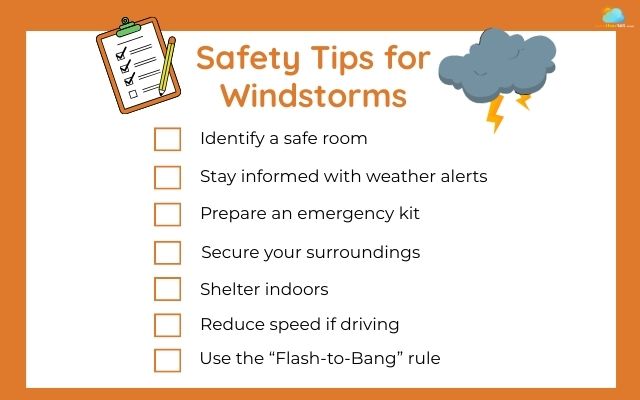
Safety Tips for Windstorms
Conclusion
Understanding what is a windstorm helps you stay prepared and protect your property from potential damage. By knowing its causes, damage, and safety precautions, you can minimize risks during severe weather events. Whether it's securing your home, staying updated with weather alerts, or having an emergency plan in place, learning about windstorms ensures better safety for you and your family.
Frequently Asked Questions (FAQs)
Related post
How To Measure Wind Speed: Step-by-Step Guide for Accurate Measurement
 1429
1429
 0
0
 4.7
4.7
 17/08/2026
Types Of Wind: Understanding Different Wind Classifications
1418
0
4.8
17/08/2026
What Does Wind Chill Mean? Complete Guide to Wind Chill Explained
1405
0
4.9
17/08/2026

0 Comment
Leave a comment
Your email address will not be published. Required fields are marked *