




How To Drive In High Winds? Dangers and Practical Steps to Stay Safe


Ever wondered how to drive in high winds? Powerful gusts do not just make steering harder; they also create serious risks from reduced visibility to flying debris. Here, you will learn practical steps, preparation advice, and what experts recommend to stay safe on windy roads. Let’s explore!
How To Drive In High Winds?
What are the risks of driving in high winds?
High winds often develop when strong pressure differences in the atmosphere create rapid air movement. This phenomenon can potentially lead to New to windstorms that disrupt travel and increase driving risks.
While most people underestimate the risks of powerful winds when traveling, driving in high winds is more dangerous than they think.
According to the US Federal Highway Administration, about 21% of all vehicle crashes are weather-related, leading to nearly 5,000 deaths and over 418,000 injuries each year.
While wind accounts for only around 3% of these crashes, its effects are often sudden and severe, especially for high-profile vehicles.
Risks of driving in high winds
Loss of vehicle control: Sudden gusts can push your car out of its lane. Trucks, SUVs, and trailers face an even higher rollover risk.
Reduced visibility: Strong winds can lift dust, sand, or snow, blocking your view and slowing reaction time.
Flying debris: Branches, roofing materials, or road signs may strike your vehicle or obstruct the roadway.
High-risk wind zones: Open highways, mountain passes, and bridges amplify crosswind effects, making steering more difficult.
Other road users: Trucks may sway into adjacent lanes, while motorcyclists and cyclists can be knocked over.
Downed power lines: High winds can bring lines down, posing a severe electrocution hazard if not avoided.
Some severe wind events are caused by derechos—learn more What is Derecho.
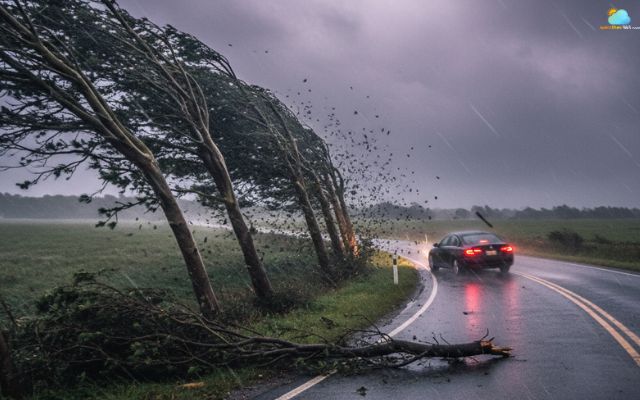
Driving in high winds is potentially dangerous
Wind speed
The danger of each wind depends mainly on its speed.
According to the National Weather Service (NWS), here’s how wind speed affects driving conditions:
15-25 mph (24-40 km/h): Light to moderate winds; small cars may require minor steering corrections.
25-35 mph (40-56 km/h): Driving trucks, RVs, and buses becomes challenging, especially on bridges and open roads.
35-45 mph (56-72 km/h): Dangerous conditions; large vehicles face a serious rollover threat, and debris becomes common.
45+ mph (72+ km/h): Very dangerous for all vehicles, with risks of tip-overs, falling trees, and flying objects.
Most states issue high wind warnings when sustained winds reach 40-45 mph or gusts exceed 58 mph. In such conditions, delaying travel is often the safest choice.
Below is the Estimating Wind Speed table from the National Weather Service.
This shows in detail how winds of different strengths can cause specific types of damage.
Beaufort number | Description | Speed | Damage effect |
0 | Calm | Calm |
|
1 | Light Air | 1-3 mph |
|
2 | Light Breeze | 4-7 mph |
|
3 | Gentle Breeze | 8-12 mph |
|
4 | Moderate Breeze | 13-18 mph |
|
5 | Fresh Breeze | 19 to 24 mph |
|
6 | Strong Breeze | 25 to 31 mph |
|
7 | Near Gale | 32 to 38 mph |
|
8 | Gale | 39 to 46 mph |
|
9 | Strong Gale | 47 to 54 mph |
|
10 | Whole Gale | 55 to 63 mph |
|
11 | Storm Force | 64 to 75 mph |
|
12 | Hurricane Force | over 75 mph |
|
Source: The National Weather Service
What to Do Before You Drive
The more you prepare before leaving, the safer your trip will be. Simple checks and smart planning can greatly reduce your risks on the road.
Plan your route carefully
→ Check real-time weather forecasts and traffic updates.
→ Pay attention to wind advisories, closed roads, or reduced speed limits.
→ Avoid high-risk areas such as open highways, long bridges, or mountain passes where crosswinds are strongest.
→ If forecasts predict extreme conditions, delay your trip until it’s safer.
Check your vehicle thoroughly
→ Inspect tires for proper inflation and tread depth to improve grip on the road.
→ Test windshield wipers and refill washer fluid, as blowing dust or rain can block your view.
→ Ensure headlights and brake lights work well for better visibility.
→ Remove or secure roof racks, cargo boxes, or any loose external items that could catch the wind
Secure surroundings before leaving
→ Look around your driveway or yard for objects that may blow into the street.
→ Tie down or move items like trash bins, patio furniture, or tools indoors.
→ Preventing these objects from becoming airborne helps protect both you and other drivers.
Know when to postpone travel
→ If strong wind warnings are in effect, reconsider driving unless absolutely necessary.
→ Waiting a few hours until the storm passes may keep you out of dangerous situations.
→ Safety should take priority over keeping a schedule.
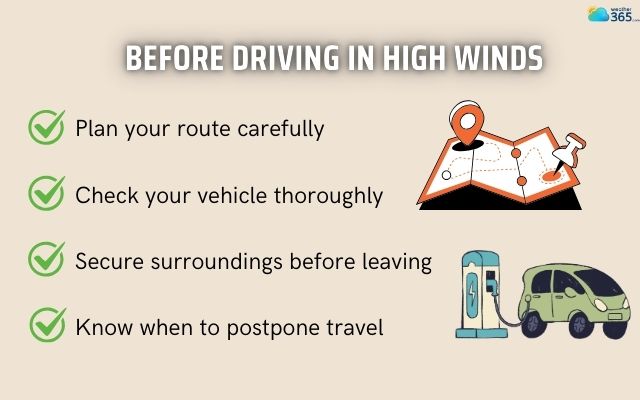
Check your vehicle carefully before driving in high winds
Also read: High winds safety tips
How To Drive In High Winds
Driving in high winds demands caution and adapted behavior. Doing the right things behind the wheel can keep you safer when gusts pick up.
Reduce your speed: Slow down early so winds have less chance to push you off course.
Keep both hands firmly on the steering wheel. Sudden gusts often try to twist or move your car unexpectedly
Turn on your headlights if visibility drops because of dust, rain, sand, or blowing debris.
If dust reduces visibility to near zero, follow these steps: what to do in a dust storm while driving.
Increase the distance between you and other vehicles: Allow extra space so you have more time to react if another car gets pushed by strong winds.
Be extra careful near high-profile vehicles: Trucks, vans, or trailers are much more affected by side winds and crosswinds.
Watch for debris: Tree limbs, road signs, or other loose objects may blow into the roadway without warning.
Know how your vehicle handles wind. If it is an SUV or a trailer, expect more buffeting and loss of stability.
Avoid cruise control: Hands-free speed control may reduce your ability to respond quickly when gusts hit. (Implied from safe driving behavior)
If winds become too strong, pull over to a safe location. Do not stop under trees, near power lines, or other structures that may fall.
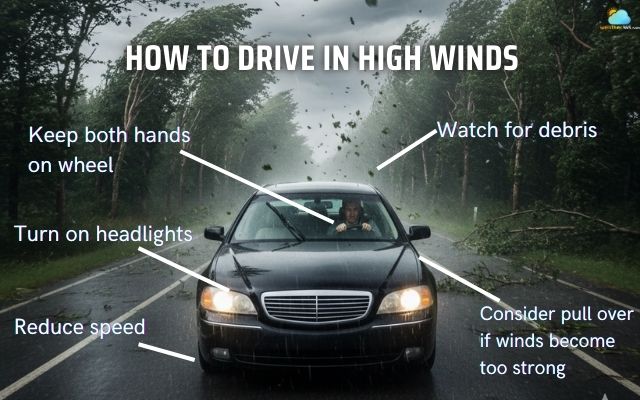
Safety tips while driving in high winds
How to Drive In High Winds: Fallen Power Line Situation
Fallen power lines are dangerous during or after high winds. Even if they look harmless, they may still carry live electricity. Always treat them with extreme caution.
Never touch or drive over downed power lines. Even if the line seems cold or inactive, it could still be energized.
Maintain a safe distance: Stay at least 30 feet (about 10 meters) away from any fallen wire or electrical equipment on or near the road.
If a line lands on your vehicle: Stay inside. The tires usually protect you from an electrical flow to the ground.
Call emergency services right away. Let trained personnel handle it.
Only exit the car if there is an imminent risk like fire. If you must, jump free without touching both the vehicle and ground at the same time.
Avoid parking near damaged poles or leaning trees. These structures may collapse under continued wind.
Warn others: Use hazard lights to alert drivers and report the hazard location when safe.
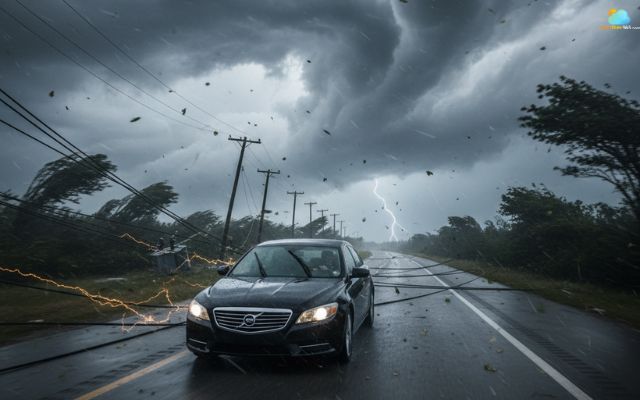
Stay away from fallen power lines while driving in high winds
Conclusion
Knowing how to drive in high winds is essential for road safety. Sudden gusts can quickly throw vehicles off balance, reduce visibility, and create dangerous conditions. By preparing well and driving with caution, you can minimize risks and protect yourself on windy days.
Frequently Asked Questions (FAQs)
Related post
Wind Speed And Direction Explained: What Are They And How Are They Measured?
 1371
1371
 0
0
 5.0
5.0
 17/08/2026
What is a Windstorm? An In Depth Look at High-Speed Winds
1290
0
4.7
06/05/2026

High Wind Alerts: Different Alert Levels and How To Stay Safe
1273
0
5.0
17/08/2026

0 Comment
Leave a comment
Your email address will not be published. Required fields are marked *