




High Wind Alerts: Different Alert Levels and How To Stay Safe


What are high wind alerts? Keep reading this article to find out in advance about wind alerts, dangers of high wind as well as safety tips. Also, Weather365 is going to disclose that sports are affected by high wind.
Understanding high wind alerts
- What is a High Wind Alert?
- Levels Of High Wind Alerts
- High Wind Warning: Take Immediate Action
- High Wind Watch: Be Prepared
- Wind Advisory: Caution
- High Wind Alerts: Which Sports Are Affected?
- High-Impact & "Wind-Dependent" Sports
- Field and Ball Sports
- Extreme & Aerial Sports
- High Wind Safety Tips
- Preparing before high winds approach
- While in a high wind
- If You Are Outside
- If You Encounter a Downed Power Line
What is a High Wind Alert?
A high wind alert is an official notification issued by meteorological agencies to warn the public of sustained, powerful wind events that pose a significant risk to life and property.
In general, high wind alerts are urgent, short messages that provide information on WHEN, WHERE, and HOW LONG the wind increase is expected.
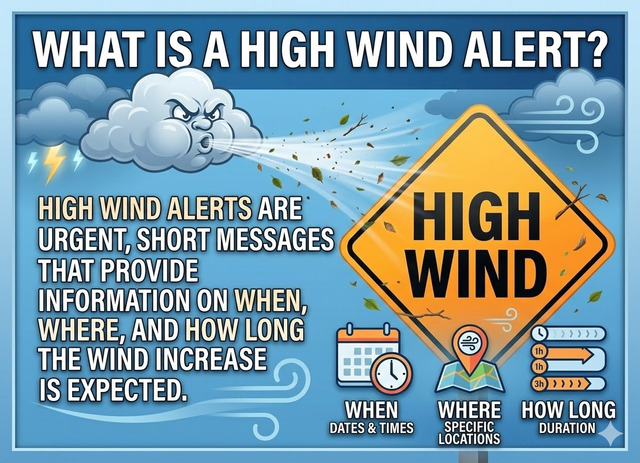
Definition of high wind alerts
Levels Of High Wind Alerts
The US National Weather Service issues different types of wind alert such as high wind warnings, high wind watches, and wind advisories.
These alerts are essential. Everyone needs to pay attention to them and take exact action for safety.
High Wind Warning: Take Immediate Action
A High Wind Warning is an urgent notification issued when life-threatening wind conditions are either currently occurring or are imminent in the area.
This level of alert is typically triggered by sustained winds of 40 mph or higher, or frequent gusts reaching 58 mph or more.
For example, high wind warnings are issued when sustained winds exceed 40 mph on Kansas high wind warnings.
The urgency level is critical, as these speeds are sufficient to cause structural damage, uproot large trees, and create widespread power outages.
Upon receiving this warning, you should immediately seek shelter in a sturdy building and stay away from windows.
If you are driving, pull over to a safe location or maintain a firm grip on the steering wheel while significantly reducing your speed, especially if operating a high-profile vehicle.
Learn how wind speed is measured here!
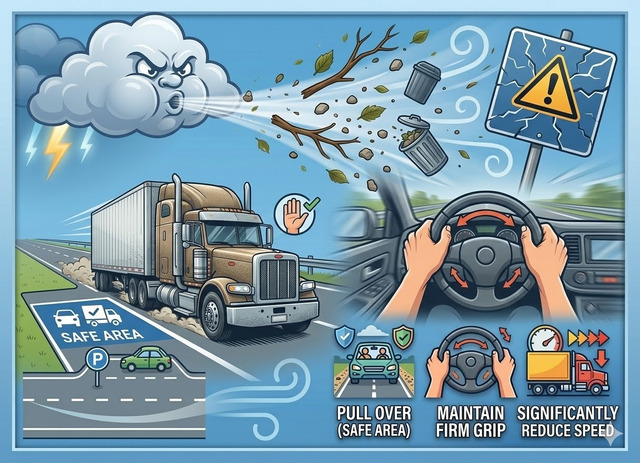
When getting a high wind warning, you should pull over to a safe location or maintain a firm grip on the steering wheel while significantly reducing your speed
High Wind Watch: Be Prepared
A High Wind Watch is a cautionary alert indicating that there is a high confidence that damaging wind conditions may develop within the next 24 to 48 hours.
While the winds are not yet occurring, the potential for sustained speeds of 40 mph or gusts of 58 mph is significant enough to warrant advance notice.
The urgency level is moderate, serving as a "heads-up" to prepare for a looming threat.
When a watch is issued, you should use the lead time to secure loose outdoor items like patio furniture, trampolines, and trash cans.
Monitor local weather updates closely and adjust any travel or outdoor plans to ensure you are not caught in a vulnerable position if conditions deteriorate.
Check the Beaufort Wind Scale Chart to see how wind speeds compare and what different levels of wind can mean!

Monitor local weather updates closely
Wind Advisory: Caution
A Wind Advisory is issued when strong winds are occurring or expected but do not quite meet the life-threatening criteria of a full High Wind Warning.
These high wind alerts usually involve sustained winds between 30 and 39 mph or gusts ranging from 45 to 57 mph.
Although the urgency level is lower than a warning, these conditions are still hazardous.
Wind at this level can blow around small objects and make driving difficult, particularly on bridges or open highways.
When an advisory is in effect, you should secure lightweight outdoor objects and exercise extra caution while driving.
It is important to remain vigilant for falling tree limbs or debris that could suddenly obstruct the roadway.
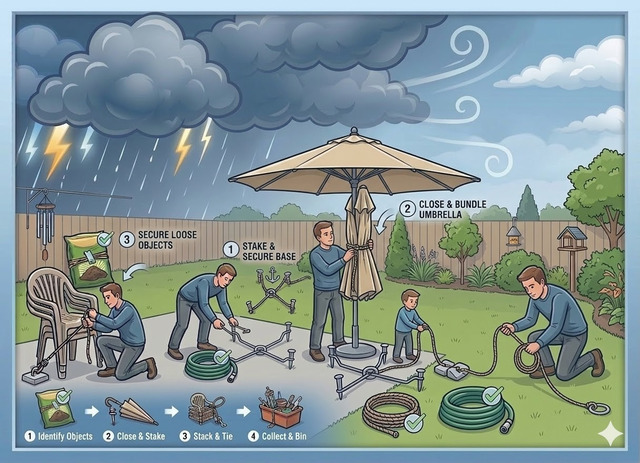
Secure lightweight outdoor objects when having wind advisory
Here is a table that summarizes high wind alerts. Take a look!
Alert Type | Status | Key Criteria & Wind Speeds | Recommended Action |
High Wind Warning | Active | Sustained dangerous winds and powerful gusts are occurring. | Take Action: Seek indoor shelter immediately; drivers should use both hands and reduce speed. |
High Wind Watch | Potential | Strong, damaging winds are possible in the near future. | Be Prepared: Secure outdoor furniture and loose objects; monitor for updates. |
Wind Advisory | Active | Strong winds are present but below the threshold for a full warning. | Take Action: Use caution when driving high-profile vehicles and secure loose items. |
High Wind Alerts: Which Sports Are Affected?
High wind alerts significantly impact any sport where the wind can alter the trajectory of a ball, the stability of equipment, or the safety of the participants.
While most outdoor sports face tactical changes during a Wind Advisory, a High Wind Warning often leads to the complete suspension or cancellation of events to prevent injury from flying debris or equipment failure.
High-Impact & "Wind-Dependent" Sports
These sports are most susceptible to high winds because they rely on aerodynamics or occur in exposed environments.
Sailing and Windsurfing: While these require wind to function, "Gale" or "Hurricane Force" warnings make the water too dangerous for even professional vessels. High winds create "swamping" risks where waves can overwhelm a craft.
Cycling: Strong gusts (especially crosswinds) can push a cyclist into traffic or off the track. In extreme cases, professional races like the Red Bull Rampage are postponed because wind can cause riders to miss landing points during jumps.
Golf: Wind is a primary "unseen opponent" in golf. It affects ball flight, making it difficult to judge distance and accuracy. Professional tournaments may be paused if gusts are strong enough to move a ball while it is stationary on the green.
Tennis: High winds make it nearly impossible to time a serve or predict where a ball will land after a lob. Matches are often delayed if the wind is strong enough to blow equipment or court dividers across the playing area.

Sports are affected by high winds
Field and Ball Sports
In these sports, wind primarily affects the "technical" performance and tactical choices of the teams.
Football (Soccer & American): High winds can render the passing game useless, forcing teams to rely almost exclusively on "ground plays" or short passes. Kicking field goals or punting becomes a high-risk gamble.
Baseball: Fly balls that would normally be routine outs can be blown over the fence for home runs, or vice versa. Pitchers also struggle with "grip" and control as the wind pushes against the ball's seams.
Track and Field: Sprinting and jumping records are only "certified" if the tailwind is below 2.0 m/s (approx. 4.5 mph). Winds above this threshold are considered "wind-aided," making official world records invalid.
Extreme & Aerial Sports
For these disciplines, a high wind alert is a mandatory "no-go" signal.
Paragliding & Skydiving: These sports are entirely dependent on stable air. Unexpected gusts can cause a canopy to collapse or blow a pilot miles off course into dangerous terrain.
High Diving (Cliff Diving): At heights of 20+ meters, even a moderate gust can push a diver off their intended trajectory, leading to a dangerous entry into the water.
For these sports, a high wind alert is a mandatory "no-go" signal
High Wind Safety Tips
High Wind Safety Tips are important whenever strong winds from thunderstorms, cold fronts, tropical systems, or other severe weather events are expected.
Below are practical safety measures before, during, and after high-wind events.
Preparing before high winds approach
Clear the Yard: Bring patio furniture, trash cans, and potted plants inside a garage or shed.
Anchor Large Items: If it can't be moved (like a trampoline or grill), strap it down with heavy-duty bungees or anchors.
Check Trees: Trim dead or loose branches that could fall on your roof or power lines.
Charge Everything: Power up phones, laptops, and portable battery packs while the electricity is stable.
Set Fridge to Cold: Turn your fridge and freezer to the coldest setting to keep food safe longer during a blackout.
Close and Latch: Secure all windows and doors. Close curtains to catch glass in case of a break.
Emergency Kit: Gather flashlights (no candles), a battery-powered radio, and extra batteries.
Pick a Safe Room: Identify an interior room on the lowest floor, away from windows, where everyone will gather if the wind becomes destructive.
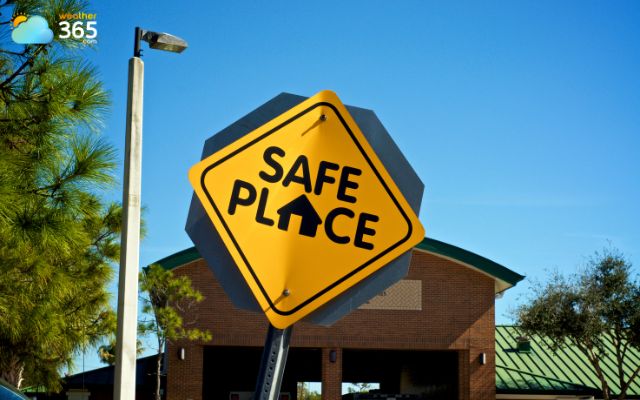
Pick a safe room to shelter in when necessary
While in a high wind
When high winds strike, your immediate environment can become unpredictable.
If you are caught outside or encounter damaged infrastructure, follow these safety protocols:
If You Are Outside
Seek Immediate Shelter: Move into a sturdy building or a basement. Avoid structures with wide-span roofs like sheds, gazebos, or temporary tents.
Avoid High-Risk Areas: Stay away from trees, tall signs, and power lines. Falling branches and flying debris are the primary causes of injury during high wind events.
Protect Your Head: If you cannot find a building, take cover next to a low-lying area or a sturdy wall. Use your arms or a bag to protect your head and neck from flying objects.
Watch for Projectiles: Be aware that "harmless" objects like trash cans or lawn chairs can become dangerous missiles at wind speeds above 58 mph.
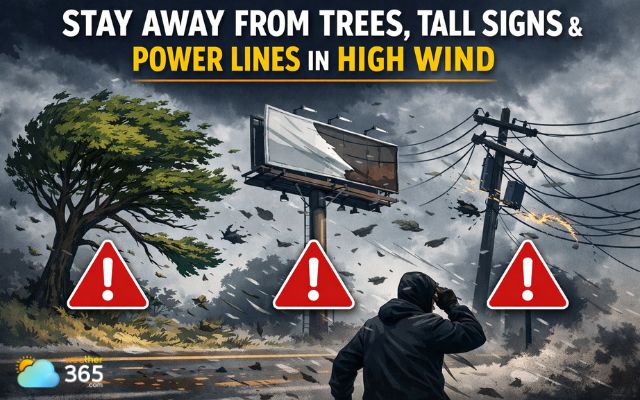
If you are outside, stay away from trees, tall signs, and power lines
If You Encounter a Downed Power Line
Assume It Is Live: Always treat every fallen wire as if it is energized and deadly.
Maintain Distance: Stay at least 35 feet (11 meters) away from the line and anything it is touching (like a fence or a puddle).
Move Away Safely: Do not take normal steps, as electricity can travel through the ground. Instead, shuffle your feet without lifting them, keeping them in constant contact with the ground, or hop with your feet together to prevent a "voltage bridge" between your legs.
Call for Help: Once you are at a safe distance, call 911 or your local emergency services and your utility company immediately.

Call 911 or your local emergency service
Final Thought
Staying informed about high wind alerts is the most effective way to protect your life and property from unpredictable weather. By distinguishing between watches, advisories, and warnings, you can take the right action at the right time to minimize damage. Besides, you should also prioritize early preparation and following expert safety protocols to ensure you stay secure whenever these alerts are issued.
Frequently Asked Questions (FAQs)
◉30° angle: Crosswind is 50% (the 5) of total wind speed.
◉ 45° angle: Crosswind is 70% (the 7) of total wind speed.
◉ 60° angle: Crosswind is 90% (the 9) of total wind speed.
If the angle is 90°, the crosswind is 100% of the reported wind speed.
◉ Commercial Jets: Most are grounded or diverted when crosswinds (side-blowing winds) exceed 33–40 mph.
◉ Ground Operations: At 40–50 mph, airports often stop using baggage loaders and jet bridges because they become unstable.
◉ Tailwinds: Landings are typically prohibited if the wind blowing from behind the plane exceeds 11–17 mph.
Related post

Types Of Wind: Understanding Different Wind Classifications
 1508
1508
 0
0
 4.8
4.8
 17/08/2026
Wind Speed And Direction Explained: What Are They And How Are They Measured?
1492
0
5.0
17/08/2026
How To Measure Wind Speed: Step-by-Step Guide for Accurate Measurement
1466
0
4.7
17/08/2026

0 Comment
Leave a comment
Your email address will not be published. Required fields are marked *