




Hail Safety Tips Before, During, and After Hailstorms You Should Know


Severe hailstorms can strike with little warning, damaging cars, homes, and even putting people at risk of injury. Being prepared with the right hail safety tips can make all the difference. In this guide, you will learn what to do before, during, and after hailstorms to protect yourself, your family, and your property.
Want to understand the science behind hail?
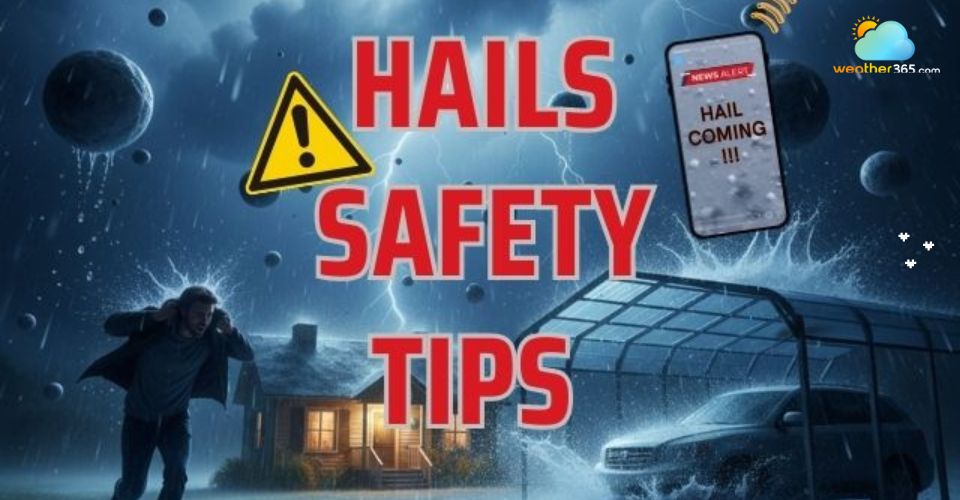
Hail Safety Tips
- Hail Safety Tips Before a Hailstorm
- Sign of an incoming storm
- Stay inform
- Protect property
- Create an emergency kit
- Create a safety plan
- What to do during a hailstorm?
- Indoor
- Outdoor
- While driving
- What to do after a hailstorm?
- Safety First
- Inspect & Document Damage
- Temporary Repairs & Mitigation
- Contact Insurance & Begin Claims
Hail Safety Tips Before a Hailstorm
Hail is frozen precipitation that forms inside strong thunderstorms when updrafts carry raindrops into extremely cold areas of the atmosphere.
These ice balls can range from small pellets to massive stones capable of shattering windows and denting vehicles.
Some of the largest hail ever recorded even reached sizes bigger than softballs - can you imagine how destructive hail can be if you’re not prepared?
Preparing ahead of time is the most effective way to stay safe during hail. Many people only react when the storm hits, but early planning helps protect both your family and your property.
Sign of an incoming storm
Hail rarely strikes without warning. By learning to recognize the early signs, both in nature and through official alerts, you can gain precious minutes to prepare.
Dark skies, shifting winds, and temperature drops often signal what is coming, while weather warnings give you reliable confirmation.
Knowing these clues could make the difference between safety and costly damage.
Natural indicators
Watch for rapidly darkening skies and clouds that appear heavy or greenish. These are classic storm signs.
A sudden drop in temperature often happens before hail begins.
Strong, shifting winds may sweep through right before the storm.
Some people even report a loud rumbling or cracking sound in the clouds.
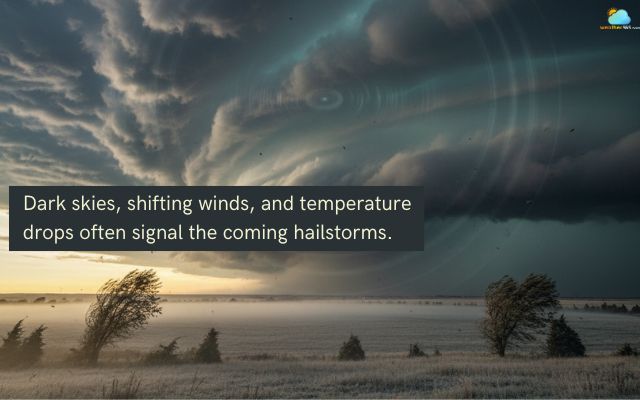
What are the signs of a hailstorm?
Official alerts
Weather agencies issue severe thunderstorm or hail warnings. These come via apps, radio, or TV.
Subscribe to emergency text alerts in your area for instant updates.
If a warning is issued, take it seriously. Hail can form within minutes and strike with little time to react.
Stay inform
Monitoring the weather is an ongoing step, not just when the sky looks threatening.
Weather apps: Choose reliable ones with real-time radar. Enable notifications so you don’t miss alerts.
Local news: Tune into TV or radio for live storm tracking.
NOAA weather radio (or local equivalent): Offers continuous updates even when power or internet fails.
Community updates: Many cities issue emergency broadcasts through loudspeakers or sirens.
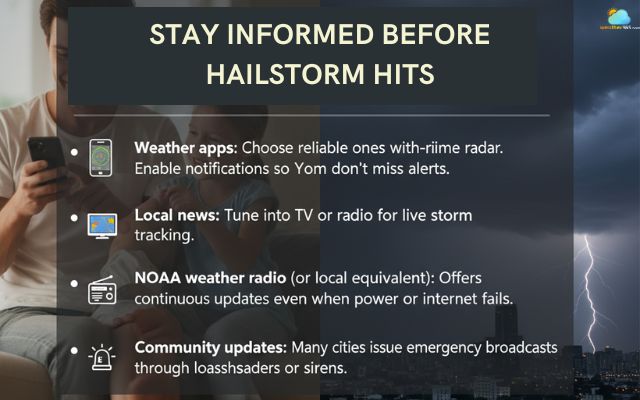
Stay informed about the upcoming hailstorm
Protect property
Hailstorms are costly because they damage roofs, windows, vehicles, and outdoor belongings.
It is highly recommended that you protect them in advance and review your insurance policies to understand coverage for hail damage, so that you will not face unexpected expenses later.
Home and roof
Inspect shingles and replace cracked or missing ones.
Reinforce weak spots, especially skylights and vents.
Keep gutters clear so water drains freely after the storm.
Outdoor items
Move patio chairs, umbrellas, grills, and potted plants indoors or under shelter.
If you have a shed, store small items there to prevent them from turning into dangerous projectiles.

Move your furniture into safe places
Vehicles
Park inside a garage or under a carport whenever possible.
If no shelter is available, use heavy blankets, floor mats, or a hail cover to minimize damage.
Avoid parking under trees; falling branches during storms can cause even more harm.
Create an emergency kit
Having a kit ready reduces panic and ensures you have what you need.
Essential supplies
Flashlights, batteries, bottled water, and non-perishable food.
A basic first-aid kit with bandages, antiseptics, and medicines.
Portable chargers for phones in case of power outages.
Important documents
Keep insurance papers, passports, IDs, and medical records in a waterproof and fireproof bag.
Make digital backups of critical documents and store them securely online.
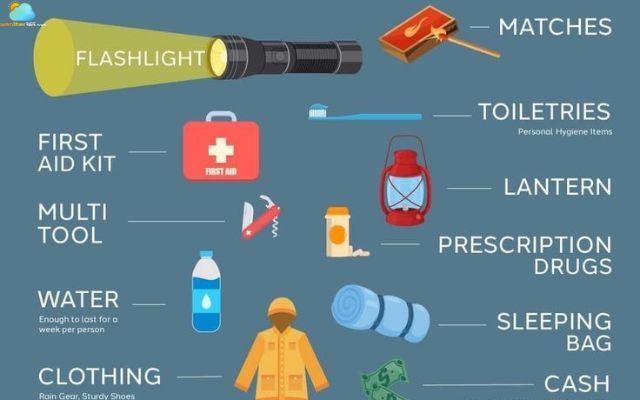
An emergency kit is important in urgent situations
Create a safety plan
Every household should know essential hail safety tips to follow when hail strikes.
Identify the safest area in your home: Preferably a basement or a windowless interior room.
Decide how family members will communicate if separated.
Assign roles (who grabs the emergency kit, who helps pets,...).
Practice the plan regularly so everyone reacts calmly and quickly.

Let your family know the safety plan
What to do during a hailstorm?
Hailstorms can strike suddenly, bringing heavy ice that threatens people, cars, and buildings. To understand why hailstones fall so fast and cause such damage, drop by our guide how does hail form.
When one hits, you need to be clear of hail safety tips. Here’s what to do whether you’re indoors, outdoors, or driving.
Indoor
Stay away from glass: Move away from windows, skylights, and glass doors as they can shatter under hail impact.
Close coverings: Shut curtains, blinds, or drapes to reduce the spread of flying glass.
Find a safe room: Move to a small, windowless room on the lowest floor, such as a basement, bathroom, or hallway.
Keep family safe: Practice storm drills in advance so everyone knows where to go quickly.
Limit electricity use: Avoid wired electronics or appliances if lightning is present; use flashlights or a battery-powered radio instead.
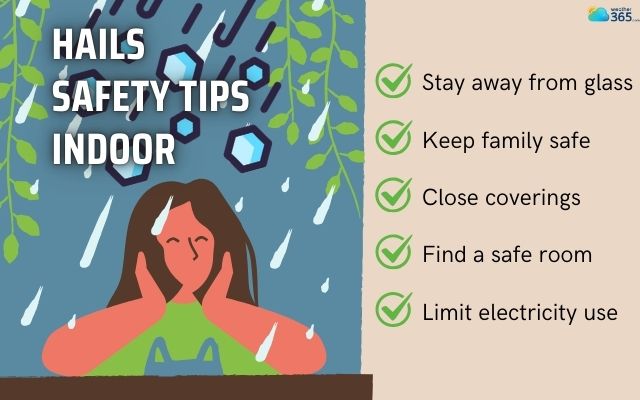
Hailstorm safety tips
Outdoor
Seek shelter immediately: Enter a sturdy building if one is nearby.
Use vehicles if needed: If no buildings are available, sit inside a car, close all windows, and stay put until the storm ends.
Protect your head and body: Use a jacket, bag, or your arms to cover yourself from hailstones.
Avoid unsafe shelters: Do not take cover under trees as branches may snap in strong winds.
Stay away from risky areas: Avoid open fields, low-lying spots, and water, as hailstorms often bring lightning and flash flooding.
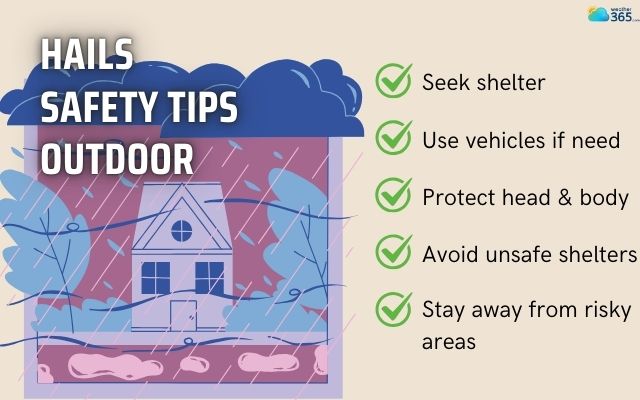
How to stay safe outdoors during a hailstorm?
While driving
Pull over safely: Stop your vehicle in a secure location. Covered areas like underpasses or garages provide the best protection.
Stay inside the car: Keep your seatbelt on and remain inside; your windshield is stronger than side windows against hail.
Protect from broken glass: Lean away from windows and use your arms to shield your head and eyes.
Avoid trees and power lines: Falling branches and electrical hazards can create more danger.
Increase visibility: Turn on hazard lights so other drivers can see you in poor conditions.
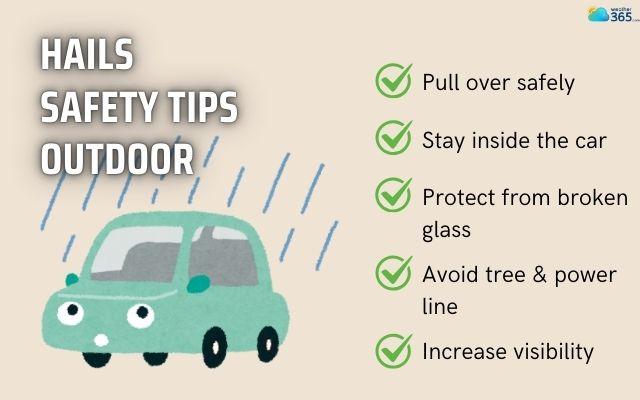
Safety tips for driving in hail
What to do after a hailstorm?
Hailstorms may end quickly, but the damage they leave behind can be serious. Knowing hail safety tips after the storm helps you stay safe, protect your property, and speed up recovery.
Safety First
Wear protective gear while being outside: sturdy boots, gloves, long sleeves, and eye protection.
Watch for hazards: broken glass, exposed nails, loose roofing, sharp debris, standing water, and slippery surfaces.
Stay away from downed power lines and report them to the utility company immediately.
If you smell gas or suspect a leak, leave the area and call emergency services or the gas company.
Do not climb on a damaged roof alone. Hire a professional for roof inspections if there is a structural concern.
Keep children and pets away from damaged areas until they are cleaned and secured.
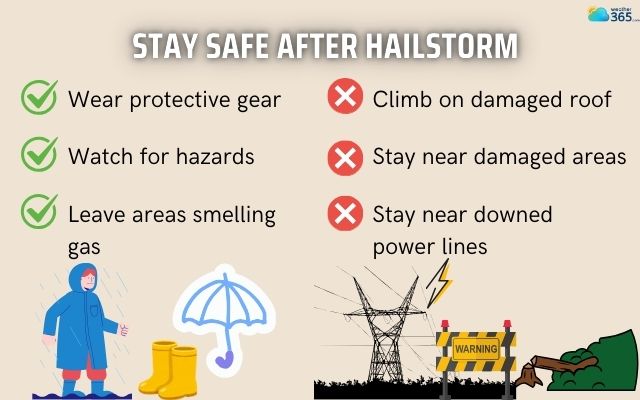
Do and don’t do after a hailstorm
Inspect & Document Damage
Wait until conditions are safe before going outside.
Do a visual walkaround first. Check roof, gutters, siding, windows, skylights, vents, HVAC units, and vehicles.
Look for: missing or cracked shingles, dents, broken glass, dents on outdoor equipment, and granules from shingles in gutters or on the ground.
Photograph and video every damaged area. Take wide shots and close-ups. Capture dates and timestamps if possible. Label photos with location and brief notes.
Keep damaged items for inspection when safe (do not throw everything away).
Make a written list of damaged items and their estimated value to help with claims.
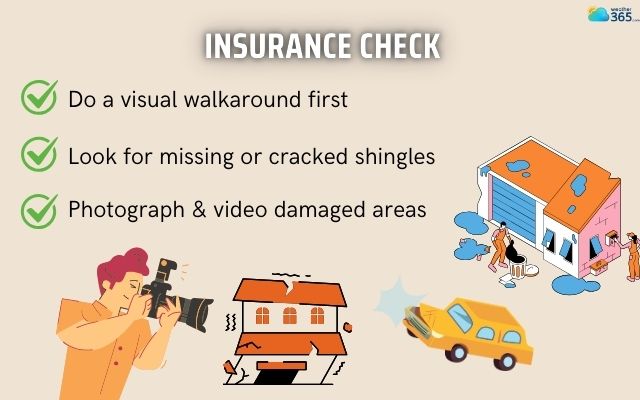
Check damaged items for insurance
Temporary Repairs & Mitigation
Make temporary fixes to prevent more damage. Cover holes in the roof with a tarp or cover broken windows with plywood.
Secure loose siding or trim to prevent wind or rain from causing more harm.
Clear gutters, downspouts, and drains so water can flow away from your home.
Remove dangerous debris from walkways and yards to avoid injuries.
Save all receipts for materials and emergency services.
Avoid permanent repairs until you’ve documented damage and spoken with your insurer, unless a delay would cause more damage.
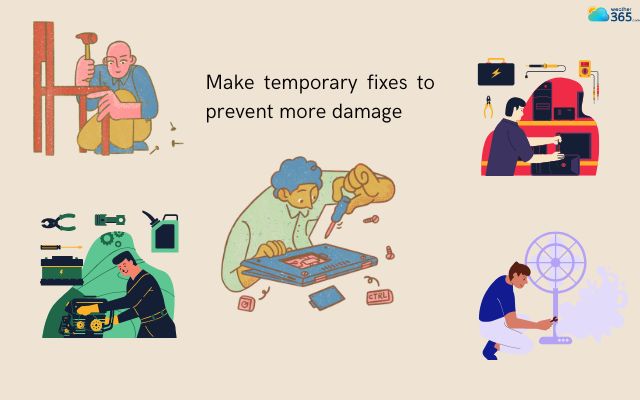
Fix damaged things after a hailstorm
Contact Insurance & Begin Claims
Contact your insurer as soon as possible to report the damage. Provide your policy number and a clear summary of what happened.
Submit photos, videos, and your damage list with the claim. Include dates and any temporary repair receipts.
Get written estimates from licensed contractors before agreeing to major repairs.
Ask your insurer about approved contractors and whether temporary repairs are covered.
Keep a detailed record of every call, email, and document related to the claim. Note names, dates, and reference numbers.
Beware of unlicensed “storm-chaser” contractors who pressure for immediate large payments. Verify credentials and check reviews.
Follow up regularly until the claim is resolved. Keep copies of all final invoices and payments.

Contact your insurer to report the damage
Conclusion
Hailstorms can strike with little warning, but preparation makes all the difference. By following these hail safety tips before, during, and after a storm, you’ll protect yourself, your family, and your property from unnecessary risks and costly damage. Stay prepared, stay safe. More : High winds safety tips
Frequently Asked Questions (FAQs)
Related post

What to do in a dust storm while driving: Essential safety tips for every driver
 1352
1352
 0
0
 4.7
4.7
 06/05/2026

How Does Hail Form? Unveil the Mysterious Process of Ice Creation
1317
0
4.9
06/05/2026

What is A Haboob? Exploring the Science, Dangers, and Safety Measures
1282
0
4.9
06/05/2026
Vital High Winds Safety Tips: What to Do Before, During, and After
1261
0
4.6
06/05/2026

0 Comment
Leave a comment
Your email address will not be published. Required fields are marked *