




What Is Cold Front? Understanding Sudden Weather Changes


What is cold front, and why does it often bring sudden storms or sharp temperature drops? If you’ve ever noticed weather changing almost instantly, a cold front is likely behind it. Scrolling down to learn how it forms and what it means for your daily weather. Diving in!
What is cold front
- What is Cold Front?
- Origin of a Cold Front
- Types of Cold Front
- Katabatic cold fronts
- Anabatic cold fronts
- What Weather Does A Cold Front Bring?
- Precipitation
- Wind and Pressure
- Sky Conditions and Visibility
- How Do Cold Fronts Affect Our Daily Lives?
- Severe Weather Potential
- Agricultural and Transportation Impacts
- Wildlife Behavioral Changes
- When Do Cold Fronts Occur?
What is Cold Front?
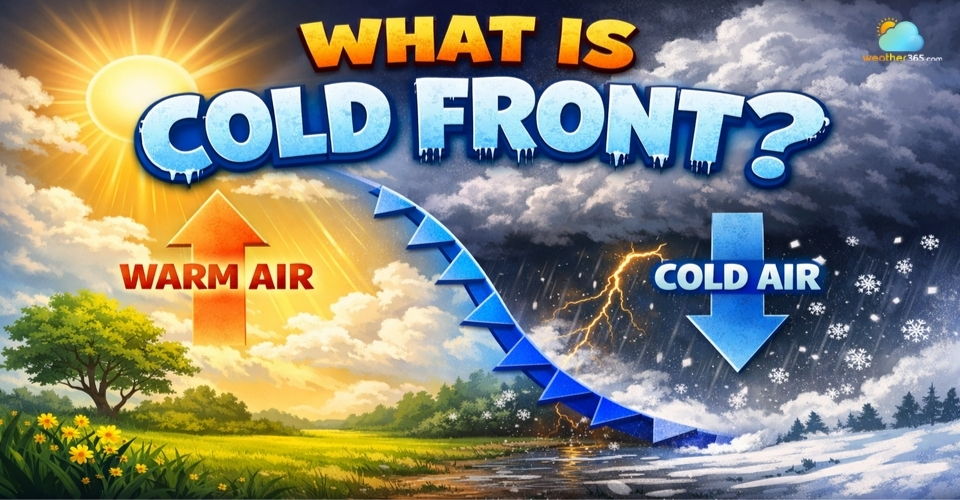
A cold front is the boundary where a mass of colder air moves forward and replaces a warmer air mass.
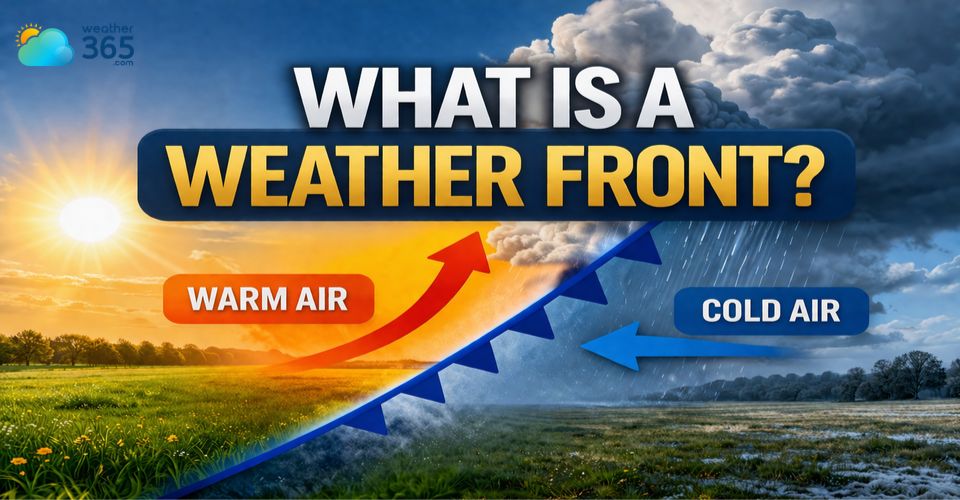
If you want a broader understanding, it helps to first learn what is a weather front and how these boundaries shape everyday weather patterns.
Because cold air is denser and heavier, it does not mix easily with warm air.
Instead, it acts like a wedge, sliding underneath the warmer air and forcing it to rise.
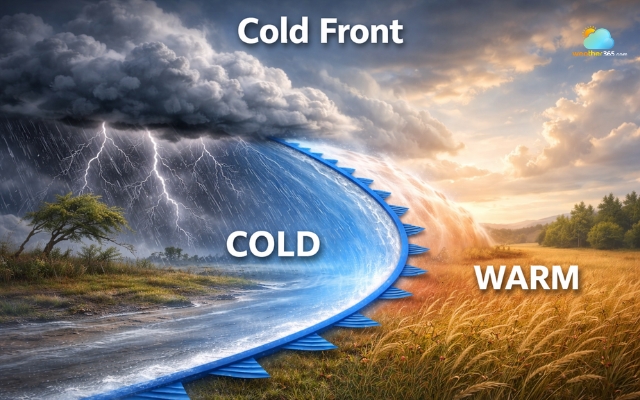
Cold air replaces a warmer air mass
This upward movement is the key to everything that follows. As warm air rises, it cools down, and the moisture it carries begins to condense into clouds.
That’s why cold fronts are often linked to sudden cloud formation, rain showers, or even thunderstorms.
Another important detail is speed. Cold fronts tend to move relatively fast compared to other types of weather fronts.
This is why the weather changes they bring often feel abrupt; clear skies can quickly turn into stormy conditions within hours.
In short, a cold front is not just a line on a weather map.
It’s a dynamic boundary where two very different air masses collide, creating the rapid and sometimes dramatic weather changes we notice in everyday life.
Origin of a Cold Front
The origin of a cold front is closely tied to the movement of large air masses and differences in atmospheric pressure.
Cold fronts typically begin in regions where cold, dense air accumulates, often in higher latitudes or areas dominated by high-pressure systems.
From there, this cold air starts moving toward regions of lower pressure, where warmer air is present.
Pressure differences in the atmosphere drive this movement.
Air naturally flows from high-pressure areas to low-pressure areas, and when the pressure contrast is strong, the movement becomes more intense.
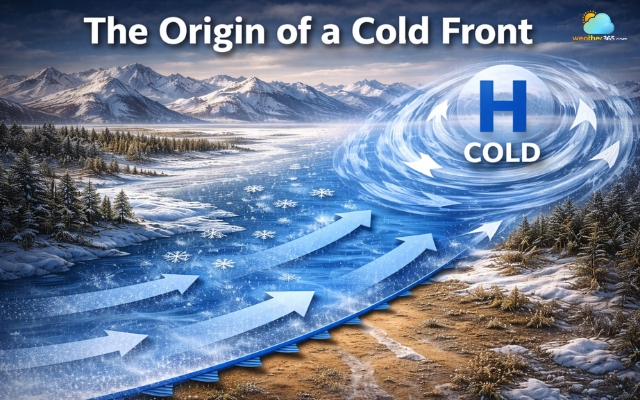
Cold fronts begin in regions where cold and dense air accumulates
As a result, a large body of cold air can surge forward, forming a clearly defined front that stretches for hundreds of kilometers.
At the same time, global wind patterns, especially the jet stream, help guide these cold air masses.
When the jet stream dips southward, it can pull cold polar air into warmer regions, setting the stage for a cold front to develop.
As the cold air advances, it continues to push underneath the warmer air ahead of it, sharpening the boundary between the two.
The stronger the temperature difference and pressure gradient, the more active and faster-moving the cold front becomes.
So, the origin of a cold front isn’t just about cold air appearing; it’s the result of large-scale atmospheric forces working together: pressure differences, temperature contrasts, and global wind patterns.
All of these combine to create the fast-moving systems that shape much of our day-to-day weather.
Types of Cold Front
Meteorologists commonly divide cold fronts into two main types: katabatic and anabatic cold fronts.
Katabatic cold fronts
A katabatic cold front is driven by relatively dry, dense air descending from higher altitudes.
This downward movement adds extra force to the advancing cold air, making the front move quickly and sharply.
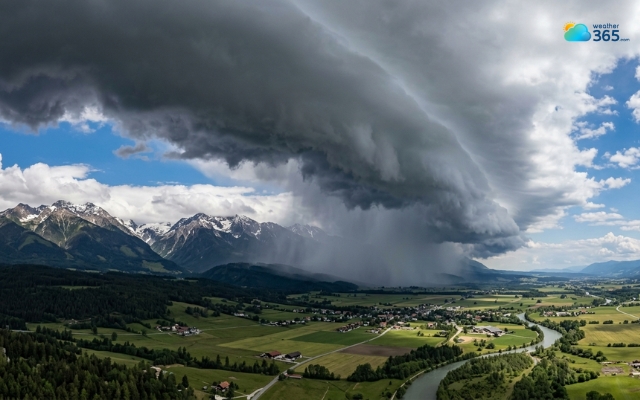
Katabatic cold fronts usually bring a sudden burst of heavy rain
Because the air behind the front is often dry, clouds and rain tend to form right along the front, or even just ahead of it, rather than spreading far behind.
In real life, this means you may experience a sudden burst of heavy rain or thunderstorms, followed by a rapid clearing of the sky.
The weather shift feels abrupt: strong winds, a quick temperature drop, and then noticeably cooler, drier air.
This type of cold front is often associated with more dramatic weather changes, especially during warmer months when the contrast between air masses is stronger.
Anabatic cold fronts
Anabatic cold fronts work differently.
Instead of dry descending air, they are associated with moist and unstable air at higher levels of the atmosphere.
In this case, precipitation doesn’t just occur at the front itself; it often continues behind the front, falling within the colder air mass that has already moved in.
This leads to a more gradual weather transition.
Instead of a short, intense storm, you might see longer periods of rain or cloud cover after the front has passed.
The change in temperature is still noticeable, but the overall experience feels less sudden compared to katabatic fronts.
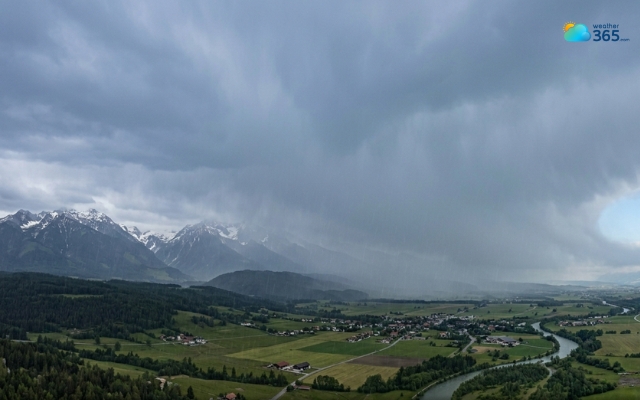
Anabatic cold fronts result in a long period of rain
What Weather Does A Cold Front Bring?
One of the most noticeable things about a cold front is how quickly it can change the weather.
In contrast, if you look at warm fronts, you’ll notice that warm fronts usually create slower, more gradual shifts in weather conditions.
With cold fronts, you might go from warm and calm conditions to strong winds, dark clouds, and heavy rain in just a few hours.
This happens because cold air forces warm, moist air to rise rapidly, triggering a chain of atmospheric reactions.
Precipitation
As the cold front advances, warm air is pushed upward and cools quickly.
This cooling causes moisture in the air to condense into clouds and eventually fall as precipitation.

Cold fronts usually bring rain
What makes cold front precipitation unique is its intensity and timing. Rain or storms often develop in a relatively narrow band along the front itself.
Instead of lasting all day, the rainfall is usually short-lived but can be quite heavy.
Cold fronts displace warm air rapidly, triggering thunderstorms and temperature drops on Minnesota 3-day weather cold front.
Depending on the season and temperature, this precipitation can take different forms.
In summer, it may show up as intense showers or thunderstorms. In winter, it could bring snow or even sudden snow squalls.
Either way, it tends to arrive quickly and leave just as fast.
Wind and Pressure
Wind is often one of the first signs that a cold front is approaching. Ahead of the front, winds usually come from warmer regions, carrying humid air.
But once the front passes, the wind direction shifts noticeably, bringing in cooler, drier air.
At the same time, atmospheric pressure begins to change. Pressure typically drops as the front gets closer, creating unstable conditions.
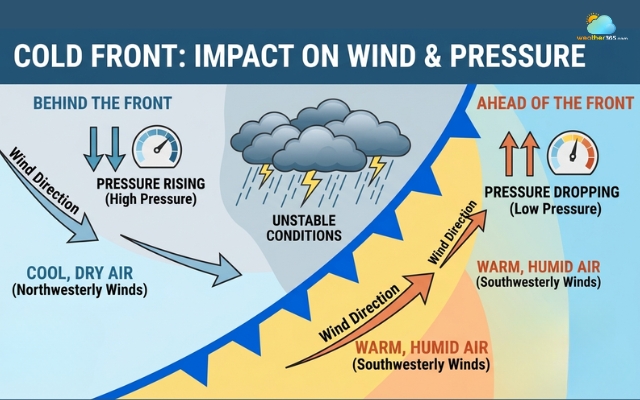
Wind brings cooler air once the front passes
After the front moves through, pressure rises again, which helps stabilize the atmosphere.
This combination of shifting winds and changing pressure is what gives cold fronts their dynamic and sometimes dramatic feel.
Strong gusts, sudden temperature drops, and even squall lines can all occur during this transition.
Sky Conditions and Visibility
The sky also tells a clear story when a cold front is on the way.
Before it arrives, you may notice increasing cloud cover, often building into tall, towering clouds associated with storms.
During the front’s passage, skies can become dark and stormy, sometimes with dramatic cloud formations like cumulonimbus clouds.
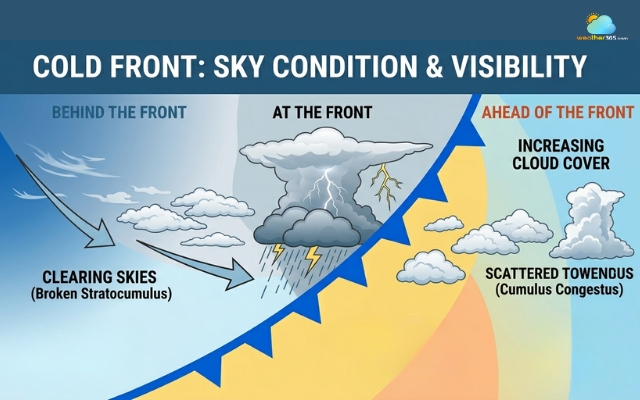
Increasing cloud cover signals incoming cold fronts
Visibility may drop due to heavy rain or blowing dust.
But what happens after is just as interesting. Once the cold front passes, the air becomes cooler and drier, allowing clouds to clear quickly.
This often leads to bright, crisp skies and much better visibility.
That rapid shift, from cloudy and stormy to clear and calm, is one of the classic signs that a cold front has just moved through your area.
How Do Cold Fronts Affect Our Daily Lives?
Have you ever wondered what these fronts mean to your life?
In reality, cold fronts are not just something you see on a weather map; they directly influence how we live, work, and interact with the environment.
Severe Weather Potential
One of the most immediate effects of a cold front is its ability to trigger severe weather.
As cold air forces warm air to rise quickly, the atmosphere can become unstable, leading to thunderstorms, heavy rain, or even more extreme events in some cases.
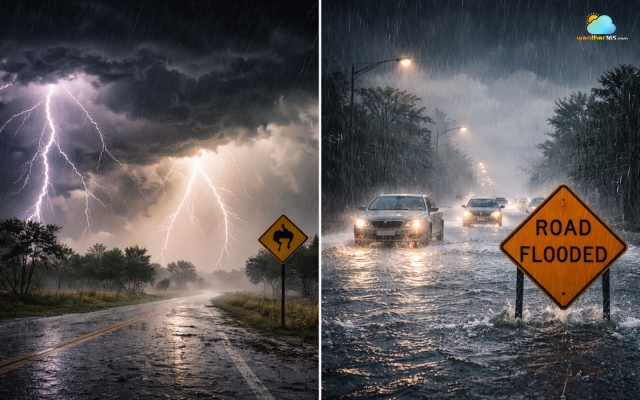
Cold fronts can bring severe weather events
These weather changes often happen fast. A calm day can quickly turn into strong winds, lightning, and intense rainfall.
Because of this, cold fronts are closely monitored in weather forecasting, especially when there is a risk of sudden storms that can affect safety and outdoor activities.
Agricultural and Transportation Impacts
Cold fronts can also create challenges for agriculture and transportation.
A rapid drop in temperature may damage crops, delay planting, or even cause frost in sensitive regions.
For transportation, the impact is just as noticeable. Heavy rain, strong winds, or reduced visibility can disrupt road travel and flights.
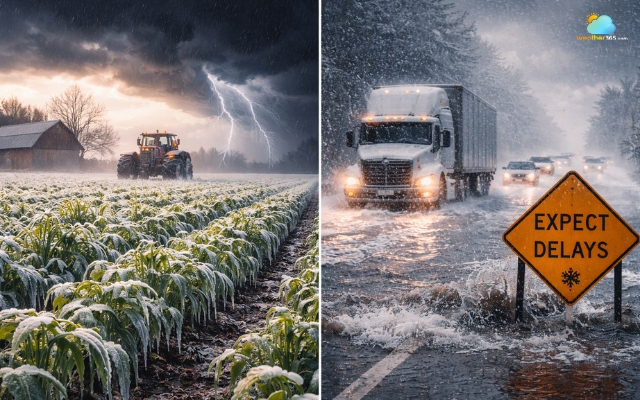
A rapid drop in temperature may damage crops and hinder transportation
In some cases, extreme conditions like snow or flooding can delay supply chains and daily commuting.
These disruptions may be temporary, but they can still affect both local economies and daily routines.
Wildlife Behavioral Changes
Animals are highly sensitive to environmental changes, and cold fronts often trigger noticeable shifts in their behavior.
Sudden drops in temperature or pressure can influence migration patterns, feeding habits, or shelter-seeking behavior.
For example, some animals may become more active just before a front arrives, while others seek protection as conditions worsen.
In colder seasons, certain species may even adjust their hibernation timing to cope with the changing environment.
These responses show how closely wildlife is connected to atmospheric changes.

Sudden drops in temperature can influence migration patterns
When Do Cold Fronts Occur?
Cold fronts can happen at any time of the year, but they are more noticeable when there is a strong contrast between warm and cold air masses.
In simple terms, the bigger the temperature difference, the more active and easier to recognize the cold front becomes.
In many regions, cold fronts are most frequent during spring and autumn.
These are transitional seasons when warm and cold air masses regularly collide, creating ideal conditions for fronts to form and move.
That’s why you often see sudden weather changes, like quick storms or temperature drops during these times.
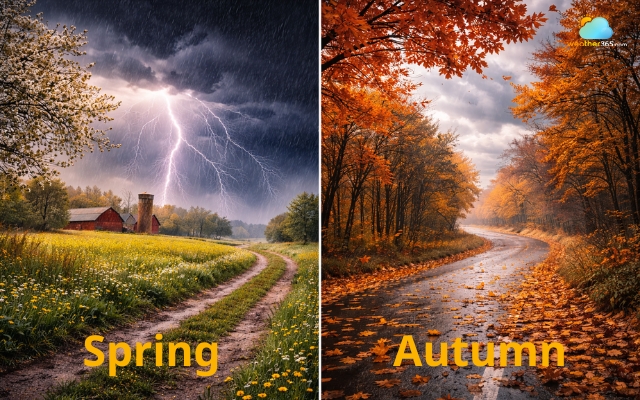
Cold fronts are most frequent during spring and autumn
During summer, cold fronts still occur, but they tend to interact with hot, moist air. This often leads to thunderstorms rather than long-lasting rain.
In contrast, winter cold fronts usually bring sharp temperature drops and, in some areas, snow or icy conditions.
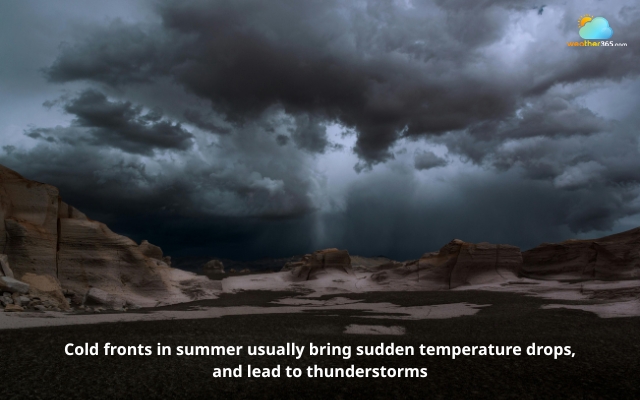
Cold fronts still occur in summer
Cold fronts are also closely linked to large-scale weather systems and the movement of the jet stream.
When the jet stream dips or shifts, it can push cold air masses into warmer regions, triggering the formation of a front.
Conclusion
What is cold front? Think of it as nature’s way of resetting the atmosphere. It brings fast changes, sometimes storms, sometimes clear skies. By understanding it, you can stay aware, prepared, and a bit more connected to the weather.
Frequently Asked Questions (FAQs)
Related post

Difference Between High and Low Pressure Systems: Easy Explanation
 570
570
 8
8
 4.6
4.6
 27/08/2026
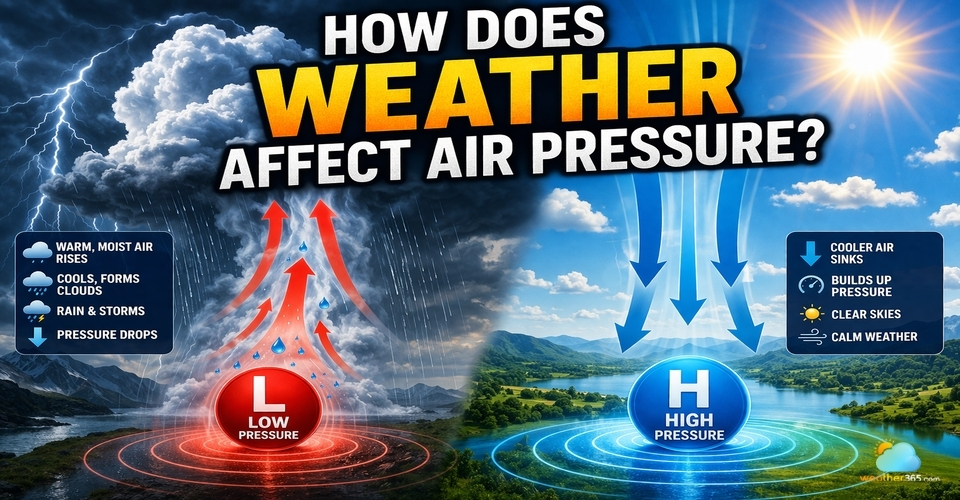
How Does Weather Affect Air Pressure? A Comprehensive Guide
351
8
4.6
18/08/2026
What Is a Weather Front? Types, Examples & Weather Impact
206
8
4.9
18/08/2026

8 Comment
Aaron Cook
Can a cold front move through without producing heavy rain?
Jameson Wright
I used to focus only on the temperature drop after a cold front. The changes in humidity, clouds, and visibility are just as interesting.
Cayden Wright
Can a cold front move through without producing heavy rain?
weather365
Yes. The weather along a cold front depends on factors such as moisture and atmospheric instability, so some fronts produce only clouds, wind, or light precipitation.
Noel Perez
Why does the wind often change direction when a cold front passes?
weather365
As the front moves through, the pressure pattern and the characteristics of the air mass change, which can lead to a noticeable wind shift.
Wesley Meyer
Why can a cold front sometimes bring thunderstorms?
weather365
When advancing cold air forces warm, moist air upward quickly, the rising air can become unstable and support thunderstorm development.
Leave a comment
Your email address will not be published. Required fields are marked *