




How Does High Humidity Affect Air Quality? Humidity Levels Explained


How does high humidity affect air quality? When indoor humidity rises above 50%, it can quickly turn a comfortable space into a breeding ground for mold, dust mites, and pollutants - affecting your health and comfort. In this article, let’s explore how it works and discover practical ways to improve your indoor air quality.
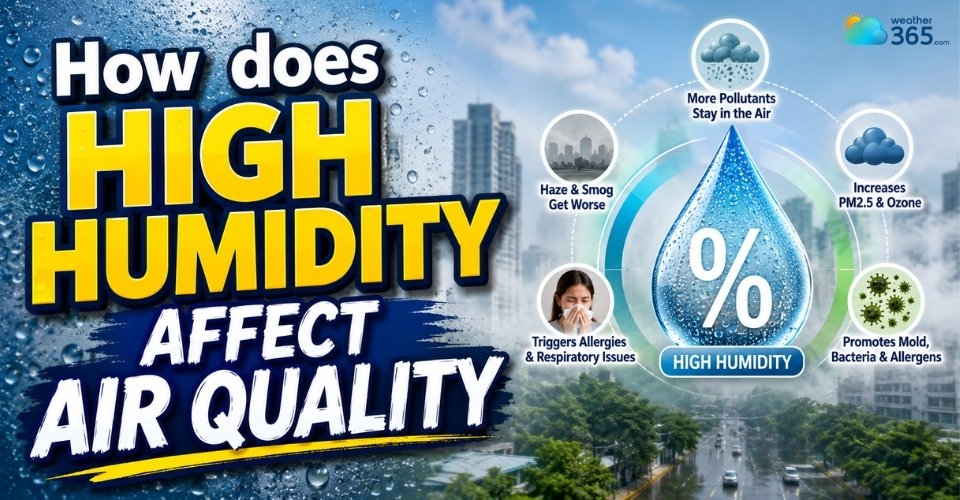
How does high humidity affect air quality
Understanding Humidity and Air Quality
Humidity affects air quality by influencing how pollutants, allergens, and microorganisms behave indoors.
Humidity refers to the amount of moisture present in the air.
When discussing indoor air quality, the most important measurement is relative humidity, which shows how much water vapor is in the air compared to the maximum amount the air can hold at a specific temperature.
A relative humidity of 50% means the air is holding half of the moisture it could potentially contain.
If you're wondering what is considered high humidity, indoor humidity levels above 50% are generally viewed as high.
While a little moisture in the air is beneficial, excessive humidity can create conditions that allow mold, dust mites, and bacteria to thrive, which may negatively affect indoor air quality.
Most experts recommend keeping indoor humidity levels between 30% and 50%. This range provides a good balance between comfort and health.
It helps prevent overly dry air that can irritate the skin and respiratory system while also limiting excess moisture that encourages pollutant buildup.
When humidity rises beyond the recommended range, air quality problems often become more noticeable.
Moisture can accumulate on walls, ceilings, carpets, and furniture, creating an environment where biological contaminants grow more easily.
High humidity can also make indoor spaces feel stuffy and uncomfortable because sweat evaporates more slowly from the body.
Understanding the connection between humidity and air quality is important because even clean-looking indoor spaces can develop hidden moisture-related issues.
Monitoring relative humidity and maintaining it within the recommended range is one of the simplest ways to support healthier indoor air and a more comfortable living environment.
Outdoor climate heavily dictates your indoor comfort.
If you live in warmer regions, keep an eye on real-time conditions by checking the Miami FL humidity level or tracking your local outdoor humidity index.
Managing indoor air is only half the battle. Discover how your home's air compares to the environment outside in our comprehensive guide on indoor air pollution vs outdoor.
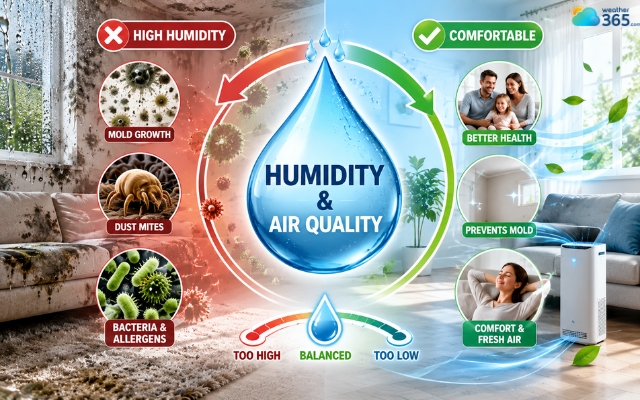
Humidity influences indoor pollutants, allergens, and microorganisms
Humidity level comparison chart
The ideal indoor humidity level is between 30% and 50%, where comfort and air quality are typically at their best.
Humidity that's too low or too high can create different indoor air quality problems.
Low humidity may dry out your skin and airways, while high humidity can encourage mold, dust mites, and musty odors.
The chart below shows how different humidity levels affect your home and health.
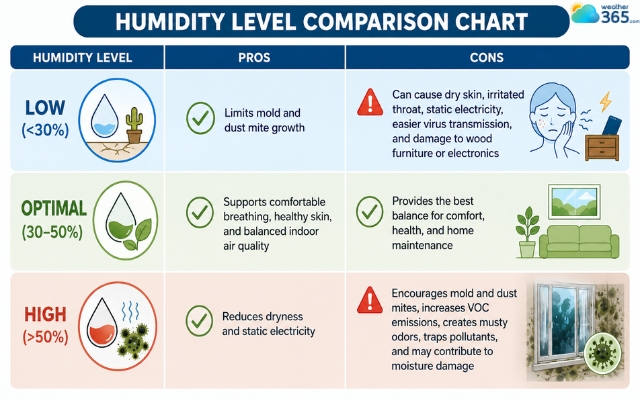
The ideal indoor humidity level is between 30% and 50%
How does high humidity affect air quality?
High humidity affects air quality by increasing moisture indoors, which encourages the growth of pollutants and allergens.
When humidity levels rise above the recommended range, indoor air can become less healthy and less comfortable.
Excess moisture creates conditions that allow mold, dust mites, and other microorganisms to thrive, while also making odors and pollutants more noticeable.
Promotes Mold and Mildew Growth
Mold and mildew grow quickly in damp environments. As they spread, they release spores into the air that can trigger allergies, coughing, and other respiratory issues.
Increases Dust Mite Allergens
Dust mites thrive in humid conditions. Higher humidity often leads to larger dust mite populations, increasing allergen exposure and potentially worsening asthma and allergy symptoms.
Encourages Bacteria and Microbial Growth
Moist surfaces provide a favorable environment for bacteria and other microorganisms.
Some of these microbes can release particles into the air, contributing to poorer indoor air quality.
Creates a Stuffy and Uncomfortable Environment
High humidity makes the air feel heavy and stagnant. Because sweat evaporates more slowly, indoor spaces often feel warmer than they actually are.
In coastal or southern regions, sudden spikes in outdoor moisture can quickly seep inside.
Stay prepared by reviewing the Houston, Texas live weather report before adjusting your home cooling settings.
Intensifies Indoor Odors
Excess moisture can make musty smells stronger and cause odors from cooking, pets, or damp materials to linger longer indoors.
Contributes to Moisture Damage
Over time, high humidity can damage walls, ceilings, wood, and furniture.
These damp materials may eventually support mold growth and release additional particles into the air.
Overall, high humidity doesn't just affect comfort, it can also worsen indoor air quality by encouraging allergens, microbial growth, odors, and moisture-related damage.
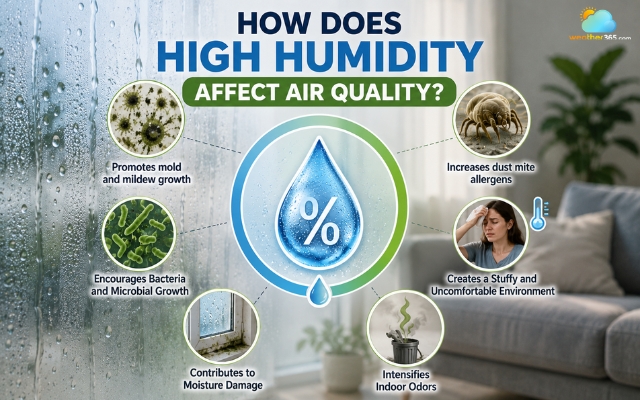
High humidity increases moisture indoors
How to improve air quality in high humidity conditions
The best way to improve air quality in humid conditions is to reduce excess moisture and keep indoor humidity between 30% and 50%.
When humidity stays too high, mold, dust mites, and other pollutants can build up more easily. Fortunately, a few simple steps can help maintain healthier indoor air.
Use a Dehumidifier
A dehumidifier removes excess moisture from the air and helps keep humidity within the recommended range.
This can reduce the risk of mold growth, dust mites, and musty odors.
Improve Ventilation
Good airflow helps move humid air out and bring fresh air in. However, only open windows when the outdoor air is crisp and dry.
Always check current air quality in Atlanta, GA before letting outside air into your living spaces.
Run Exhaust Fans
Exhaust fans are especially useful in bathrooms, kitchens, and laundry rooms where moisture levels tend to be highest.
Running them during and after activities such as showering or cooking helps remove excess humidity.
Fix Water Leaks Promptly
Leaking pipes, roofs, or windows can introduce extra moisture into your home.
Addressing leaks quickly helps prevent mold growth and protects indoor air quality.
Maintain HVAC Systems
Your HVAC system plays an important role in controlling humidity.
Regular maintenance, including changing filters and scheduling inspections, helps the system operate efficiently and improves airflow throughout the home.
Monitor Indoor Humidity Levels
A hygrometer can help you track indoor humidity levels.
Regular monitoring makes it easier to identify moisture problems early and take action before they affect air quality.
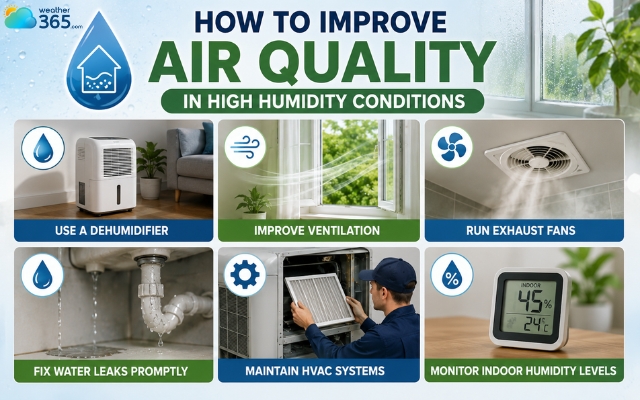
Reduce excess moisture to improve air quality
Closing thoughts
How does high humidity affect air quality? High humidity can encourage mold growth, increase allergens, trap odors, and make indoor spaces feel uncomfortable. Maintaining indoor humidity between 30% and 50% is one of the most effective ways to support healthier air. With proper moisture control and ventilation, you can improve both comfort and indoor air quality.
Frequently Asked Questions (FAQs)
Related post

What Causes Air Pollution? Major Emission Sources You Should Know
 25
25
 0
0
 5.0
5.0
 07/09/2026

Why Is Air Pollution Worse In Winter? Explore 3 Main Factors
16
0
5.0
11/09/2026

Does Rain Improve Air Quality? Benefits and Limitations Explained
6
0
4.6
13/09/2026

0 Comment
Leave a comment
Your email address will not be published. Required fields are marked *