




Does Rain Improve Air Quality? Benefits and Limitations Explained


Does rain improve air quality? Studies show that rainfall can significantly reduce airborne particulate matter, especially PM2.5 and dust, through natural cleansing processes. But how effective is rain, and are there any drawbacks? Dive in to discover the science behind cleaner air after rainfall and what it means for your health.
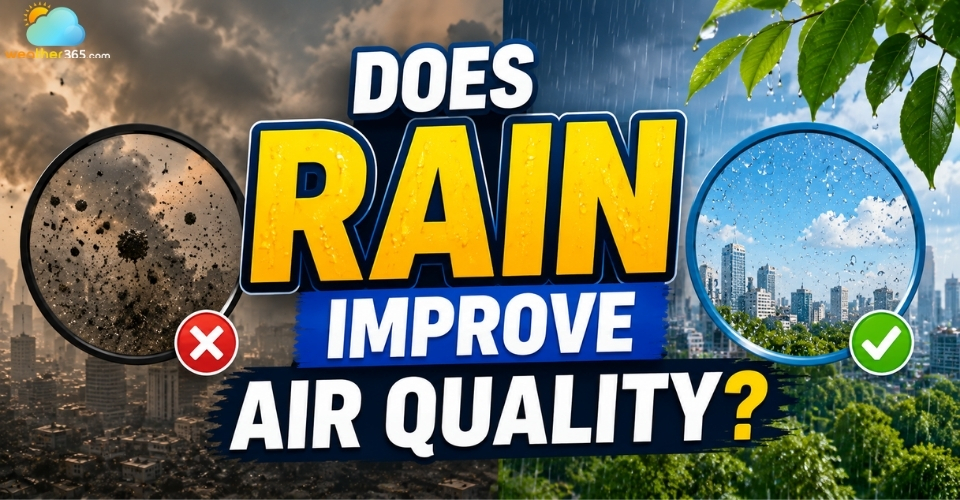
Does rain improve air quality?
- Does rain improve air quality?
- Scavenging Effect
- Washout
- Rainout
- Key benefits of rain to air quality
- Rain and Air Pollution: Potential Negative Impacts
- Relationship among weather, climate, and air quality
- Weather Influences Air Quality
- Climate Shapes Long-Term Air Quality
- Air Quality Affects Weather and Climate
Does rain improve air quality?
Yes, rain can improve air quality, at least temporarily. Rainfall acts like a natural cleaning system for the atmosphere, helping remove dust, smoke, pollen, and other airborne pollutants.
That is why the air often feels fresher and visibility improves after a rainstorm.
Scientists have long observed that rainfall can reduce concentrations of particulate matter, especially PM2.5 and PM10.
One analysis found that PM2.5 levels can drop by around 20% after rain events, although the actual reduction depends on factors such as rainfall intensity, storm duration, and local pollution sources.
However, rain does not eliminate pollution completely, it simply removes a portion of it from the air for a period of time.
The process by which rain cleans the atmosphere is known as wet deposition. This occurs when water droplets capture pollutants and transport them to the ground.
There are three key mechanisms involved: the scavenging effect, washout, and rainout.
Scavenging Effect
The scavenging effect occurs when falling raindrops collide with airborne particles and absorb them as they travel through the atmosphere.
These particles may include dust, soot, smoke, pollen, and other pollutants suspended in the air.
Think of each raindrop as a tiny vacuum cleaner. As millions of raindrops fall, they collect pollutants and carry them to the ground.
This process is one of the main reasons air often feels cleaner immediately after rainfall.
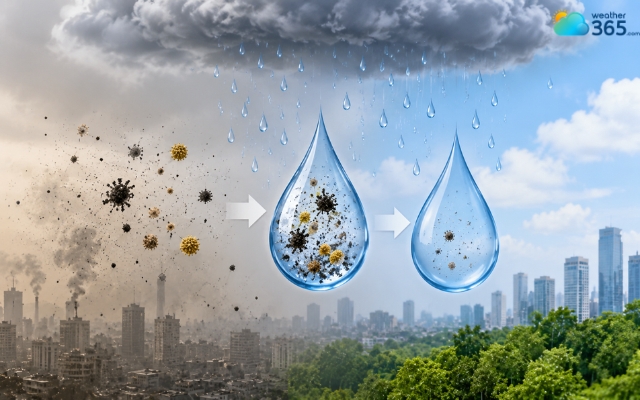
Scavenging effect occurs when falling raindrops collide with airborne particles
Washout
Washout refers to the removal of pollutants that are already present below cloud level. As rain falls through the atmosphere, it sweeps up particles and certain gases along its path.
This mechanism is particularly effective at reducing larger particles such as dust and pollen.
During moderate to heavy rainfall, washout can significantly lower particulate pollution concentrations, leading to clearer skies and improved visibility.
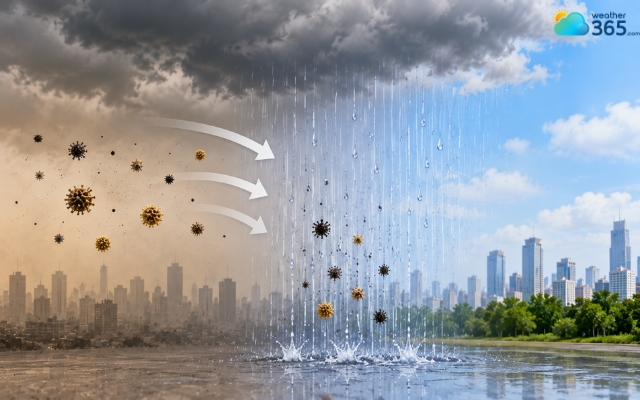
Rain sweeps up particles and gases
Rainout
Unlike washout, rainout happens inside clouds before precipitation reaches the ground. Tiny airborne particles act as nuclei around which water vapor condenses to form cloud droplets.
As these droplets combine and grow into raindrops, the pollutants trapped within them become part of the precipitation.
When the rain eventually falls, those pollutants are removed from the atmosphere.
Because rainout begins within the cloud itself, it helps clean the air at higher altitudes as well as near the surface.
Together, these three processes explain why rainy weather is often associated with cleaner air.
While the improvement may only last until new pollutants are released into the atmosphere, rainfall remains one of nature's most effective ways of temporarily reducing airborne pollution.
Planning outdoor activities after a storm? Check the current Kansas Air Quality and precipitation radar to see if rain will clear up the skies in your area today.
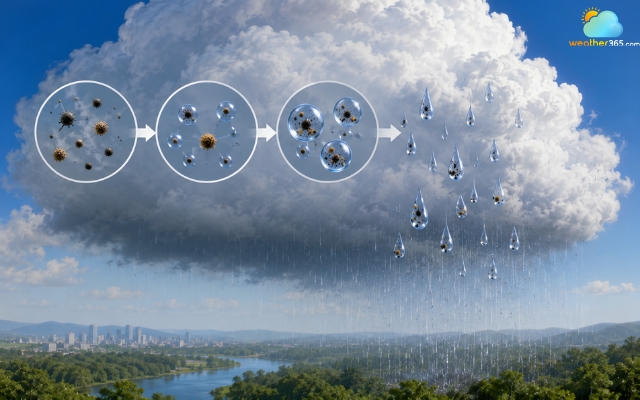
Rainout occurs inside the clouds
Key benefits of rain to air quality
Rain helps improve air quality by removing pollutants and refreshing the atmosphere.
Although the effects are often temporary, rainfall can make a noticeable difference in the air we breathe and the environment around us.
Reduces Airborne Particles
One of the biggest benefits of rain is its ability to remove particulate matter from the atmosphere.
As raindrops fall, they capture dust, dirt, soot, and fine particles such as PM2.5 and PM10.
This helps lower pollution levels and creates cleaner air, especially after moderate or heavy rainfall.
Improves Visibility
Air pollution often causes haze that makes it difficult to see distant objects. By removing suspended particles from the atmosphere, rain can significantly improve visibility.
This is why skies often appear clearer and brighter after a storm passes.
Removes Pollen and Allergens
Rain can wash pollen, mold spores, and other allergens out of the air.
For people who suffer from seasonal allergies, this often means temporary relief from symptoms such as sneezing, itchy eyes, and congestion.
Helps Reduce Smoke and Haze
During periods of smoke or light haze, rainfall can help clear some of the airborne particles responsible for poor air quality.
While rain cannot completely eliminate severe smoke pollution, it can reduce the concentration of particles and improve breathing conditions.
Creates a Fresher Outdoor Environment
Many people notice that the air smells cleaner after rain. This freshness comes from a combination of reduced pollution, lower dust levels, and natural compounds released when raindrops hit the ground.
The result is a more pleasant outdoor environment for daily activities.
Supports Public Health
By lowering the amount of particulate pollution in the air, rainfall can temporarily reduce exposure to pollutants that may irritate the lungs and respiratory system.
Cleaner air can be especially beneficial for children, older adults, and individuals with asthma or other breathing conditions.
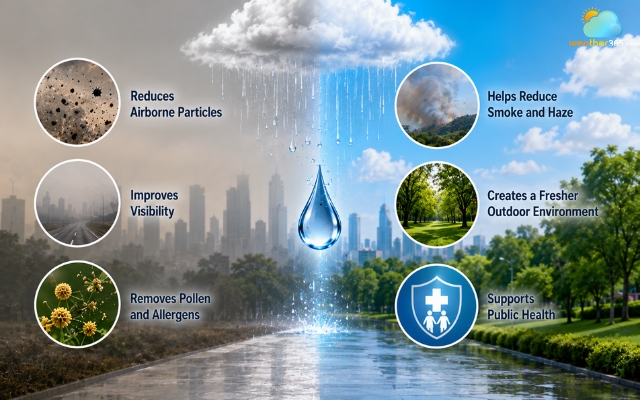
Rain improves air quality by removing pollutants
Rain and Air Pollution: Potential Negative Impacts
Yes, rain can improve air quality, but it may also have some negative effects.
While rainfall removes many pollutants from the atmosphere, it does not make pollution disappear completely.
In some cases, rain can create new environmental and air quality challenges.
Pollutants Are Moved, Not Eliminated
When rain washes pollutants out of the air, those contaminants are deposited onto roads, soil, rivers, and lakes.
This process reduces airborne pollution but can increase pollution in water bodies and surrounding ecosystems.
Acid Rain Can Harm the Environment
In areas with high emissions from vehicles, power plants, or industrial activities, pollutants such as sulfur dioxide (SO₂) and nitrogen oxides (NOₓ) can mix with moisture in the atmosphere.
The result is acid rain, which may damage forests, crops, buildings, and aquatic habitats over time.
Air Quality Improvements Are Often Temporary
Rainfall provides a short-term cleansing effect, but pollution sources continue to operate after the rain ends.
Traffic, industrial emissions, and other human activities can quickly reintroduce pollutants into the atmosphere, causing air quality to decline again.
For this reason, checking the air quality in your local area can help you understand whether conditions have actually improved after rainfall.
Increased Moisture Can Affect Indoor Air Quality
Extended periods of rainy weather often lead to higher humidity levels indoors.
Excess moisture can encourage the growth of mold, mildew, and dust mites, which may trigger allergies and respiratory problems for sensitive individuals.
Some Pollutants Are Less Affected by Rain
Rain is particularly effective at removing particulate matter, but it is less efficient at eliminating certain gaseous pollutants.
As a result, some forms of air pollution may remain in the atmosphere even after a significant rain event.
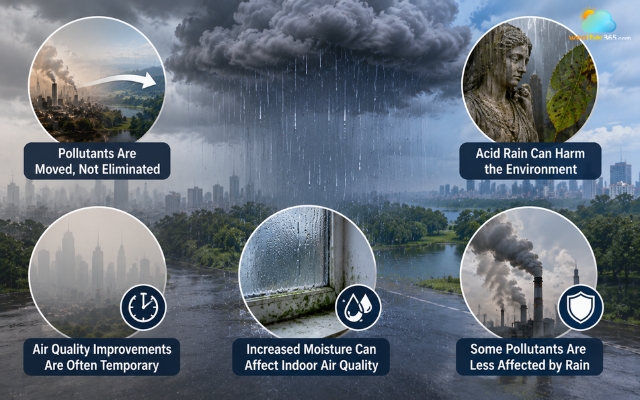
Rain can create new environmental challenges
Relationship among weather, climate, and air quality
Weather, climate, and air quality are closely linked and constantly influence one another.
Weather affects pollution levels from day to day, climate shapes long-term air quality patterns, and certain pollutants can even alter weather processes and contribute to climate change.
Weather Influences Air Quality
Weather conditions play a major role in determining how pollutants behave in the atmosphere. Depending on the conditions, pollution may either disperse quickly or build up near the ground.
Wind can disperse pollutants and improve air quality
Wind helps move polluted air away from an area and replaces it with cleaner air.
Strong winds often reduce pollution concentrations, while calm conditions can allow pollutants to accumulate.
Rain removes pollutants through wet deposition
Rain acts as a natural cleaning mechanism by removing dust, smoke, pollen, and particulate matter from the atmosphere.
Through a process known as wet deposition, pollutants are captured by water droplets and carried to the ground, temporarily improving air quality.
Temperature inversions can trap pollution
Normally, warm air rises and helps disperse pollutants. During a temperature inversion, however, a layer of warm air sits above cooler air near the surface, trapping pollutants close to the ground.
This can lead to smog and poor air quality, especially in urban areas.
Sunlight helps form ground-level ozone
While sunlight is essential for life, it also drives chemical reactions between pollutants such as nitrogen oxides (NOₓ) and volatile organic compounds (VOCs).
These reactions create ground-level ozone, a harmful pollutant that can irritate the lungs and worsen respiratory conditions.
Before heading out in traffic-heavy metro areas, track real-time conditions with the live Glendale weather air index updates to avoid peak smog hours.
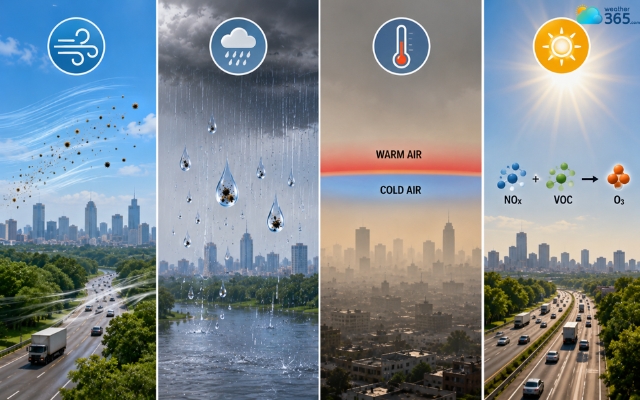
The weather significantly affects air quality
Climate Shapes Long-Term Air Quality
Climate refers to typical weather patterns over many years. Different climate zones face different air quality challenges.
Hot and sunny climates often have more ozone pollution
Areas with frequent sunshine and high temperatures provide ideal conditions for ozone formation.
As a result, ozone pollution is often more common during warm seasons.
Dry climates are more prone to dust pollution
Regions with little rainfall and sparse vegetation can experience dust storms and higher levels of airborne particles.
These conditions can reduce visibility and affect respiratory health.
Drought can increase wildfire smoke
Extended dry periods increase the likelihood of wildfires. Smoke from these events can travel hundreds of miles, affecting air quality far beyond the fire zone.
Climate change may worsen pollution events
As climate patterns shift, some regions may experience more heat waves, droughts, and wildfires.
These changes can contribute to longer-lasting and more severe air pollution episodes.
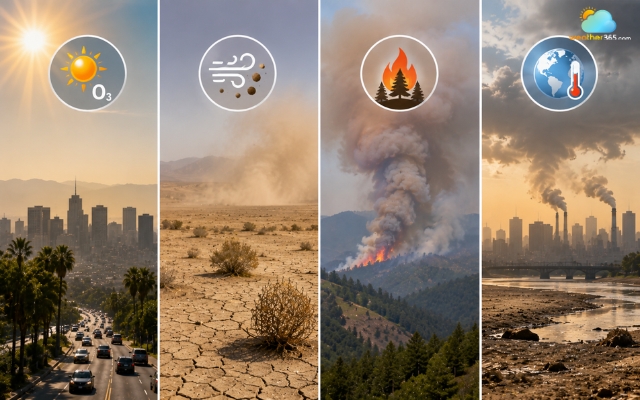
Different climate zones has different air quality challenges
Air Quality Affects Weather and Climate
The relationship is not one-way. Air pollution can also influence atmospheric processes and the Earth's climate system.
Greenhouse gases contribute to global warming
Gases such as carbon dioxide (CO₂) and methane (CH₄) trap heat in the atmosphere.
Their increasing concentrations are a major driver of global climate change.
Black carbon can warm the atmosphere
Black carbon, often produced by vehicle emissions and biomass burning, absorbs sunlight and converts it into heat. This warming effect can influence regional climate patterns.
Aerosols influence clouds and rainfall
Tiny particles known as aerosols can affect how clouds form and develop. In some cases, they can alter precipitation patterns, cloud lifetimes, and local weather conditions.
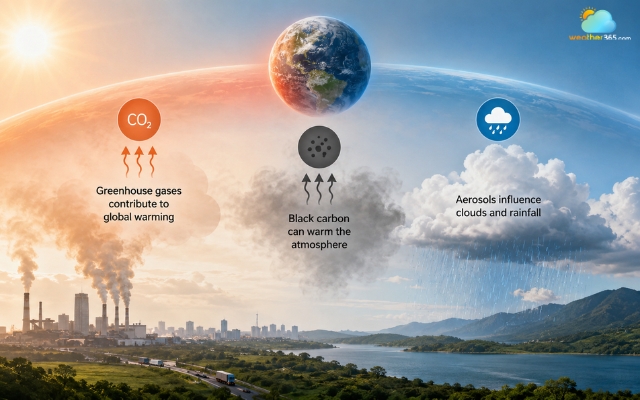
Air pollution can impact the whole climate
In conclusion
Does rain improve air quality? In most cases, yes. Rain helps remove dust, pollen, smoke, and particulate matter from the atmosphere, creating cleaner air and better visibility. However, the benefits are usually temporary. Understanding how rain interacts with weather, climate, and pollution can help you better interpret changes in air quality around you.
Frequently Asked Questions (FAQs)
Some effective strategies include:
◉ Use dehumidifiers to keep humidity levels under control.
◉ Improve ventilation by opening windows when conditions allow.
◉ Perform regular HVAC maintenance and replace filters as recommende
◉ Seal windows and doors to prevent moisture intrusion.
◉Monitor indoor air quality and humidity levels.
Related post
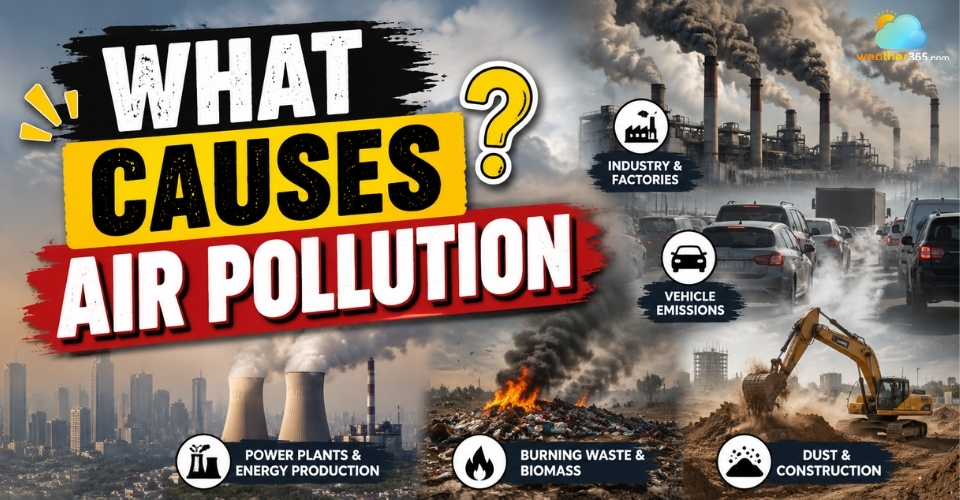
What Causes Air Pollution? Major Emission Sources You Should Know
 25
25
 0
0
 5.0
5.0
 07/09/2026
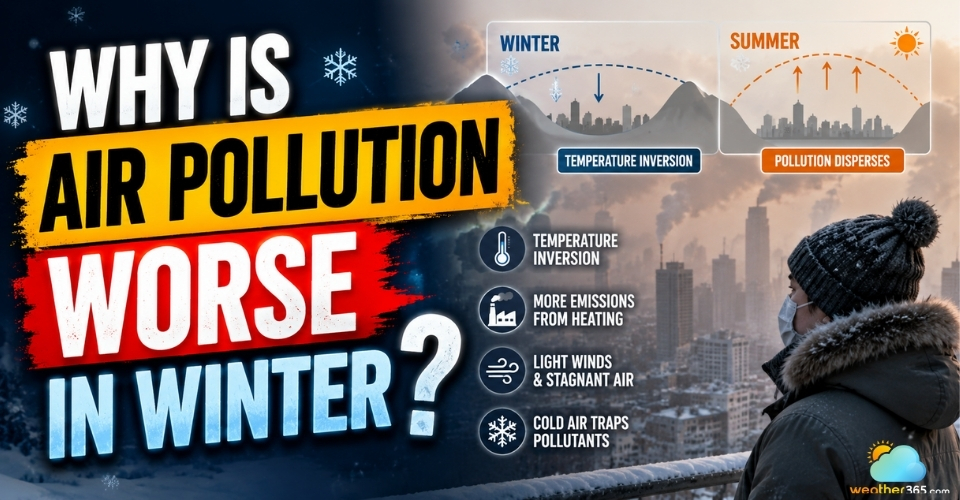
Why Is Air Pollution Worse In Winter? Explore 3 Main Factors
16
0
5.0
11/09/2026
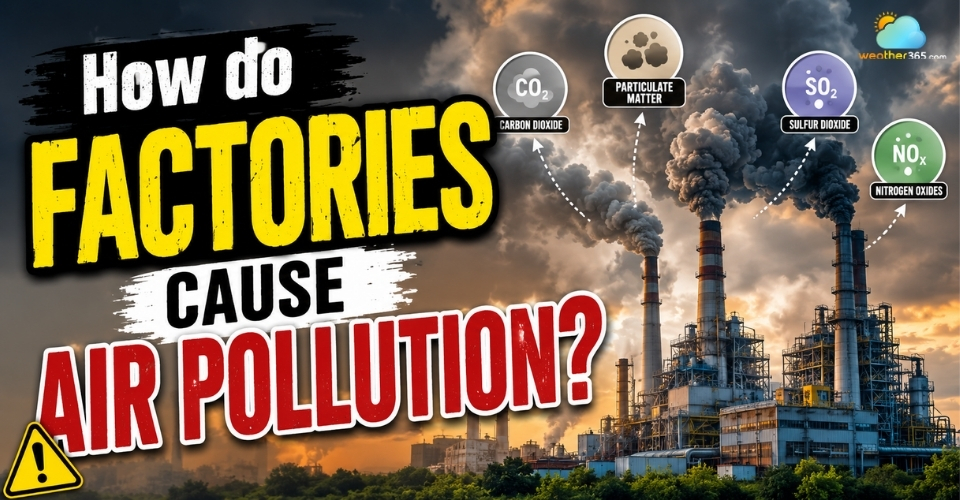
How Do Factories Cause Air Pollution? Sources, Impacts, and Safety Tips
15
0
4.7
10/09/2026

0 Comment
Leave a comment
Your email address will not be published. Required fields are marked *