




Heart Disease and Air Quality: Health Effects & Protection


Heart disease and air quality are more closely linked than many people realize. Research shows that exposure to polluted air, especially fine particles like PM2.5 can raise the risk of heart attacks, stroke, and worsening heart failure. Let’s learn how air pollution affects the heart, who is most at risk, and what you can do to protect your cardiovascular health.
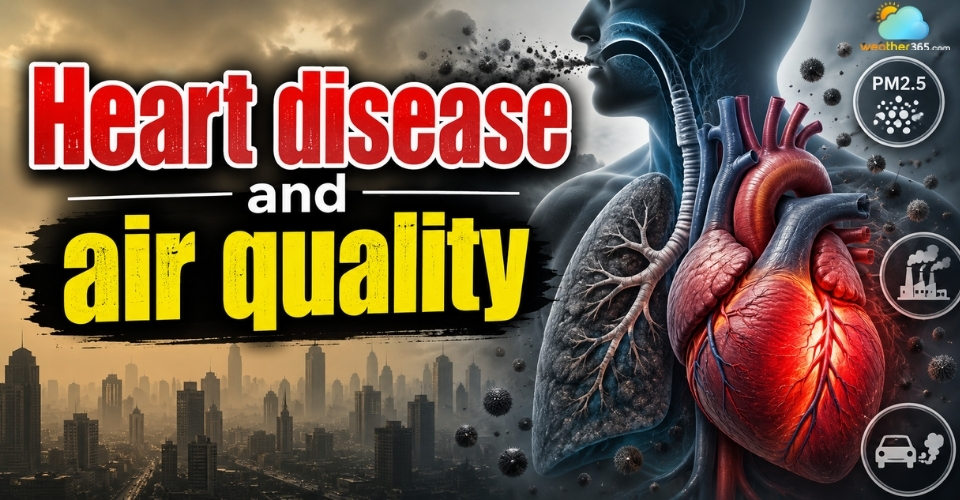
Heart disease and air quality
- Heart disease and air quality connection
- How air pollution affects the cardiovascular system
- Role of fine particulate matter (PM2.5)
- Short-term exposure effects
- Long-term exposure effects
- Who Is Most at Risk from Air Pollution and Heart Disease?
- Warning Signs of Air Pollution Affecting Heart Health
- How to protect your heart from air pollution?
Heart disease and air quality connection
There is a clear connection between heart disease and air quality.
Polluted air can do more than irritate your lungs; it can also stress your blood vessels, raise blood pressure, reduce oxygen delivery, and increase the risk of serious cardiovascular events over time.
How air pollution affects the cardiovascular system
Air pollution affects the cardiovascular system by putting the heart and blood vessels under constant biological stress.
When you inhale polluted air, especially traffic fumes, smoke, and fine particles, the lungs react first. But the impact does not stop there.
The body may release inflammatory chemicals into the bloodstream, which can irritate blood vessels and make them less flexible.
At the same time, pollution can trigger oxidative stress, a process that damages cells and weakens the protective lining of the arteries.
This combination of inflammation and oxidative stress matters because it makes the cardiovascular system work harder than it should.
Blood vessels may narrow, blood pressure can rise, and the heart has to pump against greater resistance.
Some pollutants can also interfere with how efficiently oxygen is delivered through the body, which adds even more strain, especially for people who already have coronary artery disease, heart failure, or high blood pressure.
In short, air pollution creates the kind of internal stress that can worsen existing heart conditions and increase the risk of new ones.
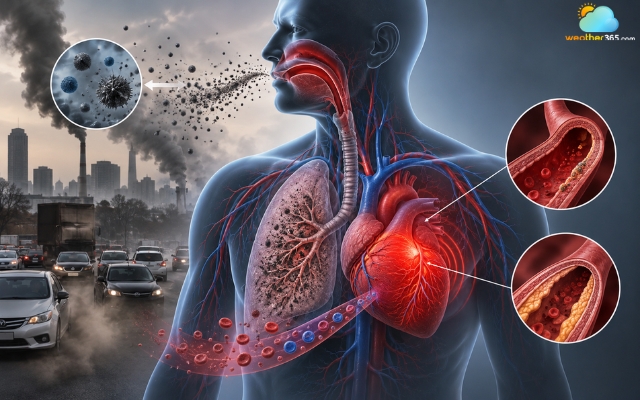
Air pollution puts the heart and blood under biological stress
Role of fine particulate matter (PM2.5)
Among the many pollutants linked to heart problems, PM2.5 is one of the most concerning.
These tiny particles are small enough to travel deep into the lungs and, in some cases, pass into the bloodstream.
That is what makes them especially dangerous: they are not just inhaled and cleared out, but can affect the body far beyond the lungs.
If you want a closer look at what these particles are and why they matter, check out our guide on What is PM2.5.
Once PM2.5 enters the body, it can contribute to inflammation in blood vessels and damage the inner arterial lining.
Over time, this may encourage plaque buildup in the arteries, making them narrower and less stable.
That matters because unstable plaque can rupture, which increases the risk of blood clots, heart attacks, and strokes.
For people with other cardiovascular risk factors, such as diabetes, high cholesterol, or hypertension regular exposure to PM2.5 may add another layer of pressure on an already vulnerable heart.
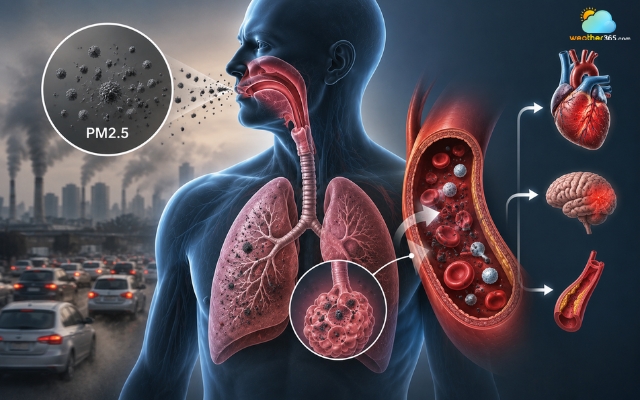
PM2.5 is one of the most serious pollutants
Short-term exposure effects
Even short-term exposure to poor air quality can affect heart health. During days with high pollution levels, the cardiovascular system may respond quickly to the added stress.
Some people experience a faster or irregular heartbeat, while others may notice chest discomfort, unusual fatigue, or shortness of breath during activities that normally feel manageable.
These short-term effects are especially important for people who already have heart disease.
A sudden spike in pollution can increase blood pressure, reduce oxygen availability, and place extra strain on the heart, which may trigger symptoms or worsen an underlying condition.
This is one reason hospitals often see more admissions for heart attacks, arrhythmias, and heart failure flare-ups during heavy pollution days.
In other words, bad air quality can act as an immediate trigger, not just a long-term risk factor.
Before heading out for a jog or daily commute, be sure to check the current Kansas air quality index to protect your cardiovascular health from sudden smog spikes.
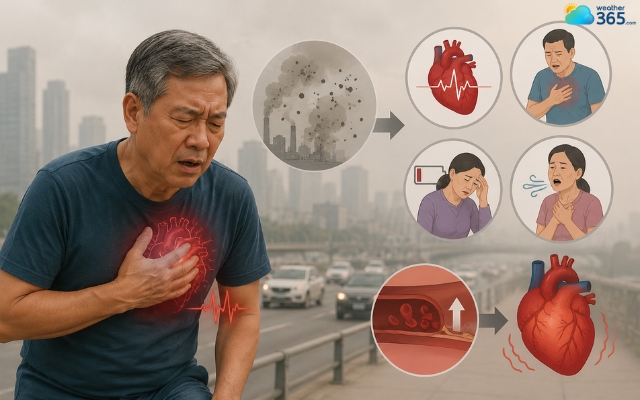
Short-term exposure can also harm human health
Long-term exposure effects
Long-term exposure is where the connection between heart disease and air quality becomes even more serious.
Breathing polluted air over months or years can gradually damage the cardiovascular system, even if the effects are not obvious right away.
Ongoing inflammation, oxidative stress, and repeated stress on blood vessels can speed up atherosclerosis, the process in which plaque builds up inside the arteries.
As that damage accumulates, the risk of chronic cardiovascular problems rises.
Existing heart disease may progress faster, the likelihood of heart failure can increase, and the risk of heart attack or stroke becomes harder to ignore.
Long-term exposure to polluted air has also been associated with higher cardiovascular mortality, meaning a greater risk of dying from heart-related conditions over time.
That is why air quality should be seen as part of heart health, not just an environmental issue, but a real factor in long-term cardiovascular protection.
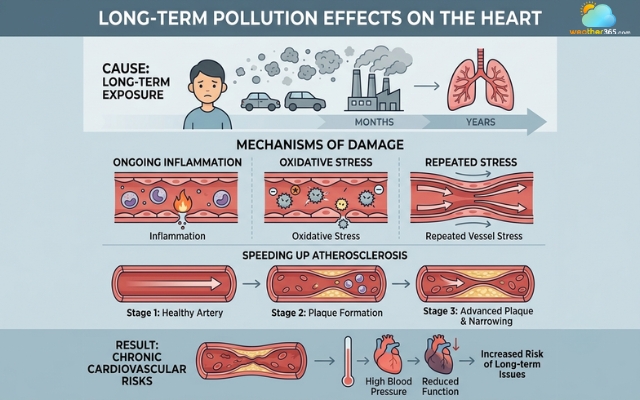
Long-term exposure to air pollution can damage cardiovascular system
Who Is Most at Risk from Air Pollution and Heart Disease?
While poor air quality can affect almost anyone, some groups are much more likely to experience serious symptoms, worsening heart problems, or pollution-related complications.
Older adults
Older adults are one of the highest-risk groups. As we age, the heart and blood vessels naturally become less flexible, and the body may not respond to stress as efficiently as it once did.
Older adults are also more likely to live with chronic conditions such as coronary artery disease, arrhythmias, or heart failure, which means air pollution can place an already stressed cardiovascular system under even more pressure.
People with existing heart condition
People who already have heart disease are also especially vulnerable.
If someone has a history of heart attack, heart failure, angina, arrhythmia, or narrowed arteries, even short-term exposure to polluted air may trigger symptoms or worsen their condition.
This is because air pollution can increase inflammation, raise blood pressure, and reduce how efficiently oxygen is delivered through the body, all of which can put extra strain on an already compromised heart.
Individuals with high blood pressure
Individuals with high blood pressure should also pay close attention to air quality.
Pollution can cause blood vessels to tighten and can contribute to short-term spikes in blood pressure, which may increase cardiovascular stress over time.
For people who already have hypertension, repeated exposure to poor air quality may make blood pressure harder to control and may raise the risk of complications such as heart attack, stroke, or worsening heart disease.

People suffering from heart disease due to air pollution
Smokers
Smokers face an added burden because their cardiovascular and respiratory systems are already exposed to harmful chemicals on a regular basis. Smoking damages blood vessels, reduces oxygen delivery, and increases inflammation throughout the body.
When air pollution is added on top of that, the combined effect can place even more stress on the heart and circulation.
In other words, smoking and polluted air can amplify each other’s harmful effects rather than acting as separate risks.
People living in highly polluted urban areas
People living in highly polluted urban areas may also face greater long-term cardiovascular risk simply because their exposure is more frequent and harder to avoid.
Heavy traffic, industrial emissions, construction dust, and seasonal smog can all contribute to consistently poor air quality.
Living in high-traffic metropolitan hubs? Take a moment to view the Chicago 10-day weather forecast and pollution report to plan outdoor activities around cleaner air windows.
Over time, that repeated exposure may increase the likelihood of plaque buildup in the arteries, worsen existing cardiovascular conditions, and raise the risk of emergency events during high-pollution days.
These higher-risk groups are often referred to as sensitive groups for air quality, because they are more likely to experience health effects when pollution levels rise.
If you want a broader breakdown of who falls into that category and why, take a look at our guide on What are sensitive groups for air quality.
Warning Signs of Air Pollution Affecting Heart Health
Air pollution may be affecting your heart if you notice symptoms like chest discomfort, shortness of breath, unusual fatigue, palpitations, or swelling, especially on days when air quality is poor.
Chest tightness or pain
Chest tightness or pain can happen when polluted air puts extra strain on the heart and reduces oxygen supply to the heart muscle.
For people with existing heart disease, this symptom may become more noticeable during high-pollution days and should not be ignored.
Shortness of breath
Shortness of breath is another common warning sign.
Poor air quality can irritate the lungs and make the heart work harder to deliver oxygen, leaving you breathless during normal activities like walking or climbing stairs.
Fatigue during light activity
If simple tasks suddenly leave you feeling unusually tired, air pollution may be adding stress to your cardiovascular system.
Reduced oxygen delivery and extra strain on the heart can make everyday movement feel more exhausting than usual.
Irregular heartbeat
Some people may notice a racing, fluttering, or uneven heartbeat when air pollution levels rise.
This can happen because polluted air affects blood vessels, inflammation, and the body’s natural control of heart rhythm.
Swelling in legs or feet
Swelling in the legs, ankles, or feet may be a sign that the heart is struggling to pump effectively, especially in people with heart failure.
While swelling can have different causes, it deserves attention if it appears along with fatigue or shortness of breath.
If these symptoms seem worse on poor air quality days, it may be a sign that pollution is putting extra pressure on your heart.
Tracking symptoms alongside the AQI can help you spot the pattern early.

Symptoms of heart problems
How to protect your heart from air pollution?
To protect your health from air pollution, focus on reducing exposure and supporting your overall cardiovascular health.
Monitor and limit exposure
Check the AQI before going outside, especially if you have heart disease or high blood pressure.
On high-pollution days, avoid outdoor exercise near traffic and try to spend less time outside during peak hours.
You can easily track live Bakersfield, CA weather conditions and AQI updates or check your local city data before starting outdoor workouts.
Optimize indoor air
Cleaner indoor air can reduce your daily exposure.
Keep windows closed when pollution levels are high, use an air purifier if possible, and avoid indoor pollutants such as cigarette smoke or strong chemical fumes.
Wear the right mask
If you need to be outdoors during poor air quality, wear a well-fitted N95 or KN95 mask.
These masks can help filter fine particles like PM2.5 more effectively than regular cloth masks.
Diet and lifestyle
Healthy habits can help your body handle pollution-related stress.
Eat antioxidant-rich foods, stay active when air quality allows, manage blood pressure, and avoid smoking to support long-term heart health.
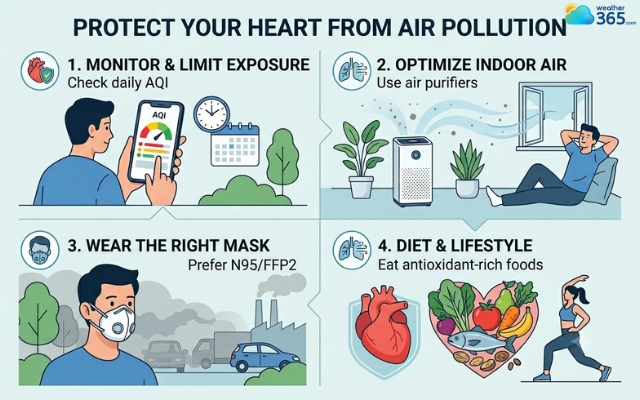
Protect your heart from air pollution
Final thoughts
Heart disease and air quality are closely connected, especially for people already at risk of cardiovascular problems. By understanding the warning signs, limiting exposure to pollution, and supporting your heart with healthy daily habits, you can reduce the strain poor air quality places on your cardiovascular system and better protect your long-term heart health.
Frequently Asked Questions (FAQs)
Related post
Symptoms of Poor Air Quality and Their Impact on Your Health
 31
31
 0
0
 4.6
4.6
 14/09/2026
What Are Sensitive Groups For Air Quality? Health Risks And Protection
12
0
4.8
14/09/2026

Air Quality and Exercise: How Pollution Affects Physical Activity
11
0
4.9
17/09/2026

0 Comment
Leave a comment
Your email address will not be published. Required fields are marked *