




What Is the Air Quality Index? Understanding AQI Levels and Health Risks


What is the air quality index? This is one of the most common questions people ask when checking weather and pollution reports. The Air Quality Index (AQI) is a simple tool that shows how clean or polluted the air is. It also helps people understand potential health risks before spending time outdoors.
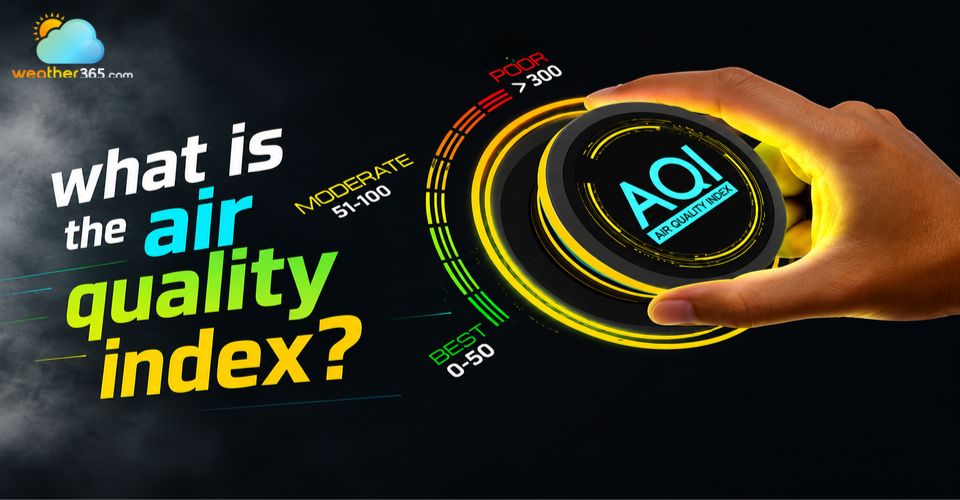
Understanding the mean of the air quality index
- What is the air quality index (AQI)?
- How does AQI work?
- Ground-Level Ozone
- Particle Pollution (PM₂.₅ and PM₁₀)
- Carbon Monoxide (CO)
- Sulfur Dioxide (SO₂)
- Nitrogen Dioxide (NO₂)
- Example of How AQI Is Calculated
- Air quality index values
- Good (0-50)
- Moderate (51-100)
- Unhealthy for Sensitive Groups (101-150)
- Unhealthy (151-200)
- Very Unhealthy (201-300)
- Hazardous (301+)
- How to check the AQI?
What is the air quality index (AQI)?
The Air Quality Index (AQI) is a system used to report daily air quality conditions. It tells you whether the air around you is clean, moderately polluted, or unhealthy. More importantly, it explains the possible health effects associated with different pollution levels.
The AQI focuses on health effects that may occur within a few hours or days after exposure to polluted air. In the United States, the Environmental Protection Agency (EPA) calculates AQI values based on major air pollutants regulated by the Clean Air Act.
>>> Check air quality in Washington to protect your health today!<<<
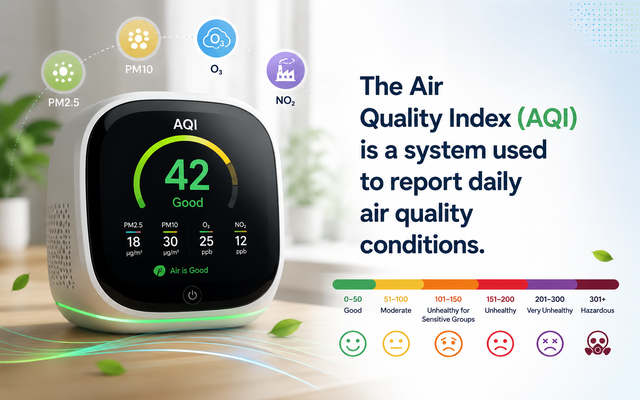
The AQI is used to report daily air quality conditions
These pollutants include:
Ground-level ozone
Particle pollution (PM₂.₅ and PM₁₀)
Carbon monoxide
Sulfur dioxide
Nitrogen dioxide
The AQI helps millions of people make informed decisions about outdoor activities, exercise, travel, and health protection.
How does AQI work?
The Air Quality Index (AQI) converts complex air pollution measurements into a simple number and color system that helps people understand local air quality conditions.
The system tracks five major pollutants regulated by the Clean Air Act:
Ground-Level Ozone
Ground-level ozone forms when pollutants from vehicles, factories, and power plants react with sunlight. It is one of the most common pollutants during hot summer days.
Particle Pollution (PM₂.₅ and PM₁₀)
Particle pollution consists of tiny solid particles and liquid droplets suspended in the air.
PM₂.₅ particles are smaller than 2.5 micrometers.
PM₁₀ particles are smaller than 10 micrometers.
These microscopic particles can travel deep into the lungs and even enter the bloodstream. PM₂.₅ is considered particularly dangerous because of its small size.
Carbon Monoxide (CO)
Carbon monoxide is an invisible, odorless gas released when fuels such as gasoline, natural gas, wood, or coal are burned.
High levels can reduce oxygen delivery throughout the body.
Sulfur Dioxide (SO₂)
Sulfur dioxide is mainly produced by burning fossil fuels such as coal and oil.
Once released into the air, it can irritate the respiratory system, trigger asthma symptoms, and make breathing more difficult for sensitive individuals.
Nitrogen Dioxide (NO₂)
Nitrogen dioxide is released from vehicle exhaust and industrial activities.
Long-term exposure can increase respiratory problems.
Air quality monitoring stations continuously measure the concentration of these pollutants in the atmosphere.
The measured concentrations are then converted into individual AQI values using standardized formulas established by environmental agencies.
For each pollutant, an AQI value of 100 generally corresponds to the national air quality standard established to protect public health.
AQI values at or below 100 are usually considered satisfactory. Values above 100 indicate increasing health concerns.
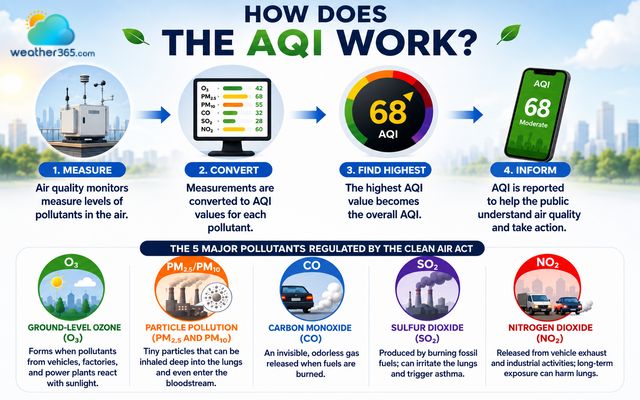
How does the air quality index work
Example of How AQI Is Calculated
Suppose a city reports the following pollutant-specific AQI values:
Pollutant | AQI Value |
Ozone | 65 |
PM₂.₅ | 125 |
Carbon Monoxide | 40 |
Sulfur Dioxide | 20 |
Nitrogen Dioxide | 35 |
In this example, PM₂.₅ has the highest AQI value (125). Therefore, the city's overall AQI is reported as 125.
Air quality index values
The AQI uses six categories to communicate health risks.
The AQI is organized into six color-coded categories. Each is paired with a numerical range to clearly communicate air quality conditions and potential health risks.
AQI Value | Category | Color | Health Concern |
0-50 | Good | Green | Little or no health risk |
51-100 | Moderate | Yellow | Acceptable air quality; minor concerns for sensitive individuals |
101-150 | Unhealthy for Sensitive Groups | Orange | Sensitive groups may experience health effects |
151-200 | Unhealthy | Red | Everyone may begin experiencing health effects |
201-300 | Very Unhealthy | Purple | Health alert; serious health effects possible |
301+ | Hazardous | Maroon | Emergency conditions affecting the entire population |
Good (0-50)
Air quality is satisfactory and poses little or no health risk.
People can safely participate in outdoor activities.
Moderate (51-100)
Air quality remains acceptable for most people.
However, individuals who are highly sensitive to ozone or particle pollution may experience mild symptoms.
Unhealthy for Sensitive Groups (101-150)
Air quality in this category can begin to pose health concerns for people who are particularly sensitive to pollution.
Children, seniors, individuals with asthma, people with heart disease, and those with chronic lung conditions may experience mild symptoms or breathing discomfort.
However, most healthy adults are unlikely to notice adverse effects at this stage.
Do you know? Due to geographic trapped smog and heavy traffic, the air quality in Los Angeles frequently hovers within this 101-150 range during hot summer days, prompting health warnings for sensitive residents. |
Unhealthy (151-200)
Everyone may begin experiencing health effects.
Common symptoms include:
Coughing
Throat irritation
Shortness of breath
Eye irritation
Sensitive groups may experience more severe reactions.
Is the air quality in Texas currently in this unhealthy range? Check current air quality in Texas!
Very Unhealthy (201-300)
This category triggers a health alert.
Outdoor activities should be limited whenever possible.
Hazardous (301+)
Hazardous air quality creates emergency conditions.
Health warnings apply to everyone, regardless of age or health status.
>>> Check the current air quality in Alabama now!<<<
How to check the AQI?
Knowing how to check the Air Quality Index (AQI) can help you avoid harmful air pollution and make safer decisions about outdoor activities.
AQI levels can change throughout the day due to traffic, weather conditions, industrial emissions, and wildfires.
That is why many people regularly search for "What is the air quality index right now?" before exercising, commuting, or spending time outdoors.
Here are some of the best ways to check AQI:
Weather365.com: One of the easiest ways to check AQI is through Weather365.com (https://weather365.com/en/air-quality-index). The platform provides current AQI readings, hourly forecasts, pollution trends, and health recommendations. Users can quickly see whether air quality is safe for outdoor activities.
Official Air Quality Websites: Government websites such as AirNow provide real-time AQI data, air quality forecasts, and wildfire smoke maps. Simply enter your city, state, or ZIP code to view local conditions.
Mobile Apps: Download air quality apps like AirNow or use weather apps that display AQI information. These apps can send alerts when pollution levels become unhealthy.
Built-In Weather Apps: Most iPhone and Android weather apps now include AQI readings alongside temperature and weather forecasts. This makes it easy to check air quality before heading outside.
Voice Assistants: Ask Siri, Google Assistant, or Alexa, "What is the AQI in my area?" for a quick update without opening an app.
Google Maps: Open Google Maps, tap the Layers icon, and select "Air Quality" to view a color-coded AQI map of your area.
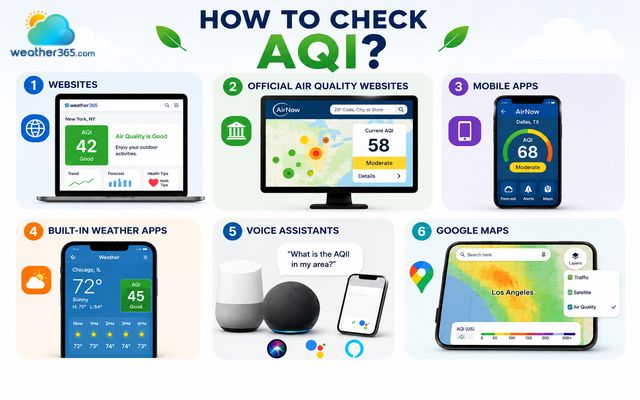
Methods to check the AQI
By taking a few seconds to check AQI each day, you can make smarter decisions about outdoor activities and better protect your health.
To sum up
The AQI is a valuable tool that transforms complex pollution measurements into easy-to-understand health information. By monitoring air quality regularly, you can make safer decisions about outdoor activities and reduce exposure to harmful pollutants. Visit Weather365.com to stay informed and understand what is the air quality index in your area.
Frequently Asked Questions (FAQs)
Related post
What Is Air Temperature? Definition, Measurement, and Key Factors
 281
281
 0
0
 4.8
4.8
 18/08/2026

What Is Air Pressure? Understanding Atmospheric Pressure
192
0
5.0
18/08/2026
How To Measure Air Temperature? Step-by-Step Guide To Accurate Measurement
186
0
4.9
18/08/2026

0 Comment
Leave a comment
Your email address will not be published. Required fields are marked *