




What are the causes of static electricity? TOP 6 common reasons


What are the causes of static electricity, and why does it seem worse in winter? In this post, we will break down the top 6 causes of static electricity, explain when shocks occur, and show how you can prevent them from ruining your day.
What Are The Causes Of Static Electricity?
- What is static electricity and static shock?
- When do static shocks happen?
- What are the causes of static electricity?
- Friction
- Contact and separation
- Rapid heat change
- High-energy radiation
- Cutting action
- Induction
- How dangerous is static electricity in winter?
- For electronics
- For flammable or explosive environments
- Tips to avoid static electricity in winter
What is static electricity and static shock?
Static electricity happens when there’s an imbalance of electric charges on a surface. When two materials rub together, electrons move from one to the other, leaving one positively charged and the other negatively charged.
You can learn more about why static electricity gets worse during cold months in our full guide on static electricity in winter!
A static shock happens when these charges suddenly discharge.
For example, you might feel a spark when touching a metal doorknob after walking on a carpet. The metal conducts electricity, allowing the built-up electrons on your body to jump and restore balance.

An imbalance of electrical charges builds up resulting in static electricity
Below are the 10 most common static electricity situations you might encounter at least once in your daily life, especially in the winter:
When you rub a balloon on your hair, the balloon becomes charged, making your hair stand up.
If you walk across a carpet and then touch a metal doorknob, you’ll feel a small electric shock.
Clothes often stick together after coming out of a dryer because of friction between fabrics.
When you brush or comb dry hair, the strands repel each other and fly apart.
Sliding out of a car seat can make your clothes and the seat fabric generate a spark when you touch the car door.
Peeling off plastic wrap causes the film to cling to your hands or nearby objects due to static charge.
After walking in a dry store, touching a metal shopping cart may give you a mild zap.
When you remove a wool sweater, it may crackle and attract dust or lint from the air.
Handling electronics without proper grounding can cause static discharge that damages computer chips or circuit boards.
Lightning during a storm is a large-scale natural example of static electricity, where charge buildup in clouds discharges toward the ground.

Rubbing a balloon on your hair charges it, making your hair stand up
When do static shocks happen?
Static shocks happens most often in cold, dry conditions because the air lacks humidity to help discharge excess electrons.
You will notice it when:
Taking off synthetic clothes in winter.
Brushing hair made of fine strands that easily charge.
Sliding across car seats.
Walking on carpet floors and touching metal objects.
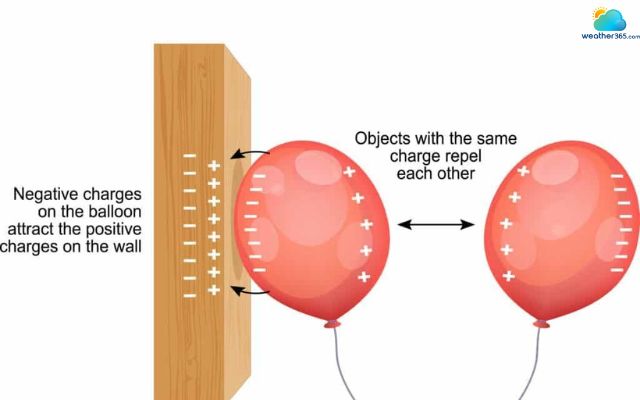
Static shocks happen most in cold, dry conditions
What are the causes of static electricity?
Static electricity forms whenever a surface gains or loses electrons through various physical processes.
This process can occur in many ways, from simple friction to more complex physical or environmental conditions.
Let’s explore the main causes in detail.
Friction
Static electricity most commonly arises when two materials come into contact and then separate. During that process, electrons transfer between the surfaces, leaving one positively charged and the other negatively charged.
The greater the friction, the more electrons move, and the stronger the charge.
For example, when you walk across a carpet, your shoes rub repeatedly against the fibers. Electrons transfer from the carpet to your body, building up static charge.
The same happens when pulling tape from a box or sliding a plastic sheet off a table - every contact and separation contributes to charge buildup.

Electrons transfer from the carpet through the shoes to your body
Contact and separation
Even without rubbing, simply touching two materials and then separating them can produce a static charge. This occurs because electrons naturally transfer at the moment of contact.
When you peel adhesive tape from a box or remove a plastic film from a surface, you may hear a faint crackling sound - that’s the sound of static discharge.
The same effect appears in the packaging and printing industries, where sheets, foils, or paper layers constantly contact and separate.

Peeling tape from the wall can produce a static charge
Rapid heat change
A sudden temperature change can also lead to static generation. When materials heat up or cool down quickly, their atomic structure shifts, forcing electrons to move unevenly.
This imbalance results in charge accumulation on the surface.
For instance, when plastic components come out of an injection molding machine, the cooling process can trap static on the material’s surface.
Similarly, in dry winter air, rapid heating from indoor systems can cause surfaces to lose or gain electrons faster, increasing static buildup around furniture or clothing.

A sudden change in heat can produce electricity
High-energy radiation
High-energy radiation, such as ultraviolet or X-rays, can knock electrons out of atoms and ionize the surrounding air. This process leaves surfaces charged even without friction or physical contact.
In industries that use sterilization lamps, UV curing, or X-ray inspection systems, static can appear on machinery or materials exposed to this radiation.
Although this cause is less common in daily life, it becomes significant in electronics production, where static from ionizing radiation can interfere with sensitive components.

UV light sterilization can produce static on machinery or materials
Cutting action
When materials are cut, torn, or split, their atomic structure separates quickly, leaving new surfaces charged. During cutting, electrons don’t have enough time to rebalance, leading to an uneven charge distribution.
For example, slicing sheets of plastic, paper, or film in packaging lines can generate noticeable static. Operators may even see small sparks if the material is thick and the air is dry.
In everyday life, you can notice this effect when tearing a piece of adhesive tape, it often clings to your hand or attracts dust immediately after cutting.
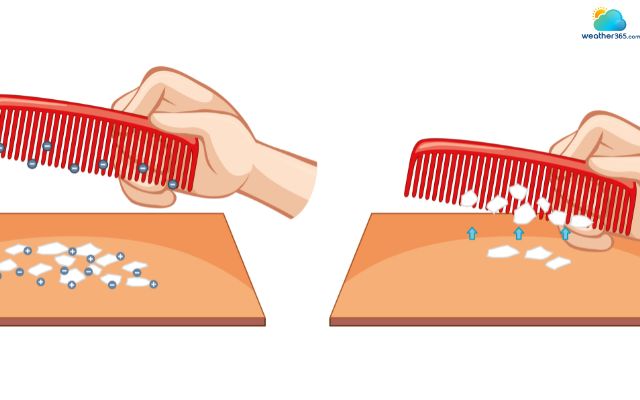
Slicing sheets of paper can generate static
Induction
Induction happens when a charged object influences another neutral object nearby, even without touching it.
The electric field from the charged surface pushes or pulls electrons within the neutral object, causing one side to become more positive and the other more negative.
For instance, when you hold a charged balloon near small pieces of paper, the paper jumps toward it because of induced charge attraction.
In industrial environments, induction can occur when ungrounded metal objects are placed near high-voltage equipment, allowing them to accumulate static charge through proximity alone.

Paper jumps toward balloon because of induced charge attraction
How dangerous is static electricity in winter?
While many zaps are harmless in everyday life, under certain conditions, static discharge can cause harm, damage, or even trigger dangerous events.
Let’s explore how static electricity can affect people, electronics, and flammable environments.
For people
Most static shocks are harmless, though unpleasant. The voltage can reach up to 20,000 volts, but the current is extremely low, so it rarely causes injury.
However, people with heart conditions or those using medical implants (like pacemakers) may feel mild interference or stress from repeated shocks.

Most static shocks are harmless to people
For electronics
Static discharge can damage sensitive electronics such as computers, circuit boards, and phones.
Even a small discharge can destroy microchips or memory components, which is why factories use antistatic wristbands and grounding systems.
For flammable or explosive environments
This is where static becomes genuinely dangerous. In places like fuel stations, paint shops, or chemical plants, a single static spark can ignite flammable vapors or dust, causing fires or explosions.
Proper grounding, humidification, and antistatic materials are critical in such settings.
Tips to avoid static electricity in winter
To reduce static buildup, you can follow these tips:
Use a key or coin
Before you reach for a doorknob, elevator button, or car door, try holding a metal key or coin in your hand and touch the surface with it first.
The metal object acts as a conductor, releasing the built-up static charge gradually instead of all at once.
This small step prevents that sharp “zap” sensation you often feel when your body discharges electricity directly.
Knuckles, no fingers
When you can not use a key or coin, touching metal surfaces with your knuckles instead of your fingertips is a effective trick.
Knuckles have thicker skin and fewer nerve endings, which means the static discharge will be less noticeable or even painless.
Try a humidifier in your room
Dry air is the main reason static electricity becomes more intense in winter, so adding moisture back into your environment can make a big difference.
Placing a humidifier in your bedroom, office, or living area helps keep the air’s humidity between 40-50%, the ideal range for reducing static buildup.
With enough moisture in the air, electrons can disperse naturally instead of clinging to your skin or clothes.
You can find a full guide on prevention in this related article Static electricity in winter.

A humidifier in your room can reduce static electricity in winter
Conclusion
The short answer to the question what are the causes of static electricity ranges from simple friction to industrial-level induction. While most shocks are harmless, understanding what triggers them helps you stay comfortable and protect sensitive devices, especially during dry winter months. So next time you feel a spark, you will know exactly what’s happening behind that tiny jolt.
Frequently Asked Questions (FAQs)
Related post
Winter Driving Safety Tips: A Complete Guide for Cold Weather Roads
 1386
1386
 0
0
 4.9
4.9
 28/04/2026

What Is a Snow Squall? Key Facts and Safety Advice for Drivers
1317
8
4.8
31/03/2026

Static electricity in winter: Causes and Tips to avoid nasty static shock
1258
0
4.6
01/04/2026

0 Comment
Leave a comment
Your email address will not be published. Required fields are marked *