




Types of Precipitation: Definition, Examples, and Weather Impact


Types of precipitation shape everything from daily forecasts to global climate patterns. Ever wondered why some storms bring snow while others create hail or drizzle? Discover how different precipitation forms develop, what affects them, and why they matter in everyday life. Dive into the full guide now!
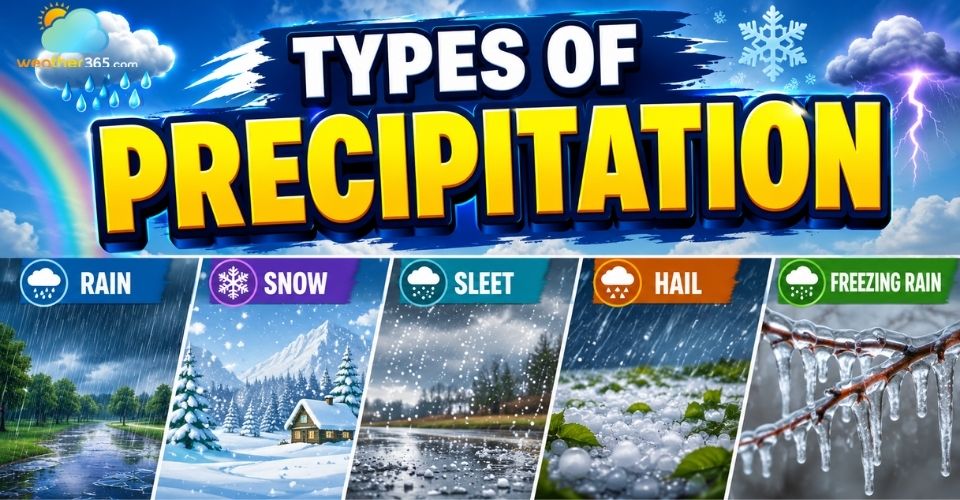
Types of precipitation
What is precipitation?
Precipitation refers to any form of water, liquid or solid, that falls from the atmosphere to Earth’s surface.
It forms when water vapor in the air cools, condenses into droplets or ice crystals, and becomes heavy enough to fall under gravity.
Factors that affect precipitation
Several atmospheric conditions influence how precipitation develops and what form it takes.
Temperature
Different atmospheric temperatures determine whether moisture falls as rain, snow, or sleet across Washington regional precipitation patterns.
Warm air usually produces liquid precipitation, while colder air creates frozen forms such as snow or hail.
Humidity
Humidity determines how much moisture is available in the atmosphere. High humidity increases cloud formation and supports stronger precipitation events.
Atmospheric pressure and wind currents
Pressure systems and wind movement influence cloud development, storm intensity, and rainfall distribution.
Low-pressure systems often bring heavy rain, while shifting wind currents can transport moisture over long distances.
Because of these factors, precipitation is much more than a simple weather event.
It acts as a critical environmental regulator that supports agriculture, drinking water systems, biodiversity, and even hydroelectric power generation.
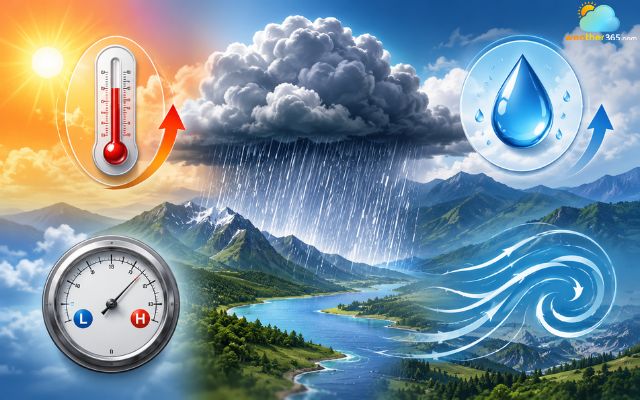
Factors influencing how precipitation develops
Nor'easter | Hurricane |
Cold-core extratropical system | Warm-core tropical system |
Forms off US East Coast (cool/warm air clash) | Forms over warm tropical oceans |
Can bring snow, sleet, rain | Brings rain, strong wind, storm surge |
Most frequent: fall–spring | Most frequent: summer–early fall |
Major types of precipitation
The major types of precipitation include rain, snow, snow and ice pellets, sleet, freezing rain, hail, and drizzle.
Each type forms under different atmospheric conditions and affects daily life, travel, and weather safety in unique ways.
Rain
Rain is the most common type of precipitation and occurs when water droplets inside clouds grow large enough to overcome air resistance and fall to the ground.
Rain forms through two main processes. In warm clouds, tiny water droplets collide and merge until they become heavy enough to fall.
In colder clouds, ice crystals grow by collecting water vapor before melting into raindrops as they pass through warmer air.
Rainfall can range from light showers to heavy downpours and is typically classified by rainfall intensity.

Rain is the most common type of precipitation
Don't let unexpected rain catch you off guard. Check today's rain probability on Weather365 before heading outside.
Snow
Snow forms when water vapor inside cold clouds freezes directly into tiny ice crystals. As these crystals stick together, they create snowflakes that fall to the ground without melting.
Snow usually occurs when temperatures remain at or below freezing throughout most of the atmosphere.
However, snow can sometimes reach the ground even when surface temperatures are slightly above 0°C (32°F), depending on humidity and the depth of the cold air.
Another winter precipitation type closely related to snow is graupel.
Graupel forms when supercooled water droplets freeze onto falling snowflakes, creating soft, white pellets that resemble tiny foam balls.

Snow is common when temperatures drop below freezing
Wondering if it's snowing in your area? Check the live Weather365 radar map now to track snowfall in real time and see where snow is moving next.
Sleet
Sleet is a mixture of rain and partially frozen precipitation that reaches the ground as small ice particles or slushy pellets.
It forms when falling snow melts in a layer of warm air but does not have enough time to become completely liquid before passing through colder air again.
Because the term "sleet" has different meanings in different countries, it can sometimes cause confusion:
In the United States and Canada, sleet usually refers to ice pellets.
In the United Kingdom, sleet often describes a mix of rain and snow falling together.
Sleet commonly occurs during winter storms when warm and cold air masses overlap.
Although individual pellets are small, sleet can quickly create hazardous road conditions.

Sleet is a mixture of rain and frozen precipitation
Freezing rain
Freezing rain begins as ordinary rain but freezes instantly when it touches surfaces that are below 0°C (32°F).
Unlike ice pellets, freezing rain remains liquid while falling because it passes through a relatively deep warm layer of air.
Only after reaching cold surfaces such as roads, trees, bridges, or power lines does it turn into a smooth layer of clear ice.
Even a thin coating of freezing rain can create dangerous conditions by:
Making roads and sidewalks extremely slippery
Causing tree branches to snap under the added weight
Damaging power lines and leading to widespread outages
Meteorologists usually report freezing rain by measuring the thickness of the ice accumulation rather than the amount of rainfall.
Because freezing rain can develop quickly and create dangerous travel conditions, checking the latest forecast and weather alerts before heading out is always a smart idea.
Stay ahead of changing conditions with real-time forecasts, radar, and weather warnings from Weather365.

Freezing rain remains liquid while falling until reaching the ground
Hail
Hail consists of solid balls or irregular lumps of ice produced inside powerful thunderstorms.
It forms within towering cumulonimbus clouds, where strong updrafts repeatedly lift water droplets into extremely cold parts of the storm.
Each trip upward adds another layer of ice. Once the hailstones become too heavy for the updraft to support, they fall to the ground.
Hail is most common during severe spring and summer thunderstorms and can cause significant damage to crops, vehicles, roofs, and windows.

Hailstorms are common in spring and summer
Drizzle
Drizzle is very light precipitation made up of tiny water droplets that fall slowly from low stratus clouds.
Unlike rain, drizzle develops in stable weather conditions with only weak upward air movement. The droplets are much smaller than raindrops, which allows them to remain suspended longer and fall gently.
Drizzle is common during cool, overcast weather, especially in autumn and winter.
Although it rarely produces large rainfall totals, it can reduce visibility, leave roads damp, and create slippery surfaces.
Like rain, drizzle is measured using rain gauges, but the recorded accumulation is usually very small because the droplets contain much less water.

Drizzle often occurs during cool weather
Why does precipitation matter?
Precipitation matters because it supplies fresh water, supports ecosystems, regulates climate, and helps sustain life on Earth.
Without precipitation, rivers would dry up, crops could not grow properly, and many ecosystems would struggle to survive.
Supports water supply
Rain and snow continuously refill lakes, rivers, reservoirs, and groundwater sources. These water supplies are essential for drinking, farming, sanitation, and industrial activities.
In many regions, seasonal precipitation directly determines whether communities experience water abundance or drought.
Essential for agriculture
Farmers rely heavily on precipitation to grow crops and maintain healthy soil conditions. Adequate rainfall improves plant growth, while snowmelt provides moisture for agricultural lands during warmer seasons.
However, too much or too little precipitation can damage crops and reduce food production.
Helps regulate climate
Precipitation also plays a major role in Earth’s climate system. Rainfall cools the atmosphere and surface temperatures, while snow and ice reflect sunlight back into space, helping balance global temperatures.
This is one reason meteorologists closely monitor precipitation patterns when studying climate change.
Maintains ecosystems and biodiversity
Forests, wetlands, rivers, and grasslands all depend on regular precipitation. Many plants and animals rely on stable water cycles to survive and reproduce.
Even small changes in precipitation patterns can affect biodiversity, migration, and habitat health.
Supports energy production
Hydroelectric power systems depend on rainfall and snowmelt to generate electricity. In some countries, precipitation is directly connected to national energy production and water management systems.
Can also create natural hazards
Although precipitation is essential, extreme events can become dangerous. Heavy rainfall may trigger floods and landslides, while hailstorms and snowstorms can damage infrastructure, transportation, and agriculture.
In modern meteorology, tracking the probability of precipitation helps people plan their daily activities.
That is why understanding the different types of precipitation is important not only for weather forecasting but also for disaster preparedness and environmental planning.

Roles of precipitation
Global Distribution of Precipitation
Precipitation is not evenly distributed around the world.
Equatorial regions typically receive the highest rainfall because warm temperatures increase evaporation and cloud formation. Tropical rainforests often experience frequent storms and high humidity year-round.
Deserts receive very little precipitation because dry air suppresses cloud development. Polar regions also remain relatively dry despite cold conditions.
Mountain ranges strongly influence precipitation distribution as well.
Moist air rises along mountain slopes, cools, and produces rainfall, while the opposite side often becomes dry due to the rain shadow effect.
Seasonal wind systems such as monsoons also shape global precipitation patterns in many regions.

Mountain ranges influence precipitation distribution
Conclusion
The many types of precipitation show how dynamic and complex Earth’s atmosphere truly is. Understanding precipitation helps us predict weather, manage water resources, support agriculture, and prepare for climate-related challenges more effectively.
Frequently Asked Questions (FAQs)
Related post
How To Measure Wind Speed: Step-by-Step Guide for Accurate Measurement
 1306
1306
 0
0
 4.7
4.7
 12/03/2026
Types Of Wind: Understanding Different Wind Classifications
1292
0
4.8
12/03/2026
What Is A Jet Stream? Complete Guide to Jet Streams and Their Role in Weather
1179
0
4.7
12/03/2026

0 Comment
Leave a comment
Your email address will not be published. Required fields are marked *