




Weather Metric Widgets – Must-have Tools for Modern Websites


Weather Metric Widgets turn static websites into real-time experiences with live UV alerts, air quality updates, pollen data, and atmospheric insights. Want to keep visitors engaged longer while boosting SEO freshness and user experience? Let’s explore the must-have weather widgets modern websites should start using today.
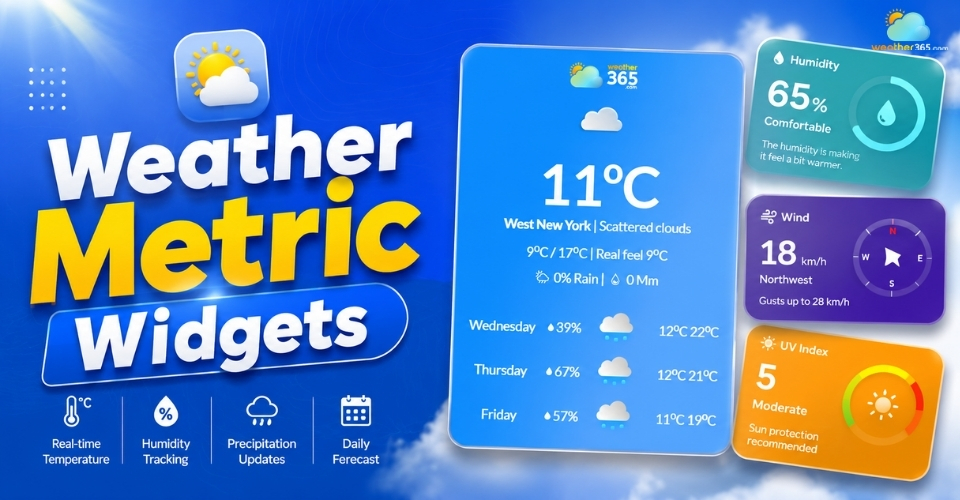
Weather metric widgets
About weather metric widgets
What makes users stay longer on a website today? It’s no longer just beautiful layouts or static information.
Real-time content has become one of the biggest drivers of engagement, especially when visitors expect instant updates and practical insights.
That’s exactly why weather metric widgets are becoming essential for modern websites.
Several free and customizable weather metric widgets are available for websites, allowing you to display current conditions, forecasts, wind speed, humidity, atmospheric pressure, and other environmental insights in real time.
Instead of showing fixed content that quickly becomes outdated, these widgets continuously update live weather data to keep pages fresh and interactive.
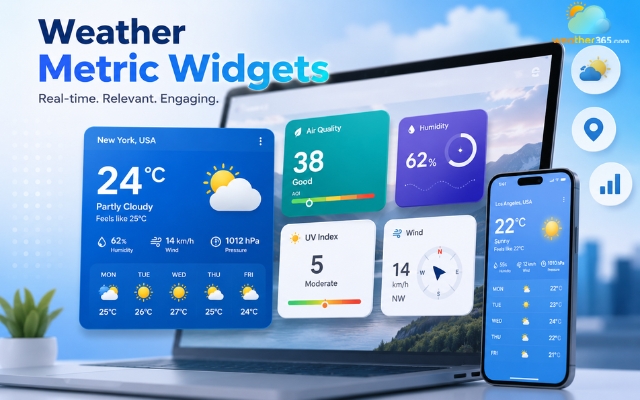
Real-time content is an important factor for user engagement
From travel blogs and event platforms to health-focused websites and smart dashboards, weather metric widgets help visitors access information that directly affects their daily activities.
Whether someone wants to check UV exposure before going outside, monitor pollen levels during allergy season, or track air quality in urban areas, these tools provide instant value without requiring users to leave the page.
Another major advantage is SEO freshness.
Search engines favor websites that regularly update content, and real-time weather data naturally creates dynamic page activity.
This can improve crawl frequency, increase dwell time, and encourage repeat visits because users know the information is constantly changing.
Beyond functionality, modern weather metric widgets are highly customizable. Website owners can adjust colors, layouts, icons, themes, and data displays to match their branding.
Many widgets also support responsive designs, ensuring smooth performance across desktops, tablets, and mobile devices.
Essential weather metric widgets for modern websites
Modern users expect more than just temperature updates.
Today’s weather metric widgets provide real-time environmental data that makes websites feel more useful, interactive, and constantly updated.
From health alerts to pollution tracking, these widgets help improve both user experience and SEO freshness.
Many websites also combine them with broader tools like weather widgets for events to create a more complete forecast experience.
UV index widget
A UV index widget shows how strong the sun’s ultraviolet radiation is in real time.
This is especially useful for travel websites, outdoor event pages, fitness blogs, and skincare platforms.
Some widgets also include hourly UV forecasts and warning levels, helping users plan outdoor activities more safely.
Air quality widget
An air quality widget displays live pollution data such as AQI and fine dust levels. It helps users quickly understand whether the air is safe for outdoor activities or exercise.
That’s why this widget is commonly used on local news websites, health blogs, and smart city platforms.
Pollen count widget
A pollen count widget tracks allergy-related data like tree, grass, and weed pollen levels. It’s particularly helpful for health, lifestyle, and seasonal weather websites.
Since allergy sufferers often check pollen updates daily, this widget can also encourage repeat visits and stronger user engagement.
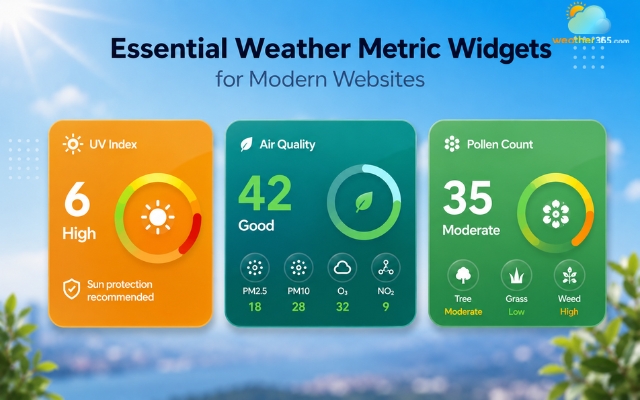
Weather metric widgets provide more useful data for users
Time and Atmospheric Weather Metric Widgets
Some weather widgets go beyond temperature and forecasts by focusing on time-based and atmospheric data.
These tools help websites deliver more detailed environmental insights while keeping content dynamic and useful.
They also work well alongside broader forecast systems like weather widgets for events or seasonal weather dashboards.
Sunrise sunset widget
A sunrise sunset widget displays daily sunrise and sunset times in real time. It’s especially useful for travel websites, photography blogs, outdoor activity pages, and event platforms where daylight matters.
Some widgets also include golden hour timing, twilight phases, or day length information.
Besides being practical, this type of widget updates automatically every day, helping pages feel fresher and more active.
More details on the Sunrise sunset widget!
Barometric pressure widget
A barometric pressure widget tracks changes in atmospheric pressure, which can help users better understand upcoming weather conditions.
Falling pressure often signals rain or storms, while stable pressure usually means calmer weather.
This widget is commonly used on fishing websites, outdoor adventure blogs, marine platforms, and advanced weather dashboards.
It adds a more professional weather-monitoring feel while giving users deeper environmental insights beyond basic forecasts.
Learn more about barometric pressure widget here!
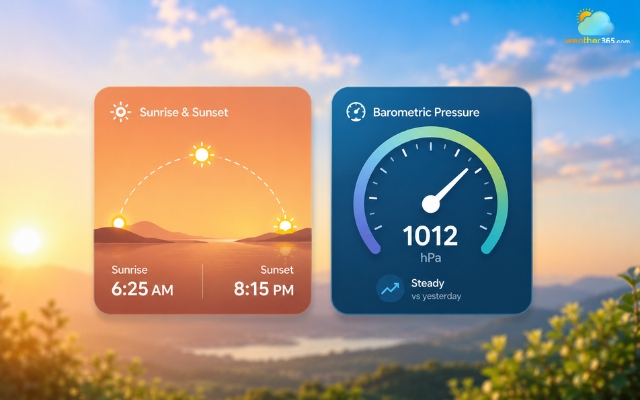
Sunrise and barometric weather widget
Benefits of using weather metric widgets on websites
Weather metric widgets not only display live environmental data, but they also help websites feel more dynamic, useful, and interactive for everyday users.
From improving engagement to supporting SEO performance, these real-time tools can turn static pages into experiences that visitors actually return to check regularly.
Improve user engagement
Real-time weather data naturally encourages visitors to interact more with a website.
Users often return to check updates like UV levels, air quality, or pollen forecasts throughout the day.
Unlike static content, weather widgets continuously change, making pages feel more active and relevant.
This can increase time on page and create stronger engagement, especially for travel, health, and event-related websites.
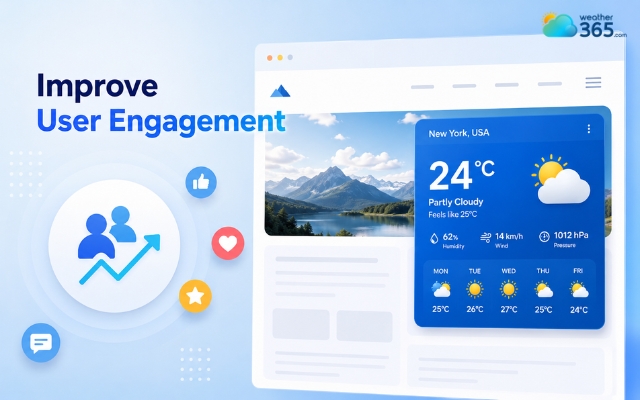
Real-time data encourages visitors to interact more
Enhance SEO performance
Search engines prefer websites with fresh and regularly updated content. Since weather metric widgets display live data, they help create dynamic pages that appear more current to search engines.
This can support SEO by:
Increasing content freshness
Improving dwell time
Encouraging repeat visits
Reducing bounce rates
When combined with useful content, weather widgets can strengthen both user signals and overall search visibility.
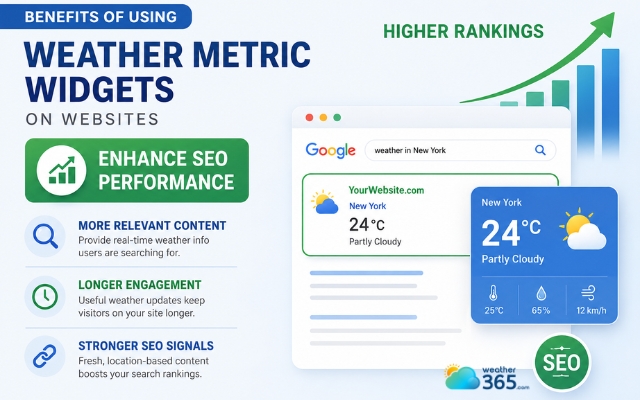
Weather metric widgets help create dynamic pages
Increase Website Retention and UX
Visitors are more likely to stay on a website when they can access helpful information without opening another tab.
Weather metric widgets improve convenience by providing real-time environmental insights directly on the page.
For example, users may check air quality before going outside or view sunrise times while planning travel activities.
Small features like these can make the browsing experience smoother and more valuable.
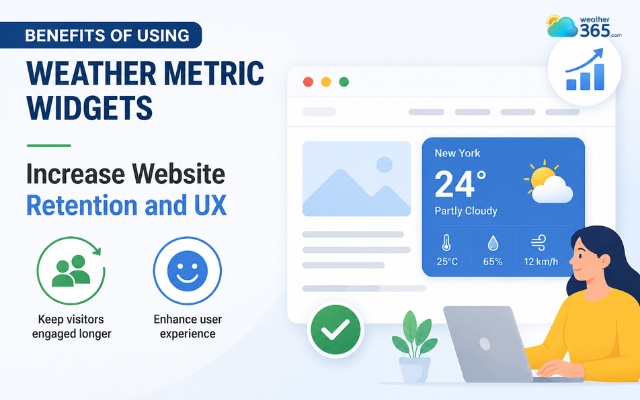
Weather metric widgets improve website convenience
Easy to embed widgets on websites
One reason weather widgets are so popular is their simplicity. Most providers offer ready-to-use embed codes that work with WordPress, Shopify, Wix, and custom websites.
Many widgets can be installed in just a few minutes without advanced coding knowledge. Website owners can also customize colors, layouts, and themes to match their branding more easily.
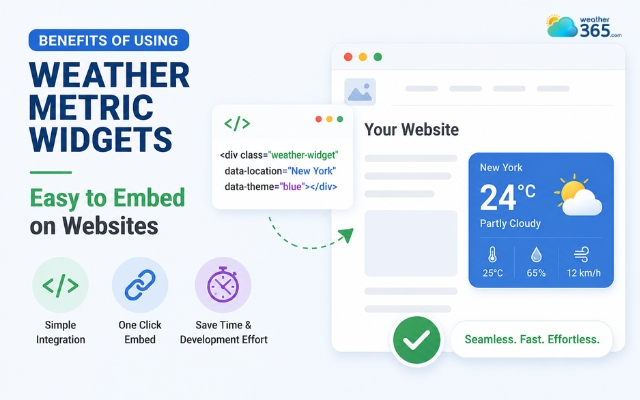
Weather widget can be added quickly
The bottom line
Adding Weather Metric Widgets to your website is a simple way to deliver more value without making your pages feel complicated. Real-time weather insights not only keep content fresh and interactive, but also encourage users to stay longer, return more often, and enjoy a smoother browsing experience. Start adding today!
Frequently Asked Questions (FAQs)
Related post

Weather365 widget - BEST & FREE weather widgets for websites
 898
898
 8
8
 4.7
4.7
 12/08/2026

How to Add Weather Widget to Any Platform? A Complete Guide for Beginners
357
8
4.7
17/08/2026
Forecast Range Widgets: Key features, Benefits, How to Add & Best tools
244
8
4.6
11/08/2026

8 Comment
Finley Thomas
I'm not very familiar with weather data, so I sometimes find all these numbers confusing. A simple widget with clear labels would be much easier to understand.
weather365
That makes sense! A clear layout helps visitors find the information they need without feeling overwhelmed. It's usually best to display the metrics most relevant to your audience.
Amari Hoffman
Would weather metric widgets be useful for a gardening website? I'm thinking rainfall and humidity could be helpful for readers who grow their own plants.
weather365
Absolutely! Rainfall, humidity, and temperature can all provide useful context for gardening decisions. Readers should still consider soil moisture and the specific needs of their plants.
Scarlett Taylor
Can I display more than one weather metric in the same widget, or do I need a separate widget for each one?
weather365
Weather365 offers options for displaying different types of weather information. Check the available configuration settings to choose the metrics and layout that best suit your website.
Hallie Ruiz
I usually look at temperature first, but wind speed and humidity can make a big difference too. Having those details together would make checking the weather much easier.
weather365
You're right! Temperature is only one part of the picture. Other metrics, such as humidity, wind speed, and precipitation, can help visitors better understand the conditions outside.
Leave a comment
Your email address will not be published. Required fields are marked *