




2026 Sees the Warmest September on Record Across the US, NOAA reports


The warmest September on record has been confirmed across the contiguous United States, with NOAA reporting an average temperature of 69.4°F in September 2026. Record-breaking overnight heat, widespread above-average temperatures and contrasting rainfall patterns highlight the country’s unusual start to fall. Here’s what the latest climate data reveals.
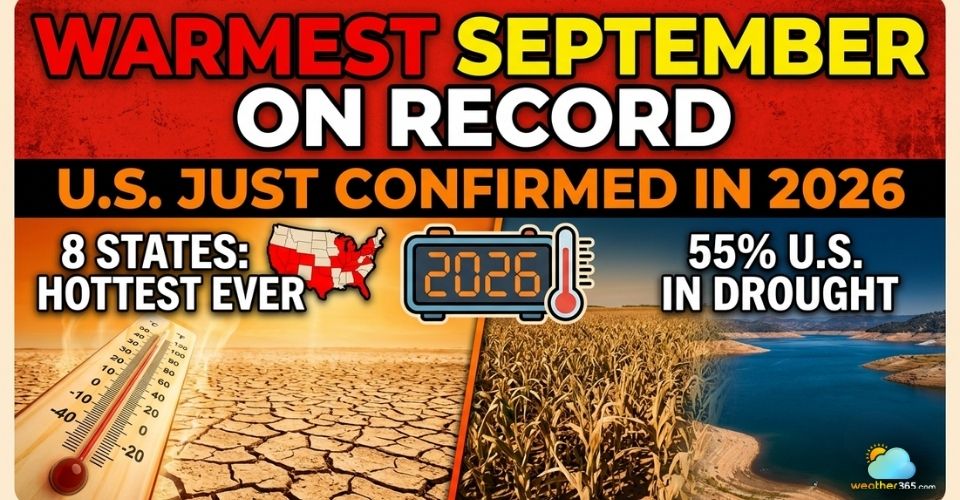
Warmest September on record
September 2026 Becomes the Warmest September on Record in the U.S.
The warmest September on record has been confirmed across the contiguous United States, with an average temperature of 69.4°F (20.8°C), according to the National Oceanic and Atmospheric Administration (NOAA).
The new record highlights the country’s unusually hot start to fall, with persistent overnight heat affecting millions of people.
NOAA reported that September temperatures averaged 4.6°F above the 20th-century norm, surpassing the previous record set in 1998.
The contiguous U.S. has now recorded above-average monthly temperatures for 20 consecutive months, from February 2025 through September 2026.
March, July, August and September were all the warmest months of their respective names on record in 2026.
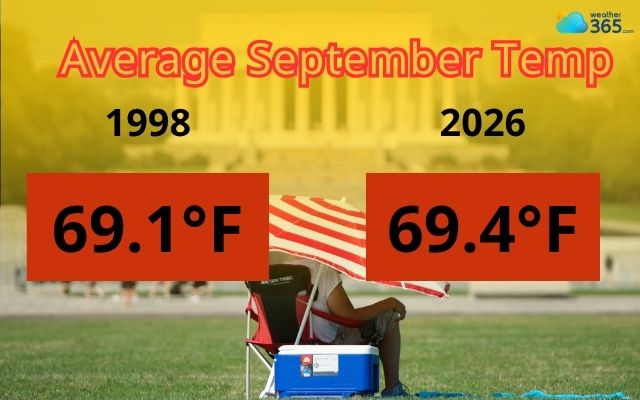
2026 average September temperature surpasses 1998’s
Overnight Heat Drives the Record
Unusually warm nights played a major role in September’s record-breaking temperatures.
The average overnight low across the contiguous U.S. exceeded the previous September record, set in 2019, by more than 1.2°F.
An estimated 80 million people lived in areas that experienced their warmest September nighttime temperatures on record.
Above-average temperatures affected 43 states, while eight states — Arkansas, Illinois, Kansas, Louisiana, Missouri, New Mexico, Oklahoma and Texas — recorded their hottest September ever.
Oregon was the only state with below-average temperatures.
Indicator | September 2026 Record | Key Comparison |
U.S. Avg Temp | 69.4°F (20.8°C) | +4.6°F vs 20th-century norm (beats 1998) |
Nighttime Heat | All-time high | +1.2°F vs previous record (2019) |
Hottest States | 8 states (AR, IL, KS, LA, MO, NM, OK, TX) | Warmest September in record history |
Impacted People | ~80 million | Experienced record nighttime warmth |
Drought Area | 55% of contiguous U.S. | Expanded in the South & Mississippi Valley |
Check current temperatures and local forecasts in Los Angeles, California to see how conditions compare with typical fall weather.
Drought Persists as Rainfall Varies by Region
Despite the widespread heat, precipitation patterns differed sharply across the country.
The Southwest received more than twice its average September rainfall.
Arizona recorded its wettest September since 1983, while New Mexico had its wettest since 1941.
In contrast, drought expanded or intensified across much of the southern Plains, Lower Mississippi Valley and Tennessee Valley.
The October 8 U.S. Drought Monitor report found that around 55% of the contiguous U.S. remained in drought, although conditions improved in some parts of the Southwest, northern Plains and Upper Midwest.
Hawaii also experienced an unusually wet month, receiving 10.83 inches of precipitation — its wettest September since 2015.
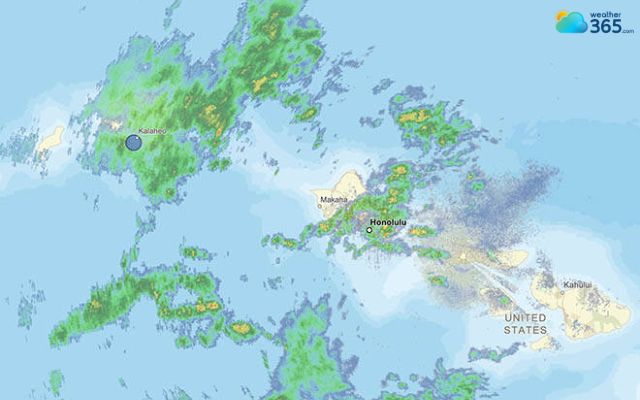
Oahu, Kauai County, Hawaii is under flood watch as rainy season starts
Long-term global warming increases the likelihood of extreme heat, while natural climate patterns such as El Niño can further influence temperatures and atmospheric circulation.
However, the causes of an individual monthly record require careful scientific analysis.
NOAA's October outlook favors above-average temperatures across much of the West, northern Plains, Gulf Coast and Florida.
The latest record is another sign that unusually warm conditions can extend beyond the traditional summer season, making local forecasts and heat alerts important well into fall.
Stay informed with the latest weather news, changing conditions, and forecast updates on Weather365!
References
ABC News
BBC
Scientific American
Related post
Heat Dome in the US: Millions Face High Temperatures and Heat Risks
 522
522
 0
0
 4.7
4.7
 25/06/2026

NOAA Confirms 2026 as the Hottest US Summer on Record
454
0
4.8
10/09/2026
Record Breaking Heat in the US Fueled by Powerful High-Pressure Ridge
200
0
4.9
08/06/2026

0 Comment
Leave a comment
Your email address will not be published. Required fields are marked *